What is in season in Montpellier. and what to order when the market changes.
Spring
- Asperge des sables: Sand-grown asparagus from the coastal plain around Mauguio and Lunel lands at the Arceaux market from late March, sold in bundles and best eaten within a day.
- Fraise de Nimes: The Gard strawberry has PGI status and arrives on Montpellier stalls in April, a fortnight ahead of most French crops thanks to the coastal warmth.
- Pelardon des Cevennes: Goat kids are born in late winter, so the first fresh pelardon of the year appears on cheese counters in spring, chalky and lactic before it dries down.
- Petits pois and fevres: Broad beans eaten raw with a shard of sheep cheese are the standard Languedoc spring aperitif, on market tables from April.
Summer
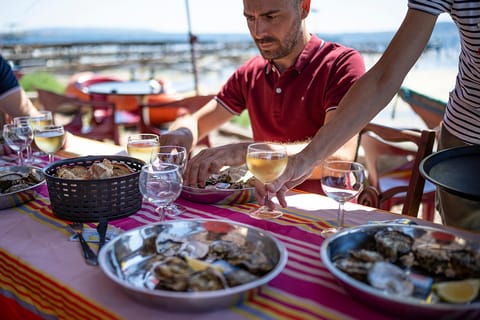
- Huitres de Bouzigues: Thau lagoon oysters are sold year-round but summer is when the city's seafood counters and the Marche du Lez shuck them by the dozen with Picpoul.
- Brasucade de moules: Thau mussels grilled over vine cuttings in a wide pan with garlic, parsley and olive oil, the standard dish at village fetes and the Estivales all summer.
- Tomates de plein champ: The Herault plain floods the markets with field tomatoes from July; the Clapiers tomato festival in early September closes the season with 250 varieties.
- Melon de Lunel: Charentais melons from Lunel, twenty minutes east, hit the halls in July and are stacked by ripeness rather than size.
- Peche de vigne: The red-fleshed vineyard peach ripens in August on the garrigue slopes and turns up as sorbet and in tarts across the city's patisseries.
Autumn
- Vendanges and vin bourru: Harvest runs from late August into October across the Languedoc; caves in and around the city sell cloudy part-fermented vin bourru for a few weeks only.
- Olive Lucques: The crescent-shaped Lucques du Languedoc olive is picked green in September and October and sold fresh-cured, sweet and buttery, at every market stall.
- Champignons de garrigue: Cepes and sanguins come down from the Cevennes and the Hortus after the first autumn rains and appear on blackboard menus within days.
- Chataignes des Cevennes: Cevennes chestnuts reach the markets in October, roasted on street braziers and folded into desserts through the winter.
Winter
- Truffe noire du Languedoc: Tuber melanosporum is dug in the Herault garrigue from December to March; the Ecusson bistronomy rooms build their winter menus around it.
- Coquillages de Thau: Oysters, mussels and clams from the lagoon peak in quality over the cold months, which is when locals order the big shellfish platters.
- Oreillettes: Thin anise-scented fritters dusted with sugar, fried for carnival across the Languedoc and sold at bakeries through February.
- Agrumes de Corse et d'Espagne: Winter citrus fills the covered halls from December, and the city's patissiers switch to lemon and bergamot for the season.