
Kuala Lumpur
4 hours
Kuala Lumpur by Night and Malaysian Food Tour
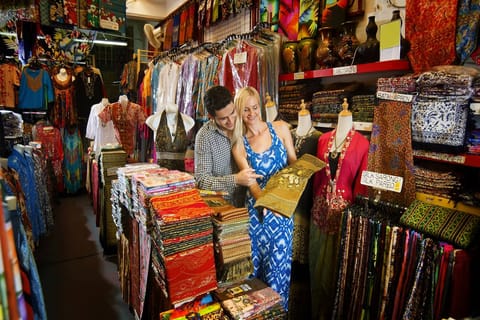
Shopping, walking, fun and food - all in one. Take selfies at independent square, shop at Central Market, explore China Town and enjoy delicious food...
from$71Check dates
132 editor-picked malaysian restaurants across 14 cities.
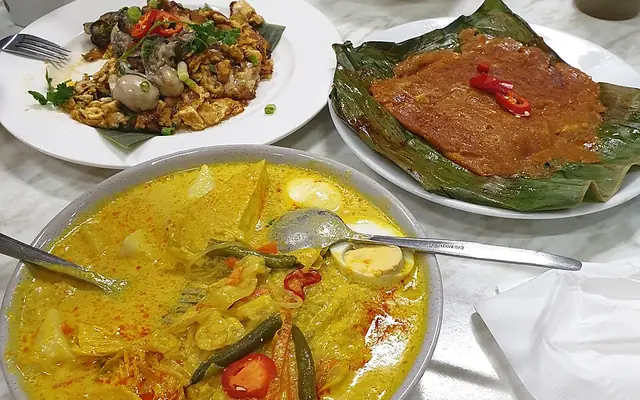
Malaysian cuisine is the food of a multi-ethnic society where Malay, Chinese, Indian, Peranakan (Straits Chinese), and indigenous (Orang Asli, Iban, Kadazan-Dusun) cooking traditions have lived side by side for centuries and cross-pollinated into one of the most diverse food cultures in Asia. The Malaysian table runs on roughly four pillars: Malay cooking (rice, coconut milk, sambal belacan, kerisik, the Hari Raya feast tradition), Chinese cooking (Hokkien, Cantonese, Teochew, Hakka, brought by 19th-century Chinese migrants and absorbed into the daily diet), Indian cooking (Tamil-South-Indian-Muslim mamak food, the 24-hour Indian-Muslim diner format), and Peranakan or Nyonya cooking (the Chinese-Malay fusion that emerged from Chinese trader marriages to Malay women, now the most distinctive regional Malaysian cuisine).
The defining dishes are nasi lemak (the unofficial national dish: coconut rice with anchovies, peanuts, cucumber, sambal, and often fried chicken or beef rendang, eaten for breakfast across Malaysia), char kway teow (the wok-fried flat rice noodles with prawns, Chinese sausage, egg, bean sprouts, and chives, made famously over high charcoal heat at Penang street stalls), laksa (the umbrella term covering Penang asam laksa, the sour-tamarind-mackerel soup; curry laksa, the coconut-curry noodle soup; Sarawak laksa, the prawn-shrimp paste version; and several regional variants), satay (the grilled meat skewers with peanut sauce, claimed by both Malaysia and Indonesia), roti canai (the Indian-Muslim flaky flatbread eaten with dhal or curry), and the deep hawker tradition where each stall specializes in a single dish.
The mamak (Indian Muslim) food culture deserves its own paragraph. Mamak stalls and the larger 24-hour mamak restaurants are central to Malaysian street life: roti canai, nasi kandar (the Penang Indian-Muslim mixed-rice format), teh tarik (the pulled-tea, where the brewed tea is poured back and forth between two metal cups for foam), mee goreng mamak, and Indian-Muslim curries. The mamak format is uniquely Malaysian, distinct from both Indian restaurants and Malay warungs, and operates 24 hours in major cities.
Tours, tastings and classes that match this page, bookable on GetYourGuide.
4 hours
Shopping, walking, fun and food - all in one. Take selfies at independent square, shop at Central Market, explore China Town and enjoy delicious food...

Day trip · 10 hours
See, feel, and taste the produce from some of Melbourne’s best food, beer, and wine locations throughout the Mornington and Bellarine Peninsulas....

Day trip · 7.5 hours
Visit the Maeklong Railway Market and the Damnoen Saduak Floating Market on either a private or group tour from Bangkok. Interact with friendly local...
Guided tour · 2 hours
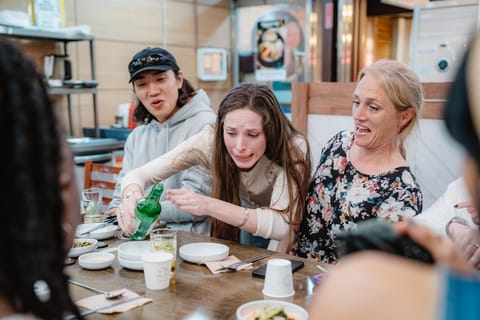
This experience goes beyond delicious food; it's a cultural journey where you'll connect with friendly hosts, engage with local vendors, and bond...
The best-scored malaysian place in each of 12 cities.
Dewakan holds two Michelin stars and a Green Star in Kuala Lumpur for chef Darren Teoh's single tasting menu, built on indigenous Malaysian ingredients.
OrderThe evolving foraged tasting menu, the restaurant's only option each night.
TipThe room is on Level 48 of Naza Tower. Cancel more than 24 hours ahead; the kitchen charges RM870 per guest for late cancellations and no-shows.
Auntie Gaik Lean's Old School Eatery holds a Michelin star in the 2026 guide, cooking heirloom Nyonya recipes behind a Bishop Street shopfront in Penang.
SignatureKari kapitan, Jiu hu char
TipReservations for larger tables carry an RM200 deposit; parties of three or fewer join the walk-in queue instead.
Crawford Lane's legendary bak chor mee (minced pork noodle) institution since 1932, holder of the Michelin 1 star from 2016 to 2022. The vinegar-dressed noodles with minced pork, sliced pork, liver, fishcake and a pork meatball are among the most complex and balanced bowls in Singapore's hawker canon. A S$8 small bowl remains one of the city's most remarkable value propositions.
TipClosed Mondays. Open Tuesday to Thursday 9am to 8.30pm. Queue forms before opening; arrive at 9am to keep waiting time to 20 minutes.
JL Studio, Jimmy Lim's modern Singaporean room (Asia's 50 Best Top 10), opened a Taipei outpost in 2024 holding two Michelin stars on the 2025 Taiwan guide.
OrderTasting menu; the chilli crab xiaolongbao course is the marquee dish.
Book8 weeks ahead
TipLimited counter seats. Reservations open eight weeks ahead through SevenRooms.
Late-night Malaysian on Goulburn Street, Haymarket, Sydney. Roti canai, satay and char kway teow; open daily 11:30am-2am Friday and Saturday.
OrderRoti canai with curry trio, satay chicken sticks.
TipNo bookings; the queue outside is part of the ritual Walk-ins usually OK.
Laksa King in Flemington has set the Melbourne standard for the dish since 1998: asam laksa, curry laksa and char kway teow at prices worth the detour.
OrderCurry laksa with tofu puffs
Phat Eatery in Katy (west of Houston) is the Malaysian street food kitchen in Katy Asian Town from the late Alex Au-Yeung, with beef rendang.
OrderBeef rendang, roti canai with curry chicken dip, char kway teow.
TipKaty is 30 miles west of Houston. Combine with H Mart and Asian Town. The Woodlands second location is the other option.
Go-Ang Pratunam in Bangkok is the pink-uniform chicken-rice counter on Petchaburi, Bib Gourmand since 2018, the canonical khao man gai room in the city.
OrderKhao man gai standard with a side of liver and the clear chicken soup; chilli-ginger sauce on every bite.
TipCash only. Queues from 10:00-14:00 then 16:00-21:00. Six branches but the original Pratunam location is the one to visit.
Julie's Kopitiam brings Malaysian hawker cooking to Glasgow's Southside, a tiny Shawlands room where the laksa and beef rendang sell out most nights.
OrderA bowl of laksa; the rendang and roti canai go fast, so order early.
TipSeats are few and it does not take large groups, so aim for an off-peak sitting or expect to wait.
Kedai Makan in Seattle's Capitol Hill is the Malaysian street-food kitchen rebooted at 15th and Pine: nasi lemak, char kway teow and roti canai with kaya.
OrderNasi lemak with the rendang, plus an order of char kway teow for the table.
TipThe Belltown second location at 2234 1st Avenue opened May 2025 and is calmer at lunch.
Kopitiam by Chandy's serves Malaysian dishes under AED 40 on Al Falah Street in Abu Dhabi, in a small, clean room run by Malaysian-born Chef Chandy.
TryMalaysian dishes under AED 40
TipBest Bites puts a meal for two under AED 100 and says everything on the menu costs under AED 40 apart from the odd special.
The Charm Dining Gallery is a Michelin Bib Gourmand room on Dibuk Road in Old Town Phuket, plating chef Buriphat's Southern Thai Peranakan family recipes.
OrderOrder chef Buriphat's stir-fried pork belly with herbs and sweet dark soy sauce.
TipPair the pork belly with the pork rib soup with tofu and salted fish, which the Michelin inspectors single out; it closes on Wednesdays.
Dewakan holds two Michelin stars and a Green Star in Kuala Lumpur for chef Darren Teoh's single tasting menu, built on indigenous Malaysian ingredients.
OrderThe evolving foraged tasting menu, the restaurant's only option each night.
TipThe room is on Level 48 of Naza Tower. Cancel more than 24 hours ahead; the kitchen charges RM870 per guest for late cancellations and no-shows.
Auntie Gaik Lean's Old School Eatery holds a Michelin star in the 2026 guide, cooking heirloom Nyonya recipes behind a Bishop Street shopfront in Penang.
SignatureKari kapitan, Jiu hu char
TipReservations for larger tables carry an RM200 deposit; parties of three or fewer join the walk-in queue instead.
Crawford Lane's legendary bak chor mee (minced pork noodle) institution since 1932, holder of the Michelin 1 star from 2016 to 2022. The vinegar-dressed noodles with minced pork, sliced pork, liver, fishcake and a pork meatball are among the most complex and balanced bowls in Singapore's hawker canon. A S$8 small bowl remains one of the city's most remarkable value propositions.
TipClosed Mondays. Open Tuesday to Thursday 9am to 8.30pm. Queue forms before opening; arrive at 9am to keep waiting time to 20 minutes.
JL Studio, Jimmy Lim's modern Singaporean room (Asia's 50 Best Top 10), opened a Taipei outpost in 2024 holding two Michelin stars on the 2025 Taiwan guide.
OrderTasting menu; the chilli crab xiaolongbao course is the marquee dish.
Book8 weeks ahead
TipLimited counter seats. Reservations open eight weeks ahead through SevenRooms.
Kevin Wong's Michelin-starred and Green Star restaurant in Duo Galleria. 24-seat seafood tasting menu paying tribute to the Malay Archipelago and its produce.
Book2-3 weeks ahead
Late-night Malaysian on Goulburn Street, Haymarket, Sydney. Roti canai, satay and char kway teow; open daily 11:30am-2am Friday and Saturday.
OrderRoti canai with curry trio, satay chicken sticks.
TipNo bookings; the queue outside is part of the ritual Walk-ins usually OK.
Laksa King in Flemington has set the Melbourne standard for the dish since 1998: asam laksa, curry laksa and char kway teow at prices worth the detour.
OrderCurry laksa with tofu puffs
Akar earned a Michelin star in the 2026 guide for chef Aidan Low's Kuala Lumpur tasting menu, which pairs endemic Malaysian ingredients with Japanese methods.
OrderThe ten-course Mekar tasting menu, built around endemic Malaysian ingredients.
TipThe current Mekar menu runs ten courses, from abalone with mung bean noodles to a crab claypot served family style.
Beta holds a Michelin star in Kuala Lumpur for chef Raymond Tham's Tour of Malaysia tasting menu, which moves course by course through the country's regions.
OrderThe Tour of Malaysia tasting menu, showcasing regional specialties course by course.
TipThe Tour of Malaysia menu is RM630++ a head; the cocktail, wine and champagne pairing adds RM330++ on top.
Malcolm Lee's Michelin-starred Peranakan restaurant at Como Dempsey. World's first starred Peranakan establishment; Ah-Ma-Kase: keluak, rendang, laksa.
Book1-2 weeks ahead
Phat Eatery in Katy (west of Houston) is the Malaysian street food kitchen in Katy Asian Town from the late Alex Au-Yeung, with beef rendang.
OrderBeef rendang, roti canai with curry chicken dip, char kway teow.
TipKaty is 30 miles west of Houston. Combine with H Mart and Asian Town. The Woodlands second location is the other option.
Go-Ang Pratunam in Bangkok is the pink-uniform chicken-rice counter on Petchaburi, Bib Gourmand since 2018, the canonical khao man gai room in the city.
OrderKhao man gai standard with a side of liver and the clear chicken soup; chilli-ginger sauce on every bite.
TipCash only. Queues from 10:00-14:00 then 16:00-21:00. Six branches but the original Pratunam location is the one to visit.
Ivy's Nyonya Cuisine in Penang is a husband-and-wife Peranakan room with a 2026 Bib Gourmand; Ivy cooks while her husband runs the small floor.
SignatureNyonya set for two, Perut ikan
TipBook ahead by phone; the set menus for two or four are the easiest way through the long home-style menu.
Deens Maju is the nasi kandar Penang locals queue for, a midday-opening Jalan Gurdwara canteen where the ayam goreng line often wraps the block.
SignatureAyam goreng nasi kandar, Bendi curry
TipThe queue moves faster than it looks; go earlier in the service for the full spread of curries before favourites sell out.
Late-night Malaysian on Hay Street, Haymarket, Sydney. Char kway teow, nasi lemak and curry laksa till 1am Friday and Saturday, 11pm earlier nights.
TryChar kway teow
Pappa Laksa in Burwood slow-cooks its coconut broth for five hours: rich, layered and served with barramundi or king prawns over rice noodles.
OrderKing seafood laksa with barramundi fillet
Ho Jiak on Rainbow Alley references Penang and KL regional traditions: precise Malaysian cooking with handmade roti at the counter in a compact laneway space.
OrderChar kuay teow with wok hei and fresh cockles
Junda Khoo's Malaysian flagship in Haymarket, Sydney. Nasi lemak, char kway teow and curry laksa on the menu; the Strathfield original opened in 2017.
SignatureNasi lemak, Char kway teow, Curry laksa
Julie's Kopitiam brings Malaysian hawker cooking to Glasgow's Southside, a tiny Shawlands room where the laksa and beef rendang sell out most nights.
OrderA bowl of laksa; the rendang and roti canai go fast, so order early.
TipSeats are few and it does not take large groups, so aim for an off-peak sitting or expect to wait.
Kedai Makan in Seattle's Capitol Hill is the Malaysian street-food kitchen rebooted at 15th and Pine: nasi lemak, char kway teow and roti canai with kaya.
OrderNasi lemak with the rendang, plus an order of char kway teow for the table.
TipThe Belltown second location at 2234 1st Avenue opened May 2025 and is calmer at lunch.
Kopitiam by Chandy's serves Malaysian dishes under AED 40 on Al Falah Street in Abu Dhabi, in a small, clean room run by Malaysian-born Chef Chandy.
TryMalaysian dishes under AED 40
TipBest Bites puts a meal for two under AED 100 and says everything on the menu costs under AED 40 apart from the odd special.
The Charm Dining Gallery is a Michelin Bib Gourmand room on Dibuk Road in Old Town Phuket, plating chef Buriphat's Southern Thai Peranakan family recipes.
OrderOrder chef Buriphat's stir-fried pork belly with herbs and sweet dark soy sauce.
TipPair the pork belly with the pork rib soup with tofu and salted fish, which the Michelin inspectors single out; it closes on Wednesdays.
Papa Rich at Born on Newtownsmith Galway dishes up Malaysian laksa under €12; the canteen-style room fills every lunchtime for the best value in the city.
OrderMee goreng: stir-fried egg noodles with sambal, vegetables and peanut crumble for under €9
Oriental Kopitiam serves nasi lemak, laksa, toast sets and Hainanese chicken rice from a stall in the Flavours Hub food hall at Masdar Park, Abu Dhabi.
TryNasi lemak, laksa and Hainanese chicken rice
TipThe National lists dishes at AED 25 to 55, with crab from AED 60, so the noodle and rice plates are the sub-AED 50 order.
Makan serves Malaysian and Indonesian halal-certified food on the Usadan-ro mosque strip of Itaewon, with nasi lemak, rendang and satay that draw a devout.
OrderNasi lemak: fragrant coconut rice with sambal, fried anchovies and hard-boiled egg.
TipThe area around Seoul Central Mosque is walkable from Itaewon Station; Makan is on the main food alley running up to the mosque.
 Kuala Lumpur61 places
Dewakan, Akar
Kuala Lumpur61 places
Dewakan, Akar
 Penang26 places
Auntie Gaik Lean's Old School Eatery, Ivy's Nyonya Cuisine
Penang26 places
Auntie Gaik Lean's Old School Eatery, Ivy's Nyonya Cuisine
 Singapore19 places
Hill Street Tai Hwa Pork Noodle, Seroja
Singapore19 places
Hill Street Tai Hwa Pork Noodle, Seroja
 Sydney6 places
Mamak, Ho Jiak Haymarket Late
Sydney6 places
Mamak, Ho Jiak Haymarket Late
 Abu Dhabi4 places
Kopitiam by Chandy's, Oriental Kopitiam
Abu Dhabi4 places
Kopitiam by Chandy's, Oriental Kopitiam
 Melbourne4 places
Laksa King, Pappa Laksa
Melbourne4 places
Laksa King, Pappa Laksa
 Glasgow3 places
Julie's Kopitiam
Glasgow3 places
Julie's Kopitiam
 Houston2 places
Phat Eatery
Houston2 places
Phat Eatery
 Seoul2 places
Makan Halal Restaurant
Seoul2 places
Makan Halal Restaurant
 Bangkok1 place
Go-Ang Pratunam Chicken Rice
Bangkok1 place
Go-Ang Pratunam Chicken Rice
 Galway1 place
Papa Rich Newtownsmith
Galway1 place
Papa Rich Newtownsmith
 Phuket1 place
The Charm Dining Gallery
Phuket1 place
The Charm Dining Gallery
 Seattle1 place
Kedai Makan
Seattle1 place
Kedai Makan
 Taipei1 place
JL Studio Taipei
Taipei1 place
JL Studio Taipei
Considered Malaysia's culinary capital. The deepest Peranakan tradition, the strongest hawker culture, and the source of several signature dishes: Penang char kway teow, Penang asam laksa (the sour version, voted World's Best in CNN polls), Penang Hokkien mee (the prawn-broth noodle soup, distinct from the Singapore version), nasi kandar (the Indian-Muslim mixed-rice format invented in Penang), curry mee. The George Town night markets are the densest hawker concentration in Malaysia.
The capital city's cooking mixes all regional traditions. Bak kut teh (the Chinese pork-bone tea), Hokkien mee KL-style (dark, with thick yellow noodles), nasi lemak across the city, Klang's specifically famous bak kut teh, the diverse mamak culture along Petaling Street and Bangsar.
The Peranakan heartland, where Chinese traders married Malay women in the 15th and 16th centuries and created Nyonya cuisine. Asam pedas, Nyonya laksa, ayam pongteh, kuih (Nyonya sweets), Portuguese-influenced devil curry (kari debal), Chetti cooking. The most distinct fusion regional kitchen.
The Borneo states, with indigenous Iban and Kadazan-Dusun influences alongside Malay and Chinese. Sarawak laksa (Madam Tang Yeoh Hui's famous version), kolo mee, manuk pansoh (chicken cooked in bamboo, an Iban specialty), umai (raw fish salad, related to Filipino kinilaw). Less spice-aggressive than peninsular Malaysia.
Thai-influenced. Nasi kerabu (Kelantanese blue rice with raw vegetables, salted egg, and fish), nasi dagang (East Coast coconut rice with tuna curry), ayam percik (grilled chicken with coconut-cream sauce), the deepest Malay traditional cuisine on the Thai border.
At a hawker centre, each stall specializes in one dish; you order from multiple stalls at the same table and pay each separately. Find a table first (a packet of tissues or umbrella indicates a reserved seat, a Malaysian tradition called 'chope'), then walk to the stalls and order. At a mamak, the menu is roti, nasi kandar, mee goreng, and tea; sit down, the waiter takes the order. Sambal and chile sauce are on the table; specific sambal varieties are dish-specific.
The rookie mistakes: trying to eat hawker food with a knife and fork (most dishes are spoon-and-fork, with the spoon as primary and fork to push food onto the spoon; chopsticks for noodle dishes), confusing Penang and KL versions of the same dish (they are different cooking grammars), expecting nasi lemak to be a dinner dish (it is overwhelmingly a breakfast and morning food, though some restaurants serve it all day), assuming Malaysian and Singaporean food are identical (they overlap heavily on Hokkien-Cantonese-Indian-Malay dishes but have specific differences: Penang asam laksa versus Singapore katong laksa, Penang char kway teow versus Singapore CKT), and being shy about asking what is in a dish (Malaysian hawkers are uniformly happy to explain). Tip 10 percent at sit-down restaurants; rounding up the change at hawker stalls.
Teh tarik (pulled tea) is the universal Malaysian beverage. Teh ais (iced tea), teh o (plain tea), kopi-O (black coffee), kopi (with condensed milk), Milo ais (iced Milo) are the kopitiam (coffee shop) basics. Limau ais (iced lime juice) and air bandung (rose syrup with milk, pink) for sweet refreshing options. Beer is widely available in Chinese-Malaysian and mamak settings (Tiger, Carlsberg, Anchor are the local-brewery brands). Local cider and Malaysian whisky are limited. Coconut water (air kelapa muda) from a fresh young coconut is the everyday non-alcoholic luxury. For Muslim-Malay dining, no alcohol; air ais (iced water with syrup) and the kopitiam drinks are universal.
Penang (George Town) is the unrivaled Malaysian food destination, with a Michelin Guide since 2023 and the highest hawker-stall density in the country. Famous: Siam Road for char kway teow, Lorong Selamat, Sister Curry Mee, Gurney Drive for nighttime hawker scene, Joo Hooi for cendol and asam laksa. Kuala Lumpur for the diverse city cuisine: Jalan Alor for late-night hawkers, Lot 10 Hutong for the curated hawker, Madam Kwan's for nasi lemak, the Bangsar restaurant district. Malacca (Jonker Street) for Peranakan and Portuguese-Eurasian. Kota Kinabalu for Sabah seafood and Kadazan cooking. Kuching for Sarawak laksa at Madam Tang. Outside Malaysia: Singapore (deep overlap), London (Sedap, Roti King), Sydney (Mamak, Old Town Hong Kong Cafe, Killiney Kopitiam), New York (Aux Epices), Toronto (Mamak Toronto).
Malaysian cuisine took its modern shape across many layers: indigenous Malay rice and coconut-milk cooking, the 15th-century Malacca trade era when Chinese traders married Malay women and created Peranakan cuisine, 19th-century Chinese migration (the Hokkien, Cantonese, Teochew, Hakka, and Hainanese communities each brought their own cooking), Tamil and South Indian migration (the mamak food culture), and the British colonial period 1786 to 1957. Malaysia received its first Michelin Guide in 2023, covering Kuala Lumpur and Penang.
They overlap heavily on the Hokkien-Cantonese-Indian-Malay dishes (Hainanese chicken rice, char kway teow, laksa, satay are shared), but each country has signature variations and dishes the other does not. Penang asam laksa and Sarawak laksa are Malaysian; Singapore katong laksa and chili crab are Singaporean. The Peranakan tradition runs in both countries but Malacca and Penang are the historic centers.
Malay food is the indigenous Malay-Muslim cooking (nasi lemak, beef rendang, sambal belacan, kuih). Mamak food is Indian-Muslim Tamil cooking adapted to Malaysian conditions (roti canai, nasi kandar, mee goreng mamak, teh tarik). The mamak community is ethnically South Indian Muslim, but the restaurants are uniquely Malaysian (24-hour, multi-ethnic clientele, a fusion menu that mixes Indian and Malay).
Depends on the type. Penang asam laksa (sour, tamarind, mackerel, mint, pineapple) was voted CNN's World's Best Dish in 2011. Curry laksa (coconut, curry paste, tofu, chicken, prawn) is the richer cousin. Sarawak laksa uses prawn-shrimp paste and chicken in a unique broth. Each is its own dish; comparing them is like comparing pho and ramen.
More cities are in research. Want malaysian covered somewhere specific? Tell us where you want to eat.