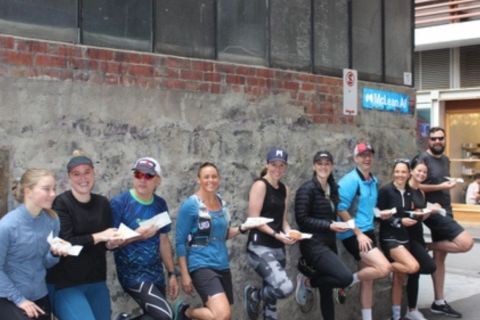

The plates that define Melbourne: what they are, where they came from, and where to eat the canonical version.
Signature dishes
-
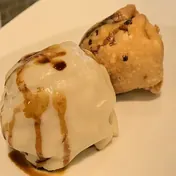
South Melbourne Dim Sim ★ 4.6
The South Melbourne dim sim has been sold at this market stall since 1949: a steamed or deep-fried version of Cantonese dim sum with pork and cabbage filling in a thick wrapper, now a statewide staple.
Where to try it: South Melbourne Dim Sim
Price: A$2-A$3 each
The dim sim was invented in Melbourne by William Chen Wing Young in the late 1940s, an Australianised reinterpretation of dim sum sized as a fist-filling steamed or fried snack rather than a delicate teahouse plate. South Melbourne Market Dim Sim opened the original stall in 1949 in the South Melbourne Market arcade and has continued the same recipe across three generations of the family. The format spread statewide through the 1950s and 1960s, becoming standard at fish-and-chip shops and milk bars across Victoria, and the South Melbourne original became a pilgrimage stop for visiting cooks and food writers.
Watch out for: Gluten, Soy, Egg
-
Hot Jam Donut ★ 4.6
American Doughnut Kitchen's hot jam donuts have been fried to order at the same Queen Victoria Market hatch since 1950: cinnamon-sugar coated, raspberry-jam filled, eaten immediately from a paper bag.
Where to try it: American Doughnut Kitchen
Price: A$1-A$2 each
American Doughnut Kitchen opened at Queen Victoria Market in 1950 in a converted bus-shaped caravan, run continuously since by the same family. The unchanged recipe is a yeast-raised dough, fried in a long oil bath, injected with raspberry jam by hand, and rolled in cinnamon sugar. Five for A$8 is the Melbourne market lunch ritual, eaten standing on the corner with greaseproof paper sticking to the cinnamon coating. The hatch has resisted franchising, expansion, and a 2020s Melbourne City Council eviction attempt, which became a citywide cause and saw the caravan saved.
Watch out for: Gluten, Dairy, Egg
-
Classic Croissant at Lune ★ 4.9
Lune Croissanterie's croissant uses a precise lamination process developed by Kate Reid from aerospace engineering: cultured butter, multiple layers and a bake that produces a shell-crisp exterior and honeycomb crumb.
Where to try it: Lune Croissanterie
Price: A$7-A$9
Kate Reid trained as a Formula One aerodynamicist for Williams F1 before stagiaring at Du Pain et des Idees in Paris and returning to Australia to open Lune in 2012, first in Elwood and then in the signature Fitzroy cube bakery in 2015. The methodology applies engineering tolerances to lamination: dough hydration measured to a percent, butter temperature monitored constantly, layer counts standardised across the team. The New York Times called Lune's croissant the finest in the world in 2016, a citation that transformed Melbourne pastry culture. The Fitzroy site still operates around a single climate-controlled glass cube where the dough is laminated in view of the queue.
Watch out for: Gluten, Dairy, Egg
Book food experiences in Melbourne


-
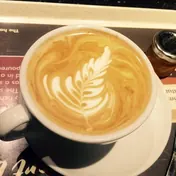
Flat White ★ 4.8
The Melbourne flat white: a double ristretto shot with 150ml of stretched whole milk, served in a small ceramic cup with no froth art and no compromise.
Where to try it: Patricia Coffee Brewers
Price: A$5-A$6
The flat white emerged in the 1980s in both Sydney and Auckland, with multiple competing origin claims. By the 1990s Melbourne had codified the format that now travels the world: a double ristretto for body, stretched (not foamed) milk at about 60 degrees Celsius, no froth dome, no latte art necessarily, served in a 160ml ceramic tulip cup. Patricia Coffee Brewers opened in 2011 behind 493-495 Little Bourke Street as a standing-room espresso bar and helped define the contemporary Melbourne idiom: short queue, fast pour, no sweetened drinks, leave fast. The cafe sources from Seven Seeds across the road.
Watch out for: Dairy
-
Beef Pho on Victoria Street ★ 4.5
Victoria Street's pho is Melbourne's central Vietnamese plate: 12-hour bone broth, rice noodles and a condiment tray of herbs, bean shoots, hoisin and chilli that every diner assembles to spec.
Where to try it: Pho Hung Vuong 2
Price: A$14-A$18
Vietnamese-Australian refugees began settling in Richmond's Victoria Street strip from the late 1970s after the fall of Saigon, transforming a declining shopping precinct into Melbourne's primary Vietnamese restaurant row by the mid-1980s. The phở format on Victoria Street is Northern-style Hanoi pho with longer, clearer broth, contrasted with the Southern-style sweeter broth that dominates Footscray. Pho Hung Vuong 2 opened in 1990 and is the rare original-generation room still operating with the founders. The herb-and-condiment tray was an Australian adaptation, with Thai basil, bean sprouts, lemon and sliced raw chilli set down with the bowl rather than at a buffet.
Watch out for: Fish (in nuoc mam), Soy (in hoisin)
-
XO King Prawn at Supernormal ★ 4.6
Supernormal's XO king prawn with XO sauce is Melbourne's most-ordered restaurant dish of the past decade: a single fat prawn in a roasted dried seafood sauce that has been on every iteration of the menu since 2014.
Where to try it: Supernormal
Price: A$29-A$34
Andrew McConnell opened Supernormal on Flinders Lane in 2014 as a pan-Asian counterpoint to his European Cumulus Inc. across the street, and the XO king prawn appeared on the opening menu. The XO sauce, named after the cognac classification because the original Hong Kong inventors thought of it as the most prestigious sauce, is a Hong Kong creation of the 1980s built around dried scallop, dried shrimp, Yunnan ham, chilli and shallot. The Supernormal version intensifies the dried-seafood reduction and balances it with sweet prawn, charred head, and rice to mop up the sauce. The dish was Eater Melbourne's number-one most-ordered restaurant dish of the late 2010s.
Watch out for: Shellfish, Fish, Soy, Gluten
-
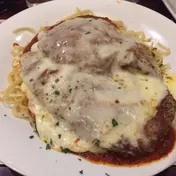
Chicken Parma ★ 4.3
The chicken parma, or parmi, is Victoria's pub staple: crumbed chicken breast, tomato sugo, leg ham and melted cheese served with chips and a pot of Carlton Draught.
Where to try it: Builders Arms Hotel
Price: A$22-A$30
The chicken parma evolved in Victorian pubs in the 1950s and 1960s as an Australian adaptation of veal parmigiana, itself a New York Italian-American invention rather than an Italian one. The shift to chicken happened in Australia for cost reasons, and the schnitzel-tomato-cheese-ham construction became standardised across Melbourne pubs by the late 1980s. The form has its own politics: the chips must be on the same plate, the ham must be quality leg ham, and Carlton Draught is the proper accompaniment. Pubs from the Builders Arms in Fitzroy to suburban beer barns compete in annual best-parma polls.
Watch out for: Gluten, Dairy, Egg
-
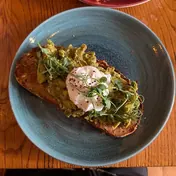
Smashed Avocado on Toast ★ 4.3
Melbourne's smashed avocado on sourdough toast became the global brunch cliche of the 2010s: the original version, popularised by Cafe Notting Hill in the mid-1990s and taken mainstream by cafes like St.
Where to try it: St. Ali
Price: A$18-A$24
Chef Bill Granger of Sydney's Bills served smashed avo on toast from 1993 and many sources credit him with the genesis, though Melbourne cafes including Stepping Stone Cafe were running similar plates the same year. By the early 2000s the format had become standardised across the Melbourne cafe scene, with St. Ali in South Melbourne and Auction Rooms in North Melbourne setting the modern template: thick-cut sourdough, fork-mashed avocado seasoned with lemon, sea salt, chilli and good olive oil, often topped with feta, dukkah or poached egg. The dish briefly became a global culture-war flashpoint when an Australian property executive blamed it for millennials being unable to buy houses.
Watch out for: Gluten, Dairy (if served with feta), Sesame (if served with dukkah)
-
Za'atar Manakish at A1 Bakery ★ 4.5
A1 Bakery's za'atar manakish from the wood-fired oven is the best A$5 meal in Brunswick: fresh thyme and sesame blend baked into Lebanese flatbread and handed across the counter at 6am to a line of Sydney Road regulars.
Where to try it: A1 Bakery
Price: A$4-A$6
Lebanese-Australian families settled along the Sydney Road strip in Brunswick and Coburg from the late 1950s onward, with the heaviest migration following the Lebanese civil war from 1975. A1 Bakery was founded by Mark Khoder in 1992 on Sydney Road in Brunswick and built around a single saj-style wood-fired oven for fresh Lebanese flatbreads. The za'atar manakish became the Brunswick breakfast standard: thyme, sumac, sesame and salt blended with olive oil into a wet paste, spread on raw flatbread and baked for 90 seconds until the bread blisters and the herb oil pools. The format has not changed in 30 years; queues form at 7am.
Watch out for: Gluten, Sesame
-
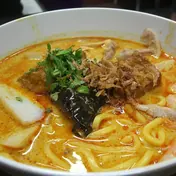
Curry Laksa at Laksa King ★ 4.7
Laksa King's curry laksa in Flemington is the city's reference version: a rich coconut and lemongrass broth loaded with tofu puffs, chicken, noodles and sambal from a Malaysian canteen running since 1998.
Where to try it: Laksa King
Price: A$15-A$20
Laksa King opened on Racecourse Road in Flemington in 1998 as a Malaysian-Chinese canteen catering to the growing Southeast Asian population around Footscray and the western suburbs. The curry laksa, the Penang and Kuala Lumpur cousin of Singaporean katong laksa, is built on a heavily spiced rempah paste of dried chilli, candlenut, lemongrass, galangal and belacan, finished with coconut milk and ladled over a mix of rice and egg noodles. The Laksa King version is heavier on the seafood-belacan funk than most Melbourne competitors and made the dish a citywide pilgrimage from the early 2010s. Travel guides routinely call it Australia's best laksa.
Watch out for: Shellfish, Soy, Gluten, Egg
-
Pork Banh Mi at Phuoc Thanh ★ 4.6
Footscray's banh mi is Melbourne's other Vietnamese sandwich: a baguette stuffed with pate, sliced cold roast pork, pickled daikon and carrot, cucumber, coriander and chilli, eaten on the kerb outside Phuoc Thanh.
Where to try it: Phuoc Thanh, Footscray Market
Price: A$7-A$10
Banh mi arrived in Melbourne with the post-1975 Vietnamese refugee wave and rooted in the western suburbs around Footscray and Richmond. Phuoc Thanh on Hopkins Street in Footscray is the city's longest-running banh mi specialist, operating from the late 1980s as a counter-service bakery turning out the sandwich at A$7 a piece. The Melbourne format is distinctly Southern Vietnamese: a soft-rice-flour Vietnamese-style baguette, slightly shorter and crispier than a French loaf, packed with cold cuts (gio cha pork roll, sliced char siu, pate), pickled carrot-daikon do chua, cucumber spears, coriander and chilli sauce. Lines run down Hopkins Street at peak Saturday lunch.
Watch out for: Gluten, Soy, Egg (in mayo)
-
Squid Ink Tagliolini at Tipo 00 ★ 4.7
Tipo 00's squid ink tagliolini with garlic, chilli and white wine is Melbourne's defining pasta dish of the past decade: hand-cut black noodles in a glossy bottarga-flecked emulsion, finished with lemon zest.
Where to try it: Tipo 00
Price: A$32-A$38
Tipo 00 opened on Little Bourke Street in 2014 under chef Andreas Papadakis (ex-The Square London), Alberto Fava and Luca Sbardella, the name a reference to the finest grade of Italian pasta flour. The squid ink tagliolini, on the opening menu in 2014, became the room's defining dish: hand-rolled tagliolini coloured with cuttlefish ink, sauced minimally with extra virgin olive oil, garlic, chilli and white wine, and finished with grated bottarga and a fine zest of lemon. The plate was on most Melbourne best-pasta lists by 2016. Tipo 00 opened a Carlton sibling, and the squid ink dish remains the single most-ordered Italian pasta in the city.
Watch out for: Gluten, Egg, Shellfish (squid ink, bottarga), Fish
Signature Dishes in Melbourne, FAQ
What food is Melbourne known for?
Melbourne's signature dishes include South Melbourne Dim Sim, Hot Jam Donut, Classic Croissant at Lune, Flat White, Beef Pho on Victoria Street. See our signature dishes chapter for where to eat each.