How Brisbane came to eat the way it does: the people, migrations and accidents that shaped the plate.
Key eras
Indigenous Foodways (pre-1824)
The Turrbal and Jagera peoples are the traditional custodians of the Brisbane River and its waterways. Their food culture combined coastal seafood (oysters, mud crab, fish from the bay), freshwater fishing and bush foods including macadamia nuts, native lemon myrtle, finger lime and Davidson plum, all of which now appear on Brisbane fine-dining menus.
Convict and Colonial Era (1824-1900)
Brisbane was founded as the Moreton Bay convict colony in 1824. Early food was rationed flour, meat and basic preserves. After convict transportation ended in 1842, free settlers arrived; subtropical agriculture (sugarcane, pineapple, banana) developed in the Brisbane River valley and bayside, defining a Queensland larder that prioritised tropical fruits.
Italian and Greek Postwar Migration (1950s-1970s)
Italian and Greek migrants arrived in Brisbane in large numbers after WWII, settling in New Farm, Fortitude Valley and West End. Italian deli culture and espresso machines appeared on Brunswick Street, while Greek tavernas opened in South Brisbane. Paniyiri Greek Festival, running since 1976, dates from this period and remains Australia's largest Greek festival.
Vietnamese Refugee Migration to Inala (1975-1995)
Vietnamese refugees arrived in Brisbane post-1975 in large numbers, settling in Inala and Darra. The first Vietnamese bakeries opened in Inala in the late 1970s; banh mi sandwiches, pho and rice paper rolls entered Brisbane mainstream culture. Sunnybank emerged as the Chinese-Vietnamese precinct in the 1990s, anchored by Sunnybank Market Square.
Wood-Fire Mod-Oz and Native Ingredients (2010s-present)
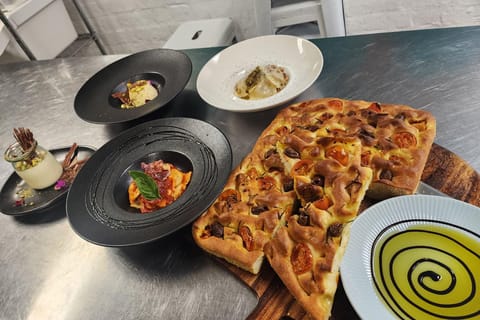
Brisbane's modern fine-dining era is defined by wood-fire cooking, native Australian ingredients and a hatted-restaurant boom led by Agnes, Joy, Restaurant Dan Arnold and Hôntô. Howard Smith Wharves opened in 2018 as a riverside food precinct, and James Street in Fortitude Valley emerged as Brisbane's pre-eminent dining precinct.
Immigrant influences
- {'slug': 'italian-influence-brisbane', 'name': 'Italian: New Farm and Brunswick Street', 'description': 'Italian migrants of the 1950s and 1960s settled in New Farm and along Brunswick Street, opening delis, espresso bars and pasta restaurants. Bar Alto at the Powerhouse and Bianca at James Street trace lineage to this wave; Festa Italiana at New Farm Park each September honours the community.', 'verified': {'source_url': 'https://www.museumofbrisbane.com.au/whats-on/post-war-migration/', 'address_quoted': 'New Farm Brisbane Italian community', 'open_status': 'open', 'open_evidence_url': 'https://festaitaliana.com.au/', 'cuisine_evidence_url': 'https://www.weekendnotes.com/brisbane/italian-restaurants-brisbane/', 'checked_on': '2026-06-02'}}
- {'slug': 'greek-influence-brisbane', 'name': 'Greek: West End and South Brisbane', 'description': "Greek migrants from the 1950s settled in West End and South Brisbane, opening tavernas, cafes and the Brisbane Greek Club. Hellenika at The Calile Hotel runs Brisbane's most-celebrated modern Greek dining room; Paniyiri Greek Festival at Musgrave Park each May is Australia's largest Greek festival.", 'verified': {'source_url': 'https://paniyiri.com/', 'address_quoted': 'West End Brisbane Greek community', 'open_status': 'open', 'open_evidence_url': 'https://greekclub.com.au/', 'cuisine_evidence_url': 'https://blog.brisbane-times.com/eat/best-greek-restaurants-brisbane', 'checked_on': '2026-06-02'}}
- {'slug': 'vietnamese-influence-brisbane', 'name': 'Vietnamese: Inala and Sunnybank', 'description': "Vietnamese refugees arrived in Brisbane from 1975, settling in Inala and Darra. Yen's banh mi counter, Ben Thanh on Wickham Street and Hello Please on Fish Lane all trace lineage to this wave. Sunnybank's Vietnamese precinct hosts dozens of pho counters across multiple shopping centres.", 'verified': {'source_url': 'https://www.museumofbrisbane.com.au/whats-on/inala-stories/', 'address_quoted': 'Inala Brisbane Vietnamese', 'open_status': 'open', 'open_evidence_url': 'https://www.mustdobrisbane.com/eat-drink/best-vietnamese-restaurants-brisbane', 'cuisine_evidence_url': 'https://www.foodwinetravel.com.au/food/dining-out/vietnamese-food-guide/', 'checked_on': '2026-06-02'}}
- {'slug': 'chinese-influence-brisbane', 'name': 'Chinese: Fortitude Valley Chinatown and Sunnybank', 'description': 'Chinese migrants from the late 19th century clustered in Fortitude Valley Chinatown, anchored by Wickham Street. The 1980s-1990s wave from Hong Kong, mainland China and Malaysia expanded the Chinese precinct south to Sunnybank. King of Kings on Wickham, Stanley at Howard Smith Wharves and Donna Chang on George Street are anchors.', 'verified': {'source_url': 'https://www.qhatlas.com.au/content/chinese-migration-queensland', 'address_quoted': 'Fortitude Valley Brisbane Chinatown', 'open_status': 'open', 'open_evidence_url': 'https://www.gourmettraveller.com.au/restaurant-reviews/best-yum-cha-brisbane/', 'cuisine_evidence_url': 'https://concreteplayground.com/brisbane/restaurants/best-asian-food', 'checked_on': '2026-06-02'}}
- {'slug': 'korean-influence-brisbane', 'name': 'Korean: Sunnybank and CBD', 'description': 'Korean migration to Brisbane accelerated in the 1990s and 2000s, with the community concentrated in Sunnybank and the southern suburbs. Korean barbecue, fried chicken and bibimbap restaurants line Mains Road; Sunnybank Plaza hosts a dedicated Korean food court with multiple specialist counters.', 'verified': {'source_url': 'https://www.qhatlas.com.au/content/korean-migration', 'address_quoted': 'Sunnybank Korean community Brisbane', 'open_status': 'open', 'open_evidence_url': 'https://www.theurbanlist.com/brisbane/a-list/best-korean-restaurants-brisbane', 'cuisine_evidence_url': 'https://www.broadsheet.com.au/brisbane/sunnybank/guides/best-asian-food', 'checked_on': '2026-06-02'}}
Signature innovations
- {'slug': 'lamington-invention', 'name': 'Lamington (Brisbane, c. 1900)', 'description': "The lamington was reportedly invented in Brisbane in 1900 at Queensland Government House during Lord Lamington's term as Queensland Governor. The chef devised the recipe to use leftover sponge cake; chocolate-dipped, coconut-rolled cubes spread statewide and became a national emblem of Australian baking.", 'verified': {'source_url': 'https://www.qhatlas.com.au/content/lamington', 'address_quoted': 'Lamington invention Brisbane 1900', 'open_status': 'open', 'open_evidence_url': 'https://www.foodwinetravel.com.au/food/dining-out/best-lamingtons-brisbane/', 'cuisine_evidence_url': 'https://www.gourmettraveller.com.au/restaurant-reviews/best-lamingtons-brisbane/', 'checked_on': '2026-06-02'}}
- {'slug': 'moreton-bay-bug-cuisine', 'name': 'Moreton Bay Bug on Fine Dining', 'description': 'Moreton Bay bug (Thenus orientalis), the sweet slipper-lobster fished from the bay east of Brisbane, became a Queensland fine-dining identifier from the 1970s seafood-restaurant boom. Today every serious Brisbane fine-dining menu features halved and grilled bugs as a signature plate.', 'verified': {'source_url': 'https://www.daf.qld.gov.au/business-priorities/fisheries/sustainable/commercial/east-coast/moreton-bay-bugs', 'address_quoted': 'Moreton Bay bug Queensland fishery', 'open_status': 'open', 'open_evidence_url': 'https://www.firsttable.com.au/brisbane/best-seafood-brisbane', 'cuisine_evidence_url': 'https://www.firsttable.com.au/brisbane/best-seafood-restaurants', 'checked_on': '2026-06-02'}}
- {'slug': 'finger-lime-native-ingredients', 'name': 'Finger Lime and Native Ingredient Cuisine', 'description': "Brisbane fine-dining adopted finger lime (Citrus australasica) early in the 2000s native ingredient movement. South East Queensland orchards in the Granite Belt grow the bulk of Australian finger limes; chefs at Agnes, Joy and e'cco bistro use the pearl-like beads on oyster, kingfish ceviche and dessert.", 'verified': {'source_url': 'https://www.daf.qld.gov.au/business-priorities/agriculture/plants/fruit-vegetable/fruit-vegetable-crops/finger-limes', 'address_quoted': 'Finger lime Queensland', 'open_status': 'open', 'open_evidence_url': 'https://www.theurbanlist.com/brisbane/a-list/native-australian-ingredients', 'cuisine_evidence_url': 'https://www.timeout.com/brisbane/restaurants/native-australian-ingredients-brisbane', 'checked_on': '2026-06-02'}}
- {'slug': 'wood-fire-cooking-agnes', 'name': 'Wood-Fire Cooking at Agnes', 'description': 'Agnes restaurant opened on Agnes Street, Fortitude Valley in 2020 cooking every plate over Queensland wood. No gas, no electricity in the kitchen; ironbark, apple wood, cherry and olive feed the open hearths. Agnes set a Brisbane wood-fire standard that subsequent rooms (Same Same, Hôntô, Same Same Wine) have followed.', 'verified': {'source_url': 'https://www.agnesrestaurant.com.au/', 'address_quoted': 'Agnes Restaurant Fortitude Valley', 'open_status': 'open', 'open_evidence_url': 'https://www.bestrestaurants.com.au/qld/brisbane/restaurant/agnes-new-menu-may-2026', 'cuisine_evidence_url': 'https://www.theworlds50best.com/discovery/Establishments/Australia/Brisbane/Agnes.html', 'checked_on': '2026-06-02'}}
- {'slug': 'howard-smith-wharves-precinct', 'name': 'Howard Smith Wharves Precinct (2018)', 'description': "Howard Smith Wharves opened in 2018 as a derelict-warehouse-to-precinct riverside food development under the Story Bridge. The complex hosts Felons Brewing Co., Stanley, Greca, Ciao Papi, Burleigh Brewing and Mr Percival's. It is now Brisbane's most-visited riverside dining destination.", 'verified': {'source_url': 'https://howardsmithwharves.com/', 'address_quoted': 'Howard Smith Wharves Brisbane', 'open_status': 'open', 'open_evidence_url': 'https://www.broadsheet.com.au/brisbane/guides/howard-smith-wharves', 'cuisine_evidence_url': 'https://www.agfg.com.au/restaurant/howard-smith-wharves-guide', 'checked_on': '2026-06-02'}}