

The plates that define Oklahoma City: what they are, where they came from, and where to eat the canonical version.
Signature dishes
-
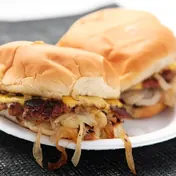
Oklahoma onion burger ★ 4.8
A beef patty pressed onto shredded onions on an Oklahoma City flat-top griddle, caramelizing into a salty, sweet crust that defines Depression-era ingenuity.
Where to try it: Tucker's Onion Burgers
Price: $6-$10
The Oklahoma onion burger dates to the 1920s, when short-order cooks in western Oklahoma pressed shredded onions into thin beef patties on a flat-top griddle to stretch ground beef during hard times. The technique gained wide recognition in El Reno, where diners codified the style: onions smashed into raw beef so they caramelize into the meat. Tucker's Onion Burgers brought that tradition to OKC, preserving the flat-top method. El Reno hosts an annual onion burger festival, and Tucker's keeps the style alive with thin patties, American cheese, and a soft white bun.
Watch out for: Gluten, Dairy
-
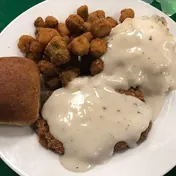
Chicken-fried steak ★ 4.6
Tenderized beef dredged in seasoned flour and fried golden, topped with peppery cream gravy at Oklahoma City diners, part of the state meal since 1988.
Where to try it: Cattlemen's Steakhouse
Price: $14-$22
Chicken-fried steak arrived in Oklahoma via Central European immigrants who adapted their tradition of breaded schnitzel to the affordable beef available on the Southern Plains. By the early 20th century it was a staple at diners across the state. Cattlemen's Steakhouse in Stockyards City has served it since 1910. In 1988 the Oklahoma Legislature made chicken-fried steak part of the official state meal. The cream gravy, built on pan drippings, flour, and whole milk, has been passed down largely unchanged, and the dish remains the most ordered item at Oklahoma City diners.
Watch out for: Gluten, Dairy, Eggs
-
Oklahoma-style BBQ brisket ★ 4.3
Slow-smoked beef brisket with a black pepper and garlic dry rub, finished over native pecan or hickory wood at Oklahoma City pitmasters across the metro.
Where to try it: The Jones Assembly
Price: $16-$26
Oklahoma barbecue bridges several regional traditions: the smoke-heavy beef focus of Texas, the hickory-wood sweetness of Kansas City, and a Native American tradition of slow-cooking over open fire. Oklahoma pitmasters favor a dry rub of black pepper, garlic, and paprika on whole briskets smoked 12 to 16 hours over pecan or hickory wood, both native to eastern Oklahoma. Sauce, when used, runs toward a tomato and molasses base less sweet than Kansas City versions. OKC's craft barbecue scene expanded in the 2010s as dedicated smoke houses opened in Automobile Alley and the Paseo Arts District, drawing comparison to the simultaneous Austin revival.
Watch out for: None
Book food experiences in Oklahoma City
-
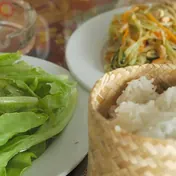
Lao papaya salad (tam mak hung) ★ 4.7
Green papaya pounded with bird's eye chili, lime, and fish sauce at Oklahoma City's Ma Der Lao Kitchen, reflecting the Lao community that arrived after 1975.
Where to try it: Ma Der Lao Kitchen
Price: $12-$16
Lao papaya salad came to OKC when Lao and Hmong refugees resettled after the Vietnam War in the late 1970s and 1980s. The Lao community established restaurants and grocery stores preserving homeland traditions. The salad is a village staple made by pounding unripe green papaya with chili, lime, fish sauce, and tomatoes in a clay mortar for a sour-spicy-salty balance. Chef Jeff Chanchaleune at Ma Der Lao Kitchen in the Plaza District received a James Beard Award nomination for his version, served with sticky rice.
Watch out for: Fish, Tree Nuts
-
Oklahoma pecan pie ★ 4.4
A custard pie loaded with native Oklahoma pecans in brown sugar and Karo filling, part of the official state meal and a staple across Oklahoma City tables.
Where to try it: Cattlemen's Steakhouse, Cheever's Cafe
Price: $6-$9
The pecan is the only major tree nut native to North America, and Oklahoma's river valleys along the Arkansas, Canadian, and Red rivers have supported wild pecan groves for thousands of years. Oklahoma typically ranks second nationally in native pecan production. Pecan pie took its modern form in the 1930s when Karo Syrup printed the recipe on its label. Oklahoma home cooks adopted the pie, adapting it with locally harvested pecans and sometimes a splash of bourbon. In 1988 the Oklahoma Legislature made pecan pie part of the official state meal alongside chicken-fried steak and black-eyed peas. In OKC the pie appears at diners and holiday tables throughout the year.
Watch out for: Gluten, Dairy, Eggs, Tree Nuts
-
Native American fry bread ★ 4.2
Pillowy fried dough made from Depression-era government rations, served as Indian tacos at Oklahoma City powwows and the annual Red Earth Festival each June.
Where to try it: The Mule
Price: $8-$14
Fry bread emerged from a painful chapter in American history: when the U.S. government relocated Native tribes to Indian Territory in the mid-19th century, rations consisted of white flour, lard, salt, and baking powder. Native cooks adapted those ingredients into deep-fried dough. For tribal nations including the Cherokee, Choctaw, Chickasaw, Creek, and Seminole, fry bread carries cultural meaning as a symbol of survival. In OKC it appears at powwows, the Red Earth Festival each June, and the State Fair as Indian tacos. Many Native Americans describe it as both a reminder of dispossession and a celebration of resilience.
Watch out for: Gluten
-

Vietnamese pho ★ 4.5
Bone broth with star anise and charred ginger, ladled over rice noodles in Oklahoma City's Asian District, a Vietnamese community landmark since 1975.
Where to try it: Grand House Asian Bistro, Saii Asian Bistro
Price: $12-$18
Vietnamese pho arrived in OKC in 1975 when the first wave of refugees resettled after the fall of Saigon; by 1980 the state's Vietnamese population exceeded 6,000. NW 23rd Street developed into the Asian District, now home to over 30 restaurants. The pho follows southern Vietnamese style with a sweeter broth and garnishes of bean sprouts, basil, lime, and hoisin. The tight-knit community has preserved techniques that drifted elsewhere: overnight bone simmering with charred onion and ginger, toasted spices, and the precise fish sauce and rock sugar balance of a great bowl.
Watch out for: Gluten, Fish
-
Steak Oscar ★ 4.5
A filet topped with crab, asparagus, and Bearnaise sauce, the signature preparation at Vast Restaurant on the Oklahoma City Devon Energy Center 49th floor.
Where to try it: Vast, Red PrimeSteak
Price: $55-$80
Steak Oscar is a Continental preparation combining tender beef, shellfish, and a butter-emulsion sauce over asparagus, rooted in late-19th century European dining. It became a staple of American steakhouse luxury menus in the mid-20th century. In Oklahoma City, Vast Restaurant made the dish a signature by serving it 49 floors above the city in the Devon Energy Center, the tallest building in Oklahoma. Vast opened in 2012 and built its Steak Oscar around hand-cut prime filet mignon, fresh crabmeat, and a classic Bearnaise from clarified butter and tarragon reduction. The tableside presentation element connects the dish to the golden era of formal American dining.
Watch out for: Dairy, Eggs, Shellfish
-
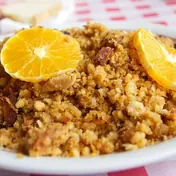
Migas and breakfast tacos ★ 4.2
Scrambled eggs with crispy corn tortilla pieces, peppers, and cheese in warm flour tortillas at Oklahoma City Latin American breakfast spots in Midtown.
Where to try it: Cafe Kacao
Price: $10-$15
Migas and breakfast tacos arrived in OKC through Mexican and Central American communities who settled from the 1980s onward, reinforced by the culinary influence of neighboring Texas. OKC's Latin American population built a food ecosystem of taco stands, panaderias, and family diners in Capitol Hill. Migas, from the Spanish word for crumbs, combines day-old corn tortillas torn and scrambled with eggs, onion, tomato, and cheese. Cafe Kacao in Midtown brought a Latin American brunch sensibility to the neighborhood, serving migas alongside other Central American breakfast dishes.
Watch out for: Gluten, Dairy, Eggs
-
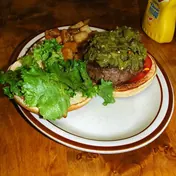
Green chile cheeseburger ★ 4.1
A beef patty topped with roasted Hatch green chiles and melted cheese at Oklahoma City burger joints, reflecting Southwestern influence along Route 66.
Where to try it: Tucker's Onion Burgers, The Mule
Price: $10-$15
The green chile cheeseburger is most strongly associated with New Mexico's Hatch Valley, which produces a celebrated crop of long green chiles roasted each August. Oklahoma City's connection to that tradition runs through Route 66, a corridor of Southwestern and Midwestern exchange that passes through OKC. In the late 20th century, green chiles appeared on OKC menus as chefs recognized how well the smoky, mildly spicy pepper complemented ground beef. The tradition grew as OKC's Hispanic population expanded, bringing knowledge of Hatch chile preparation. Fresh Hatch chiles now arrive at OKC grocers each August, and several burger restaurants carry dedicated green chile burgers year-round.
Watch out for: Gluten, Dairy
-
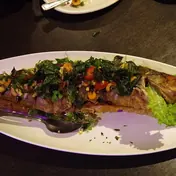
Southern fried catfish ★ 4.0
Farm-raised catfish dredged in yellow cornmeal and deep-fried, a Southern Oklahoma tradition served with hushpuppies and coleslaw at Oklahoma City's diners.
Where to try it: Cattlemen's Steakhouse, McNellie's Public House
Price: $14-$20
Catfish frying is central to southern and eastern Oklahoma's food culture, where the Red River and Canadian River tributaries have supported catfish for centuries. By the late 19th century, fried catfish was a Friday tradition across Oklahoma, spreading beyond Catholic fasting origins. Oklahoma's technique uses yellow cornmeal rather than white, deep-fried in cast-iron. Catfish farms in southeastern Oklahoma, developed in the mid-20th century, ensured year-round supply. In OKC, fried catfish appears at Southern diners and church fish fries alongside hushpuppies and coleslaw.
Watch out for: Gluten, Fish, Eggs
Signature Dishes in Oklahoma City, FAQ
What food is Oklahoma City known for?
Oklahoma City's signature dishes include Oklahoma onion burger, Chicken-fried steak, Oklahoma-style BBQ brisket, Lao papaya salad (tam mak hung), Oklahoma pecan pie. See our signature dishes chapter for where to eat each.