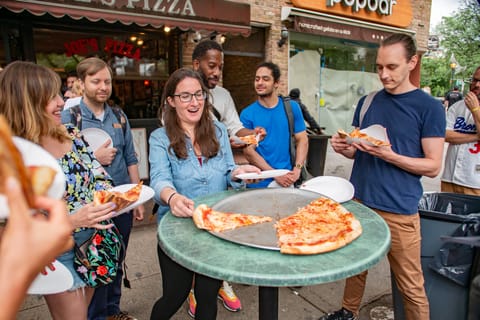
Signature dishes
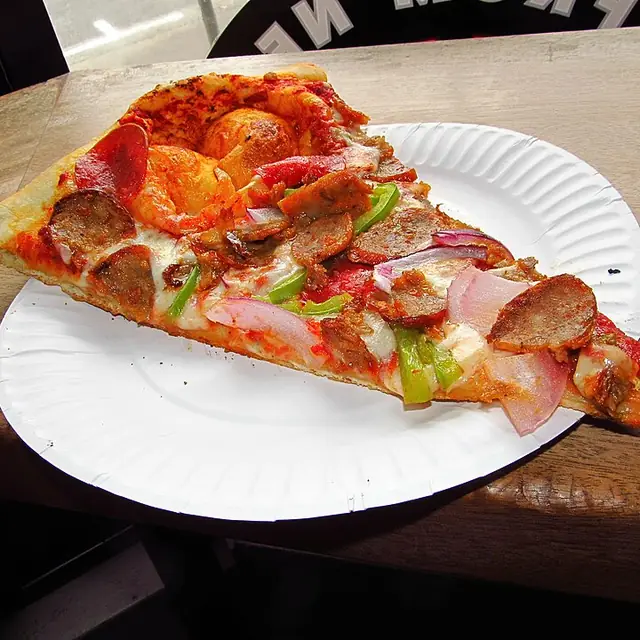
The New York slice is a wide triangle of thin-crust pizza, foldable in one hand, sold by the count. It is the city's default lunch, snack and 2am closer in New York City since the 1950s.
Where: Joe's Pizza, Lucali, Una Pizza Napoletana, Prince Street Pizza, L'Industrie Pizzeria
Price: $3-$8 per slice
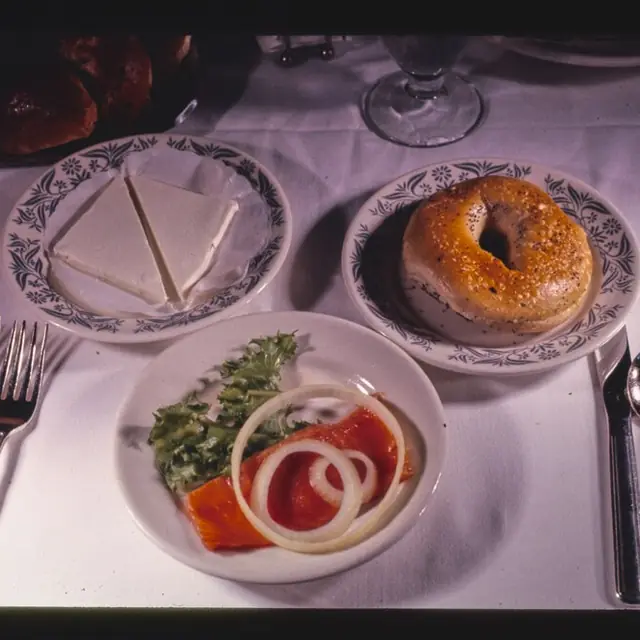
The New York bagel is dense, chewy, and boiled before it is baked, eaten the same day with a smear of cream cheese or built as a lox sandwich. A daily staple in New York City since the 1880s.
Where: Russ & Daughters, Ess-a-Bagel, Tompkins Square Bagels, Black Seed Bagels
Price: $2.50-$18 (bagel sandwich)
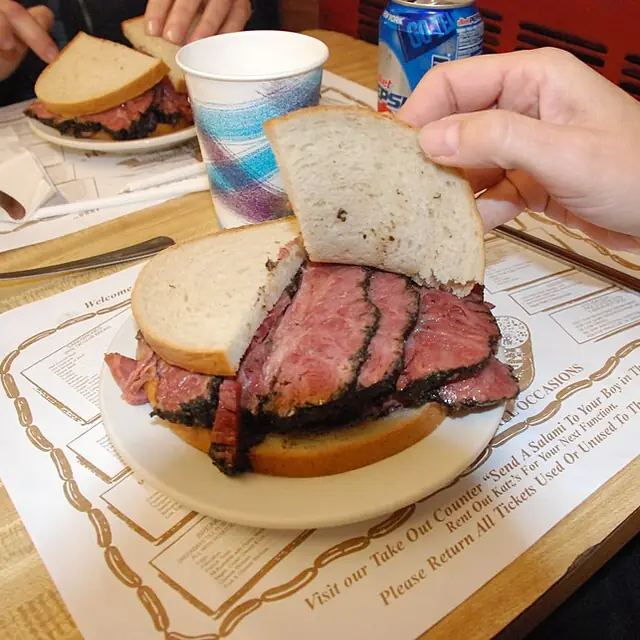
Pastrami on rye is brined navel beef, smoked, steamed and hand-sliced thick onto seeded caraway rye with yellow mustard. The defining New York City Jewish-deli sandwich, since the 1880s.
Where: Katz's Delicatessen, Pastrami Queen, Mile End Deli
Price: $23-$32
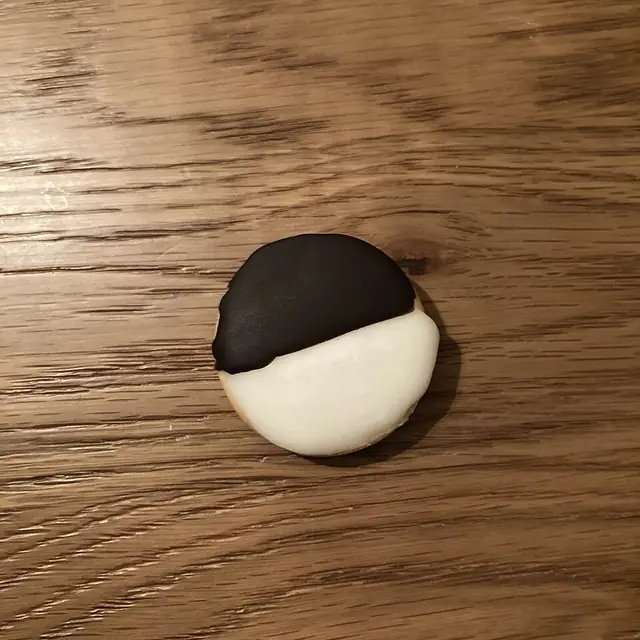
The black and white is a soft cakey disc, half lemon-vanilla fondant and half chocolate, sold by the deli register. A bakery-counter staple across New York City since the 1900s.
Where: William Greenberg Desserts, Levain Bakery, Russ & Daughters, Zabar's
Price: $3.50-$5.50
Halal cart chicken and rice is sliced grilled chicken thigh over yellow turmeric rice with lettuce, tomato, white sauce and chilli sauce. A New York City street-food default since 1990.
Where: The Halal Guys, King Souvlaki of Astoria, Sammy's Halal, 53rd & 6th cart
Price: $10-$14
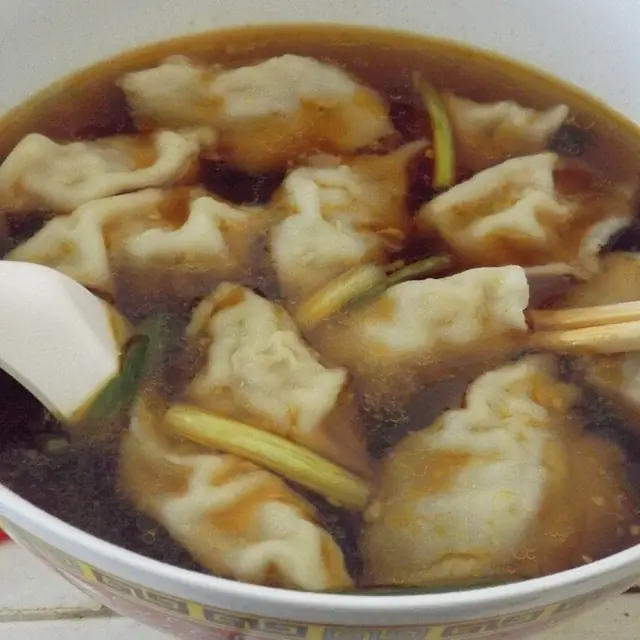
Soup dumplings (xiao long bao) are pleated pork-and-broth parcels steamed in bamboo baskets, eaten in one bite. A canonical Chinese American order in Flushing and Manhattan's Chinatown.
Where: Nan Xiang Xiao Long Bao, Joe's Shanghai, Tim Ho Wan
Price: $10-$16 per basket of 8
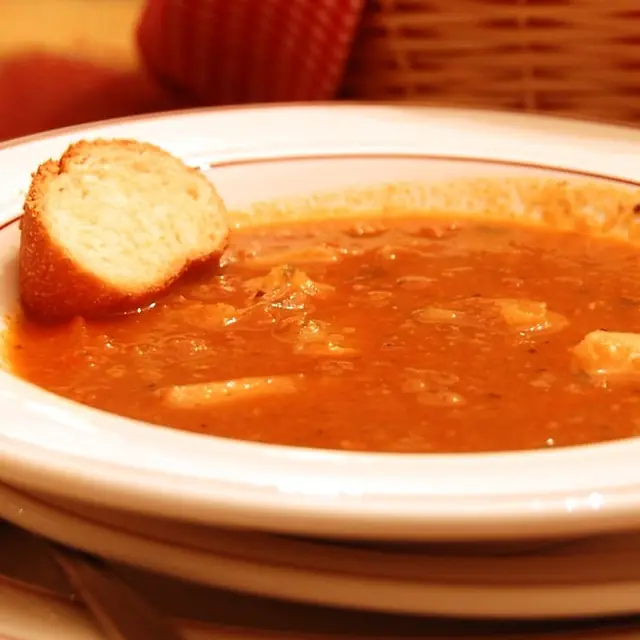
Manhattan clam chowder is a tomato-based clam broth with potato, celery and a clam-juice backbone, served at oyster bars across New York City since the 1890s.
Where: Grand Central Oyster Bar, Maison Premiere
Price: $12-$22 per bowl
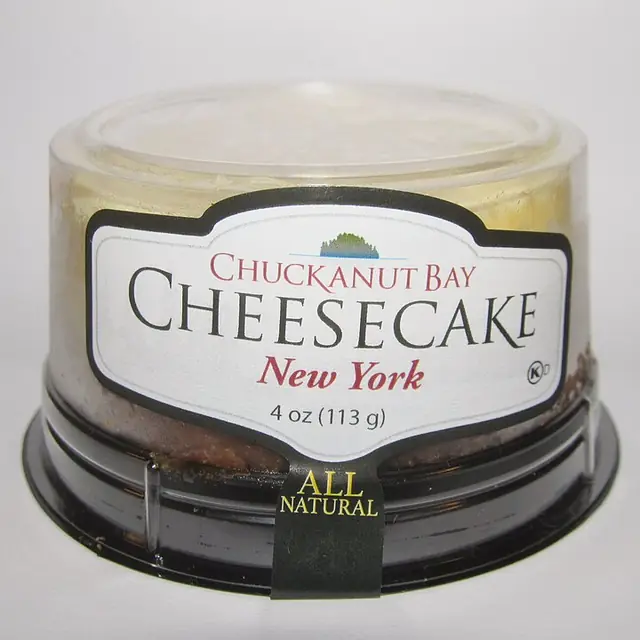
New York cheesecake is a dense, high-cream-cheese baked cake on a graham crust, served plain or with a fruit topping. A bakery-counter and steakhouse staple in New York City since the 1920s.
Where: Junior's Restaurant, Eileen's Special Cheesecake, Veniero's, S&S Cheesecake
Price: $8-$14 per slice
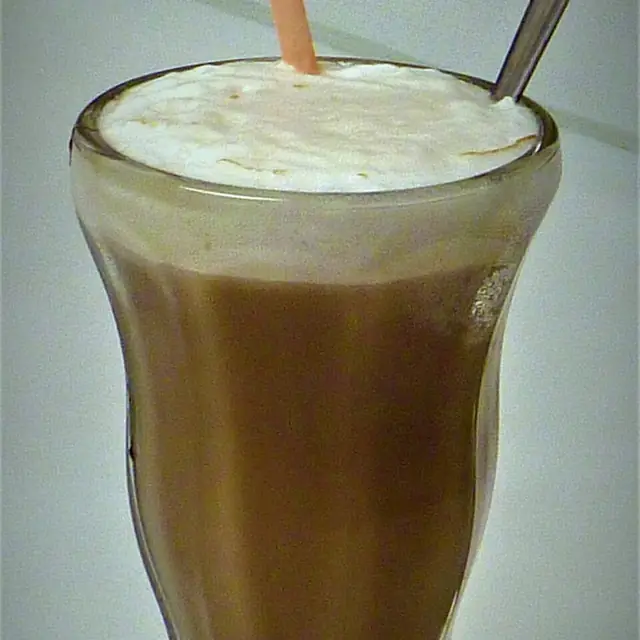
An egg cream is a soda-fountain drink of cold milk, seltzer and chocolate (or vanilla) syrup, despite containing neither egg nor cream. A New York City deli-counter classic since the 1890s.
Where: Russ & Daughters Cafe, Lexington Candy Shop, S&P Lunch
Price: $4-$6
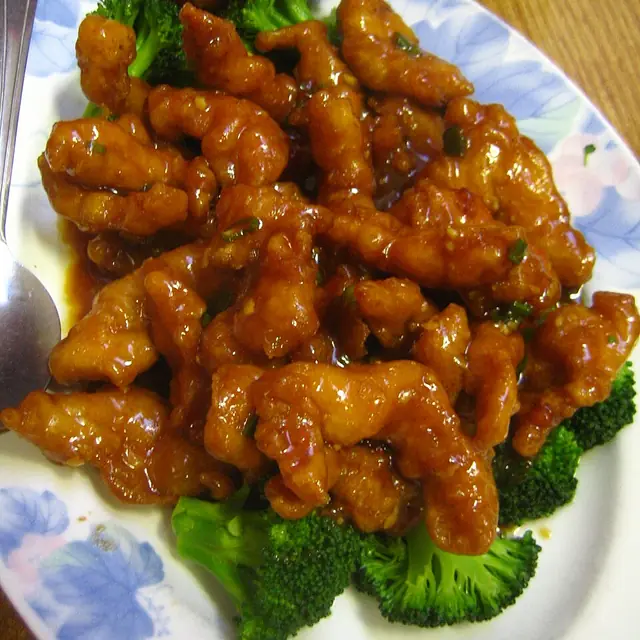
General Tso's is battered fried chicken pieces in a sweet, dark, chilli-tinged soy glaze, the Chinese American takeout default. Invented in New York City restaurants in the early 1970s.
Where: Shun Lee Palace, Hwa Yuan Szechuan, Han Dynasty, Bonnie's, Joe's Shanghai
Price: $16-$24
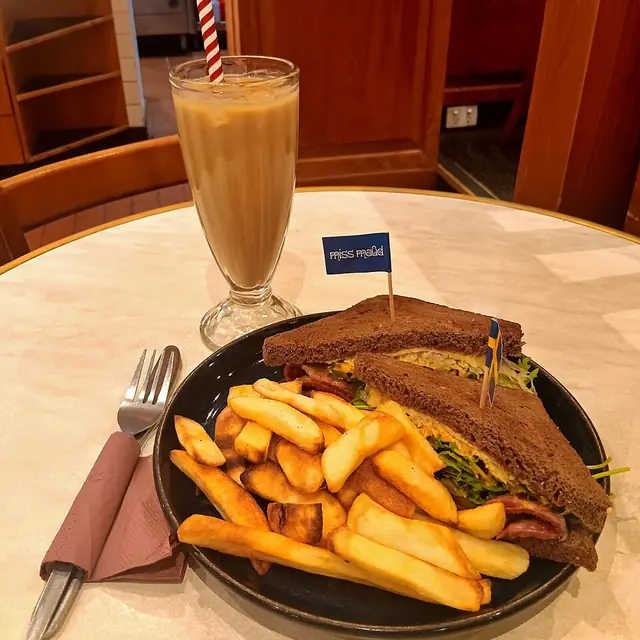
Hot grilled rye sandwich layered with thinly sliced corned beef or pastrami, sauerkraut, Swiss cheese and Russian dressing, pressed in a buttered cast-iron pan until the bread crisps and the cheese melts.
Where: Katz's Delicatessen, Pastrami Queen, Sammy's Roumanian Steakhouse
Price: $22-32
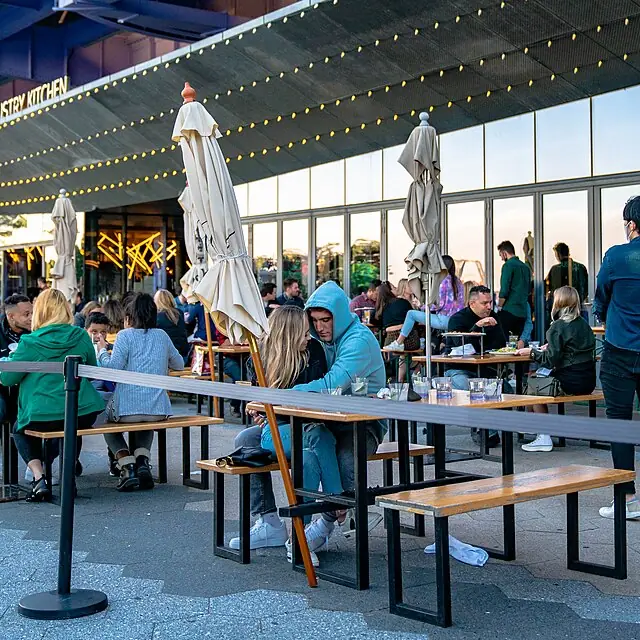
Rye whiskey, sweet vermouth and bitters stirred over ice and strained into a chilled coupe with a brandied cherry. The drink that gave the borough its name in the late 1800s; canonical NYC bar order.
Where: Katz's Delicatessen, Atomix
Price: $18-26
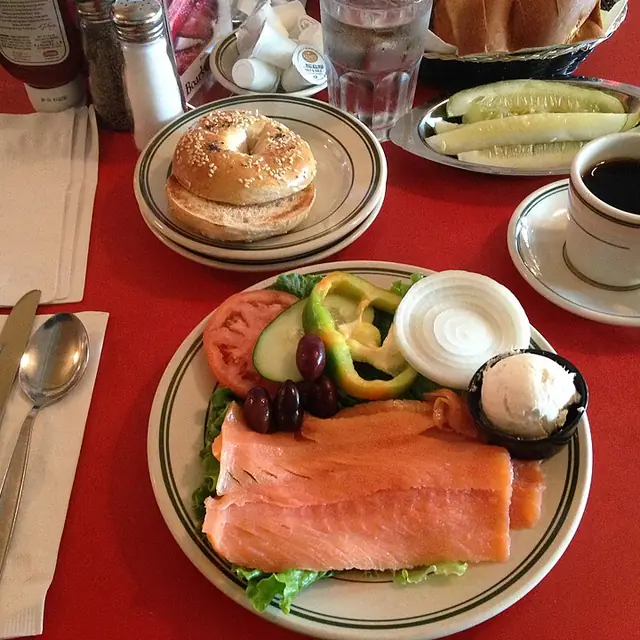
The appetizing platter is a New York Jewish-deli ritual: a hand-sliced bagel topped with cream cheese, ribboned cold-smoked salmon (lox), shaved red onion, capers and tomato. Saturday brunch in a single bite.
Where: Russ & Daughters, Russ & Daughters Cafe, Zabar's
Price: $18-32
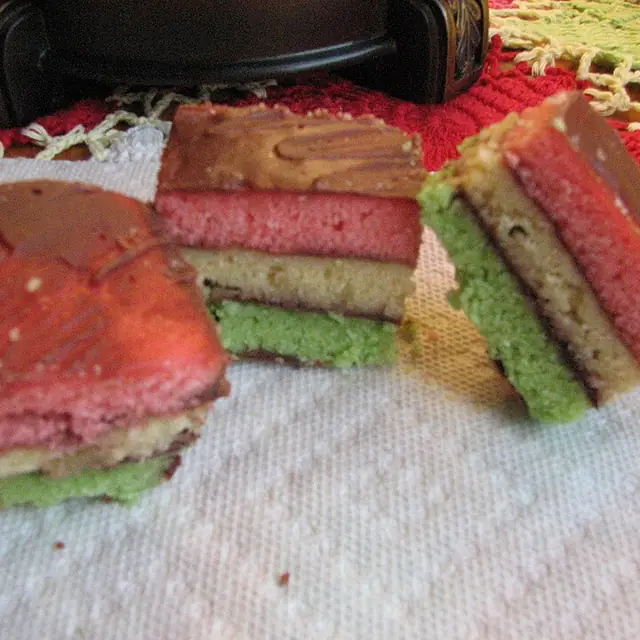
Italian rainbow cookies are three thin almond-paste sponge layers (red, green and plain), bound with raspberry and apricot jam and capped in a thin shell of dark chocolate. Cut into rectangles.
Where: Veniero's, William Greenberg Desserts, Junior's Restaurant
Price: $2-4 per piece
The Brooklyn Sicilian (or grandma) slice is square, thicker than a round slice, with a focaccia-style olive-oil-rich crust, garlicky tomato and torn mozzarella laid right onto the dough.
Where: L&B Spumoni Gardens, Best Pizza, Prince Street Pizza
Price: $3.75-5
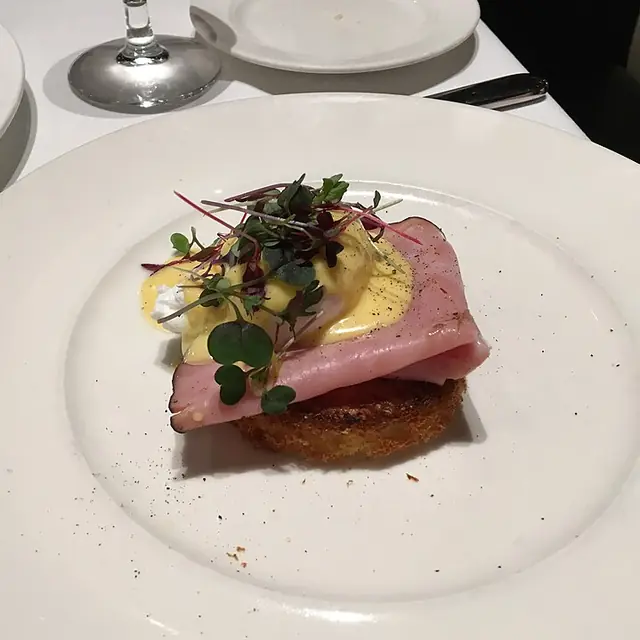
Eggs Benedict is two poached eggs and a slab of Canadian bacon on a toasted English muffin, draped in warm hollandaise. The classic New York brunch plate, invented in the city in 1894.
Where: Sadelle's, Five Leaves, Buvette
Price: $18-28
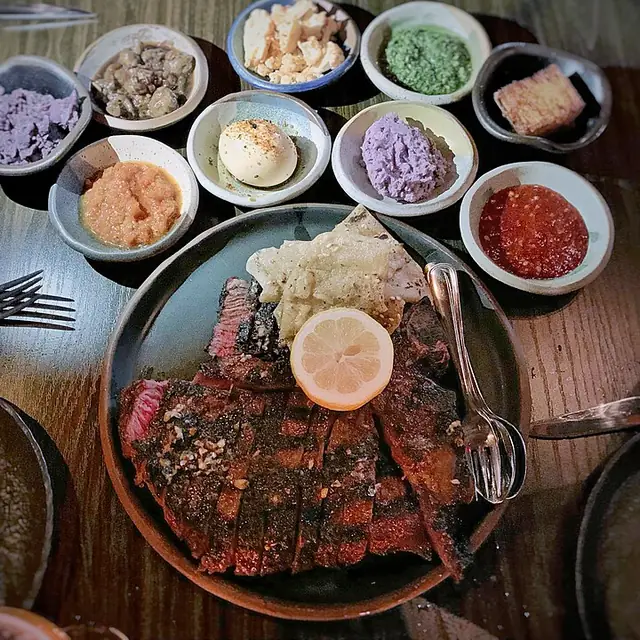
The New York porterhouse is a dry-aged T-bone with a generous tenderloin side and the broiled, butter-basted finish that Peter Luger and the city's old steakhouses canonized. Sliced and served family-style.
Where: Peter Luger Steak House, The Grill, Sammy's Roumanian Steakhouse
Price: $120-180 (for two)
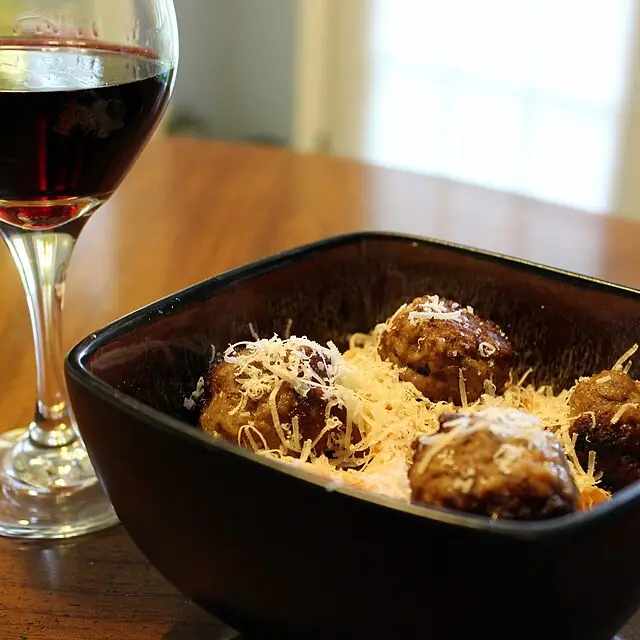
Spaghetti and meatballs is New York red-sauce Italian-American: long spaghetti coated in a long-simmered tomato sauce, topped with two large pork-and-beef meatballs and a snow of Parmesan.
Where: Carbone, Frankies 457 Spuntino, Via Carota
Price: $24-65
New York slice
The New York slice is a wide triangle of thin-crust pizza, foldable in one hand, sold by the count. It is the city's default lunch, snack and 2am closer in New York City since the 1950s.
History: The slice owes its shape to Gennaro Lombardi's coal-oven pies on Spring Street, sold by the wedge from 1905. Postwar pizzerias adopted gas ovens and a wider 18-inch pie that produced eight large slices, ideal for counter service and walk-in eating. Patsy's in East Harlem and Joe's on Carmine codified the form between the 1930s and the 1970s. By the 1980s a dollar slice circuit, anchored by 2 Bros, had set the floor price; the upper end, Lucali in Carroll Gardens and Una Pizza Napoletana on Orchard, came later. Today every borough still measures itself against the foldable plain cheese on a paper plate.
Where to try it: Joe's Pizza, Lucali, Una Pizza Napoletana, Prince Street Pizza, L'Industrie Pizzeria
Watch out for: Gluten, Dairy
New York bagel
The New York bagel is dense, chewy, and boiled before it is baked, eaten the same day with a smear of cream cheese or built as a lox sandwich. A daily staple in New York City since the 1880s.
History: Eastern European Jewish bakers, arriving in the Lower East Side in the 1880s, brought the boiled-and-baked bagel from Poland. The Bagel Bakers' Local 338, founded in 1907, kept production hand-rolled and unionised until the 1970s, when Lender's introduced a frozen industrial version. New York's surviving holdouts (H&H from 1972, Russ & Daughters' appetising counter since 1914, Ess-a-Bagel from 1976) hand-roll, boil in barley-malt water, then bake on burlap-lined boards. The everything-bagel seasoning, attributed to David Gussin at Charlie's Bagels in 1980, is the city's most-imitated bake.
Where to try it: Russ & Daughters, Ess-a-Bagel, Tompkins Square Bagels, Black Seed Bagels
Watch out for: Gluten
Pastrami on rye
Pastrami on rye is brined navel beef, smoked, steamed and hand-sliced thick onto seeded caraway rye with yellow mustard. The defining New York City Jewish-deli sandwich, since the 1880s.
History: Sussman Volk, a Lithuanian butcher on Delancey Street, is credited with serving the first pastrami sandwich in New York in 1887 after acquiring a Romanian recipe. Katz's Delicatessen, opened in 1888 on Houston Street, made the sandwich a city institution: navel cut, cured 30 days, smoked over hardwood and steamed before slicing by hand. Second Avenue Deli, founded 1954, kept the kosher-style tradition uptown. The sandwich shrank as the Yiddish-speaking Lower East Side aged out, but the surviving handful of full-process delis still cure and smoke their own meat from raw brisket.
Where to try it: Katz's Delicatessen, Pastrami Queen, Mile End Deli
Watch out for: Gluten, Mustard
Black and white cookie
The black and white is a soft cakey disc, half lemon-vanilla fondant and half chocolate, sold by the deli register. A bakery-counter staple across New York City since the 1900s.
History: Glaser's Bake Shop on Yorkville's First Avenue claimed the cookie's American origin in 1902, though Hutch's in Utica argued for earlier dates. The form (a cakey domed disc finished with two contrasting fondant glazes) became a New York-borough delicatessen standard by the 1950s, sold from the same glass-front case as charlotte russe and rugelach. Jerry Seinfeld's 1994 stand-up routine, the 'look to the cookie' bit, sealed its national identity. Glaser's closed in 2018 after 116 years; William Greenberg Desserts on Madison Avenue (since 1946) remains the canonical bake. The cookie name in Boston is 'half-moon'; in New York it stays black and white.
Where to try it: William Greenberg Desserts, Levain Bakery, Russ & Daughters, Zabar's
Watch out for: Gluten, Dairy, Eggs
Halal cart chicken and rice
Halal cart chicken and rice is sliced grilled chicken thigh over yellow turmeric rice with lettuce, tomato, white sauce and chilli sauce. A New York City street-food default since 1990.
History: The Halal Guys opened a single hot-dog cart at 53rd Street and Sixth Avenue in 1990. The three Egyptian founders (Mohamed Abouelenein, Ahmed Elsaka and Abdelbaset Elsayed) switched to halal-prepared chicken and gyro within months to serve the area's Muslim taxi drivers. The yellow rice, the chopped grilled chicken, the lettuce shred and the chilli-and-white-sauce squeeze bottles all set the template that every halal cart in the city has copied since. The original cart still operates from the same corner; the company now franchises globally, but the editorial answer remains the cart.
Where to try it: The Halal Guys, King Souvlaki of Astoria, Sammy's Halal, 53rd & 6th cart
Watch out for: Dairy
Soup dumplings
Soup dumplings (xiao long bao) are pleated pork-and-broth parcels steamed in bamboo baskets, eaten in one bite. A canonical Chinese American order in Flushing and Manhattan's Chinatown.
History: Xiao long bao left Shanghai's Nanxiang district in the 1870s and reached the United States via Taiwanese immigration in the 1980s. Joe's Shanghai, founded in Flushing in 1995 by Joe Si, popularised the dumpling among non-Chinese New Yorkers; a Manhattan-Chinatown branch on Pell Street opened in 1997. Din Tai Fung's American expansion in the 2010s set a polished comparison point, but the editorial centre of soup dumplings in New York remains the small Flushing rooms (Nan Xiang Xiao Long Bao on Prince Street, Shanghai You Garden in the New World Mall) where the wrappers are pleated to 18 folds by hand each morning.
Where to try it: Nan Xiang Xiao Long Bao, Joe's Shanghai, Tim Ho Wan
Watch out for: Gluten, Shellfish
Manhattan clam chowder
Manhattan clam chowder is a tomato-based clam broth with potato, celery and a clam-juice backbone, served at oyster bars across New York City since the 1890s.
History: The red Manhattan style emerged in late-19th-century clam shacks on Coney Island and the Rhode Island shore, attributed variously to Portuguese fishermen who added tomato to the New England base and to Italian immigrants at Brooklyn's clam houses. The dish was codified at the Grand Central Oyster Bar (since 1913) and at Sloppy Louie's in the South Street Seaport. New England chowder partisans waged a Maine state legislative campaign in 1939 to ban tomato from clam soup; New York ignored the bill and the recipe stuck. The Oyster Bar still serves a daily Manhattan and a daily New England side by side, no preference declared.
Where to try it: Grand Central Oyster Bar, Maison Premiere
Watch out for: Shellfish
New York cheesecake
New York cheesecake is a dense, high-cream-cheese baked cake on a graham crust, served plain or with a fruit topping. A bakery-counter and steakhouse staple in New York City since the 1920s.
History: Arnold Reuben (yes, the same Reuben who put a sandwich on the menu) is generally credited with the New York version, served at his East Side restaurant from 1929: a Philadelphia cream cheese base instead of farmer's cheese, baked dense, served plain. Lindy's on Broadway adopted it as a house dessert in 1932 and made it a tourist destination through the 1950s. The Junior's recipe (Junior's of Flatbush, founded 1950) became the canonical version through Brooklyn and remains in production at three Junior's locations. Steakhouse menus citywide still close on a plain wedge with a strawberry sauce on the side.
Where to try it: Junior's Restaurant, Eileen's Special Cheesecake, Veniero's, S&S Cheesecake
Watch out for: Gluten, Dairy, Eggs
Egg cream
An egg cream is a soda-fountain drink of cold milk, seltzer and chocolate (or vanilla) syrup, despite containing neither egg nor cream. A New York City deli-counter classic since the 1890s.
History: Louis Auster, a Lower East Side candy-shop owner, claimed the egg cream's invention in the 1890s, using his own chocolate syrup at his Stanton Street shop. Brooklyn's Fox's u-bet syrup, manufactured in Brownsville since 1900, became the editorial standard: a thin, dark, glossy chocolate that emulsifies cleanly with cold whole milk. The name's origin is debated (Yiddish 'echt keem,' real cream; phonetic drift from 'egg cream' as a fancy term for soda-fountain richness; or a working-class joke). What is not debated: the cold-pour technique, milk first, then seltzer hard from the siphon, then syrup whisked in last, makes the foamy white head that signals correctness.
Where to try it: Russ & Daughters Cafe, Lexington Candy Shop, S&P Lunch
Watch out for: Dairy
General Tso's chicken
General Tso's is battered fried chicken pieces in a sweet, dark, chilli-tinged soy glaze, the Chinese American takeout default. Invented in New York City restaurants in the early 1970s.
History: Chef Peng Chang-kuei, a Hunan-born refugee in Taiwan in the 1950s, devised the original General Tso's as a savoury Hunan-style dish. T.T. Wang adapted it for New York palates at Shun Lee Palace on East 55th Street in 1972, sweetening the sauce and battering the chicken in the heavy American style. Hunan-born chef Tsung Ting Wang at Hunam Restaurant followed weeks later. Within a decade the dish had displaced chop suey as the unofficial Chinese American national order. The dish is named for Zuo Zongtang, a 19th-century Qing-dynasty general from Hunan, who almost certainly never ate anything resembling it.
Where to try it: Shun Lee Palace, Hwa Yuan Szechuan, Han Dynasty, Bonnie's, Joe's Shanghai
Watch out for: Gluten, Soy, Eggs
Reuben Sandwich
Hot grilled rye sandwich layered with thinly sliced corned beef or pastrami, sauerkraut, Swiss cheese and Russian dressing, pressed in a buttered cast-iron pan until the bread crisps and the cheese melts.
History: The Reuben's origin is disputed between New York and Omaha. The New York claim credits Arnold Reuben at Reuben's Restaurant in Midtown Manhattan, who created a 'Reuben Special' around 1914, though his original used ham, turkey and coleslaw rather than the now-canonical corned beef and sauerkraut. The Omaha claim credits Reuben Kulakofsky and chef Schimmel at the Blackstone Hotel around 1925; the Blackstone version went national after winning a 1956 sandwich contest. The Midtown deli version is what survives in New York today; Katz's, Pastrami Queen and 2nd Avenue Deli all run defensible versions.
Where to try it: Katz's Delicatessen, Pastrami Queen, Sammy's Roumanian Steakhouse
Watch out for: Gluten, Dairy, Egg
Manhattan
Rye whiskey, sweet vermouth and bitters stirred over ice and strained into a chilled coupe with a brandied cherry. The drink that gave the borough its name in the late 1800s; canonical NYC bar order.
History: The Manhattan emerged at New York bars in the 1870s and 1880s, with a Manhattan Club origin story long attached to a Lady Randolph Churchill banquet (the 'Winston's mother' tale that was debunked when historians showed Lady Churchill was in England that month). The classic 2:1 rye-to-sweet-vermouth ratio with Angostura crystallised by the 1900s and the cocktail was codified in Jerry Thomas's later bartender manuals. Bemelmans Bar at the Carlyle, Death & Co and Attaboy run defensible classical versions; the brandied cherry (not maraschino) is the modern bartender's standard.
Where to try it: Katz's Delicatessen, Atomix
Watch out for: Sulphites
Lox and bagel platter
The appetizing platter is a New York Jewish-deli ritual: a hand-sliced bagel topped with cream cheese, ribboned cold-smoked salmon (lox), shaved red onion, capers and tomato. Saturday brunch in a single bite.
History: The lox bagel emerged on the Lower East Side in the early 20th century as Jewish-immigrant appetizing stores refined a way to use the briny cold-smoked salmon shipped down from the Pacific Northwest packing trade. Russ & Daughters opened in 1914 on Orchard Street and pioneered the hand-sliced, paper-thin Gaspe Nova-style cut that defines the platter. Zabar's brought the same template uptown to the Upper West Side in 1934. The appetizing tradition (dairy and smoked-fish under kosher law) made the lox-bagel-and-shmear a Saturday-morning institution that survived as a New York identity marker long after most appetizing stores closed.
Where to try it: Russ & Daughters, Russ & Daughters Cafe, Zabar's
Watch out for: Gluten, Fish, Dairy
Italian rainbow cookie
Italian rainbow cookies are three thin almond-paste sponge layers (red, green and plain), bound with raspberry and apricot jam and capped in a thin shell of dark chocolate. Cut into rectangles.
History: Italian rainbow cookies were created by Italian-American bakers in early-20th-century New York as an edible salute to the Italian tricolore flag. They became a fixture of the city's Italian bakeries (Veniero's in the East Village, opened 1894; the Italian-American pastry counters of the Lower East Side and Williamsburg). The cookies are now baked across New York Italian bakeries and bagel shops, sold by the pound from the case. Junior's and William Greenberg Desserts on the Upper East Side both keep the tradition; Williamsburg's Italian bakeries (and even Russ & Daughters' rotating cookie case) sell them.
Where to try it: Veniero's, William Greenberg Desserts, Junior's Restaurant
Watch out for: Gluten, Egg, Dairy, Nuts
Sicilian square slice
The Brooklyn Sicilian (or grandma) slice is square, thicker than a round slice, with a focaccia-style olive-oil-rich crust, garlicky tomato and torn mozzarella laid right onto the dough.
History: Square Sicilian slices arrived in New York via Sicilian immigrant bakeries in the early 20th century, evolving from the southern Italian sfincione (a thick olive-oil-and-tomato focaccia). The modern Brooklyn grandma slice (thinner, garlicky tomato, fresh mozzarella) emerged in Long Island and Brooklyn delicatessens in the 1990s as a thinner, less bready alternative to the classic Sicilian. L&B Spumoni Gardens in Gravesend (opened 1939) is the canonical destination for the upside-down Sicilian (mozzarella under the sauce, then crisp cheese edges). Best Pizza in Williamsburg and Prince Street Pizza in Nolita both run modern grandma and square slices.
Where to try it: L&B Spumoni Gardens, Best Pizza, Prince Street Pizza
Watch out for: Gluten, Dairy
Eggs Benedict
Eggs Benedict is two poached eggs and a slab of Canadian bacon on a toasted English muffin, draped in warm hollandaise. The classic New York brunch plate, invented in the city in 1894.
History: Eggs Benedict was created in New York in 1894, when stockbroker Lemuel Benedict, hungover at the Waldorf Hotel, ordered buttered toast, bacon, two poached eggs and a hooker of hollandaise; maitre d' Oscar Tschirky put it on the menu (replacing toast with English muffin and bacon with Canadian bacon). The dish became the brunch-menu canon across the city in the 1940s and 1950s. Today every Manhattan and Brooklyn brunch spot runs a version; Sadelle's in Soho, Five Leaves in Greenpoint and Buvette in the West Village all keep the form (Sadelle's plates a smoked salmon variant alongside the classic).
Where to try it: Sadelle's, Five Leaves, Buvette
Watch out for: Gluten, Egg, Dairy, Pork
Dry-aged porterhouse
The New York porterhouse is a dry-aged T-bone with a generous tenderloin side and the broiled, butter-basted finish that Peter Luger and the city's old steakhouses canonized. Sliced and served family-style.
History: The dry-aged porterhouse is the steakhouse tradition that Peter Luger (Brooklyn, opened 1887) made the city's reference plate. Luger broilers cook the steaks at 425C under salamanders, finished with a tableside butter baste and sliced for sharing. The dry-aging tradition (28 to 45 days in temperature-controlled lockers) was standardised by mid-20th-century steakhouses (Keens, Sparks, Smith and Wollensky). The Grill at the Seagram Building plates a dry-aged-strip refinement; Sammy's Roumanian Steakhouse on the Lower East Side keeps the old-Jewish-deli end of the spectrum with garlic-rubbed skirt and ribeye.
Where to try it: Peter Luger Steak House, The Grill, Sammy's Roumanian Steakhouse
Watch out for: Dairy
Spaghetti and meatballs
Spaghetti and meatballs is New York red-sauce Italian-American: long spaghetti coated in a long-simmered tomato sauce, topped with two large pork-and-beef meatballs and a snow of Parmesan.
History: Spaghetti and meatballs is an Italian-American invention codified in New York's Little Italy by southern Italian immigrants in the late 19th and early 20th centuries (Italy itself never plated it; it is a New World creation). The cheap-protein meatball plate became the staple of red-sauce restaurants across Manhattan and Brooklyn (Rao's in East Harlem, founded 1896; Patsy's in Midtown; Frankies 457 Spuntino in Carroll Gardens). Carbone in Greenwich Village (opened 2013) repositioned it as a fine-dining set piece with $30 meatballs and a tableside ricotta finish. Via Carota plates a refined Tuscan-leaning version. The canonical New York Italian-American comfort plate.
Where to try it: Carbone, Frankies 457 Spuntino, Via Carota
Watch out for: Gluten, Egg, Dairy, Pork