Signature dishes
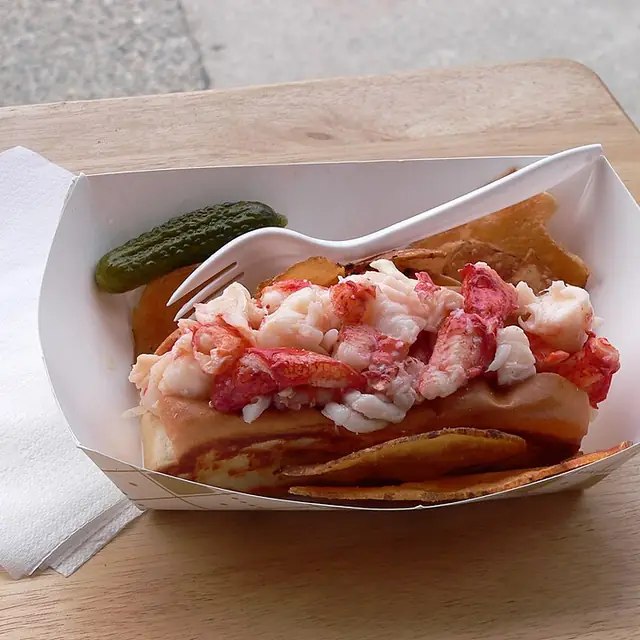
The Boston lobster roll is fresh-picked Gulf of Maine lobster meat tossed warm with drawn butter or cold with mayonnaise, served in a buttered top-split bun.
Where: Neptune Oyster, Pauli's, James Hook & Co, Row 34, Saltie Girl
Price: $28-$65
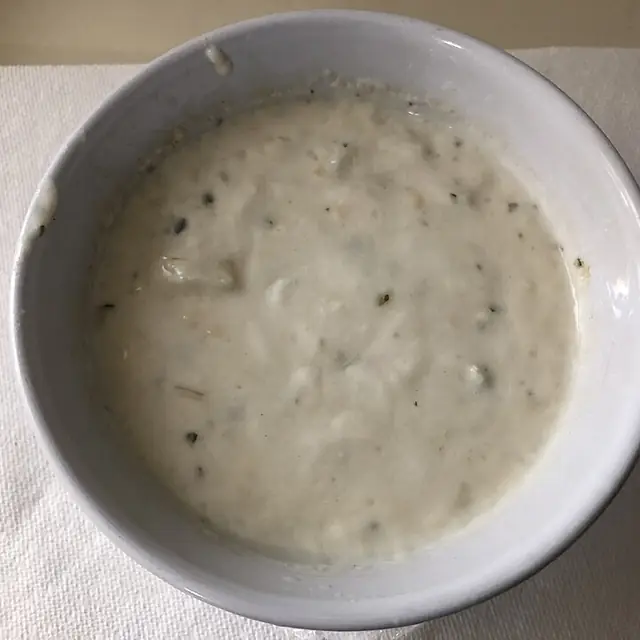
New England clam chowder is a thick cream-and-potato soup with chopped quahog clams and salt pork, served with oyster crackers. The city's signature cold-weather soup in Boston since the 1700s.
Where: Union Oyster House, Legal Sea Foods Long Wharf, Neptune Oyster, James Hook & Co
Price: $8-$15
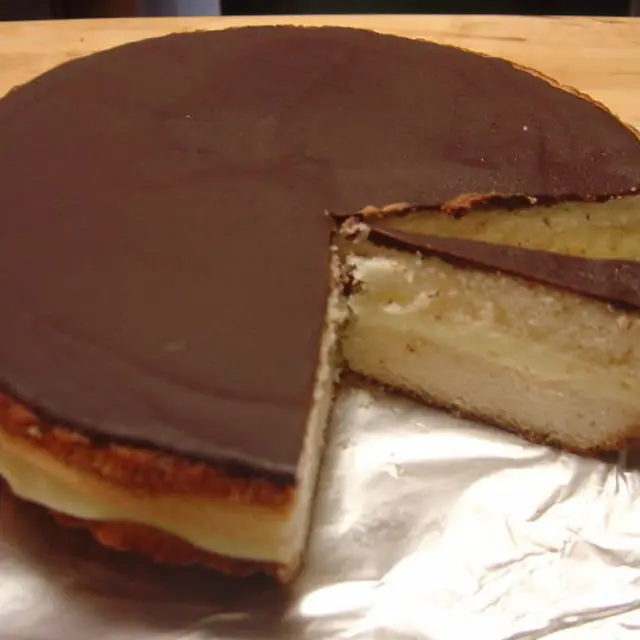
Boston cream pie is two layers of sponge cake filled with thick pastry cream and topped with chocolate ganache. Massachusetts's official state dessert since 1996, invented at the Parker House Hotel in 1856.
Where: Modern Pastry, Mike's Pastry, Flour Bakery, Tatte Bakery & Cafe
Price: $7-$12 per slice
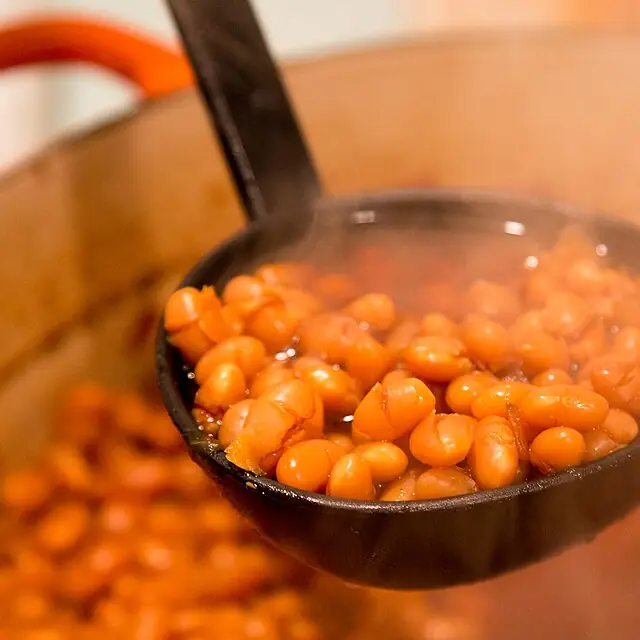
Boston baked beans are navy beans slow-cooked overnight with salt pork, molasses, brown sugar, mustard and onion. The dish that gave Boston the Beantown nickname and ran the Saturday-night Puritan table since the 1600s.
Where: Union Oyster House, Legal Sea Foods Long Wharf
Price: $6-$10
The North End cannoli is a Sicilian-style fried pastry tube filled to order with sweetened ricotta cheese and dusted with powdered sugar or chocolate. The defining Italian-American pastry in Boston since the 1920s.
Where: Mike's Pastry, Modern Pastry
Price: $5-$7 each
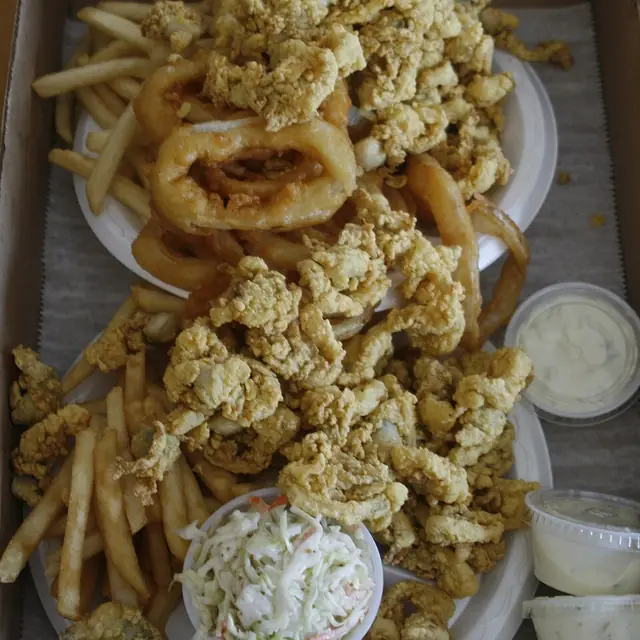
Whole soft-shell clams, dipped in evaporated milk and corn flour and deep-fried until golden. Invented at Woodman's of Essex on the North Shore in 1916, a New England summer-shack staple in Boston ever since.
Where: Neptune Oyster, Union Oyster House, Legal Sea Foods Long Wharf, Pauli's
Price: $22-$32
New England oysters are wild and farmed bivalves from Wellfleet on Cape Cod, Duxbury Bay south of Boston and Damariscotta in Maine. The signature raw-bar plate at Boston seafood rooms since the 1820s.
Where: Neptune Oyster, Row 34, Union Oyster House, Saltie Girl
Price: $3.50-$4.50 each
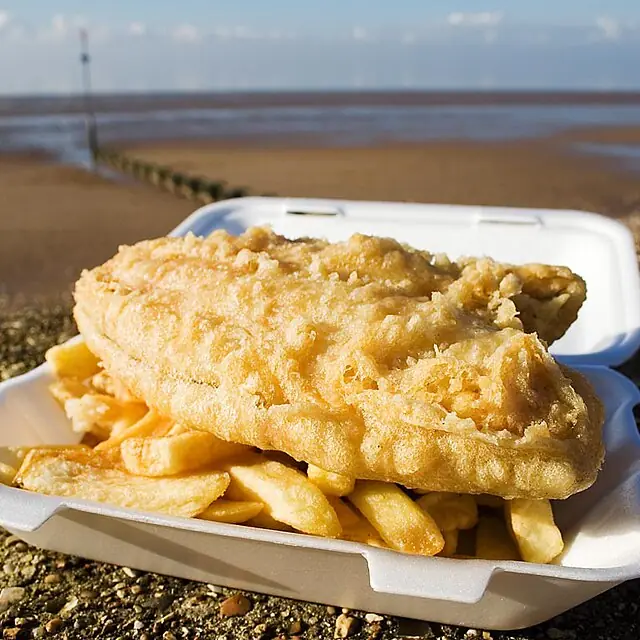
New England fish and chips is beer-battered or breadcrumbed haddock or cod, deep-fried until crisp, served with thick-cut fries and tartar sauce. The Friday-night Catholic-Irish staple in Boston since the 1880s.
Where: Union Oyster House, Legal Sea Foods Long Wharf, South End Buttery, James Hook & Co
Price: $22-$30
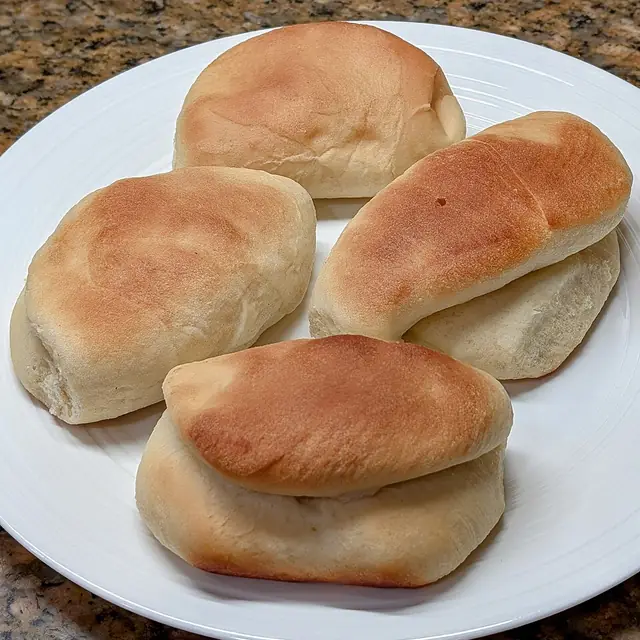
Parker House rolls are soft, buttery yeast rolls folded into a half-moon shape and baked golden. Invented at the Parker House Hotel on School Street in Boston in the 1870s; a staple of New England Thanksgiving tables.
Where: Flour Bakery, Modern Pastry, Union Oyster House
Price: $2.50-$4 each
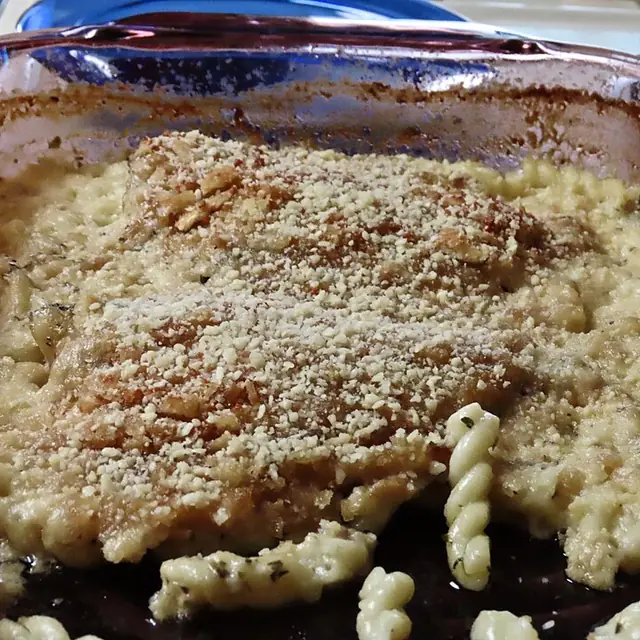
Scrod is a young Atlantic cod or haddock, typically under 2.5 pounds, broiled with breadcrumbs and lemon butter. The defining Boston seafood-room weeknight order from the 1920s through the 1980s.
Where: Union Oyster House, Legal Sea Foods Long Wharf
Price: $24-$32
Boston's regional sandwich obsession: thin-sliced rare roast beef on a sesame onion roll, lavished with BBQ sauce, mayonnaise, and American cheese (the famous 3-Way).
Where: Pauli's, James Hook & Co, Saltie Girl, Anna's Taqueria
Price: $11-16
South Shore bar-style pizza: thin crust crisped in butter or oil to a deep golden bottom in a 10-inch round pan, topped with slightly sweet sauce, edge-to-edge cheese, and a caramelized cheese ring at the rim.
Where: Santarpio's Pizza
Price: $10-16 per pizza
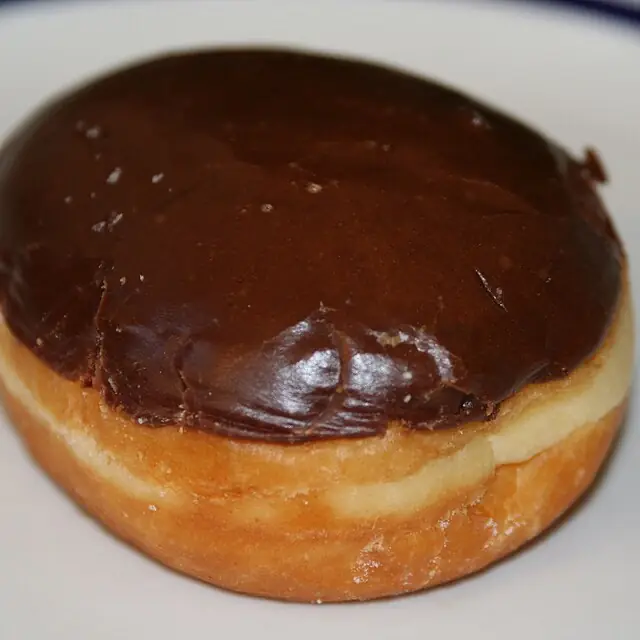
Yeast-raised doughnut split and filled with vanilla pastry cream, then dipped in dark chocolate glaze. The official doughnut of Massachusetts since 2003. Eaten in three bites, ideally with black coffee at a counter.
Where: Mike's Pastry, Modern Pastry, Flour Bakery, Tatte Bakery & Cafe, Iggy's Bread, Sofra Bakery & Cafe
Price: $3 to $5
Fresh North Atlantic haddock fillet dipped in beer batter and fried to a shatteringly crisp golden shell, served with thick steak-cut chips, malt vinegar, mushy peas and tartare. The Boston Irish-pub default.
Where: Union Oyster House, Legal Sea Foods Long Wharf, Neptune Oyster, Row 34, James Hook & Co, Saltie Girl
Price: $24 to $36
Lobster roll
The Boston lobster roll is fresh-picked Gulf of Maine lobster meat tossed warm with drawn butter or cold with mayonnaise, served in a buttered top-split bun.
History: The lobster roll is credited to Perry's restaurant in Milford, Connecticut, where Harry Perry sold a hot-buttered lobster sandwich to a regular trucker around 1929. The Maine version, cold lobster bound with mayonnaise on a buttered top-split bun, became the New England standard by the 1950s. Boston adopted both schools: Neptune Oyster on Salem Street built its reputation on a hot-buttered roll heavy with full-claw and tail meat. Pauli's on Salem rolls the city's biggest XL version. The split-top white-bread bun, butter-toasted on its flat sides, is the unifying physical detail; both warm and cold camps agree the bun must crackle on contact.
Where to try it: Neptune Oyster, Pauli's, James Hook & Co, Row 34, Saltie Girl
Watch out for: Shellfish, Gluten, Dairy
New England clam chowder
New England clam chowder is a thick cream-and-potato soup with chopped quahog clams and salt pork, served with oyster crackers. The city's signature cold-weather soup in Boston since the 1700s.
History: Clam chowder appeared in colonial American cookbooks by the 1750s, with cookbook author Amelia Simmons publishing a recipe in 1796. The Boston version locked in the cream-and-potato base by the 1840s, distinguished from New York's tomato-based Manhattan chowder. The Parker House and the original Locke-Ober Restaurant codified the room-service template by the 1880s. Legal Sea Foods, founded by George Berkowitz in 1968, served its chowder at every presidential inauguration from 1981 through 2017, making it the country's most-tasted bowl. Union Oyster House, in continuous service since 1826, still ladles the soup at the bar where Daniel Webster ate his.
Where to try it: Union Oyster House, Legal Sea Foods Long Wharf, Neptune Oyster, James Hook & Co
Watch out for: Shellfish, Dairy, Gluten
Boston cream pie
Boston cream pie is two layers of sponge cake filled with thick pastry cream and topped with chocolate ganache. Massachusetts's official state dessert since 1996, invented at the Parker House Hotel in 1856.
History: The Boston cream pie was created in 1856 by French chef M. Sanzian at the Parker House Hotel on School Street, three years after the hotel opened. The original recipe layered yellow sponge cake with custard cream and finished the top with a chocolate fondant, not a ganache. Massachusetts named it the official state dessert in 1996 over the Toll House cookie and the Indian pudding. The Omni Parker House still serves the original recipe in its Parker's Restaurant dining room. The dish is technically a cake, not a pie; the historic name dates to a period when American kitchens used pie pans for both shapes.
Where to try it: Modern Pastry, Mike's Pastry, Flour Bakery, Tatte Bakery & Cafe
Watch out for: Gluten, Eggs, Dairy
Boston baked beans
Boston baked beans are navy beans slow-cooked overnight with salt pork, molasses, brown sugar, mustard and onion. The dish that gave Boston the Beantown nickname and ran the Saturday-night Puritan table since the 1600s.
History: Boston baked beans evolved from Puritan New England's Sabbath cooking restrictions, which banned work from sundown Saturday to sundown Sunday. Wives prepared a slow-baked pot of beans Saturday morning, served it for Saturday supper, and ate the leftovers cold on Sunday. Molasses, abundant via the Caribbean rum trade through Boston Harbor, sweetened the dish and gave the city the nickname Beantown by the 1880s. Durgin-Park, founded 1827 and closed 2019, served the dish at long communal tables on Faneuil Hall's basement floor through the 1990s. Union Oyster House and Legal Sea Foods still offer the classic preparation. The bean of choice is small white navy beans, not large kidney or pintos.
Where to try it: Union Oyster House, Legal Sea Foods Long Wharf
Watch out for: Soy
North End cannoli
The North End cannoli is a Sicilian-style fried pastry tube filled to order with sweetened ricotta cheese and dusted with powdered sugar or chocolate. The defining Italian-American pastry in Boston since the 1920s.
History: Sicilian immigrants brought the cannolo to Boston's North End in the 1880s and 1890s, when the neighbourhood became the city's Little Italy. Mike's Pastry opened on Hanover Street in 1946 and codified the to-order ricotta-filling template that prevents the shell going soggy. Modern Pastry, a few doors down at 257 Hanover, has filled cannoli at the counter since 1930. The Mike's-versus-Modern argument is the North End's longest-running tourist debate: Mike's wins on shell crunch and filling variety, Modern wins on cream balance and chocolate-dipped shells. Either house fills the shell only at the moment of purchase, never in advance.
Where to try it: Mike's Pastry, Modern Pastry
Watch out for: Gluten, Dairy, Eggs
Fried clams
Whole soft-shell clams, dipped in evaporated milk and corn flour and deep-fried until golden. Invented at Woodman's of Essex on the North Shore in 1916, a New England summer-shack staple in Boston ever since.
History: Lawrence Chubby Woodman of Essex, Massachusetts dropped soft-shell clams into hot lard on July 3, 1916 on a customer's suggestion. The result became the New England roadside-shack staple. Boston-area fried-clam culture follows the North Shore template: whole-belly clams, not strips; evaporated-milk dip; cornmeal-and-flour breading. Neptune Oyster on Salem Street serves the city version, Pauli's on Salem makes them by the basket, and the summer commute up Route 128 to Woodman's, the Clam Box of Ipswich or J.T. Farnham's remains the regional pilgrimage. Belly-on is the canonical Boston preparation; clam strips are the Howard Johnson's industrial version born in the 1950s.
Where to try it: Neptune Oyster, Union Oyster House, Legal Sea Foods Long Wharf, Pauli's
Watch out for: Shellfish, Gluten, Dairy
New England oysters
New England oysters are wild and farmed bivalves from Wellfleet on Cape Cod, Duxbury Bay south of Boston and Damariscotta in Maine. The signature raw-bar plate at Boston seafood rooms since the 1820s.
History: Boston's oyster-bar tradition runs unbroken to 1826, when Union Oyster House opened on Union Street and became the oldest continuously operating restaurant in the United States. Daniel Webster, US Senator from Massachusetts, ate his oysters at the U-shaped bar with a tumbler of brandy from 1830 onward. Wellfleet oysters from the outer Cape Cod flats and Duxbury Bay row 34 oysters, named for the literal 34th cultivation row in the bay, became the defining house-bay varieties. The modern raw-bar revival traces to Island Creek Oysters (founded 1995 in Duxbury) and the Row 34 restaurant chain (2013).
Where to try it: Neptune Oyster, Row 34, Union Oyster House, Saltie Girl
Watch out for: Shellfish
New England fish and chips
New England fish and chips is beer-battered or breadcrumbed haddock or cod, deep-fried until crisp, served with thick-cut fries and tartar sauce. The Friday-night Catholic-Irish staple in Boston since the 1880s.
History: Cod was the foundation of Boston's pre-revolution economy: the dried-salt cod trade with the Caribbean financed the city's merchant class through the 1700s. The Sacred Cod, a five-foot pine carving, has hung in the Massachusetts State House since 1784 to memorialise the fish. Boston's Irish-Catholic immigrant wave after the 1840s built Friday-night fish-and-chips into the standard family meal, supported by the church's no-meat-Friday rule. The dish reaches the table breaded or beer-battered; haddock has replaced cod as the kitchen-side default since cod stocks collapsed in the 1990s. Union Oyster House, Legal Sea Foods and South End Buttery keep the classic plate on the menu year round.
Where to try it: Union Oyster House, Legal Sea Foods Long Wharf, South End Buttery, James Hook & Co
Watch out for: Fish, Gluten
Parker House rolls
Parker House rolls are soft, buttery yeast rolls folded into a half-moon shape and baked golden. Invented at the Parker House Hotel on School Street in Boston in the 1870s; a staple of New England Thanksgiving tables.
History: The Parker House Roll was invented at Boston's Parker House Hotel in the 1870s, traditionally attributed to a German baker who folded discs of enriched dough into the now-canonical shape after a chef-staff dispute. The hotel, opened by Harvey Parker in 1855, also gave the world the Boston cream pie and the chocolate Boston cream donut. The Omni Parker House continues to serve the rolls in its Parker's Restaurant dining room daily. Joanne Chang's Flour Bakery sells a sourdough-inflected version year-round; many Boston-area Thanksgiving tables centre on a basket of buttered Parker House rolls and gravy.
Where to try it: Flour Bakery, Modern Pastry, Union Oyster House
Watch out for: Gluten, Dairy, Eggs
Scrod
Scrod is a young Atlantic cod or haddock, typically under 2.5 pounds, broiled with breadcrumbs and lemon butter. The defining Boston seafood-room weeknight order from the 1920s through the 1980s.
History: The word scrod came into Boston use around 1850 as a fishing-fleet term for the smallest cod or haddock landed that day. The Parker House Hotel popularised broiled scrod on its menu by 1880 with a butter-breadcrumb topping; the dish became the city's mid-20th-century seafood-room default at Locke-Ober, the Coach Grill, Anthony's Pier 4 and dozens of hotel rooms. The collapse of New England cod stocks in the 1990s shifted scrod to haddock by industry default, but Legal Sea Foods, Atlantic Fish Co and Union Oyster House still list the dish on the menu year-round. Boston is the only American city where the word still appears on menus without parenthesis or explanation.
Where to try it: Union Oyster House, Legal Sea Foods Long Wharf
Watch out for: Fish, Gluten, Dairy
North Shore Roast Beef Sandwich
Boston's regional sandwich obsession: thin-sliced rare roast beef on a sesame onion roll, lavished with BBQ sauce, mayonnaise, and American cheese (the famous 3-Way).
History: The North Shore roast beef sandwich (so named for the towns north of Boston) descends from Kelly's Roast Beef in Revere, which opened in 1951 and codified the form: a soft sesame-onion roll, thin-sliced top-round roast beef, BBQ sauce (Kelly's house recipe), and the option of mayo and American cheese. The 3-Way (with all three) became the well-known order. Pauli's in the North End brought the format into downtown Boston.
Where to try it: Pauli's, James Hook & Co, Saltie Girl, Anna's Taqueria
Watch out for: Gluten, Dairy, Egg
Boston Bar Pizza
South Shore bar-style pizza: thin crust crisped in butter or oil to a deep golden bottom in a 10-inch round pan, topped with slightly sweet sauce, edge-to-edge cheese, and a caramelized cheese ring at the rim.
History: Boston bar pizza developed in South Shore towns (Brockton, Stoughton, Quincy) in the mid-1940s as bar food cooked in 10-inch round pans, sliced into 4 wedges. The signature crisp bottom comes from butter or oil greased in the pan before baking. Cape Cod Cafe in Brockton (open since the late 1930s) is credited with originating the format; Town Spa Pizza in Stoughton has served the style since 1955. Santarpio's in East Boston serves a Sicilian-influenced version.
Where to try it: Santarpio's Pizza
Watch out for: Gluten, Dairy
Boston cream doughnut
Yeast-raised doughnut split and filled with vanilla pastry cream, then dipped in dark chocolate glaze. The official doughnut of Massachusetts since 2003. Eaten in three bites, ideally with black coffee at a counter.
History: The Boston cream doughnut descends from the Boston cream pie (Parker House Hotel, 1856) but in doughnut form. The pastry-cream-filled, chocolate-glazed doughnut emerged in early-20th-century New England bakeries; Dunkin' Donuts (founded 1950 in Quincy, MA) made it a national category through its franchise network. In 2003, the Massachusetts legislature designated the Boston cream doughnut as the official state doughnut. The Boston version is always YEAST-raised, never cake; the filling is pastry cream not whipped cream; the glaze is dark chocolate not milk.
Where to try it: Mike's Pastry, Modern Pastry, Flour Bakery, Tatte Bakery & Cafe, Iggy's Bread, Sofra Bakery & Cafe
Watch out for: Gluten, Egg, Dairy
Boston haddock fish and chips
Fresh North Atlantic haddock fillet dipped in beer batter and fried to a shatteringly crisp golden shell, served with thick steak-cut chips, malt vinegar, mushy peas and tartare. The Boston Irish-pub default.
History: Boston's Irish-pub fish and chips tradition descends from the city's 19th-century Irish immigrant wave and the proximity of the Georges Bank haddock fishery. The Boston version is haddock-specific (not cod, as in much of the UK); haddock has been the New England fish of choice since the colonial era, when it was salt-cured and exported. The Atlantic Fish Co, Legal Sea Foods, and the Union Oyster House (1826, oldest restaurant in continuous operation in America) all serve canonical versions. The defining Boston touch: ALWAYS haddock, ALWAYS thick steak-cut chips (not fries or wedges), served with malt vinegar.
Where to try it: Union Oyster House, Legal Sea Foods Long Wharf, Neptune Oyster, Row 34, James Hook & Co, Saltie Girl
Watch out for: Fish, Gluten, Dairy, Egg