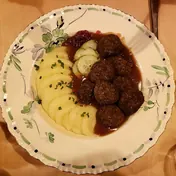
Köttbullar are Sweden's national dish: small beef-and-pork meatballs in cream sauce with mashed potatoes, lingonberry jam and pickled cucumber. Stockholm cooks them everywhere, from IKEA to Frantzén.
The Swedish meatball traces to King Charles XII's exile in the Ottoman Empire (1709-1714), where he ate Turkish köfte and brought the spiced-minced-meat tradition back to Sweden in 1715. The dish was codified in Cajsa Warg's 1755 Stockholm cookbook and standardised in mid-20th-century home economics. Today every Stockholm husmanskost room keeps its own version: Pelikan's beef cream sauce, Meatballs for the People's rotating proteins, Tennstopet's classic 1907 recipe. The IKEA meatball at 85 kronor at Kungens Kurva is the country's cheapest sit-down meal.
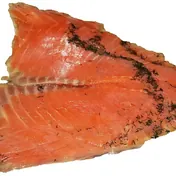
Gravlax is salmon cured in salt, sugar and dill for 48 hours then sliced thin and served with mustard-dill sauce, rye bread or boiled potatoes. The Stockholm classic of the smörgåsbord.
The word gravlax means buried salmon: medieval Baltic fishermen buried salted salmon in shore sand to ferment slowly through preservation. The dill version codified in the 17th-century Stockholm court kitchens and standardised in Cajsa Warg's 1755 cookbook. By the early 20th century gravlax was the bourgeois holiday-table dish. Today every Stockholm saluhall counter sells it: Lisa Elmqvist at Östermalms Saluhall cures the reference version daily.
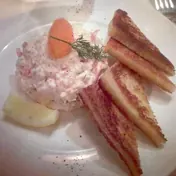
Toast Skagen is shrimp tossed in mayonnaise and dill on grilled white bread, topped with bleak roe (löjrom) and lemon, the codified Swedish smörgåsbord starter at every Stockholm brasserie.
Tore Wretman, the Stockholm restaurateur who modernised Swedish cuisine, improvised Toast Skagen in 1956 on a sailing trip to the northern Danish port of Skagen and named the dish for the harbour. He introduced it to the public at Riche in Stockholm in 1958, then carried it across to Operakällaren after taking over that restaurant. The dish became the codified Swedish smörgåsbord starter and now appears on every brasserie menu. Sturehof and Lisa Elmqvist both cook the canonical version with bleak roe (löjrom) from Bothnian-coast fisheries; the lemon and dill garnish is the universal finish.
Stockholm's Gamla Stan hides centuries of Viking and seafaring history behind its cobbled lanes, and the best way to taste it is with a local guide leading you street ...
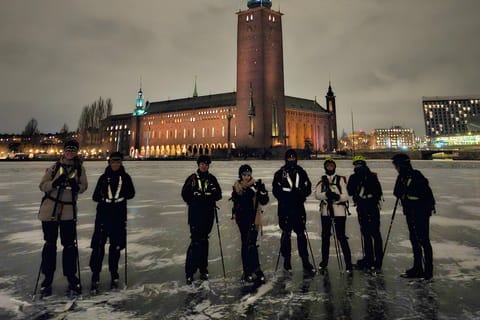
Embrace the Nordic night and glide across the ice surrounded by city lights and moonlight. Learn the basics of ice skating, experience the atmosphere in the dark, and ...
Escape the busy city life on a guided nature hike near Stockholm. Walk through Swedish forests, enjoy a campfire lunch, and experience nature on an adventure just outs...
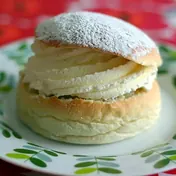
A cardamom-spiced wheat bun filled with almond paste and whipped cream, dusted with icing sugar. Eaten on Fettisdagen (Shrove Tuesday) and through Lent across Sweden.
The semla descends from the medieval Lutheran Lent fast: the bun was the only sweet allowed on Fettisdagen (Shrove Tuesday) before the fast began. King Adolf Fredrik of Sweden died in 1771 from eating 14 semlor at his post-fast feast, the country's most-cited royal indigestion case. Vete-Katten (1928) and Tössebageriet (1920) bake the canonical Stockholm versions; pre-orders for Fettisdagen run two weeks ahead.
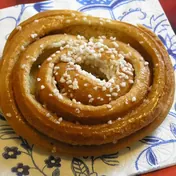
Sweden's signature pastry: a cardamom-and-cinnamon spiced wheat dough rolled with butter, sugar and cinnamon, topped with pearl sugar. Kanelbullens Dag is October 4 nationwide.
The kanelbulle codified in the early 20th century as Swedish home bakers adopted cinnamon from German baking traditions. Vete-Katten (1928) and the konditori movement set the canonical Stockholm version: cardamom in the dough, swirled with butter-sugar-cinnamon, topped with Swedish pearl sugar. Kanelbullens Dag (October 4) is the Hembakningsrådet (Home Baking Council) national-marketing event from 1999. Fabrique and Lillebrors run the modern Vasastan versions; Vete-Katten the heritage one.
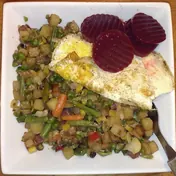
A diced hash of cubed potatoes, onion and meat (sausage, ham or leftover roast) fried in butter, served with pickled beetroot and a fried egg on top. The Swedish leftover Sunday dish.
Pyttipanna means small pieces in pan: the dish codified in working-class Stockholm in the 19th century as the Saturday-Sunday morning use-up of the week's leftovers. The classic combination of potato, onion and any cured meat (kassler ham, frankfurters, leftover roast) with pickled beetroot is the dictionary version. Tradition on Österlånggatan, Pelikan on Blekingegatan and the saluhall counters all run the canonical recipe today.
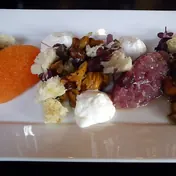
Tiny orange-red roe from the bleak fish (löja), harvested from the Bothnian coast in winter. Served on small toast with sour cream, red onion and chopped dill. Sweden's edition of caviar.
Kalix löjrom from the Bothnian coast received EU Protected Designation of Origin in 2010, the only Swedish food product so designated. The roe is harvested October through November from the bleak (Coregonus albula). Stockholm's Lisa Elmqvist at Östermalms Saluhall and Wedholms Fisk at Nybrokajen are the canonical suppliers; the löjromstoast format codified at Operakällaren in the 1970s alongside Toast Skagen.
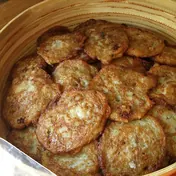
A grated-potato pancake fried crisp in butter, served with crisp bacon and lingonberry jam. The hearty Swedish farmer's lunch and a husmanskost canon dish.
Raggmunk codified in 19th-century rural Sweden as a use-up dish for grated leftover potatoes. The word raggmunk means hairy monk (the texture of the strands of grated potato). The dish entered Stockholm's bruna krogar through working-class migration north and remains on every husmanskost menu. Pelikan on Blekingegatan and Lilla Ego's modernised version with löjrom are both reference Stockholm interpretations.
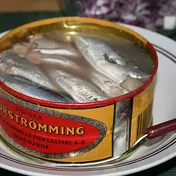
Lightly salted Baltic herring fermented in barrels for two months, sold in swollen tins. Served on tunnbröd flatbread with potato and onion. The strongest-smelling food in commerce.
Surströmming traces to medieval Baltic fishermen who used minimum salt (rare and expensive in the north) to preserve herring; the result fermented. The trade codified in the 16th century. By royal decree, the year's surströmming can be released no earlier than the third Thursday of August (Surströmmingspremiär). The traditional surströmmingsskiva is eaten outdoors with new potatoes, raw onion, sour cream, tunnbröd and snaps. Pelikan, Tennstopet and Kvarnen all run sittings in late August.
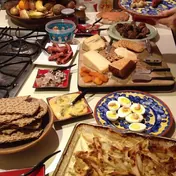
Sweden's signature buffet table: pickled herring in five sauces, gravlax, meatballs, Janssons frestelse, ham, cheese, knäckebröd, served as Christmas julbord and summer midsommar tables.
The smörgåsbord codified in the late 19th century as a Stockholm hotel-and-restaurant format and was exported to global recognition through the 1939 New York World's Fair Swedish Pavilion. The Christmas julbord is the contemporary version: ham, herring, lutfisk, meatballs, Jansson's temptation, prinskorv. Operakällaren, Sturehof and the saluhalls all run julbord sittings in December; the year-round version anchors hotel breakfasts.
Watch out for: Gluten, Dairy, Egg, Fish, Shellfish
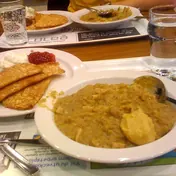
Yellow pea soup with cured pork and marjoram, traditionally followed by thin Swedish pancakes (pannkakor) with whipped cream and lingonberry jam. The Thursday-lunch ritual across Sweden.
The Thursday ärtsoppa tradition dates to medieval Sweden when Friday was a fasting day, so Thursday meant a hearty meal to carry workers through. King Erik XIV reportedly died of arsenic-laced pea soup in 1577. The pannkakor dessert pairing is uniquely Swedish. Den Gyldene Freden and Pelikan still serve it as Thursday lunch.
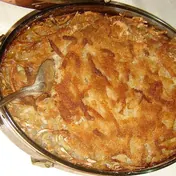
Layered potato gratin with sweet pickled Swedish anchovies (sprats), onions and cream, baked until the top crusts golden and the centre stays silky. The Swedish Christmas julbord (smorgasbord) staple.
Janssons Frestelse (Jansson's Temptation) appears in Swedish recipe collections from the late 1920s. The name was popularised when Elvira Stigmark, an Östermalm Stockholm hostess, served anchovy gratin under the name after seeing the 1928 Swedish film 'Janssons frestelse'; an earlier association with the 19th-century opera singer Per Adolf 'Pelle' Janzon is improbable since the dish was not called that during his lifetime. The recipe defines the modern Swedish julbord. Pelikan and Den Gyldene Freden run defensible Stockholm renditions through December.
Watch out for: Fish, Dairy
Signature Dishes in Stockholm, FAQ
What food is Stockholm known for?
Stockholm's signature dishes include Köttbullar (Swedish meatballs), Gravlax (dill-cured salmon), Toast Skagen, Semla (Lent cream bun), Kanelbulle (cinnamon bun). See our signature dishes chapter for where to eat each.