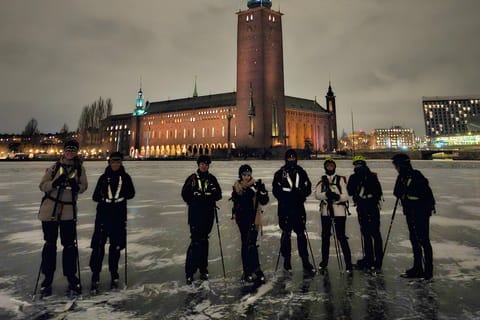
How Stockholm came to eat the way it does: the people, migrations and accidents that shaped the plate.
Key eras
1252, founding of Stockholm and the herring trade
Birger Jarl founded Stockholm in 1252 at the choke point between Lake Mälaren and the Baltic. The city's first wealth came from the Hanseatic Baltic herring trade; the strömming (Baltic herring) salted and dried at Slussen fed the medieval city and shaped the surströmming tradition that fermented from a preservation method.
1722, Den Gyldene Freden opens
Den Gyldene Freden on Österlånggatan in Gamla Stan opened in 1722 and remains the oldest restaurant in continuous operation under the same name in the world. Carl Michael Bellman drank there in the 1760s; the Swedish Academy still uses the cellar room for its Thursday dinners every week.
1787, Operakällaren opens at the Royal Opera
Operakällaren opened in 1787 inside the original Royal Opera House on Gustav Adolfs Torg. It is one of Europe's oldest restaurants in continuous operation. The Operakällaren wagon of cheese and the classical European canon shaped Sweden's hotel-and-restaurant culture for two centuries.
1888, Östermalms Saluhall opens
Östermalms Saluhall opened in 1888 in a brick hall on Östermalmstorg, designed by Isak Gustaf Clason. The saluhall consolidated Östermalm's butchers, fishmongers and cheesemakers into one building. After a full 2020 renovation, the hall reopened with 18 vendors and the original 1888 ironwork preserved overhead.
1928, Vete-Katten and the konditori canon
Vete-Katten on Kungsgatan opened in 1928 from Ester Nordhammar. The Swedish konditori format Vete-Katten codified (semla in Lent, princess cake year-round, kanelbulle daily) became the Swedish bakery canon; Tössebageriet (1920) and other classics anchored the citywide network.
2008-2018, Frantzén and the Stockholm fine-dining boom
Björn Frantzén opened the original Frantzén in 2008, earned the second Michelin star in 2010 and the third in 2018, the first Swedish three-star ever. Aira followed with two stars by 2023. Stockholm now holds twelve starred kitchens, one of Europe's densest Michelin maps per capita.
Immigrant influences
- German (Hanseatic): Medieval Hanseatic trade brought German baking, pickled cabbage and beer brewing to the Old Town. The bruna krogar tradition (brown taverns serving small beer and pyttipanna) traces to Hanseatic merchant houses.
- Finnish: Finnish migration brought rye bread, pancakes (pannkakor) and the sauna-and-coffee tradition. The Thursday ärtsoppa-and-pancakes ritual borrows from Lutheran-Finnish fasting culture and is still served Thursdays in many Stockholm canteens.
- Polish-Jewish (Ashkenazi): 19th- and 20th-century Jewish migration shaped Stockholm's bagel tradition and herring smoking. The Söder bakery counters and herring stalls at Östermalms Saluhall carry the Ashkenazi diaspora baking and curing techniques.
- Italian: Post-war Italian migration brought espresso bars, pasta and the Stockholm pizza tradition. The Vasastan trattorias on Rörstrandsgatan and the espresso-counter formats of Café Pascal and Il Caffè descend from Italian café architecture.
- Middle Eastern (Lebanese, Syrian, Iranian): Post-1970s Middle Eastern migration shaped Stockholm's falafel and shawarma culture. Tahrir on Södermalm and the halal grill counters across Norrmalm and Södermalm all draw from this immigrant baseline.
- Sápmi (Sami) and Nordic indigenous: Sápmi communities contributed reindeer, cloudberries, smoked whitefish and the cured-fish (gravlax) tradition. The fine-dining wave of Frantzén, Aira and Ekstedt all cook with Sápmi-Nordic ingredients as the regional base.
Signature innovations
- Surströmming, fermented Baltic herring, legal release third Thursday of August
- Smörgåsbord, the Swedish open-buffet tradition codified for export at the 1939 World's Fair
- Gravlax, dill-and-salt cured salmon, traceable to medieval Baltic preservation
- Semla, the Lent-only cream-filled saffron-pearl bun, eaten on Fettisdagen
- Kanelbulle, the cinnamon bun with its own national day October 4 (Kanelbullens Dag)
- Toast Skagen, the bleak-roe and shrimp toast Tore Wretman improvised near Skagen in 1956 and introduced at Riche in 1958
- Bruna krogar, the dark-tavern husmanskost format anchored by Pelikan (1904)
- Wood-fire-only fine dining, codified at Niklas Ekstedt's restaurant since 2013
- Specialty third-wave coffee in Sweden, driven by Drop Coffee, Johan and Nyström and Standout
- Bakficka, the casual-dining counter format from a Michelin-starred chef, a Stockholm export to the rest of Sweden