
History
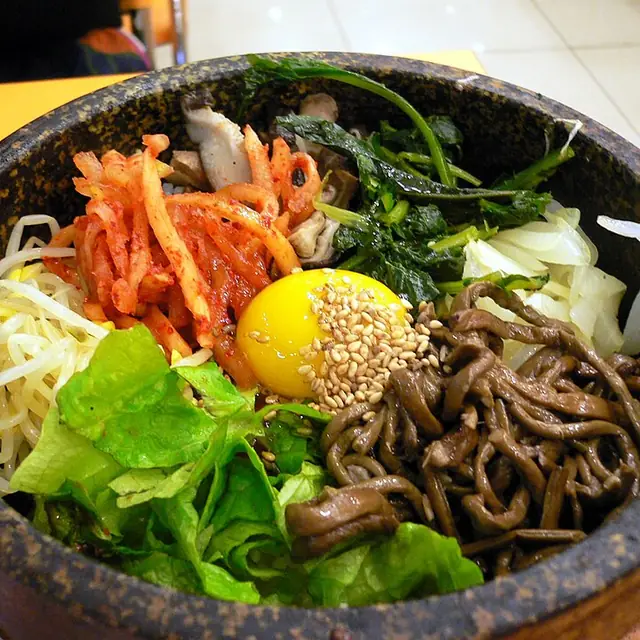
Bibimbap is documented in Korean records as early as the Joseon dynasty (1392-1897), when it was served to the royal court as a way of combining leftover banchan with rice. Jeonju in North Jeolla Province developed the most celebrated regional version, using Jeonju-style gochujang and rice cooked in beef bone broth, topped with raw beef yukhoe and gingko nuts. The dolsot (stone pot) version, which creates a crisped rice crust at the base, became popular in the 20th century. Today, bibimbap is served from the simplest counter restaurants to Michelin-starred rooms, each interpreting the same structure of rice, protein, vegetables and paste.
Book a food experience
Tours, tastings and classes from the cities on this page, bookable on GetYourGuide.


Common allergens: Egg, Sesame, Soy in gochujang
Make it at home
Ingredients
- 400g cooked short-grain rice, warm
- 100g bean sprouts, blanched and dressed with sesame oil and salt
- 100g spinach, blanched and dressed with garlic, sesame oil and soy
- 1 small zucchini, julienned and stir-fried
- 1 medium carrot, julienned and stir-fried briefly
- 50g shiitake mushrooms, sliced and stir-fried in soy
- 2 eggs, fried sunny-side up or kept raw
- 2 tablespoons gochujang
- 1 teaspoon sesame oil
- 1 teaspoon toasted sesame seeds
Method
- Cook the rice and keep warm. Prepare each vegetable separately: blanch or stir-fry, then dress individually with small amounts of sesame oil, garlic and salt.
- Divide the rice between two wide bowls. Arrange the vegetables in sections around the rice, placing the egg in the centre on top.
- Add a spoonful of gochujang, a drizzle of sesame oil and a pinch of sesame seeds.
- For dolsot (stone pot) version: heat a stone bowl until very hot, add a thin layer of sesame oil, add the rice and press against the sides, then add the toppings. The rice crust will form as it sizzles.
- Mix everything together at the table before eating.
Tip from the editors. The key to good bibimbap is treating each vegetable as a separate dish first. Every component should be seasoned and flavoured independently before assembly.
Where to eat bibimbap
Bibimbap in Seoul
Insa Dodam ★ 4.2
Insa Dodam is a renovated hanok off Insadong-gil that runs a lunch-only bibimbap programme, capping bowls per day to lock in same-morning vegetable delivery.
OrderDodam warm-steamed bibimbap: farm-direct vegetables on rice in the house build.
TipBibimbap is lunch-only; arrive before 14:00 to be sure of a dolsot order, and ask for the vegan build if you want the no-egg version.
Insadong Geu Jib ★ 4.1
Insadong Geu Jib is a hanok-style Korean restaurant set in a narrow Insa-dong alley, serving dolsot bibimbap, beef-tartare bibimbap and bulgogi-and-vegetable.
OrderDolsot bibimbap in the stone pot with the rice crackling at the rim.
TipThe bulgogi yachaemari rolls (pick beef, pork or chicken) are the house specialty: thin meat with vegetables, hand-rolled at the table.
EID Halal Korean Food ★ 4.1
EID on Usadan-ro near Seoul Central Mosque is the city's most respected halal Korean restaurant, run by a Korean Muslim family since the 1990s.
OrderHalal bibimbap or Korean BBQ platter.
TipThe mosque alley on Usadan-ro has several halal Korean options side by side; EID is the one with the longest-running local reputation.
More cities are in research. Want bibimbap covered somewhere specific? Tell us where you want to eat.