Signature dishes
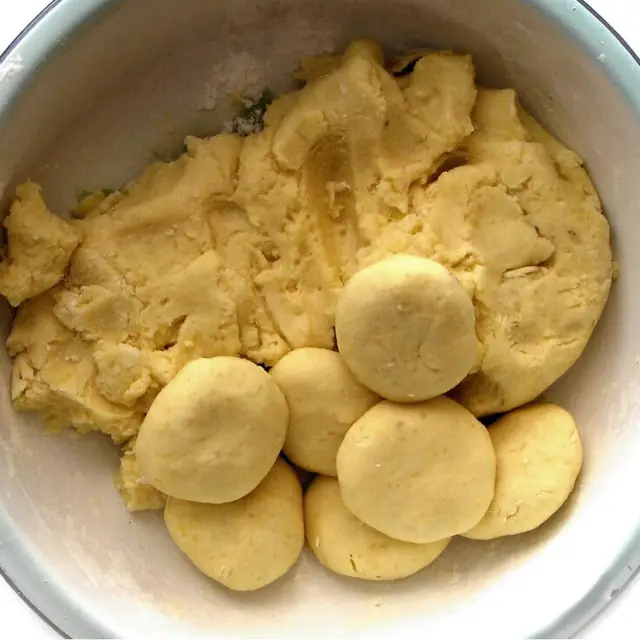
Silesian potato dumplings, small and round with a thumb-hole indent in the centre that catches the gravy. The signature carbohydrate of the region, served beside rolada śląska or any roast.
Where: Restauracja Wrocławska, BABA, Młoda Polska bistro & pianino
Price: 12-18 zł as a side, 25-35 zł as a plate
Silesian beef roulade, thinly pounded beef wrapped around bacon, pickle and onion, braised long and slow in stock. The Sunday plate of Silesia, paired with kluski śląskie and modra kapusta.
Where: Restauracja Wrocławska, Karczma Lwowska, Pod Fredrą
Price: 45-65 zł a plate
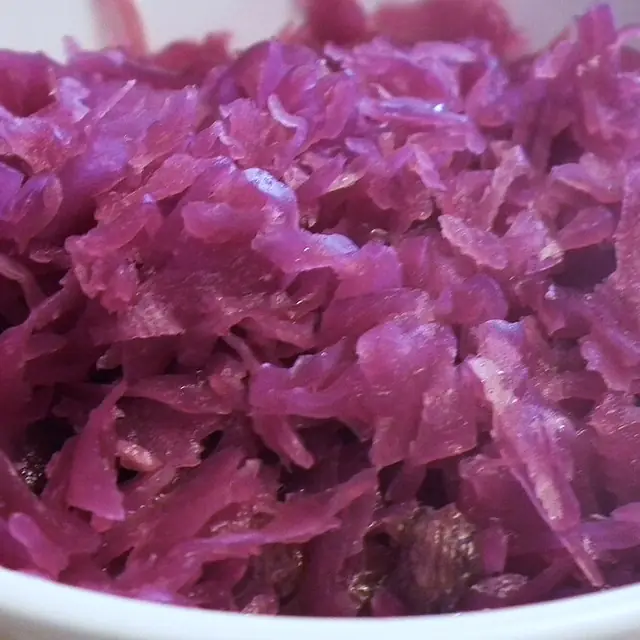
Silesian red cabbage stewed with apples, onion, caraway and a little smoked bacon. The third leg of the canonical Silesian Sunday plate beside rolada śląska and kluski śląskie.
Where: Restauracja Wrocławska, Karczma Lwowska, Pod Fredrą
Price: 8-15 zł a side
Silesian heaven: smoked pork shoulder stewed with dried fruit (prunes, apricots, pears) and served with potato dumplings. The Silesian sweet-savoury plate at its most concentrated.
Where: Restauracja Wrocławska, Karczma Lwowska
Price: 55-75 zł a plate
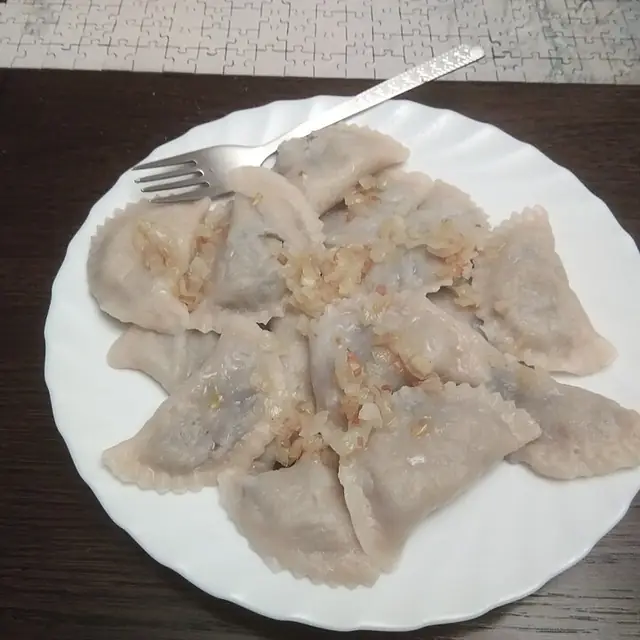
Pierogi filled with sauerkraut and dried wild mushrooms (often porcini). The Christmas Eve plate across Poland and the Wrocław classic the city's pierogi rooms cook year-round.
Where: Pierogarnia Stary Młyn, Restauracja Rynek 26, Bar Pierożek
Price: 30-45 zł for a dozen
Wrocław's version of the Polish hunter's stew: cabbage and sauerkraut braised slow with smoked meats, dried mushrooms and prunes. The defining Lower Silesian winter dish, deeper and smokier than its Warsaw cousin.
Where: Restauracja Wrocławska, Karczma Lwowska, Konspira
Price: 30-50 zł a plate
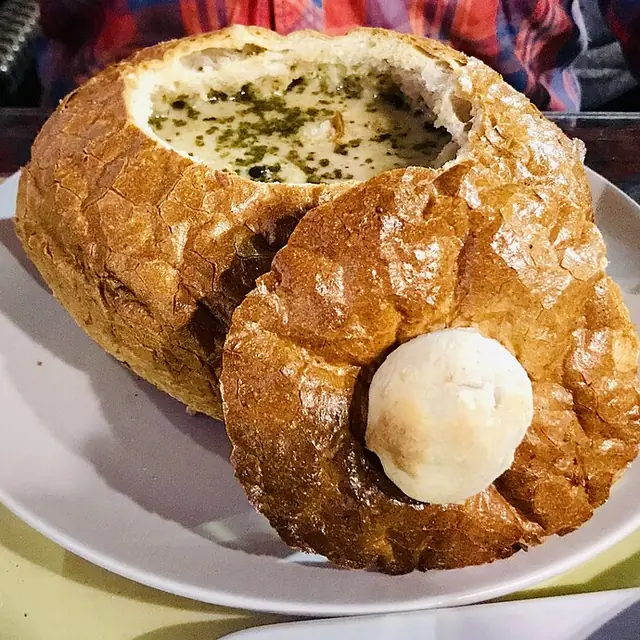
Polish fermented-rye sour soup, served with a hard-boiled egg, slices of smoked sausage, and pieces of potato. Often presented in a hollowed-out round bread bowl in Wrocław's traditional rooms.
Where: Konspira, Restauracja Wrocławska, Bar Mleczny Miś
Price: 15-30 zł, bread bowl extra
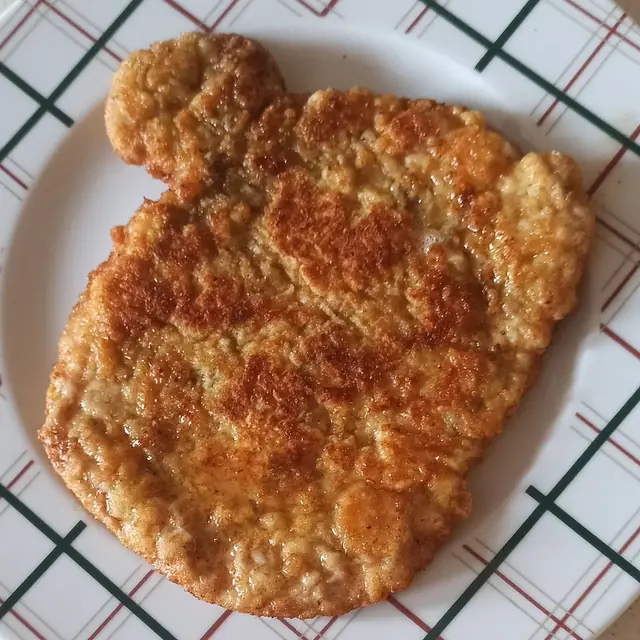
Polish breaded pork cutlet, hand-pounded thin and shallow-fried in lard, the canonical Polish lunch across milk bars and bistros. Served with mashed potato, cucumber-and-dill salad and a wedge of lemon.
Where: Bar Mleczny Miś, Młoda Polska bistro & pianino, Konspira
Price: 15-35 zł a plate
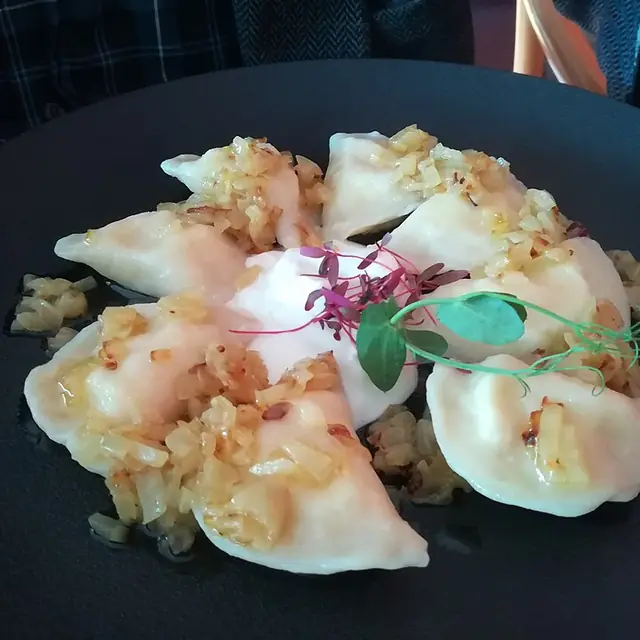
Poland's most-eaten pierogi: half-moon dumplings of yeast-free dough filled with mashed potato and twarog farmer's cheese. Boiled then pan-fried in browned butter, served with caramelised onion and sour cream.
Where: Pierogarnia Stary Młyn, Bar Mleczny Miś, Bar Pierożek, Karczma Lwowska
Price: 15-30 PLN per portion (8 to 10 pierogi)
Silesian crispy potato pancakes served bandit-style: a stack of crisp potato pancakes topped with a goulash-style beef-and-vegetable stew, sour cream and a sprinkle of paprika. The Lower Silesian pub plate.
Where: Karczma Lwowska, Dwór Polski, Restauracja Wrocławska, Restauracja Konspira
Price: 28-45 PLN
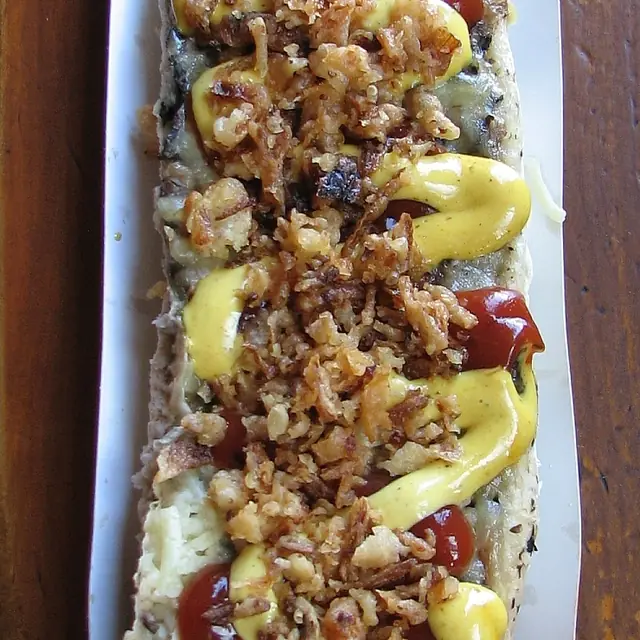
Poland's open-faced street pizza: a long French-style baguette halved lengthways, topped with fried mushrooms, melted cheese, ketchup and chopped parsley, baked under a salamander until the cheese bubbles.
Where: Zapiekarnik, Bar Lubię To, Bar Pierożek
Price: 12-25 PLN
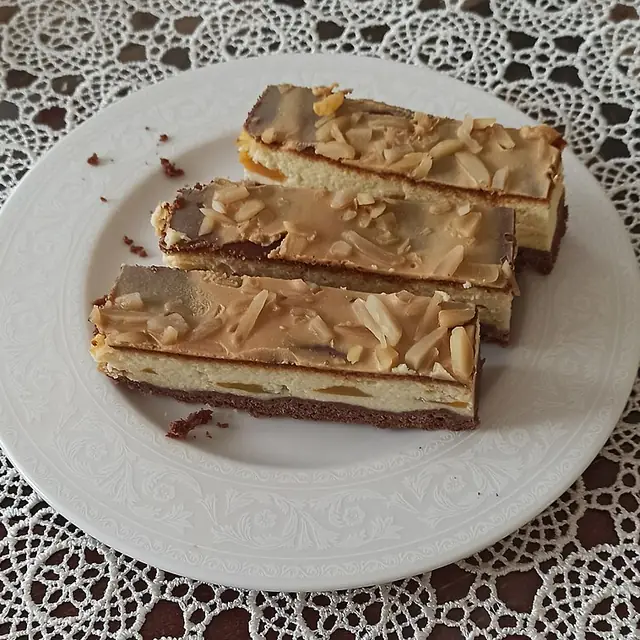
Polish twaróg cheesecake: a dense, light-yellow baked cake made from fresh dry-curd farmer's cheese (twaróg) folded with butter, egg yolks, sugar, vanilla and raisins, on a thin shortbread base, often with a lattice top.
Where: Piekarnia Sąsiedzi, Piekarnia Złoto Nadodrza, Karczma Lwowska, Restauracja Wrocławska
Price: 18-30 PLN a slice
Kluski śląskie
Silesian potato dumplings, small and round with a thumb-hole indent in the centre that catches the gravy. The signature carbohydrate of the region, served beside rolada śląska or any roast.
History: Kluski śląskie date from Silesia's potato-cultivation roll-out in the 18th and 19th centuries. The thumb-hole indent is the test of a Silesian cook: it gives the dumpling a thinner centre that cooks evenly while holding gravy. The dish travelled across the Silesian diaspora and is now sold pre-made across Poland, though Wrocław's restaurant versions stay closest to the original hand-shaped form.
Where to try it: Restauracja Wrocławska, BABA, Młoda Polska bistro & pianino
Watch out for: Gluten
Rolada śląska
Silesian beef roulade, thinly pounded beef wrapped around bacon, pickle and onion, braised long and slow in stock. The Sunday plate of Silesia, paired with kluski śląskie and modra kapusta.
History: Rolada śląska traces to 19th-century Breslau (now Wrocław) and the Silesian-German bistro tradition. The recipe is essentially a Silesian rouladen, the German beef roll, with longer braising and a heavier pickle accent. The three-part plate (rolada plus kluski plus red cabbage) is the canonical Silesian Sunday lunch across Polish, German, and Czech Silesia.
Where to try it: Restauracja Wrocławska, Karczma Lwowska, Pod Fredrą
Watch out for: Gluten
Modra kapusta
Silesian red cabbage stewed with apples, onion, caraway and a little smoked bacon. The third leg of the canonical Silesian Sunday plate beside rolada śląska and kluski śląskie.
History: Modra kapusta (literally 'blue cabbage', the Silesian name for red cabbage) inherits the German-Silesian tradition of long-stewed cabbage with sour apples and warming spice. The Silesian version leans more sweet-sour than the Bohemian version, and includes a final shot of vinegar to brighten the close.
Where to try it: Restauracja Wrocławska, Karczma Lwowska, Pod Fredrą
Śląskie niebo
Silesian heaven: smoked pork shoulder stewed with dried fruit (prunes, apricots, pears) and served with potato dumplings. The Silesian sweet-savoury plate at its most concentrated.
History: Śląskie niebo (Silesian heaven) was traditionally cooked for major Silesian holidays: dried-fruit preservation gave winter access to summer sweetness, and the smoked-pork shoulder reflected the autumn pig-slaughter calendar. The cinnamon and clove accents nod to the trade routes that ran through medieval Silesia.
Where to try it: Restauracja Wrocławska, Karczma Lwowska
Pierogi z kapustą i grzybami
Pierogi filled with sauerkraut and dried wild mushrooms (often porcini). The Christmas Eve plate across Poland and the Wrocław classic the city's pierogi rooms cook year-round.
History: Pierogi with sauerkraut and mushrooms is the canonical Polish Christmas Eve filling, observed throughout the Catholic liturgy as a meat-free Wigilia plate. The sauerkraut runs through autumn's preservation tradition; the dried porcini lock in summer's mushroom foraging. Wrocław's pierogi rooms make the filling year-round; Christmas weeks see a tripling of orders at Hala Targowa stalls.
Where to try it: Pierogarnia Stary Młyn, Restauracja Rynek 26, Bar Pierożek
Watch out for: Gluten
Bigos wrocławski
Wrocław's version of the Polish hunter's stew: cabbage and sauerkraut braised slow with smoked meats, dried mushrooms and prunes. The defining Lower Silesian winter dish, deeper and smokier than its Warsaw cousin.
History: Bigos wrocławski grew from the post-1945 layering of Eastern Borderlands settlers' bigos (heavier, smoked-meat-led) onto the Silesian-German cabbage tradition. The Wrocław version takes the dried-plum sweetness from the Silesian larder and the smoked-meat depth from the Lwów inheritance. Improves on reheats; some Wrocław kitchens keep a pot running for a week.
Where to try it: Restauracja Wrocławska, Karczma Lwowska, Konspira
Żurek
Polish fermented-rye sour soup, served with a hard-boiled egg, slices of smoked sausage, and pieces of potato. Often presented in a hollowed-out round bread bowl in Wrocław's traditional rooms.
History: Żurek is one of Poland's oldest soups, with the fermented-rye starter recipe dating to the medieval period when wheat was the upper-class grain. The Wrocław bread-bowl service is a 1990s presentation that travelled well to tourist menus; the home version is served in regular bowls with the rye sour, water, and meat stock blended.
Where to try it: Konspira, Restauracja Wrocławska, Bar Mleczny Miś
Watch out for: Gluten, Egg
Kotlet schabowy
Polish breaded pork cutlet, hand-pounded thin and shallow-fried in lard, the canonical Polish lunch across milk bars and bistros. Served with mashed potato, cucumber-and-dill salad and a wedge of lemon.
History: Kotlet schabowy is Poland's national plate, the descendant of the Austrian Wienerschnitzel adapted to pork and bigger portions in the 19th century. Under communism it became the Sunday lunch across Polish households; today every milk bar in Wrocław runs a schabowy plate at around 15-25 zł. Wrocław's higher-end versions appear at Młoda Polska on Plac Solny.
Where to try it: Bar Mleczny Miś, Młoda Polska bistro & pianino, Konspira
Watch out for: Gluten, Egg
Pierogi Ruskie
Poland's most-eaten pierogi: half-moon dumplings of yeast-free dough filled with mashed potato and twarog farmer's cheese. Boiled then pan-fried in browned butter, served with caramelised onion and sour cream.
History: Pierogi ruskie despite the name (literally Ruthenian pierogi) are not Russian but originate from the Kresy region of eastern Poland and western Ukraine (formerly Galicia), where they have been the everyday peasant dumpling since at least the 17th century. After World War II, the population transfer from Lwów (now Lviv) brought hundreds of thousands of eastern Poles to Wrocław as Soviet-imposed border changes shifted the city's demographics; they brought the dumpling with them. Today pierogi ruskie are the most popular pierogi variety in Poland and the canonical Wrocław bar-mleczny dish, served at Pierogarnia Stary Młyn and most casual menus.
Where to try it: Pierogarnia Stary Młyn, Bar Mleczny Miś, Bar Pierożek, Karczma Lwowska
Watch out for: Gluten, Dairy, Egg
Placki Ziemniaczane po Zbóju
Silesian crispy potato pancakes served bandit-style: a stack of crisp potato pancakes topped with a goulash-style beef-and-vegetable stew, sour cream and a sprinkle of paprika. The Lower Silesian pub plate.
History: Placki ziemniaczane (grated-potato pancakes) are eaten across all of Poland, but the Lower Silesian variation served po zbóju (literally bandit-style, meaning loaded up with stew) is the regional Wroclaw signature. The dish emerged in late 19th-century Silesian inns as a way to combine the cheap potato pancake with a small portion of leftover goulash, stretching expensive meat across a peasant plate. The Lower Silesian variation usually uses Hungarian-influenced paprika-heavy beef gulasz rather than the wetter Polish bigos. The dish is a Karczma standard across Wroclaw, served at Karczma Lwowska and Dwór Polski; locals order it with a pint of dark Tyskie at midday.
Where to try it: Karczma Lwowska, Dwór Polski, Restauracja Wrocławska, Restauracja Konspira
Watch out for: Gluten, Dairy, Egg
Zapiekanka
Poland's open-faced street pizza: a long French-style baguette halved lengthways, topped with fried mushrooms, melted cheese, ketchup and chopped parsley, baked under a salamander until the cheese bubbles.
History: The zapiekanka was invented in 1970s Poland as a cheap way to feed cities during food shortages of the late communist era. The original was a piece of stale baguette, topped with mushrooms and processed cheese, finished with sweet tomato ketchup (an exotic Western import at the time). The dish exploded across Polish university cities through the 1980s as the standard drunken late-night food and became iconically associated with Krakow's Plac Nowy Round House, Wrocław's late-night strips and Warsaw's bus-station kiosks. The simple version is sold from windows everywhere in the centre after midnight.
Where to try it: Zapiekarnik, Bar Lubię To, Bar Pierożek
Watch out for: Gluten, Dairy
Sernik
Polish twaróg cheesecake: a dense, light-yellow baked cake made from fresh dry-curd farmer's cheese (twaróg) folded with butter, egg yolks, sugar, vanilla and raisins, on a thin shortbread base, often with a lattice top.
History: Sernik has been a Polish bakery staple since the medieval period, with twaróg (Polish dry-curd cheese) the structural ingredient that gives the dish its distinctive texture: lighter, drier, less sweet than American cheesecake, more cake-like than dense. The Kraków lattice-top version (sernik krakowski) is the most ornamented form; the Silesian Wrocław version is simpler with a flat top and often raisins or candied orange peel folded through. The cake became a Sunday dinner standard across the Polish home in the 19th century; modern Wrocław bakeries serve the canonical version.
Where to try it: Piekarnia Sąsiedzi, Piekarnia Złoto Nadodrza, Karczma Lwowska, Restauracja Wrocławska
Watch out for: Gluten, Dairy, Egg