What is in season in Marrakech, and what to order when the market changes.
SpringIn season now
- Fresh fava beans and bissara
- March to May brings the new fava harvest from the Haouz plain. Bissara, the breakfast soup of pureed fava beans with olive oil and cumin, peaks now. Look for it at neighborhood counters in Bab Doukkala from 07:00.
- Wild artichoke and tagine khodra
- Spring vegetable tagines (khodra) layer baby artichokes, peas, fava and preserved lemon. The Marche Couvert Gueliz stalls show what's coming in. April is peak.
- Eid al-Fitr sweets
- Ramadan ends in March 2026; Eid al-Fitr (March 20 to 22) is the city's sweet-pastry holiday. Sellou (toasted almond paste), kaab el ghazal (gazelle horns), and the family couscous lunch dominate.
Going to Eid al-Fitr?
Hotels in Marrakech, 9-11 Mar 2027
SummerIn season now
- Cherries and apricots from the Atlas
- June brings Atlas cherries from Sefrou and Imlil, plus apricots from the Ourika Valley. Both turn up at Marche Couvert and Rahba Kedima fruit stalls through July.
- Mechoui at Eid al-Adha
- Eid al-Adha falls on June 16 to 18 in 2026: every family slaughters a sheep and pit-roasts it. Mechoui Alley off Jemaa el-Fna runs constantly through the holiday. Plan around it; many restaurants close.
- Watermelon and mint
- July to August heat (40+C) drives the watermelon and chilled mint-tea seasons. Most medina restaurants close lunch; eat dinner late, after sundown when the square cools.
Festivals this seasonMarrakech Comedy FestivalExpected 3-5 Jun 2027
AutumnIn season now
- Date harvest from the southern oases
- October brings the date harvest from Erfoud and Zagora south of the Atlas. Mejhool and Medjool varieties at Rahba Kedima, sold by the kilo from waist-high mounds. Snack with mint tea.
- Pomegranate and quince
- November is pomegranate month. Stalls split the fruit open at the counter; juice is squeezed to order. Quince enters lamb tagines (lham bel sfarjal) at the medina riads.
- Olives and new-press oil
- October to December is the olive harvest across the Haouz plain. Black, green and violet olives sit in barrels at the Mellah and Rahba Kedima markets. Cold-pressed olive oil from local cooperatives sells in unmarked bottles.
Festivals this seasonMarrakech International Film Festival20-28 Nov
WinterIn season now
- Harira broken with dates
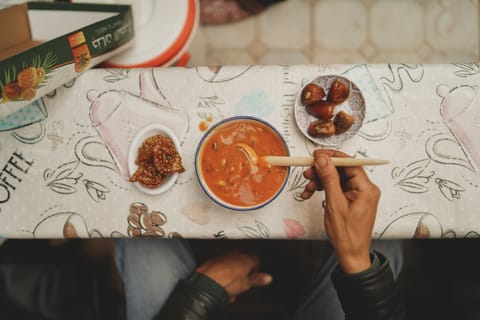
- December and January cold (sometimes 5C overnight) brings harira soup (chickpea, lentil, tomato, lamb) to street stalls and family tables. Traditionally Ramadan food, but the cold pulls it forward year-round at Jemaa el-Fna.
- Bissara breakfast and msemen
- Winter morning rhythm: bissara fava soup at 07:00, layered msemen flatbread folded with honey and amlou (argan-almond spread) from Bab Doukkala counters, nous-nous coffee to chase.
- Citrus and preserved lemon
- Marrakech citrus peaks November to February: clementines, oranges, the bitter Seville orange used to make preserved lemons (citron confit) that go into every chicken tagine. Family kitchens put up jars now.
Festivals this seasonRamadan Iftar8 Feb to 9 Mar 2027
Going to Ramadan Iftar?
Hotels in Marrakech, 8 Feb to 9 Mar 2027
Book food experiences in Marrakech