The plates that define Vilnius: what they are, where they came from, and where to eat the canonical version.
Signature dishes
-
Cepelinai ★ 4.9
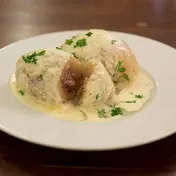
Cepelinai are the Lithuanian national dish: large potato dumplings stuffed with pork (or curd, or mushrooms) and served with bacon-mushroom sauce and sour cream.
Where to try it: Lokys, Etno Dvaras (Aušros Vartų), Senoji Trobelė, Šnekutis, Užupio Kavinė, Forto Dvaras (Pilies)
Price: €6-9
Cepelinai (zeppelins) take their name from the German zeppelin airship that flew over Lithuania in 1908. The dish itself predates the airship by centuries as didžkukuliai. The modern cepelinai recipe of grated and shredded potato dough stuffed with pork-and-onion mixture solidified in interwar Lithuania (1918-1940) and became the national dish through Soviet kitchens. Today every Lithuanian restaurant runs a version, from Etno Dvaras's Heritage Fund recipe to Lokys's medieval-cellar plate.
Watch out for: Gluten, Eggs
-
Šaltibarščiai ★ 4.9
Šaltibarščiai is the electric-pink Lithuanian cold beet soup made with kefir, boiled potatoes, dill and cucumber: the summer canon eaten across Vilnius from June to August.
Where to try it: Etno Dvaras (Aušros Vartų), Senoji Trobelė, Užupio Kavinė, Šnekutis, Lokys
Price: €4-6
The pink soup traces to Polish-Lithuanian Commonwealth tables and shares roots with Polish chłodnik. The kefir base distinguishes the Lithuanian version. Šaltibarščiai is so signature in Vilnius summer that the city runs the Pink Soup Fest every June with parade and tasting stops. Eat it everywhere from Etno Dvaras to Senoji Trobelė to Užupio Kavinė through summer.
Watch out for: Dairy
-

Kibinai ★ 4.7
Kibinai are Karaim crescent-shaped pastries filled with mutton, cheese, spinach or mushrooms. The Vilnius and Trakai street snack from the 14th-century Karaim community.
Where to try it: Pinavija, Pinavija Café & Bakery, Halės Bistro
Price: €2-4
Kibinai (or kybyn) came to Lithuania with the Karaim community brought from Crimea to Trakai in 1397 by Grand Duke Vytautas. The pastry has stayed in the Karaim community of Trakai ever since, with mutton the original filling. In Vilnius, Pinavija and Halės Turgus carry the pastry; for the canonical version travellers cross to Trakai itself, where Kybynlar (Karaimų 29) and Senoji Kibininė sit by the lakeside castle.
Watch out for: Gluten, Eggs, Dairy
Book food experiences in Vilnius


-
Kugelis ★ 4.5
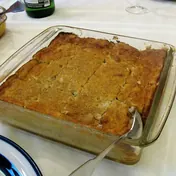
Kugelis is the Lithuanian grated-potato cake baked with bacon, eggs and onion: a hearty oven dish served sliced with sour cream and bacon cracklings.
Where to try it: Etno Dvaras (Aušros Vartų), Forto Dvaras (Pilies), Senoji Trobelė, Etno Dvaras (Pilies)
Price: €5-8
Kugelis derives from the Yiddish kugel and reflects the long Litvak Jewish presence in Lithuania. The dish became part of Christian Lithuanian cooking through shared rural kitchens. Today kugelis appears at Etno Dvaras and Forto Dvaras as a Heritage Fund-certified dish, alongside cepelinai. It's the alternative oven-baked answer to the same potato-and-pork problem cepelinai solve by boiling.
Watch out for: Eggs, Dairy
-
Bulvių blynai ★ 4.3
Bulvių blynai are Lithuanian potato pancakes: grated potato, egg and onion fried crisp, served with sour cream and mushroom sauce or bacon-cracklings spirgučiai.
Where to try it: Gusto Blynine, Etno Dvaras (Aušros Vartų), Senoji Trobelė, Forto Dvaras (Pilies)
Price: €5-7
Potato pancakes are common across the Baltic and Eastern Europe, with each tradition holding small differences. The Lithuanian version is thicker than the Polish placki and crisper than the German Reibekuchen. Senoji Trobelė and Gusto Blynine cook the canonical Vilnius versions, and the Žemaičių blynai variant (Samogitian, mashed-potato-based) is a heartier alternative.
Watch out for: Eggs
-

Šakotis ★ 4.6
Šakotis is the Lithuanian spit-roasted tree cake: layered dough cooked over an open flame on a turning spit, with spiky branches and a dramatic dome shape.
Where to try it: Pinavija, Pinavija Café & Bakery, Etno Dvaras (Aušros Vartų)
Price: €5-15 per slice
Šakotis (sometimes spit-cake) shares roots with the Polish sękacz and the German Baumkuchen. Lithuanian wedding tradition makes šakotis the centrepiece dessert at any major celebration, and the cake holds special status at Christmas markets. At Pinavija in Vilnius the šakotis is baked traditionally and sold by the slice or whole. The largest known šakotis was baked in Druskininkai in 2015 at 3.6 metres tall.
Watch out for: Gluten, Eggs, Dairy
-
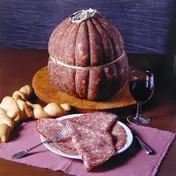
Skilandis ★ 4.4
Skilandis is the smoked pork stomach of Sumeliškės: Lithuania's only protected AOC food product, made of seasoned pork meat stuffed into pig's stomach and cold-smoked for months.
Where to try it: Halės Deli, Etno Dvaras (Aušros Vartų), Senoji Trobelė
Price: €4-8 per 100g
Skilandis (Sumeliškės skilandis specifically) is the only Lithuanian food product with the EU's protected designation of origin (PDO). The Sumeliškės village near Vilnius has made it since the 17th century. The pork meat is mixed with garlic and herbs, stuffed into pig's stomach and cold-smoked over alder wood for two to four months. Find it sliced thinly at Halės Turgus smoked-meat stalls and on heritage menus across Vilnius.
-

Gira (Kvass) ★ 4.0
Gira is the fermented Lithuanian rye-bread drink: low-alcohol, slightly sour and refreshing. The Baltic answer to kombucha, fermented from dark rye bread.
Where to try it: Pinavija, Pinavija Café & Bakery, Užupio Kavinė, Halės Deli
Price: €2-4
Gira (called kvass in Russia) is the traditional fermented drink across the Baltic and Slavic lands. The Lithuanian version is made specifically from dark rye bread, water, sugar and a starter culture. Pinavija and Užupio Kavinė serve house-made gira; Halės Turgus stalls sell bottled versions. The drink pairs particularly well with cepelinai and other heavy Lithuanian plates.
Watch out for: Gluten
-
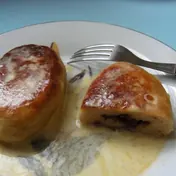
Žemaičių blynai ★ 4.0
Žemaičių blynai are Samogitian potato pancakes: thicker and made from mashed potato (rather than grated) wrapped around meat or curd-cheese filling, then pan-fried.
Where to try it: Senoji Trobelė, Etno Dvaras (Aušros Vartų), Forto Dvaras (Pilies)
Price: €5-7
Žemaičių blynai come from Samogitia (Žemaitija), the northern Lithuanian region. Where bulvių blynai are crisp grated-potato pancakes, žemaičių blynai are mashed-potato dumplings filled with meat or curd cheese and fried in a pan. Senoji Trobelė and Etno Dvaras both run them on the heritage menus. A Hill of Crosses (Šiauliai) day-trip pairs well with Samogitian-cuisine cafes for this dish.
Watch out for: Eggs, Dairy
-
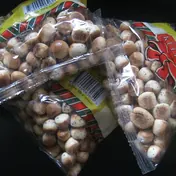
Kūčiukai ★ 4.2
Kūčiukai are small Lithuanian Christmas Eve biscuits made with poppy seeds and honey, eaten in milk on Kūčios as part of the 12-course meatless dinner.
Where to try it: Pinavija Café & Bakery, Pinavija, Beigelių Krautuvėlė (The Bagel Shop)
Price: €2-4 per portion
Kūčiukai (also known as šližikai) belong to the Lithuanian Christmas Eve table called Kūčios, a 12-course meatless meal held by Lithuanian Catholic families. The small dough biscuits are baked with poppy seeds and honey, then soaked in poppy-seed milk to start the meal. Across Vilnius, they appear at the Cathedral Square Christmas market through December and at Pinavija and other bakery cafes.
Watch out for: Gluten, Eggs, Dairy
-
Trauktinė (Žalios Devynerios 999) ★ 4.0
Trauktinė is the Lithuanian herbal liqueur tradition; Žalios Devynerios 999 is the canonical brand, made from nine herbs and the digestif of choice across Lithuanian dinners.
Where to try it: Lokys, Senoji Trobelė, Šnekutis, Etno Dvaras (Aušros Vartų)
Price: €4-6 per glass
Trauktinė is Lithuania's herbal-liqueur tradition. Žalios Devynerios (Green Nine) 999 is the most famous brand, named for the nine herbs in the recipe and the 999 lottery-luck branding from the Soviet era. It pours dark green and tastes bitter-herbal, served as a digestif after a Lithuanian dinner. Lokys and most traditional Lithuanian restaurants in Vilnius keep it on the bar. Also worth tasting: Žalgiris mead-balsam at Senoji Trobelė.
-
Švyturys Baltas ★ 4.1
Švyturys Baltas is the Lithuanian witbier-style wheat beer from Lithuania's oldest brewery (1784, Klaipėda): cloudy, citrus-bright and the Lithuanian summer-terrace pour.
Where to try it: Šnekutis, Halės Deli
Price: €4-6 per pint
Švyturys has brewed in Klaipėda since 1784, the oldest brewery in Lithuania. Baltas is the wheat-beer style modelled on the Belgian witbier tradition. Across Vilnius bars it's the summer-terrace pour. Find it on draught at every Šnekutis and at Halės Deli. Pair with cepelinai or with the Halės Turgus smoked-fish counter for a quick lunch.
Watch out for: Gluten
Signature Dishes in Vilnius, FAQ
What food is Vilnius known for?
Vilnius's signature dishes include Cepelinai, Šaltibarščiai, Kibinai, Kugelis, Bulvių blynai. See our signature dishes chapter for where to eat each.