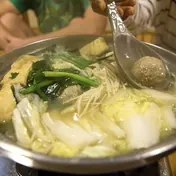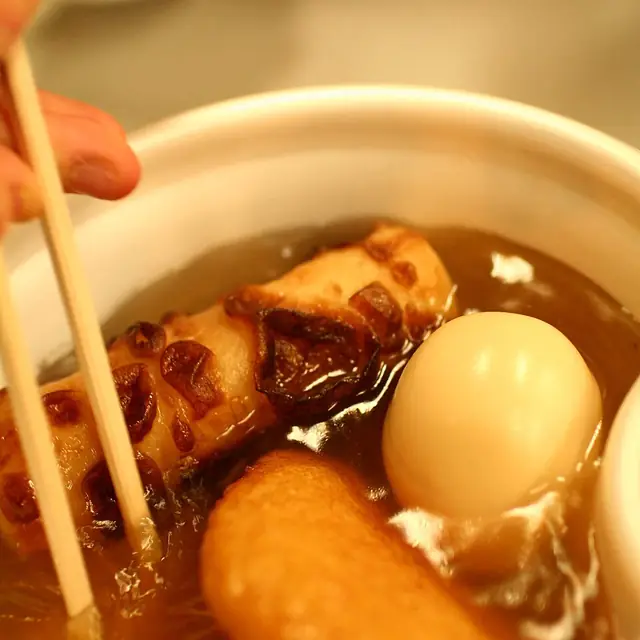
Oden is a dish of ingredients simmered in dashi; Tokyo's dashi-based version is called Kanto-ni, while Nagoya keeps the older miso-based stew.

Oden began as miso dengaku, konjac or tofu boiled and eaten with miso. Ingredients were later cooked in dashi instead, and in the Edo period oden came to mean boiled dengaku. Japanese Wikipedia records that oden chameshi stalls were popular in Meiji-era Tokyo and were badly hit by the 1923 Great Kanto earthquake. In Nagoya oden keeps its original meaning of a miso-based stew, while Tokyo-style dashi-based oden is called Kanto-ni, with soy sauce as the dip. In the Kansai area it is sometimes called Kanto-daki.

Where to eat Oden in Tokyo

The editor picks for Oden in Tokyo are still in research. Meanwhile, see the Tokyo signature-dishes index or the Tokyo food guide.

Book food experiences in Tokyo

See all 2,568 food experiences in Tokyo

Make it at home

Serves 43 hrIntermediate

Ingredients

  • 2L water
  • 20g kombu (dried kelp), 10cm square
  • 20g katsuobushi (dried bonito flakes)
  • 120ml shoyu (Japanese soy sauce)
  • 60ml mirin
  • 30g caster sugar
  • 1 large daikon radish, peeled and cut into 3cm-thick rounds
  • 4 hard-boiled eggs, peeled
  • 1 block konnyaku (200g), cut diagonally into triangles, scored on one side
  • 4 chikuwa (grilled fish-paste tubes)
  • 4 hanpen (white fish-paste squares)
  • 8 satsuma-age (fried fishcakes)
  • Karashi mustard, to serve

Method

  1. Soak the kombu in 2L cold water for 1 hour. Heat slowly to just below boiling and remove the kombu before it simmers.
  2. Add the katsuobushi to the kombu water, simmer 5 minutes off the heat, then strain through a fine sieve. Return the clear dashi to the pot.
  3. Add shoyu, mirin and sugar to the dashi. Bring to a gentle simmer.
  4. Parboil the daikon rounds in fresh water for 15 minutes until just translucent. Drain.
  5. Blanch the konnyaku for 2 minutes to remove any bitterness, drain.
  6. Add daikon and konnyaku to the dashi first; simmer 45 minutes at a bare simmer (do not boil hard or the broth clouds).
  7. Add the hard-boiled eggs and chikuwa; simmer another 30 minutes.
  8. Finally add hanpen and satsuma-age in the last 10 minutes (they overcook quickly).
  9. Serve each bowl with a selection of ingredients, a ladle of broth and a dot of karashi mustard on the rim.

Editor tip. Make a day ahead and rewarm; the daikon and eggs absorb the dashi overnight, which is the real secret. Skim the broth gently if it clouds and never let it boil.

Common allergens: Fish, Soy, Egg, Gluten.