History

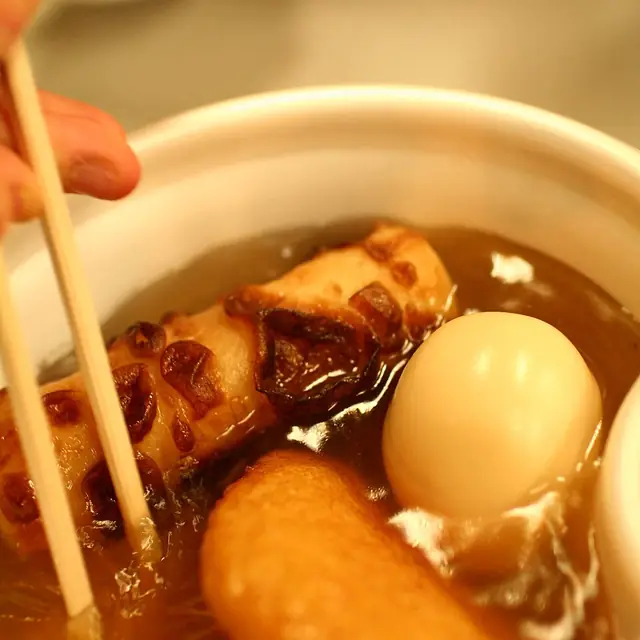
Oden traces to Muromachi-era miso-dengaku, but the simmered Kanto-style broth that defines Tokyo oden took shape in the late Edo period as street vendors moved indoors. The dish became a yatai (cart) and izakaya staple by the 1920s, and Tokyo's Kanto-shitate version (dark shoyu broth, no miso) is now the national reference. The dish peaks November to March; many Shinjuku and Asakusa specialists run an open clay pot at the counter from October through the new year.

Common allergens: Fish, Soy, Egg, Gluten

Make it at home

Yield 4Hands-on 30 minTotal 3 hrDifficulty Intermediate

Ingredients

  • 2L water
  • 20g kombu (dried kelp), 10cm square
  • 20g katsuobushi (dried bonito flakes)
  • 120ml shoyu (Japanese soy sauce)
  • 60ml mirin
  • 30g caster sugar
  • 1 large daikon radish, peeled and cut into 3cm-thick rounds
  • 4 hard-boiled eggs, peeled
  • 1 block konnyaku (200g), cut diagonally into triangles, scored on one side
  • 4 chikuwa (grilled fish-paste tubes)
  • 4 hanpen (white fish-paste squares)
  • 8 satsuma-age (fried fishcakes)
  • Karashi mustard, to serve

Method

  1. Soak the kombu in 2L cold water for 1 hour. Heat slowly to just below boiling and remove the kombu before it simmers.
  2. Add the katsuobushi to the kombu water, simmer 5 minutes off the heat, then strain through a fine sieve. Return the clear dashi to the pot.
  3. Add shoyu, mirin and sugar to the dashi. Bring to a gentle simmer.
  4. Parboil the daikon rounds in fresh water for 15 minutes until just translucent. Drain.
  5. Blanch the konnyaku for 2 minutes to remove any bitterness, drain.
  6. Add daikon and konnyaku to the dashi first; simmer 45 minutes at a bare simmer (do not boil hard or the broth clouds).
  7. Add the hard-boiled eggs and chikuwa; simmer another 30 minutes.
  8. Finally add hanpen and satsuma-age in the last 10 minutes (they overcook quickly).
  9. Serve each bowl with a selection of ingredients, a ladle of broth and a dot of karashi mustard on the rim.

Tip from the editors. Make a day ahead and rewarm; the daikon and eggs absorb the dashi overnight, which is the real secret. Skim the broth gently if it clouds and never let it boil.

Where to eat oden

Oden in Tokyo

Omoide Yokocho yakitori alley ★ 4.4

Japanese¥¥Until 00:00 (varies by stall)Cash only

Omoide Yokocho in Tokyo's Shinjuku runs 70 yakitori and offal stalls until midnight, the post-war alley north of the JR west exit. Bring cash and a friend.

Try: Yakitori sticks, motsuyaki offal, beer

Tip: Most stalls seat six to eight; arrive by 22:00 for a counter seat before the last-train rush.

Shinjuku Golden Gai ★ 4.3

Japanese¥¥Until 03:00-05:00 (varies by bar)Cash only

Shinjuku Golden Gai in Tokyo's Kabukicho is six narrow alleys of 200 themed bars, most open until 03:00. Each room seats four to ten people.

Try: Highball, sake, whisky pours

Tip: Most bars charge a 500-1,500 yen seating fee. Look for English-friendly signs after 22:00 if you do not speak Japanese.

Harmonica Yokocho ★ 4.0

Japanese¥¥

Harmonica Yokocho is post-war alley behind kichijoji station with 100 stalls, locals only, most of tokyo's tourists never make it this far west.

Why locals love it: Post-war alley behind Kichijoji station with 100 stalls, locals only, most of Tokyo's tourists never make it this far west.

Tip: The alley density makes any stall a discovery; after 19:00 the standing yakitori counters fill with locals.

More cities are in research. Want oden covered somewhere specific? Tell us where you want to eat.

Browse all dishes →