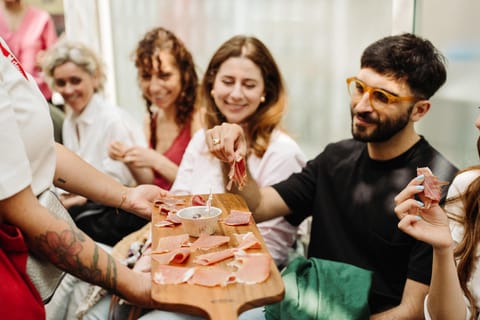
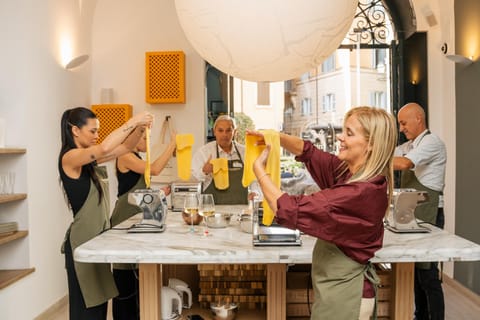
How Rome came to eat the way it does: the people, migrations and accidents that shaped the plate.
Key eras
1st century, Apicius and ancient Roman cuisine
The De Re Coquinaria, attributed to Marcus Gavius Apicius in the 1st century CE, is the oldest surviving cookbook from ancient Rome. It records the spice-and-garum-led elite cuisine of the Empire, with recipes for stuffed dormice, peacock, fermented fish sauce and the herb-and-honey sauces that defined Roman fine dining for 400 years.
1555, the Jewish Ghetto established
Pope Paul IV's bull Cum nimis absurdum confined Rome's Jews to the Ghetto along the Tiber on 14 July 1555, creating the conditions for the cucina giudaico-romanesca: the carciofo alla giudia, aliciotti con l'indivia, filetti di baccalà and the cherry-and-ricotta crostata of Pasticceria Boccione all trace to this 280-year cloistered period.
19th century, the Testaccio slaughterhouse and quinto quarto
The municipal slaughterhouse of Testaccio operated from 1888 to 1975, with the vaccinari (workers) paid in the unwanted fifth-quarter (quinto quarto) offal: oxtail, tripe, sweetbreads and pajata. The Testaccio trattorias around Monte dei Cocci codified these into the modern dishes, with Checchino dal 1887 the dynastic temple of the offal tradition.
1916-1924, the modern Roman bakery and pizza al taglio
Pasticceria Regoli (1916) codified the modern maritozzo con la panna. Forno Campo de' Fiori (1924, current ownership 1972) made pizza bianca the city's defining flatbread, sold by weight and eaten standing. The Rome pizza al taglio counter format that now defines every neighbourhood emerged from this 1920s working-class lunch tradition.
1960s-1990s, the trattoria canon
The four Roman pastas (carbonara, cacio e pepe, amatriciana, gricia) were codified into the trattoria canon during the post-war decades. Carbonara reached its modern form in the late 1940s; the Accademia Italiana della Cucina banned the cream addition in 1985. The Testaccio trattorias and the bistros of the Centro Storico set the canon that still defines Roman dining.
2008-now, modern Roman and the new wave
Stefano Callegari's Trapizzino (2008) reinvented the Roman street snack as a portable pizza-pocket sandwich. Gabriele Bonci's Pizzarium (2003) re-wrote pizza al taglio with long-fermented dough. Sarah Cicolini's Santo Palato (2018) put the quinto quarto offal grammar on the modern map. The new generation of Roman cooks now reads the bistro canon through a modern technique lens.
Immigrant influences
- Roman Jewish (Sephardic and Italki): The Ghetto's cooks created the cucina giudaico-romanesca canon of carciofo alla giudia, aliciotti con l'indivia and Boccione cherry-jam tart, with a 470-year continuous tradition since 1555.
- Lazio mountain (Castelli Romani, Amatrice): The shepherd cuisines of Amatrice, Norcia and the Castelli Romani brought guanciale, pecorino romano and the gricia-amatriciana axis to Rome's trattorias from the 19th century onward.
- Chinese: Chinese migration to Esquilino from the 1980s built the Nuovo Mercato Esquilino into a multi-ethnic food market, with Chinese groceries, Sichuan and Cantonese kitchens now part of the city's daily food map.
- North African and Middle Eastern: Egyptian, Lebanese and Tunisian migration to Esquilino and Pigneto from the 1980s brought halal kebab counters, Levantine mezze rooms and shawarma counters across the eastern quarter.
- Bangladeshi and Pakistani: South Asian migration to Esquilino from the 1990s built halal Pakistani-Indian kitchens around Piazza Vittorio, with biryani and Mughlai curry served alongside the multi-ethnic mercato stalls.
- Eritrean and Ethiopian: East African migration brought injera-and-stew restaurants to Termini-edge Esquilino and the Stazione Tiburtina quarter, with Ethiopian coffee ceremonies running alongside the Italian espresso tradition.
Signature innovations
- Garum and the spice-led elite cuisine, codified by Apicius 1st century
- Carciofo alla giudia, the twice-fried artichoke fritter, Ghetto 18th century
- Bouillon-and-bread pizza bianca, the working-quarter lunch flatbread
- The four Roman pastas (carbonara, cacio e pepe, amatriciana, gricia)
- Coda alla vaccinara, the slaughterhouse oxtail stew with cocoa finish
- Suppli al telefono, the saffron-tomato risotto-and-mozzarella fritter
- Maritozzo con la panna, the morning sweet bun with whipped cream, Regoli 1916
- Trapizzino, the pizza-pocket sandwich form, Stefano Callegari 2008
- Pizza al taglio reimagined with long-fermented dough, Gabriele Bonci 2003
Food History in Rome, FAQ
When is the best time to eat in Rome?
Peak food season in Rome is year-round.
What time do people eat in Rome?
Local dining hours: lunch around 12:30, dinner from 19:30.
How does tipping work in Rome?
service is typically included; small extra is welcome but not expected.
What is the one dish to try in Rome?
Ask the next local you meet what they would order. Rome rewards trust.