Signature dishes
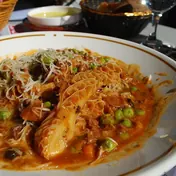
Small round pasta parcels filled with a long-braised beef and Parmigiano paste, served drowning in capon or mixed-meat broth. Parma's Christmas dish and its winter answer to every question.
Where: Ristorante Cocchi, Brisla Trattoria, Osteria del 36, Trattoria Il Cortile
Price: €12-16
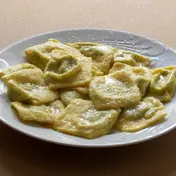
Square pasta parcels of ricotta and erbette chard, sauced with nothing but melted butter and a snowfall of Parmigiano Reggiano. Parma eats them year round and ritually on 23 June.
Where: Trattoria Ai Due Platani, I Tri Siochett, Trattoria Antichi Sapori, Trattoria Le Viole, Trattoria Corrieri
Price: €9-13
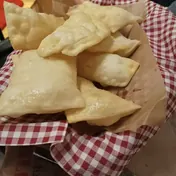
Pillows of leavened dough fried in strutto until they balloon hollow and golden, eaten hot with cold Parma salumi draped over so the fat softens against the crust.
Where: Gallo d'Oro, Trattoria del Grillo, Antica Osteria della Ghiaia, Trattoria Corrieri
Price: €6-10 with salumi
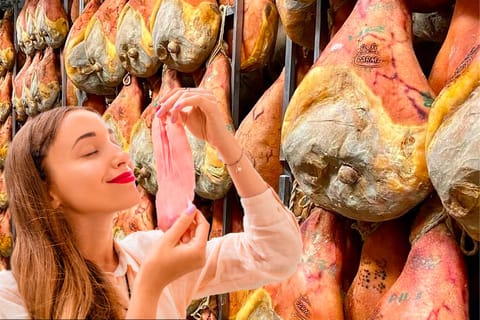
The DOP raw ham of the Langhirano hills: pork legs cured with sea salt and mountain air for 12 to 36 months, sweet where other hams are salty, sliced to silk in the city's salumerie.
Where: Trattoria Sorelle Picchi, Taverna del Castello, Salumeria Garibaldi, Trattoria del Grillo
Price: €10-16 a plate
The heart of the pork leg, hand-tied in a bladder and aged in the fog of the Po lowlands. Deeper, muskier and rarer than prosciutto, it is the salume Parma treats as treasure.
Where: Al Vedel, Antica Corte Pallavicina, La Filoma, Degusteria Romani, Osteria Ardenga
Price: €14-25 a plate
The granular, crystal-studded cheese aged 12 to over 100 months in the dairies around Parma. Eaten in chunks with balsamico, grated over everything, and visited at the source.
Where: Salumeria Garibaldi, Degusteria Romani, Podere Stuard
Price: €3-6 per etto to buy
A slim, gently spiced pork salame from the village of Felino in Parma's hills, IGP protected, cut on the diagonal into long ovals that show its coarse, wine-scented grain.
Where: Trattoria del Tribunale, I Pifferi, Trattoria Sorelle Picchi
Price: €8-12 a board
A moulded dome of rice baked around braised pigeon, unmoulded at the table like a savoury cake. Parma's grandest old-fashioned dish, revived by the city's younger kitchens.
Where: Brisla Trattoria
Price: €14-18
A ring of enriched rice baked in the crown-shaped savarin mould, its centre filled with creamy ragu or mushrooms. Parma borrowed the French shape and made it a Sunday dish.
Where: Trattoria Le Viole, Ristorante Cocchi
Price: €12-16
Raw minced horse meat seasoned with oil, salt and lemon, eaten cold with bread or torta fritta. Parma's frankest dish, still a lunchtime staple the city refuses to give up.
Where: Osteria Virgilio, Borgo 20, Pepen
Price: €8-14
Tripe stewed soft with tomato, butter and broth, finished under so much Parmigiano it barely needs the name explained. Market-day food that Parma's trattorias never dropped.
Where: Trattoria Antichi Sapori, Trattoria del Grillo, I Tri Siochett
Price: €10-14
Veal breast pocketed and stuffed with a Parmigiano-rich filling, roasted slowly and sliced to show the mosaic. The old Parma second course that separates tourist menus from real ones.
Where: Ristorante Cocchi, Osteria del 36
Price: €14-18
Anolini in brodo
Small round pasta parcels filled with a long-braised beef and Parmigiano paste, served drowning in capon or mixed-meat broth. Parma's Christmas dish and its winter answer to every question.
History: Anolini appear in Parma records from the Renaissance, when court cooks sealed braised meat into coin-sized pasta. The orthodox city filling uses stracotto, beef braised for many hours, worked with breadcrumbs and Parmigiano; toward the Bassa the filling goes cheese-only. Families still argue the point every December, when making anolini together the day before Christmas remains a household rite.
Where to try it: Ristorante Cocchi, Brisla Trattoria, Osteria del 36, Trattoria Il Cortile
Watch out for: Gluten, Egg, Milk
Tortelli d'erbetta
Square pasta parcels of ricotta and erbette chard, sauced with nothing but melted butter and a snowfall of Parmigiano Reggiano. Parma eats them year round and ritually on 23 June.
History: Tortelli d'erbetta are Parma's green-filled counterpart to the meat pastas of Bologna and Piacenza, documented across the province's farm kitchens for centuries. Erbette, a tender local chard, sets them apart from spinach imitations. On the eve of San Giovanni each 23 June the city holds tortellate, communal tortelli feasts under the stars, a custom osterias and courtyards still keep.
Where to try it: Trattoria Ai Due Platani, I Tri Siochett, Trattoria Antichi Sapori, Trattoria Le Viole, Trattoria Corrieri
Watch out for: Gluten, Egg, Milk
Torta fritta
Pillows of leavened dough fried in strutto until they balloon hollow and golden, eaten hot with cold Parma salumi draped over so the fat softens against the crust.
History: Torta fritta is Parma's name for the fried dough eaten across Emilia, gnocco fritto in Modena and chisolino toward Piacenza. Frying in strutto, rendered pork fat, ties it to the pig economy of the plain; the contrast of scalding pillow and cool prosciutto or culatello is the whole idea. Trattorias serve it by the basket as the opening move of any serious Parma meal, and the city stages contests over whose puffs highest.
Where to try it: Gallo d'Oro, Trattoria del Grillo, Antica Osteria della Ghiaia, Trattoria Corrieri
Watch out for: Gluten
Prosciutto di Parma
The DOP raw ham of the Langhirano hills: pork legs cured with sea salt and mountain air for 12 to 36 months, sweet where other hams are salty, sliced to silk in the city's salumerie.
History: Parma ham was praised by Roman writers, but the modern Prosciutto di Parma DOP is a discipline of geography: legs salted and aged in the valley south of the city, where air moving between Apennines and plain dries them slowly. Only salt is permitted. The consortium's ducal crown brands each approved ham, Langhirano cures most of them, and the September Festival del Prosciutto opens the curing houses to visitors.
Where to try it: Trattoria Sorelle Picchi, Taverna del Castello, Salumeria Garibaldi, Trattoria del Grillo
Culatello di Zibello
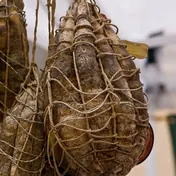
The heart of the pork leg, hand-tied in a bladder and aged in the fog of the Po lowlands. Deeper, muskier and rarer than prosciutto, it is the salume Parma treats as treasure.
History: Culatello di Zibello DOP belongs to the Bassa, the flat river country north of Parma where winter fog and summer heat swing the cellars through the cycles the meat needs. Documented at the Farnese court from the 15th century, it lost ground to industrial hams before Slow Food and a handful of families, the Spigaroli among them, rebuilt its name. Each piece ages 12 to 40 months tied in netting, checked by nose and needle.
Where to try it: Al Vedel, Antica Corte Pallavicina, La Filoma, Degusteria Romani, Osteria Ardenga
Parmigiano Reggiano
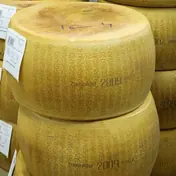
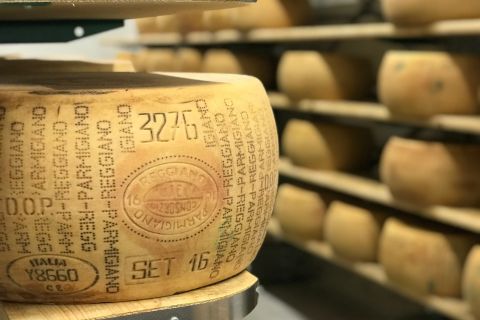
The granular, crystal-studded cheese aged 12 to over 100 months in the dairies around Parma. Eaten in chunks with balsamico, grated over everything, and visited at the source.
History: Benedictine and Cistercian monasteries drained the plain around Parma and Reggio in the Middle Ages and needed a cheese that kept; nine centuries later the recipe is still milk, salt, rennet and time. Boccaccio already joked about a mountain of grated Parmigiano in the 1350s. The consortium fire-brands every approved wheel, dairies like Gennari and San Pier Damiani welcome visitors to the morning make, and ageings now stretch past 100 months for collectors.
Where to try it: Salumeria Garibaldi, Degusteria Romani, Podere Stuard
Watch out for: Milk
Salame di Felino
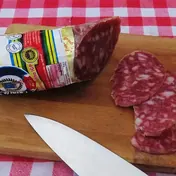
A slim, gently spiced pork salame from the village of Felino in Parma's hills, IGP protected, cut on the diagonal into long ovals that show its coarse, wine-scented grain.
History: Felino, a few kilometres southwest of Parma, has cured salame since at least the 18th century, when parish records priced it above other salumi. The IGP recipe is lean pork, salt, whole peppercorns and a splash of wine, aged in the same hill air that cures prosciutto. Its museum sits in Felino castle's cellars, and the diagonal cut is orthodoxy: longer slices, more aroma, thinner skin-to-meat ratio.
Where to try it: Trattoria del Tribunale, I Pifferi, Trattoria Sorelle Picchi
Bomba di riso
A moulded dome of rice baked around braised pigeon, unmoulded at the table like a savoury cake. Parma's grandest old-fashioned dish, revived by the city's younger kitchens.
History: Bomba di riso descends from the baroque timballi of the Farnese and Bourbon courts, filtered through the farm kitchens of the Parma Apennines where pigeon was the festive meat. The rice shell is enriched with butter and Parmigiano, the filling is pigeon braised with its livers, and the whole is baked in a buttered mould until it holds its shape. Nearly extinct by the 1990s, it has returned on revival menus, Brisla's Bib Gourmand kitchen among them.
Where to try it: Brisla Trattoria
Watch out for: Milk, Egg
Savarin di riso
A ring of enriched rice baked in the crown-shaped savarin mould, its centre filled with creamy ragu or mushrooms. Parma borrowed the French shape and made it a Sunday dish.
History: The savarin mould came from 19th-century French patisserie, named for the gastronome Brillat-Savarin, and Parma's cooks turned the sweet ring savoury during the French-inflected ducal years. The rice is bound with butter, eggs and Parmigiano like the bomba's shell, baked in the ring and unmoulded with its centre filled. Old bourgeois restaurants kept it alive; Cocchi and Le Viole still send it out on porcelain.
Where to try it: Trattoria Le Viole, Ristorante Cocchi
Watch out for: Milk, Egg
Pesto di cavallo
Raw minced horse meat seasoned with oil, salt and lemon, eaten cold with bread or torta fritta. Parma's frankest dish, still a lunchtime staple the city refuses to give up.
History: Horse butchery took root in Parma's Oltretorrente in the 19th century as cheap protein for the working quarter, and pesto di cavallo, hand-minced and simply dressed, became its signature. The dialect name caval pisst means pressed horse. Where much of Italy dropped the tradition, Parma kept dedicated butchers and put the dish on modern menus, from sandwich counters to bistrot reinterpretations.
Where to try it: Osteria Virgilio, Borgo 20, Pepen
Trippa alla parmigiana
Tripe stewed soft with tomato, butter and broth, finished under so much Parmigiano it barely needs the name explained. Market-day food that Parma's trattorias never dropped.
History: Tripe was the Ghiaia market's working lunch, cheap offal cooked long until silky, and alla parmigiana here means what it says: finished with abundant Parmigiano Reggiano and butter rather than baked like the southern aubergine dish. Thursday was the traditional tripe day across the city's osterias. The countryside trattorias around Parma, Gaione and Vigatto especially, still list it beside the tortelli as a loyalty test.
Where to try it: Trattoria Antichi Sapori, Trattoria del Grillo, I Tri Siochett
Watch out for: Milk
Punta di vitello ripiena
Veal breast pocketed and stuffed with a Parmigiano-rich filling, roasted slowly and sliced to show the mosaic. The old Parma second course that separates tourist menus from real ones.
History: Stuffed veal breast belongs to Parma's bourgeois Sunday kitchen: a cheap, fatty cut made grand with a filling of egg, Parmigiano, breadcrumbs and sometimes greens, sewn shut and roasted until sliceable. Gambero Rosso still singles out the version at Cocchi, and Osteria del 36 keeps it among its signatures. It is the dish to order where the menu is handwritten and the trolley still exists.
Where to try it: Ristorante Cocchi, Osteria del 36
Watch out for: Milk, Egg, Gluten