Signature dishes
Semolina rolled into rough pellets, toasted until nutty, then simmered in the broth of tiny arselle clams. It is the plate Cagliari is judged on, soupy rather than dry, eaten with a spoon in the Marina.
Where: Antica Hostaria
Price: €14-18
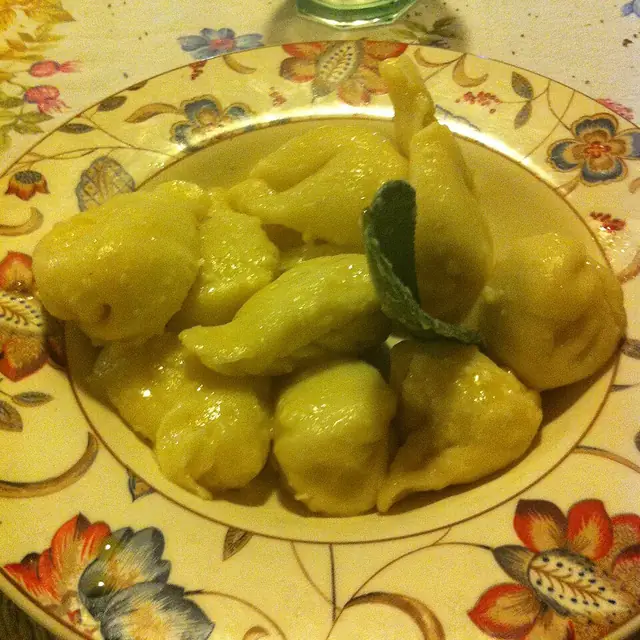
Wheat pasta parcels filled with potato, aged pecorino and mint, closed with a hand-pleated seam that looks like an ear of wheat. Served simply, in tomato sauce or with butter, so the seam and the filling do the work.
Where: Su Cumbidu
Price: €12-16
Ridged semolina shells, sometimes yellowed with saffron, in a sauce of crumbled fresh sausage and tomato, finished with grated pecorino. It is the Sunday pasta of the Campidano plain that Cagliari sits at the foot.
Where: Su Cumbidu
Price: €10-14
Suckling pig roasted whole over embers of myrtle and juniper until the skin crackles and the meat stays moist. In Cagliari it is a booked-ahead plate, ordered a day in advance and eaten in a group.
Where: Su Cumbidu
Price: €18-25 per person
Poached dogfish dressed in a cold sauce of its own liver pounded with walnuts, garlic and vinegar, then left a day or two to marinate. Casteddu is Cagliari in Sardinian, and this is the city's own plate.
Price: €12-16
Spaghetti stirred through raw sea urchin roe with oil and a little garlic, so the heat of the pasta warms the roe without cooking it. It is a winter plate on the Cagliari coast, made in minutes.
Price: €20-30
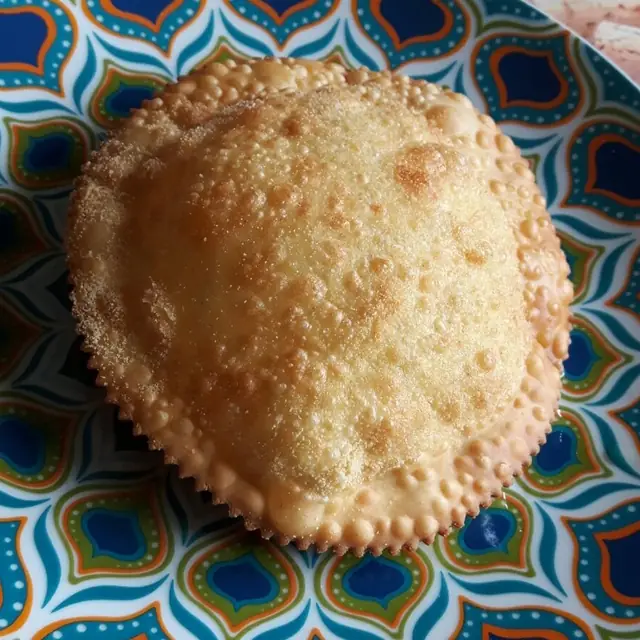
A large fried pastry parcel filled with fresh, slightly sour sheep cheese and lemon zest, poured over with bitter honey while still hot. Sardinia's cheese course and dessert in the same plate.
Where: Sa Schironada, Su Cumbidu
Price: €6-9
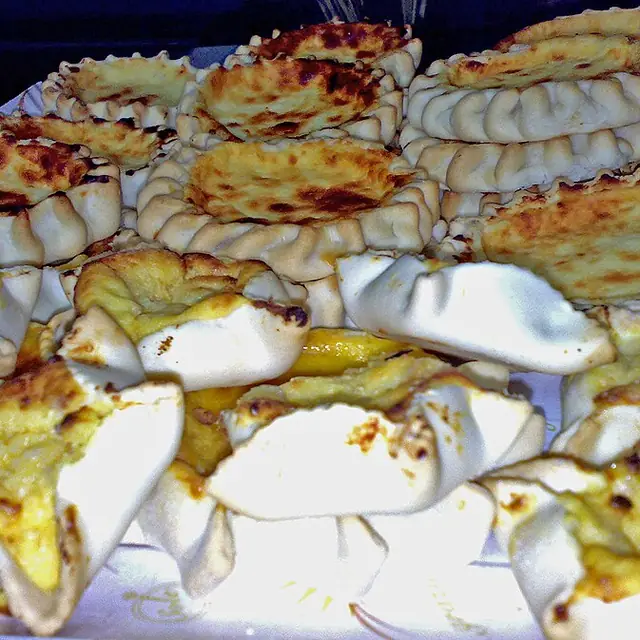
Open baskets of thin pastry pinched into points and filled with sweetened ricotta or fresh cheese, scented with saffron and lemon or orange zest. Cagliari bakes them for Easter and sells them all year.
Price: €1.50-2.50 each
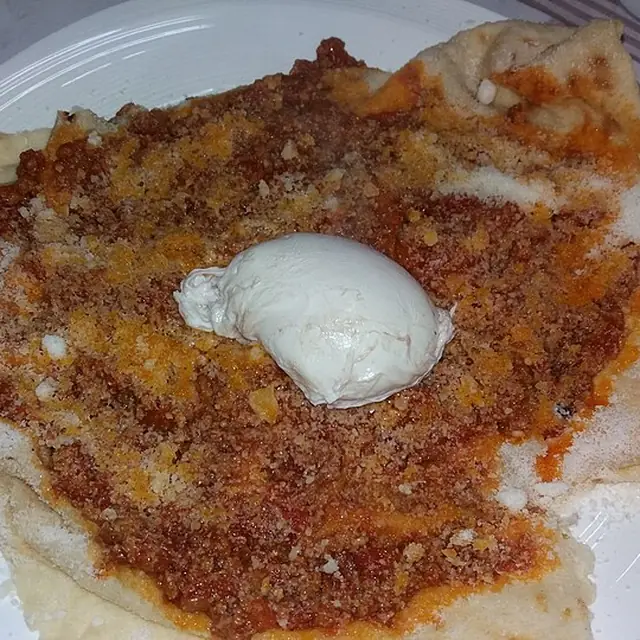
Sheets of pane carasau dipped in hot broth until they soften, layered with tomato sauce and grated pecorino, and topped with a poached egg. A shepherd's assembly that Cagliari treats as comfort food.
Where: Panefratteria
Price: €10-14
A palm-sized round of puff pastry topped with tomato, oregano and often capers or anchovy, sold from bakery counters all over Cagliari. The city's cheapest and most specific snack.
Where: Ditrizio Pasticceria
Price: €1.20-2.50 each
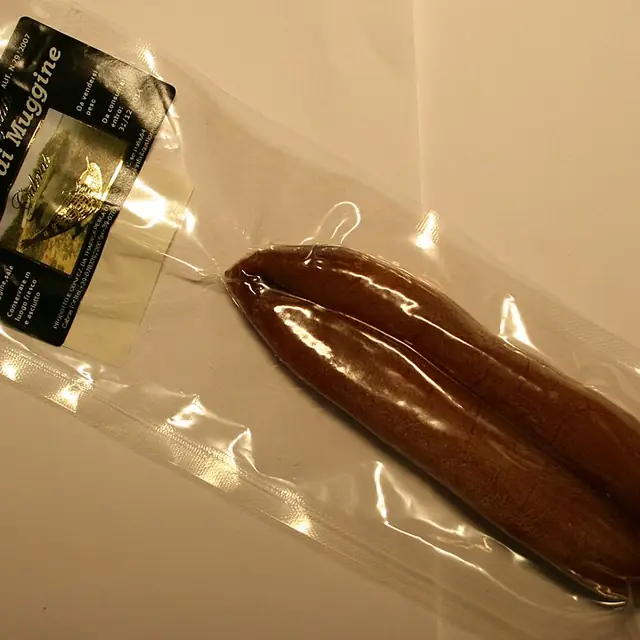
Grey mullet roe salted, pressed and air-dried into a firm amber block, then grated over pasta or sliced thin with oil. Sardinia's oldest export, and a standing fixture on Cagliari tables.
Price: €8-16 as a plate, €25-40 for 100g to take home
Fregola con le arselle
Semolina rolled into rough pellets, toasted until nutty, then simmered in the broth of tiny arselle clams. It is the plate Cagliari is judged on, soupy rather than dry, eaten with a spoon in the Marina.
History: Fregola is made by rubbing coarse semolina with salted water in a wide terracotta basin until it beads, then toasting the beads in the oven, which gives the pasta its colour and its smell. The technique is old and shared across the western Mediterranean, closest in method to North African couscous, and it has been documented in Sardinia for centuries. The arselle are the small clams raked from the lagoons and shallows around the Golfo degli Angeli, so the dish is a direct product of the water the city sits on. Cagliari serves it wetter than the inland versions, closer to a soup, with garlic, parsley, a little tomato and the clam liquor doing the seasoning.
Where to try it: Antica Hostaria
Watch out for: Gluten, Molluscs
Culurgiones
Wheat pasta parcels filled with potato, aged pecorino and mint, closed with a hand-pleated seam that looks like an ear of wheat. Served simply, in tomato sauce or with butter, so the seam and the filling do the work.
History: Culurgiones come from Ogliastra, on the eastern side of Sardinia, and have travelled to every table on the island including Cagliari's. The filling is a shepherd's economy: boiled potato, grated aged pecorino, olive oil or lard, and mint, which is what lifts the whole thing. The closure is the point of pride. The pleat, called spighitta after the wheat ear it resembles, is made by folding the dough over itself from side to side with the thumb and finger, and a badly stitched culurgione is a fair reason for criticism in Sardinia. The shape carries an older meaning as an offering, and in Ogliastra the parcels are still associated with the feasts of the dead in early November.
Where to try it: Su Cumbidu
Watch out for: Gluten, Dairy
Malloreddus alla campidanese
Ridged semolina shells, sometimes yellowed with saffron, in a sauce of crumbled fresh sausage and tomato, finished with grated pecorino. It is the Sunday pasta of the Campidano plain that Cagliari sits at the foot.
History: Malloreddus are shaped by pressing a thumb-sized piece of semolina dough against a ridged basket or board, which gives the ribbing that holds the sauce. The name comes from the Sardinian for small calves. The campidanese dressing takes its name from the Campidano, the wide plain running north from Cagliari, and it is built on the two things that plain produces: fresh pork sausage flavoured with fennel and myrtle, and tomatoes. Saffron, grown around San Gavino Monreale in the same plain, is stirred into the dough or the sauce in many households, which is why the pasta often arrives distinctly yellow. It is a dish of feast days and Sunday lunches rather than restaurant menus.
Where to try it: Su Cumbidu
Watch out for: Gluten, Dairy
Porceddu
Suckling pig roasted whole over embers of myrtle and juniper until the skin crackles and the meat stays moist. In Cagliari it is a booked-ahead plate, ordered a day in advance and eaten in a group.
History: Porceddu is the shepherds' roast of inland Sardinia, cooked for feast days and still the centrepiece for Christmas and family celebrations. The pig weighs four to six kilos, is split and spitted, and turns slowly beside rather than over the fire so the fat renders without scorching. Myrtle is the signature: branches are laid under the meat as it rests, or the roast is buried in myrtle leaves so the aromatic oils settle into the skin. In the city it is a restaurant dish rather than a home one, because few Cagliari kitchens have the space or the fire for it, and the rooms that do it well ask for 24 hours' notice.
Where to try it: Su Cumbidu
Burrida alla casteddaia
Poached dogfish dressed in a cold sauce of its own liver pounded with walnuts, garlic and vinegar, then left a day or two to marinate. Casteddu is Cagliari in Sardinian, and this is the city's own plate.
History: Burrida belongs to Cagliari specifically, which is why it carries the casteddaia name after Casteddu, the Sardinian name for the city. It is a preserving dish: gattuccio di mare, the small spotted dogfish, is poached, skinned and sliced, then covered in a sauce built from the fish's own liver crushed with walnuts, garlic, vinegar and oil. The acid and the fat keep it for several days, which mattered in a port where the catch arrived all at once. It is always eaten cold, as an antipasto, and it improves on the second day. Fewer kitchens make it now because the preparation is slow and the fish is less common than it was, so it is worth asking before you book rather than assuming it is on.
Watch out for: Fish, Nuts
Spaghetti ai ricci di mare
Spaghetti stirred through raw sea urchin roe with oil and a little garlic, so the heat of the pasta warms the roe without cooking it. It is a winter plate on the Cagliari coast, made in minutes.
History: Sea urchins have been harvested along the Sardinian coast for as long as anyone has written about it, and around Cagliari the ricci season traditionally runs from November to April, when the roe is full. The dish is deliberately minimal: the urchin roe is scooped from the shell and folded through hot spaghetti with olive oil, a little garlic and parsley, and nothing else, because cream or tomato would bury it. The catch has been under pressure in recent years and the regional fishery has been restricted to let stocks recover, so the plate now appears on Marina menus only when the season and the rules allow it.
Watch out for: Gluten, Molluscs
Seadas
A large fried pastry parcel filled with fresh, slightly sour sheep cheese and lemon zest, poured over with bitter honey while still hot. Sardinia's cheese course and dessert in the same plate.
History: Seadas, also written sebadas, were originally a shepherd's dish from the interior rather than a sweet: fresh acidic sheep cheese, a few days old, sealed inside a semolina and lard pastry and fried. The sweetness came later, in the form of honey poured over the top at the table, traditionally corbezzolo honey from the strawberry tree, which is bitter and expensive and the only version Sardinians consider correct. In Cagliari the pastry closes almost every traditional meal, and the test of a good one is that the cheese pulls into strings when it is cut and the pastry stays crisp under the honey.
Where to try it: Sa Schironada, Su Cumbidu
Watch out for: Gluten, Dairy
Pardulas
Open baskets of thin pastry pinched into points and filled with sweetened ricotta or fresh cheese, scented with saffron and lemon or orange zest. Cagliari bakes them for Easter and sells them all year.
History: Pardulas, called casadinas in parts of the interior, are the Easter bake of southern Sardinia. The pastry is semolina worked with lard and water, rolled thin, cut into discs and pinched up around the filling in six or seven points so the top stays open. The filling is fresh sheep ricotta or a soft cheese, sugar, egg and saffron, which gives the crown its yellow colour, plus lemon or orange zest. Saffron has been grown in the Campidano plain north of Cagliari for centuries and is what separates a Sardinian pardula from any other ricotta tartlet. City pastry houses now bake them year round.
Watch out for: Gluten, Dairy, Eggs
Pane frattau
Sheets of pane carasau dipped in hot broth until they soften, layered with tomato sauce and grated pecorino, and topped with a poached egg. A shepherd's assembly that Cagliari treats as comfort food.
History: Pane carasau is the flatbread of the Sardinian interior, baked twice so it keeps for months, which is why shepherds carried it and why every island table has it. Pane frattau is what you do with it when you are home: soften the sheets in hot broth, layer them with tomato sauce and grated aged pecorino, stack three or four deep, and finish with a poached egg so the yolk runs into the layers. The name comes from the Sardinian for crumbled or broken up. It is a dish of the Barbagia and the Nuoro region that has moved into city kitchens, and in Cagliari it has its own dedicated restaurant on Via Azuni.
Where to try it: Panefratteria
Watch out for: Gluten, Dairy, Eggs
Pizzetta sfoglia cagliaritana
A palm-sized round of puff pastry topped with tomato, oregano and often capers or anchovy, sold from bakery counters all over Cagliari. The city's cheapest and most specific snack.
History: The pizzetta sfoglia is a post-war Cagliari invention, dated by local accounts to the 1950s. The story told in the city is that a pastry chef with puff pastry left over from croissant production cut it into small discs and dressed them with tomato sauce and capers from Selargius, and that the snack caught on because it was cheap, filling and portable in a city rebuilding after the 1943 bombing. It has stayed a bakery product rather than a pizzeria one, sold by the piece from counters across Villanova, Stampace and the Marina, eaten standing up at breakfast or as an afternoon fill.
Where to try it: Ditrizio Pasticceria
Watch out for: Gluten, Fish
Bottarga di muggine
Grey mullet roe salted, pressed and air-dried into a firm amber block, then grated over pasta or sliced thin with oil. Sardinia's oldest export, and a standing fixture on Cagliari tables.
History: Bottarga is made by lifting the intact roe sac from a grey mullet, salting it, pressing it flat under weights and drying it in air for weeks until it firms into a translucent block. The technique is Phoenician in origin and the lagoons around Cagliari and Cabras have supplied the fish for it since antiquity, which makes bottarga arguably the oldest continuously traded Sardinian food. Mullet bottarga, di muggine, is finer and more expensive than the tuna version. In Cagliari it appears grated over spaghetti with oil and garlic, shaved raw over artichoke or celery, or simply sliced with a little oil as an antipasto.
Watch out for: Fish