
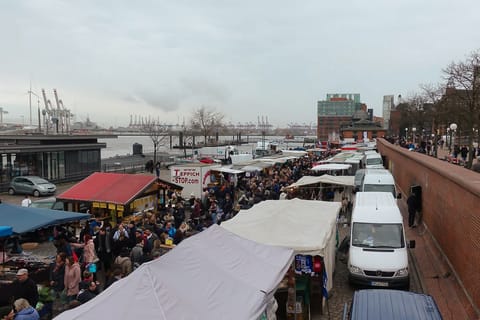
The plates that define Hamburg: what they are, where they came from, and where to eat the canonical version.
Signature dishes
-
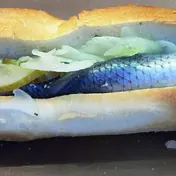
Fischbroetchen ★ 4.9
Hamburg's defining lunch is a fresh-baked roll filled with pickled herring (Matjes, Bismarckhering, Rollmops), fried fish (Backfisch) or North Sea brown shrimp (Krabben), with onion and remoulade.
Where to try it: Bruecke 10, Fishbar Originale Hamburger Fischbroetchen, Fischbroetchen Koenig, Underdocks, Fischbroetchenbude Blankenese
Price: €4-9
The Fischbroetchen tradition grew from the Hanseatic harbour in the 19th century, when herring-curing was Hamburg's biggest export industry. Kiosks at the Landungsbruecken sold fish in rolls to harbour workers from the 1870s; by 1910 Hamburg had 200 dedicated Fischbroetchen counters. The Bismarckhering style (vinegar-cured raw herring) was patented by Hamburg merchant Johann Wiechmann in 1900. Today Bruecke 10 and Fishbar Originale on the Landungsbruecken cook the canonical Hamburg versions.
Watch out for: Fish, Gluten
-
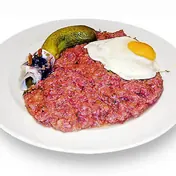
Labskaus ★ 4.8
Hamburg's canonical sailor's hash combines corned beef, mashed potato, beetroot and onion into a pink mash, served with a fried egg on top, pickled herring (Rollmops) on the side.
Where to try it: Old Commercial Room, Deichgraf, Fischereihafen Restaurant
Price: €12-22
Labskaus originated as a Hanseatic and British sailors' dish, a way to mash whatever was on board into one plate (potato, beef, fish, beetroot) on long voyages. The name comes from the English lobscouse, traced to Liverpool in the 18th century, with the Hamburg version codified by the 19th century. The Old Commercial Room on Englische Planke (opened 1795) is the city's canonical Labskaus address. By Hanseatic tradition the dish includes a fried egg, Rollmops and gherkin alongside.
Watch out for: Egg, Fish (in Rollmops)
-

Franzbroetchen ★ 4.7
Hamburg's own cinnamon pastry is a flat, flaky, crushed-and-pressed cinnamon-sugar roll, baked with butter laminations and a sticky caramelised base, eaten warm with morning coffee.
Where to try it: Nur Hier Osterstrasse, Nur Hier Rentzelstrasse, Dat Backhus Neuer Steinweg, Junge Die Baeckerei, Effenberger Vollkornbaeckerei
Price: €1-2.50
The Franzbroetchen originated in Hamburg in the early 19th century, when French Napoleonic troops occupied the city between 1806 and 1814 and brought the French Croissant. Hamburg bakers adapted the laminated dough into a flat, pressed form with cinnamon and sugar, calling it the French roll (Franzbroetchen). The dish stayed Hamburg-exclusive for nearly 200 years; Nur Hier, Dat Backhus and Junge are the canonical chains today, with smaller bakeries like Effenberger running handmade versions.
Watch out for: Gluten, Dairy, Egg
Book food experiences in Hamburg
-

Hamburger Aalsuppe ★ 4.4
Hamburg's eel soup is a sweet-and-sour Hanseatic broth, despite the name often historically a soup of dried fruit, vegetables, meat and bones, with eel as an optional traditional addition.
Where to try it: Old Commercial Room, Fischereihafen Restaurant, Deichgraf
Price: €9-16
Aalsuppe's name confused for centuries; Hanseatic Plattdeutsch "aal" means "all" (Allesuppe, all-bits soup), not eel (Aal). The dish was a working-class Sunday soup of leftover bits with dried pears, apples, prunes, vegetables and pork bones, with eel added by harbour-side cooks who had river eels in season. The sweet-sour combination is the Hanseatic signature. Old Commercial Room and Fischereihafen Restaurant cook the canonical Hamburg versions; the optional eel addition is now standard in tourist-facing rooms.
Watch out for: Fish, Sulphites (in vinegar)
-
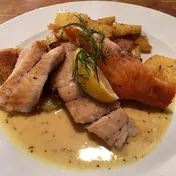
Pannfisch ★ 4.5
Pannfisch is Hamburg's pan-fried fish plate, traditionally yesterday's roasted fish or fresh white fish from the harbour, served with fried potatoes, mustard sauce and chopped pickle.
Where to try it: Landhaus Scherrer, Old Commercial Room, Fischereihafen Restaurant
Price: €16-28
Pannfisch began as a frugal Hamburg fishmonger's dish in the 18th century, made from leftover roasted fish reheated in a hot pan with butter, potatoes and a mustard cream. By the 19th century it became a staple of the Imbiss and Hanseatic tavern menu, made fresh from cod or plaice with herbs and a sharp mustard sauce. Landhaus Scherrer in Altona is the canonical fine-dining Pannfisch; Old Commercial Room and Fischereihafen Restaurant serve the standard tavern version with Bratkartoffeln.
Watch out for: Fish, Dairy, Mustard
-
Rundstueck Warm ★ 4.3
Hamburg's working-class roast-beef sandwich is a round bread roll filled with thinly-sliced roast beef and gravy, served warm and dripping. The probable ancestor of the modern hamburger.
Where to try it: Old Commercial Room, Deichgraf
Price: €10-16
Rundstueck Warm originated in 19th-century Hamburg as a working-class harbour-worker lunch, slices of roast beef in a round bread roll (Rundstueck) with the cooking gravy poured over. The dish gives Hamburg its name-share with the modern hamburger; food historians trace the hamburger via German immigrants to New York and to Texas in the 1880s. The original Rundstueck Warm is now rare; the Old Commercial Room and a handful of traditional taverns still serve it.
Watch out for: Gluten
-
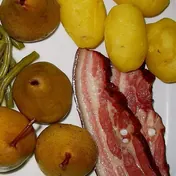
Birnen Bohnen und Speck ★ 4.2
This north German autumn classic combines green beans, pears and smoked bacon in one pot, the sweet-savoury-smoky balance the signature of Hanseatic seasonal cooking.
Where to try it: Old Commercial Room, Fischereihafen Restaurant, Deichgraf
Price: €11-18
Birnen Bohnen und Speck dates to 17th-century North German farm cooking, when the late-summer green-bean and pear harvests overlapped. Hamburg adopted the dish from the Schleswig-Holstein hinterland through the 19th century. The recipe is fixed: green beans, small whole hard pears (Kochbirnen), thick-sliced smoked bacon, savory (Bohnenkraut), and salted potatoes alongside. Old Commercial Room and Fischereihafen Restaurant cook the seasonal version through August and September.
Watch out for: Pork
-
Matjes ★ 4.3
Matjes is young, lightly-cured Atlantic herring, eaten raw with onion and apple, the canonical North Sea catch on a Fischbroetchen or a cold plate with fried potatoes and gherkin.
Where to try it: Bruecke 10, Fishbar Originale Hamburger Fischbroetchen, Fischmarkt Altona, Old Commercial Room
Price: €5-14
Matjes-curing dates to 15th-century Dutch fishermen who developed the gibbing technique of removing only the gills and intestine, leaving the pancreas to cure the herring with its own enzymes. The Hamburg Fischmarkt has sold Matjes since 1703. The Matjes season runs June to August, when the herring is at its fattest pre-spawning; the first Matjes catch each year is celebrated at the Hamburg Fischmarkt with public tastings on the dock.
Watch out for: Fish
-
Schnuesch ★ 4.1
Schnuesch is the North German vegetable stew of early summer, with carrots, peas, beans, kohlrabi and potatoes cooked together with smoked bacon, finished with cream and dill.
Where to try it: Old Commercial Room, Deichgraf
Price: €12-18
Schnuesch is a Schleswig-Holstein and Hamburg-hinterland seasonal vegetable stew, eaten when the first early-summer vegetables come to the markets in June. The Plattdeutsch name means snicker (chop) and refers to the small-diced cuts. Hamburg taverns serve it from June to August as a vegetarian-friendly summer alternative to the heavier Birnen Bohnen und Speck. Old Commercial Room cooks the canonical version with optional smoked bacon.
Watch out for: Dairy
-
Rote Gruetze ★ 4.3
Rote Gruetze is the north German red-berry pudding, a thickened compote of red currants, raspberries, cherries and strawberries served cold with vanilla cream or milk.
Where to try it: Old Commercial Room, Deichgraf, Fischereihafen Restaurant
Price: €5-12
Rote Gruetze dates to 17th-century North German peasant cooking, when the late-summer berry harvests overlapped. The Hamburg version uses red currants, raspberries, cherries and strawberries thickened with potato starch (formerly with semolina); served cold with vanilla cream, vanilla sauce or full-cream milk. Every Hamburg dessert menu in July and August carries Rote Gruetze; Old Commercial Room and Deichgraf use the canonical Hamburg recipe.
Watch out for: Dairy
-
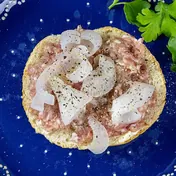
Mettbrötchen ★ 4.3
Raw seasoned ground pork (Mett) piled on a sliced Brötchen with rings of raw white onion and a turn of black pepper. The North German butcher-counter snack, eaten at room temperature.
Where to try it: Erika's Eck, Fischmarkt Altona
Price: €3-5
Mett (raw seasoned pork) has been a German butcher's staple since at least the 18th century, regulated under modern food law: the pork must be processed and chilled the same day, and contains less than 35 percent fat. The Mettbrötchen is a Northern German butcher-counter and bakery snack rather than a Hamburg-specific dish, but Hamburg butcher counters and St Pauli Imbiss windows serve it the same way; Erika's Eck in the entertainment district is the cult late-night Mett stop.
Watch out for: Gluten
-
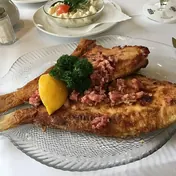
Finkenwerder Scholle ★ 4.6
Whole plaice pan-fried in butter, served with crispy fried bacon (Speck), tiny North Sea brown shrimp and parsley potatoes. The Elbe-island Finkenwerder signature, peaks in May with Maischolle.
Where to try it: Deichgraf, Fischereihafen Restaurant, Fischmarkt Altona
Price: €22-34
Finkenwerder Scholle is named for Hamburg's Finkenwerder peninsula on the southern Elbe, historically the city's fishing-cutter base. The plaice-with-bacon combination dates to the late 19th century when Finkenwerder's fishing community paired the day's catch with the island's smoked pork. The dish is at its peak in May when the young Maischolle arrives at Hamburg's fish markets. Today Deichgraf on Deichstrasse, Fischereihafen Restaurant on the Altona working harbour and Anno 1905 in Finkenwerder all serve the canonical version with bacon sauce, brown shrimp and boiled potatoes through plaice season.
Watch out for: Fish, Crustacean, Gluten
Signature Dishes in Hamburg, FAQ
What food is Hamburg known for?
Hamburg's signature dishes include Fischbroetchen, Labskaus, Franzbroetchen, Hamburger Aalsuppe, Pannfisch. See our signature dishes chapter for where to eat each.