.jpg)

London
Guided tour · 3 hours
Obi's African & Caribbean Food Tour in Brixton
Join us on a journey through multicultural Brixton, uncovering hidden gems and indulging in delicious African and Caribbean cuisine. If you love...
from£90Check dates
11 editor-picked west african restaurants across 8 cities.
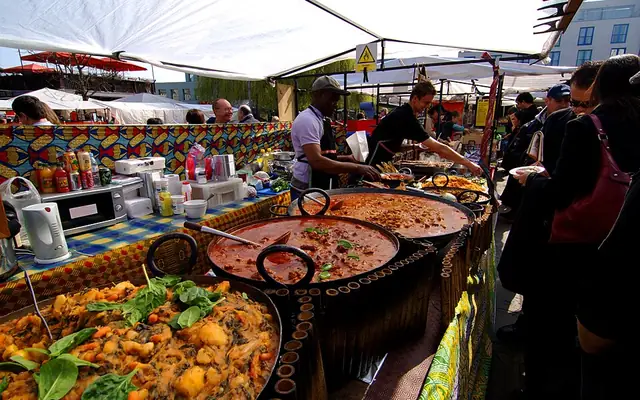
West African cuisine is the cooking of the Atlantic-coast and Sahel countries from Senegal in the north to Cameroon in the south, a region of roughly 400 million people and a food culture that has shaped Brazilian, Caribbean, southern American, and Afro-Latin cooking through the legacy of the trans-Atlantic slave trade. The grammar is built on starchy staples (rice, fufu, fonio, attiéké, plantain, yam, cassava), a deep stew and soup tradition (peanut stew, palm-nut soup, okra-and-fish stews, leaf-based stews), smoked and dried fish for umami, and a sharp use of Scotch bonnet chile for heat. Palm oil and groundnut (peanut) are the defining cooking fats and flavor builders.
The centerpiece dish across most of the region is jollof rice, the tomato-and-onion-stewed rice that is the cause of one of the world's longest-running food rivalries (the so-called Jollof Wars between Nigeria, Ghana, and Senegal, where the dish originated as thieboudienne). Each country claims the best version, and the differences (parboiled basmati versus long-grain, smoky bottom versus clean rice, with or without scotch bonnet) are real and worth tasting through.
West African cooking is one of the great underrepresented cuisines in the global restaurant landscape: deep, complex, and largely invisible outside the diaspora. The recent emergence of chefs like Pierre Thiam (Senegalese, New York) and Eric Adjepong (Ghanaian-American) has begun to shift this, and London now holds the strongest West African restaurant scene outside the region. Ikoyi in London became the first West African-influenced restaurant to win two Michelin stars in 2022, an inflection point for the cuisine's global recognition. The pantry's distinctive ingredients (uda, alligator pepper, locust bean, palm oil, baobab, fonio) are slowly entering the fine-dining lexicon worldwide, and the next decade is likely to see West African cooking move from underrepresented to fully integrated into the global culinary conversation.
Tours, tastings and classes that match this page, bookable on GetYourGuide.
Guided tour · 3 hours
Join us on a journey through multicultural Brixton, uncovering hidden gems and indulging in delicious African and Caribbean cuisine. If you love...
2h 30m
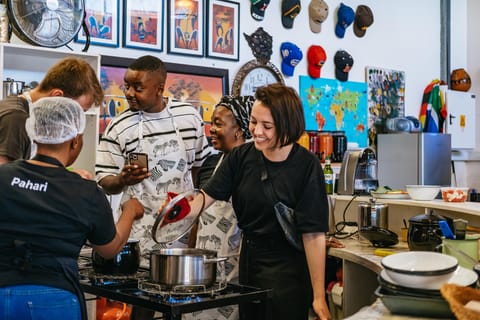
Discover how to cook a traditional African meal from start to finish with this hands-on cooking class in Cape Town. Try some tasty dishes along with...
Guided tour · 3 hours
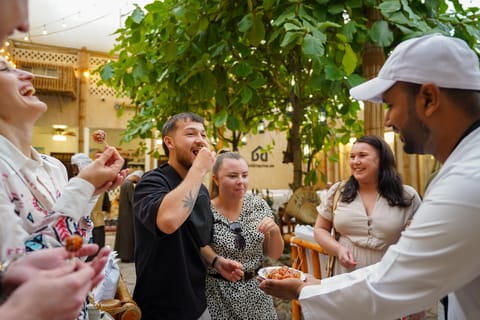
Experience Dubai's old town on a guided tour in the Al Fahidi district. Visit an Emirati Heritage House, savor street food, explore vibrant souks,...
Guided tour · 3 hours
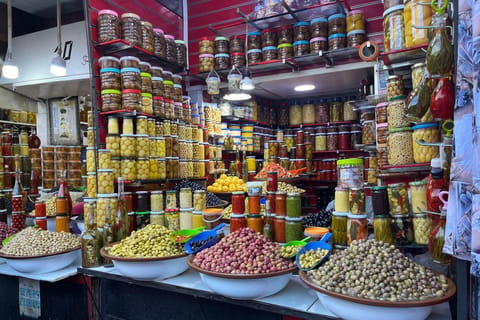
Sample dishes you've never heard of and learn about typical Moroccan fare on a guided Street Food Tour in Marrakech. Explore with a foodie and savor...
The best-scored west african place in each of 8 cities.
Jeremy Chan and Ire Hassan-Odukale's West African-influenced tasting room on the Strand in London, opened 2017, Michelin two-starred and 50 Best listed.
OrderPlantain with raspberry-scotch-bonnet salt, the dish that has stayed on the menu since opening.
Book8 weeks ahead
TipCounter seats look directly at the pass; book the corner for two and watch every plate go out.
Rotterdam's most under-visited market in the Feyenoord quarter where the full Surinamese, Turkish, Moroccan, and West African grocery and street-food scene.
Why locals goSouth of the Maas and away from tourist areas; guidebooks rarely mention it
Kenneh on Nassaukade is the Amsterdam West African room, jollof rice, suya, fried plantain, the menu Adekunle Owolabi built around home cooking.
OrderJollof rice with suya skewers; plantain on the side.
TipBring a group; the menu rewards sharing. Reservation strongly advised on weekends.
Kwabo serves halal Afro-fusion street food, burgers and sandwiches on Rue de Courcelles in Reims, with a second menu themed on an African country each month.
TryAfro-fusion burgers and sandwiches
TipThe Master Chang beef sandwich, inspired by Benin street food, costs €9.90; tables can be booked online, by phone or by email.
Mama Afrika in Marrakech's Gueliz plates Afro-fusion under tribal-art ceilings, with a vegan-friendly menu and Monday-night live reggae-jazz Mama Jam sets.
OrderThe Afro-fusion bowl of the week; the vegan menu is one of the deepest in Gueliz.
TipMonday live music nights fill up; reserve. Vegetarians can build a full meal across the appetizer list.
Le Comptoir Général in Paris's 10e is the canal-side African-themed bar-restaurant in a converted warehouse, with West African plates and a hibiscus bar.
TryBissap juice and West African plates
TipOpen from 18:00 Tue-Sun; live DJ Thu-Sat from 22:00. The kitchen serves until 01:00 nightly.
Wakanda on Bree Street in Cape Town cooks a West African menu of plantain chips, catfish pepper soup and egusi stew in a small, calm dining room.
OrderCatfish pepper soup with a side of plantain chips
TipCome hungry, portions are generous and the egusi stew is meant to be eaten slowly with company.
Africana Home Restaurant serves Nigerian jollof rice and grills from a mezzanine room near Al Sabkha Street in Deira, Dubai, open until 02:00.
Why locals goIt trades from a mezzanine near the Al Sabkha Hotel, a floor that most people walking past on the street never notice.
TipOrder the jollof rice with grilled tilapia.
Jeremy Chan and Ire Hassan-Odukale's West African-influenced tasting room on the Strand in London, opened 2017, Michelin two-starred and 50 Best listed.
OrderPlantain with raspberry-scotch-bonnet salt, the dish that has stayed on the menu since opening.
Book8 weeks ahead
TipCounter seats look directly at the pass; book the corner for two and watch every plate go out.
Rotterdam's most under-visited market in the Feyenoord quarter where the full Surinamese, Turkish, Moroccan, and West African grocery and street-food scene.
Why locals goSouth of the Maas and away from tourist areas; guidebooks rarely mention it
Kenneh on Nassaukade is the Amsterdam West African room, jollof rice, suya, fried plantain, the menu Adekunle Owolabi built around home cooking.
OrderJollof rice with suya skewers; plantain on the side.
TipBring a group; the menu rewards sharing. Reservation strongly advised on weekends.
Kwabo serves halal Afro-fusion street food, burgers and sandwiches on Rue de Courcelles in Reims, with a second menu themed on an African country each month.
TryAfro-fusion burgers and sandwiches
TipThe Master Chang beef sandwich, inspired by Benin street food, costs €9.90; tables can be booked online, by phone or by email.
Aji Akokomi and Ayo Adeyemi's West African tasting-menu kitchen on Berners Street in Fitzrovia London, opened 2020 and Michelin-starred since 2022.
OrderThe Suya-spiced lamb course and whatever the smoked-jollof preparation is on the night.
Book6 weeks ahead
TipSit at the counter to watch the open kitchen. Wine pairing leans into Lebanese, South African and English wines.
Mama Afrika in Marrakech's Gueliz plates Afro-fusion under tribal-art ceilings, with a vegan-friendly menu and Monday-night live reggae-jazz Mama Jam sets.
OrderThe Afro-fusion bowl of the week; the vegan menu is one of the deepest in Gueliz.
TipMonday live music nights fill up; reserve. Vegetarians can build a full meal across the appetizer list.
Le Comptoir Général in Paris's 10e is the canal-side African-themed bar-restaurant in a converted warehouse, with West African plates and a hibiscus bar.
TryBissap juice and West African plates
TipOpen from 18:00 Tue-Sun; live DJ Thu-Sat from 22:00. The kitchen serves until 01:00 nightly.
Wakanda on Bree Street in Cape Town cooks a West African menu of plantain chips, catfish pepper soup and egusi stew in a small, calm dining room.
OrderCatfish pepper soup with a side of plantain chips
TipCome hungry, portions are generous and the egusi stew is meant to be eaten slowly with company.
Africana Home Restaurant serves Nigerian jollof rice and grills from a mezzanine room near Al Sabkha Street in Deira, Dubai, open until 02:00.
Why locals goIt trades from a mezzanine near the Al Sabkha Hotel, a floor that most people walking past on the street never notice.
TipOrder the jollof rice with grilled tilapia.
 Reims3 places
Kwabo
Reims3 places
Kwabo
 London2 places
Ikoyi, Akoko
London2 places
Ikoyi, Akoko
 Amsterdam1 place
Kenneh
Amsterdam1 place
Kenneh
 Cape Town1 place
Wakanda African Restaurant
Cape Town1 place
Wakanda African Restaurant
 Dubai1 place
Africana Home Restaurant
Dubai1 place
Africana Home Restaurant
 Marrakech1 place
Mama Afrika
Marrakech1 place
Mama Afrika
 Paris1 place
Le Comptoir Général
Paris1 place
Le Comptoir Général
 Rotterdam1 place
Afrikaandermarkt
Rotterdam1 place
Afrikaandermarkt
Thieboudienne (the ancestor of jollof rice, with broken rice, fish, and tomato), yassa (chicken or fish with mustard-onion-lemon sauce), mafe (peanut stew), and a strong fish-and-rice coastal tradition. The Senegalese kitchen is widely considered the most refined in the region.
Jollof rice (the most internationally visible Nigerian dish), egusi soup (melon-seed stew with goat or beef and leafy greens), pounded yam with vegetable soup, suya (spiced grilled meat), and the strongest pepper soup tradition. The largest food economy in the region.
Ghana jollof (often considered the rival to Nigeria's), waakye (rice and beans with stew, the national breakfast), kelewele (spiced fried plantain), fufu with peanut soup or light soup, banku (fermented corn dumpling) with tilapia and pepper sauce.
Attiéké (fermented cassava couscous, the national starch), kedjenou (slow-cooked chicken or guinea fowl in a sealed pot), aloko (fried plantain). French-Ivorian colonial overlay still visible in the bistro scene.
Ndolé (bitter-leaf stew with shrimp and peanut, Cameroon's national dish), poulet DG (chicken with plantain), and a transition zone toward Central African flavors.
A West African restaurant meal is built around the starch-and-stew pair. Pick your starch first (jollof, fufu, pounded yam, waakye, attiéké, banku), then pick the stew or protein (egusi, peanut, yassa, suya, grilled tilapia, goat pepper soup). Sides are typically fried plantain, kelewele, or a fresh salad. Suya is a snack or appetizer course, eaten with raw onion and tomato. Wash hands before fufu, as it is eaten by hand: pinch off a piece, dip in stew, swallow without chewing (chewing the fufu changes the texture in a way locals dislike).
The rookie mistakes: under-ordering stew (a small portion of stew with a large fufu is the local proportion), expecting jollof to taste like Mexican rice (the smoke-flavor of party jollof is the dish, not a defect), being put off by the slimy texture of okra-based stews (it is intentional), and skipping suya as a starter (it is one of the great street meats in the world).
Palm wine, the fermented sap of the oil palm or raffia palm, is the traditional West African alcohol, served fresh and cloudy. Bissap (hibiscus drink, often spiked with mint or ginger), ginger beer (the West African version is sharper than Caribbean), tamarind drink, baobab juice (bouye), and zobo are the universal non-alcoholic options. Imported lager (Star in Ghana, Castle in southern Africa, Gulder and Star in Nigeria) is widely drunk with food. With suya, an ice-cold beer is the canonical pairing. With pepper soup, the heat does the work, and water is the companion.
Lagos and Accra are the great urban food scenes, with the deepest restaurant cultures in the region. Dakar for Senegalese refinement and the best thieboudienne. Abidjan for French-Ivorian fusion and attiéké. Outside the region, London is the best West African food city in the world, with serious Nigerian, Ghanaian, and Senegalese restaurants (Chuku's, Akoko, Ikoyi). Houston and Atlanta have strong Nigerian-Ghanaian diaspora scenes; Paris and Brussels for francophone West African; New York for Senegalese (Le Grand Dakar legacy, Pierre Thiam projects). Most of the world's great West African cooking is still unrepresented internationally.
West African cuisine descends from the agricultural civilizations of the Sahel and the Atlantic coast, with yam, sorghum, millet, and palm oil cultivation going back millennia. The trans-Atlantic slave trade (16th to 19th century) carried West African cooking techniques (rice cultivation, okra, black-eyed pea, palm oil, gumbo grammar) to the Americas, where they shaped the cuisines of Brazil, the Caribbean, Louisiana, and the American South. Senegalese thieboudienne was added to the UNESCO Intangible Cultural Heritage list in 2021.
An unresolved and intentionally unresolved debate. Nigerian party jollof leans on long-grain rice with a smoky bottom layer; Ghanaian jollof often uses basmati and is considered less smoky but more aromatic. Senegalese thieboudienne, the actual ancestor of both, is technically the original answer.
Often, yes, with scotch bonnet as the primary chile. The heat is built into the stews rather than added at the table. That said, milder versions are common, and family cooks adjust scotch bonnet up or down based on the eaters.
Stew, almost always. The fufu is the carbohydrate vehicle; the stew (peanut soup, light soup, palm-nut soup, egusi, okra) is the flavor. You pinch a piece of fufu with your fingers, dip it in stew, and swallow without chewing.
More cities are in research. Want west african covered somewhere specific? Tell us where you want to eat.