

Seattle
Guided tour · 2 hours
Seattle: Pike Place Market Chef-Guided Food Tour
Embark on a culinary tasting tour of Pike Place Market with a local chef. Stop at 9 artisanal vendors and learn about local food producers as you...
from$75Check dates
14 editor-picked russian restaurants across 9 cities.
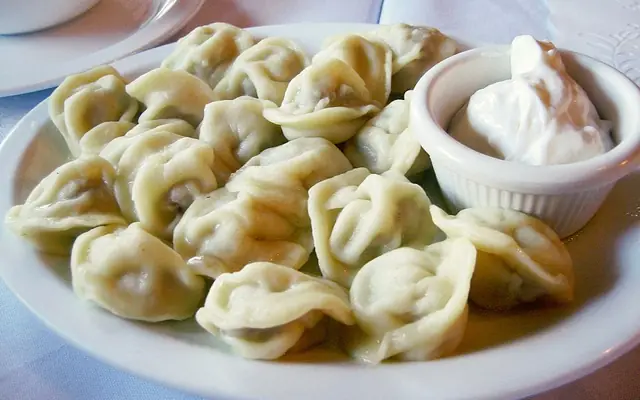
Russian cuisine is the food of the world's largest country by area, shaped by extreme winters, an Orthodox fasting calendar that historically dictated half the year's menu, a peasant base of grain (buckwheat, rye, oats, barley) and root vegetables, an aristocratic French-influenced layer added in the 18th and 19th centuries, and the Soviet ingredient politics of the 20th century that reduced and standardized the kitchen but also created several enduring dishes (Olivier salad, herring under a fur coat, Mimosa salad). The post-Soviet generation has been rebuilding Russian fine dining since the late 1990s, and Moscow now hosts a serious tasting-menu scene anchored by White Rabbit (the Vladimir Mukhin restaurant that runs deep on heritage Russian ingredients), Selfie, Twins Garden, and several Michelin-equivalent rooms (Russia has its own La Liste rather than a Michelin guide).
The defining dishes are pelmeni (small meat dumplings, Russian-Siberian origin, distinct from Polish or Ukrainian dumplings in shape and filling), borshch (the sour beet soup, also Ukrainian, with a long Russian tradition), blini (small yeasted buckwheat pancakes, served with caviar, smoked fish, sour cream, or jam), beef stroganoff (the St. Petersburg aristocratic dish of beef in mustard-cream sauce, invented in the 1850s at the Stroganov family table), shchi (the cabbage soup that has been the Russian peasant staple for a millennium), olivier salad (the late-Imperial-era restaurant dish that became the Soviet New Year's table centerpiece), pirog and pirozhki (the savory and sweet stuffed pastries), and the deep smoked-fish and caviar tradition.
The drinking culture is vodka-first. Vodka is drunk in chilled shots, accompanied by zakuski (the small-plate appetizers: pickled cucumber, salted herring, salo, marinated mushrooms, blini with caviar). The Russian feast is not a sit-down course progression but a long table of zakuski with rounds of vodka, followed by a hot soup, a hot main, and a sweet finish. The format is hospitable, slow, and built around the table.
Tours, tastings and classes from the cities on this page, bookable on GetYourGuide.
Guided tour · 2 hours
Embark on a culinary tasting tour of Pike Place Market with a local chef. Stop at 9 artisanal vendors and learn about local food producers as you...

Day trip · 8 hours
Experience the fine wines and beautiful scenery of Napa and Sonoma on a guided day trip from San Francisco.
Guided tour · 3.5 hours
Get off the beaten path and eat where the locals eat on a walking tour in the oldest neighborhood of Beijing. Eat at local, family-run eateries that...

Day trip · 4 hours
Depart from Strasbourg on a half-day tour along the Alsace wine route to discover some of the best wines of France. Visit 2 wineries, learn about the...
The best-scored russian place in each of 9 cities.
Langer's Delicatessen on Alvarado, Westlake, Los Angeles has hand-sliced pastrami since 1947. The #19 with Russian dressing, coleslaw and Swiss is the order.
TryHand-sliced pastrami #19 sandwich
Bonnie Morales's Russian and Georgian room in southeast Portland, with infused vodkas, pelmeni dumplings and the city's most authoritative zakuski spread.
OrderThe Siberian pelmeni with brown butter and vinegar
TipLunch is counter service and walk-in only. Dinner takes reservations and the vodka flights are mandatory.
Paul's Pel'meni on West Gilman, the late-night Russian dumpling counter near campus since 2009, sells a single dish of pelmeni with butter and sour cream.
TryRussian pelmeni with butter, curry and sour cream
The Sentinel in San Francisco is Dennis Leary's South of Market lunch window, serving a corned beef and Russian dressing sandwich to a long FiDi office line.
TryCorned beef sandwich
TipOrder ahead via the website by 11:00; the window is a six-deep line from 12:15-13:30.
Piroshky Piroshky in Seattle's Pike Place is the 1992 Russian bakery: salmon and cream cheese, cabbage and beef, hand-folded buns under $8 sold.
TrySalmon piroshky or cabbage and onion
Dostoïevski is a russian room in Orangerie. Reserve ahead, order the pelmeni and khachapuri, and let them pour a Georgian wine from the short list.
Why locals goA small Orthodox-themed Russian and Georgian table on Rue du General Conrad east of the centre, found mostly by word of mouth and a loyal Sunday-lunch crowd.
TipReserve ahead, order the pelmeni and khachapuri, and let them pour a Georgian wine from the short list.
Moon on Telliskivi is a Michelin-listed Russian room running Siberian pelmeni dumplings, borscht and dairy-led mains; it moved to a new Telliskivi address.
OrderPelmeni and borscht; the kitchen pickles, ferments and sour-creams its own dairy.
TipVegetarian options are explicit on the menu. The G-building entrance is at the Telliskivi-end of the complex.
Tatiana Cafe on the Brighton Beach boardwalk has run Russian-Ukrainian family meals in New York City since 1990. Borscht, pelmeni, blini, ocean-front tables.
OrderPelmeni in butter, with sour cream on the side.
TipLive music on weekend evenings runs late. Order from the Russian menu if Cyrillic is doable; the kitchen makes more there.
Moscow Restaurant on Xizhimenwai Street is a classic Russian dining room serving Moscow borscht and braised beef, long listed by Beijing food guides.
OrderOrder the Moscow-style braised beef and the Moscow borscht, then the baked fish with cream sauce.
TipThe city's autumn food guide names it as the classic Moscow restaurant for beef stew; the capital salad with foie gras is on the menu too.
Langer's Delicatessen on Alvarado, Westlake, Los Angeles has hand-sliced pastrami since 1947. The #19 with Russian dressing, coleslaw and Swiss is the order.
TryHand-sliced pastrami #19 sandwich
Bonnie Morales's Russian and Georgian room in southeast Portland, with infused vodkas, pelmeni dumplings and the city's most authoritative zakuski spread.
OrderThe Siberian pelmeni with brown butter and vinegar
TipLunch is counter service and walk-in only. Dinner takes reservations and the vodka flights are mandatory.
Paul's Pel'meni on West Gilman, the late-night Russian dumpling counter near campus since 2009, sells a single dish of pelmeni with butter and sour cream.
TryRussian pelmeni with butter, curry and sour cream
Paul's Pel'meni on State Street in Madison is the late-night Russian dumpling counter selling a single menu item until 02:00, the city's defining 1am snack.
Why locals goThe State Street late-night Russian dumpling counter sells a single menu item until 02:00 and is the city's defining 1 a.m. snack.
TipMix beef and potato pelmeni in one order; curry powder, butter and sour cream are non-negotiable toppings.
The Sentinel in San Francisco is Dennis Leary's South of Market lunch window, serving a corned beef and Russian dressing sandwich to a long FiDi office line.
TryCorned beef sandwich
TipOrder ahead via the website by 11:00; the window is a six-deep line from 12:15-13:30.
Piroshky Piroshky in Seattle's Pike Place is the 1992 Russian bakery: salmon and cream cheese, cabbage and beef, hand-folded buns under $8 sold.
TrySalmon piroshky or cabbage and onion
Dostoïevski is a russian room in Orangerie. Reserve ahead, order the pelmeni and khachapuri, and let them pour a Georgian wine from the short list.
Why locals goA small Orthodox-themed Russian and Georgian table on Rue du General Conrad east of the centre, found mostly by word of mouth and a loyal Sunday-lunch crowd.
TipReserve ahead, order the pelmeni and khachapuri, and let them pour a Georgian wine from the short list.
Moon on Telliskivi is a Michelin-listed Russian room running Siberian pelmeni dumplings, borscht and dairy-led mains; it moved to a new Telliskivi address.
OrderPelmeni and borscht; the kitchen pickles, ferments and sour-creams its own dairy.
TipVegetarian options are explicit on the menu. The G-building entrance is at the Telliskivi-end of the complex.
Swensen's Ice Cream in San Francisco is the 1948 Russian Hill original near the cable car turnaround, with hand-scooped cones in a small corner shop.
Why locals goThe 1948 Russian Hill original. The chain went global; the corner shop where Earle Swensen first scooped is still small, family-run and easy to miss.
TipOpen Wed to Sun only; the chocolate fudge cone with rainbow sprinkles is the kid order, the rum raisin is the right adult.
Tatiana Cafe on the Brighton Beach boardwalk has run Russian-Ukrainian family meals in New York City since 1990. Borscht, pelmeni, blini, ocean-front tables.
OrderPelmeni in butter, with sour cream on the side.
TipLive music on weekend evenings runs late. Order from the Russian menu if Cyrillic is doable; the kitchen makes more there.
Moscow Restaurant on Xizhimenwai Street is a classic Russian dining room serving Moscow borscht and braised beef, long listed by Beijing food guides.
OrderOrder the Moscow-style braised beef and the Moscow borscht, then the baked fish with cream sauce.
TipThe city's autumn food guide names it as the classic Moscow restaurant for beef stew; the capital salad with foie gras is on the menu too.
 Madison4 places
Paul's Pel'meni, Paul's Pel'meni after midnight
Madison4 places
Paul's Pel'meni, Paul's Pel'meni after midnight
 San Francisco2 places
The Sentinel, Swensen's Ice Cream
San Francisco2 places
The Sentinel, Swensen's Ice Cream
 Tallinn2 places
Moon
Tallinn2 places
Moon
 Beijing1 place
Moscow Restaurant
Beijing1 place
Moscow Restaurant
 Los Angeles1 place
Langer's Delicatessen
Los Angeles1 place
Langer's Delicatessen
 New York City1 place
Tatiana Cafe
New York City1 place
Tatiana Cafe
 Portland1 place
Kachka
Portland1 place
Kachka
 Seattle1 place
Piroshky Piroshky
Seattle1 place
Piroshky Piroshky
 Strasbourg1 place
Dostoïevski
Strasbourg1 place
Dostoïevski
The standard Russian canon: pelmeni, borshch, shchi, blini, beef stroganoff, olivier salad, herring under a fur coat. Moscow's modern Russian scene (White Rabbit, Selfie, Twins Garden) takes the regional ingredient base seriously. Caviar and smoked fish from the Caspian were the historic prestige products.
Pelmeni are the regional flagship (the dish is Siberian in origin, the small frozen dumplings made in bulk for the winter). Stroganina (frozen-fish shavings, eaten raw with salt and pepper). Game (elk, venison, bear) and freshwater fish (omul, muksun, taimen). The deepest cold-weather cooking tradition.
Russian cooking with Korean, Chinese, and Japanese influence: Korean carrot salad (the Soviet-era Korean-diaspora invention), king crab, salmon and salmon caviar, the Pacific seafood tradition. Vladivostok's restaurant scene leans Asian-Russian fusion.
Influenced by Georgian, Armenian, and Azerbaijani cooking: khachapuri (the Georgian cheese bread), shashlik (the grilled meat skewer), tkemali sauce, lavash. Adjarian and Caucasian dishes are now Russian-canon-adjacent.
The historic aristocratic kitchen. Beef stroganoff (invented here), pozharsky cutlets (the chicken croquette named after a Tver innkeeper), the French-influenced 18th-century court cooking that defined elite Russian cuisine. Baltic herring, smoked sprats, and the Finno-Russian crossover (rastegai and kulebyaka pastries).
At a traditional Russian table (whether a restaurant or a home), the meal begins with zakuski (small plates) and vodka: salted herring, salo with rye bread, pickled cucumber, marinated mushroom, blini with caviar, olivier salad, herring under a fur coat. Round after round of zakuski with chilled vodka shots (always with a toast). After the zakuski come the hot dishes: a soup (borshch, shchi, or solyanka), a hot main (pelmeni, beef stroganoff, kotlety with kasha, golubtsy), and a sweet finish (medovik honey cake or syrniki cottage-cheese pancakes with sour cream). At the modern Moscow fine-dining rooms, the tasting menu follows a similar logic but compressed.
The rookie mistakes: trying to drink vodka cocktail-style (it is drunk in shots, chilled, with food, paced through the meal; never sipped on its own), refusing the toast (each round of vodka is preceded by a toast, often increasingly elaborate; participate), expecting the meal to be paced like a French progression (Russian feasts run on a long zakuski stretch, then concentrated hot courses), and ordering only one dish (the Russian table format is sharing and abundance). Tip 10 percent.
Vodka is the universal pour, served chilled (out of the freezer) in small glasses, with food and toasts. Russian Standard, Beluga, Stolichnaya, Kauffman, and the craft producers (Polugar, the historic bread wine made from rye) are the categories. Beer (Baltika, Zhigulevskoye) for casual rooms; the brewing tradition is broad but secondary to vodka. Kvass (the fermented bread drink, lightly alcoholic) is the universal non-alcoholic option in summer. Russian sparkling wine (Sovetskoye Shampanskoye, the Soviet-era brand still produced) for celebrations; the Russian wine industry (Krasnodar, Crimea, Rostov) is rebuilding seriously since 2010 and produces credible reds (Saperavi, Cabernet) and whites (Riesling, Chardonnay).
Moscow: White Rabbit (Vladimir Mukhin, the country's most prominent modern Russian chef), Selfie, Twins Garden (Ivan and Sergey Berezutskiy), Cafe Pushkin (the classic Russian-Imperial-style room), Dr. Zhivago (the modern Russian-classic crossover). St. Petersburg: Tsar (Imperial-style), Restoran (the modern Russian classic). Outside Russia: Brighton Beach (Brooklyn, the largest Russian-American food district), Tel Aviv (the Russian-Israeli scene), Berlin (the Russian-German diaspora), Vilnius and Riga (the Baltic-Russian crossover). The post-2022 political situation has restricted travel for many; the diaspora restaurants in Berlin, Tbilisi, and Tel Aviv now hold the standard.
Russian cuisine took its modern shape across several historical layers: the medieval Slavic base (kasha, shchi, pirogi, mead), the Mongol-Tatar influence (pelmeni from Siberia, the dumpling tradition), the 18th-century French-aristocratic overlay (Catherine the Great's court invited French chefs who codified the multi-course Russian service that became standard in Western fine dining), the late-Imperial restaurant scene that invented beef stroganoff and olivier salad, and the Soviet decades that standardized but also preserved the kitchen. UNESCO listed Russian shchi in 2024.
The two cuisines share the dish, but the Ukrainian version (UNESCO-listed in 2022 as Ukrainian Intangible Cultural Heritage) typically uses a fermented-beet-kvas base for the souring, more vegetables, less meat. The Russian version typically uses fresh beets, more meat (often beef shank), and sometimes includes prunes or a smoked-meat finish. Both versions are served with sour cream and black bread with garlic.
Yes. It was created at the St. Petersburg kitchen of the Stroganov family (a powerful aristocratic merchant family) in the 1850s, traditionally credited to a French-trained Russian chef in their employ. The original is mustard-and-sour-cream-based; the international Stroganoff (heavier on cream, often with mushroom and onion) is a later Western adaptation.
The Soviet-era New Year (December 31, since Christmas was suppressed) became the country's most important secular feast, and the table is heavily codified: olivier salad, herring under a fur coat, mimosa salad, pelmeni, kholodets (meat aspic), pirog, mandarins, champagne (Sovetskoye Shampanskoye), and the President's televised speech. Russians of every generation recognize the menu.
More cities are in research. Want russian covered somewhere specific? Tell us where you want to eat.