

The plates that define Sarajevo: what they are, where they came from, and where to eat the canonical version.
Signature dishes
-
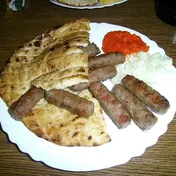
Cevapi ★ 4.9
Sarajevo cevapi are finger-shaped beef sausages grilled and served in a dry somun with chopped onion and kajmak; ten pieces is a common order.
Where to try it: Cevabdzinica Zeljo, Petica Ferhatovic, Cevabdzinica Hodzic, Cevabdzinica Mrkva
Price: 13-14 KM for ten pieces
The word cevap comes through Ottoman Turkish kebap. Wikipedia dates the present Sarajevo form to the 1950s and 1960s, when Ferhatovic and Mrkva (1963) were among the first cevabdzinice. Ferhatovic says its family opened Sarajevo's first one in 1957 and Petica in 1984, during the Winter Olympics. In August 2024 Sarajevski cevapi, made in Sarajevo Canton from fresh beef and salt, received protected geographical indication in Bosnia and Herzegovina.
Watch out for: Gluten
-
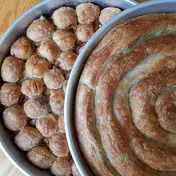
Burek ★ 4.9
Sarajevo burek is meat only: hand-rolled phyllo around minced meat, onion and pepper, baked in a tray and best eaten hot, ideally with yogurt.
Where to try it: Buregdzinica Sac, Buregdzinica Bosna
Burek came into Bosnian cooking from Turkish borek; Sarajevo's tourism board quotes the Bosnian Wikipedia, which calls it a specialty taken from Turkish cuisine. In Sarajevo the name is kept for the meat version: the cheese, spinach and potato pies are sirnica, zeljanica and krompirusa, and locals say all pitas are pita but only burek is the real thing. Buregdzinica Sac on Mali Bravadziluk is named after the metal sac lid, and Lonely Planet put Bosnian burek in its 2012 street food book.
Watch out for: Gluten, Dairy
-
Bosanski Lonac ★ 4.7
Bosanski lonac is a Bosnian stew of meat and vegetables layered in a deep pot with a little water; beef, lamb, cabbage, potato and carrot are typical.
Where to try it: Inat Kuca, Nanina Kuhinja, Barhana
Price: 18 KM
Wikipedia calls bosanski lonac a national dish of Bosnia and Herzegovina that has been on the tables of rich and poor for hundreds of years, the wealthy using more meat. It was originally cooked in ceramic pots in a fireplace or a pit in the ground; many cooks now use an ordinary pot on the stove. Inat Kuca files it under Ottoman-era dishes and calls it a one-pot dish that stands for togetherness and Bosnian hospitality.
Book food experiences in Sarajevo
-
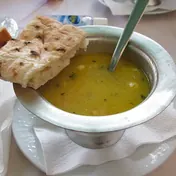
Begova Corba ★ 4.6
Begova corba, the Bey's soup, is a traditional Bosnian festive soup of chicken, carrot, parsley and okra, finished with sour cream and egg yolk.
Where to try it: Inat Kuca, Kibe Mahala, Nanina Kuhinja, Avlija
Price: 8-9 KM
Wikipedia traces begova corba to the Ottoman period and says it is associated with hospitality, served to guests at weddings and on Eid and Ramadan. The name comes from the Turkish bey, a gentleman of high standing, and Inat Kuca says it was cooked for high-ranking guests. Sarajevo's Carsija recipe app, presented by the Stari Grad municipality, includes a recipe for it.
Watch out for: Gluten, Dairy, Eggs
-
Klepe ★ 4.5
Klepe are Bosnian dumplings of thin dough filled with meat, boiled and dressed in cream sauce; Inat Kuca serves them with sour cream and garlic.
Where to try it: Inat Kuca, Avlija
Price: 15 KM
Avlija lists klepe among its Bosnian house specialities as Bosnian-style dumplings of filo dough stuffed with meat, cooked and dressed in cream sauce, for 15 KM. Inat Kuca calls its klepe handmade filled pelmeni with meat, served with sour cream and garlic, lists them among its traditional dishes, and includes them in its Veliki sahan, the sharing tray for four people.
Watch out for: Gluten, Dairy
-
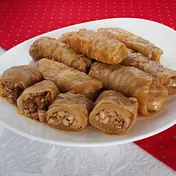
Sarma ★ 4.5
Sarma is minced meat and rice rolled in leaves; Nanina Kuhinja says the Bosnian winter version uses sour cabbage, while vine-leaf rolls are called japrak.
Where to try it: Nanina Kuhinja, Barhana
Price: 14 KM
Wikipedia says sarma is a Turkish word meaning wrap and that the dish originated in Ottoman cuisine, a stuffed-leaf member of the dolma family now found across the Balkans, Bosnia included. Nanina Kuhinja calls vine-leaf meat rolls very popular in Bosnia, says the winter tradition is to make them with sour cabbage, and gives sarma and japrak as the traditional names. Barhana lists cabbage rolls at 14 KM.
-

Tufahija ★ 4.6
Tufahija is a poached apple stuffed with walnuts, served in its syrup with cream; Avlija and Nanina Kuhinja both list it among their desserts.
Where to try it: Avlija, Nanina Kuhinja
Price: 7 KM
Wikipedia describes tufahije as walnut-stuffed apples poached in sugar water, very popular in Bosnia and Herzegovina, served in large glasses with their own glazed syrup and whipped cream, usually with coffee. Nanina Kuhinja serves an apple stuffed with walnuts, cooked and served with syrup and cream; Avlija bakes its apple and fills it with walnuts and sugar paste for 7 KM. Inat Kuca lists a tufahija cake.
Watch out for: Dairy, Nuts
-
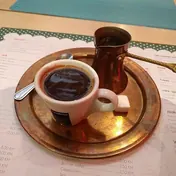
Bosnian Coffee ★ 4.9
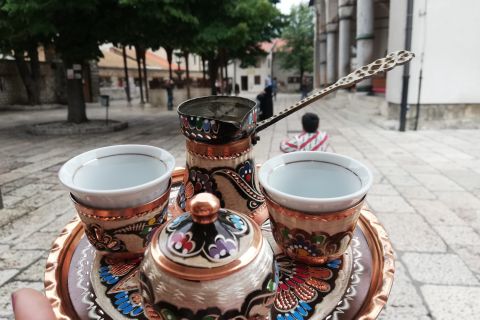
Bosnian coffee is boiled in a copper dzezva and poured into small handleless fildzani, with rahat lokum and a glass of water served alongside.
Where to try it: Dveri
Price: 2 KM
Sarajevo's tourism board says the word kahva reached the region from Turkish and Arabic, and that coffee came with the Ottomans from Yemen and Arabia via Istanbul. It was first served in rich homes, then coffeehouses opened in the Sarajevo carsija and became centres of social life. Names mark the occasion: razgalica for the first morning cup, razgovorusa for talking, docekusa for guests. Dveri lists Bosnian coffee at 2 KM.
-
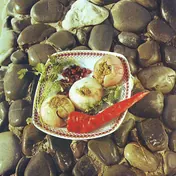
Sogan-Dolma ★ 4.4
Sogan-dolma is the Bosnian stuffed onion, filled with minced meat and rice; Kibe Mahala serves it as a main course and Inat Kuca in its large sahan.
Where to try it: Kibe Mahala, Nanina Kuhinja, Inat Kuca
Price: 25 KM
Wikipedia lists stuffed onions as a traditional dish in Turkey, Armenia and Bosnia, made with onions, minced beef, rice, paprika and spices, and records stuffed onions in Ottoman sources of the 15th century. Kibe Mahala lists sogandolma of onion, minced meat and rice for 25 KM, Nanina Kuhinja serves onions stuffed with meat, and Inat Kuca includes sogan dolma in its Veliki sahan for four people.
-
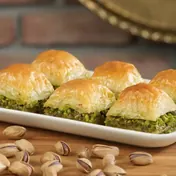
Baklava ★ 4.5
Baklava layers filo with chopped nuts and is soaked in syrup; Nanina Kuhinja fills its baklava with walnuts and prunes, Kibe Mahala sells it for 11 KM.
Where to try it: Nanina Kuhinja, Kibe Mahala, Park Princeva
Price: 11 KM
Wikipedia says the word baklava comes from Ottoman Turkish, that its earliest known mention is a poem by the 15th-century mystic Kaygusuz Abdal, and that the filo layers are separated by melted butter with walnuts or pistachios between them. Bosnian cuisine lists baklava among sweets inspired by the Middle East. Nanina Kuhinja fills its baklava with walnuts and prunes in a syrup it calls agda, and Park Princeva lists baklava among its desserts.
Watch out for: Gluten, Nuts, Dairy
-
Sarajevski Sahan ★ 4.6
Sarajevski sahan is a mixed tray of Sarajevo specialities for two; Inat Kuca fills it with cevapi, dried meat, home-made sausages and stuffed peppers.
Where to try it: Inat Kuca
Inat Kuca describes its Sarajevski sahan as a mix of traditional Sarajevo specialities served on a tray, a good choice for two, and its Veliki sahan as a mix for four with sogan dolma, stuffed pepper, japrak dolma, sitni cevap, klepe and bosanski lonac. The house was moved in 1898 to the opposite bank of the Miljacka, facing the City Hall, after its owner Mujaga Benderlic refused to leave; it became a restaurant in 1997.
Watch out for: Gluten, Dairy
-

Pita (Bosnian phyllo family) ★ 4.7
In Sarajevo, pita is the family of filled phyllo pies other than burek: sirnica with cheese, zeljanica with spinach and krompirusa with potato.
Where to try it: Inat Kuca, Nanina Kuhinja, Kibe Mahala
Price: 11 KM
Sarajevo's tourism board explains that burek in Sarajevo is always meat, so the cheese, spinach and potato pies are separate pitas called sirnica, zeljanica and krompirusa; Wikipedia gives the same names. Inat Kuca lists a homemade sirnica of cheese, jufke, eggs and sour cream, Nanina Kuhinja a zeljanica of spinach and feta in layered filo, and Kibe Mahala a meat or spinach pie rolled in a spiral for 11 KM.
Watch out for: Gluten, Dairy

Signature Dishes in Sarajevo, FAQ
What food is Sarajevo known for?
Sarajevo's signature dishes include Cevapi, Burek, Bosanski Lonac, Begova Corba, Klepe. See our signature dishes chapter for where to eat each.