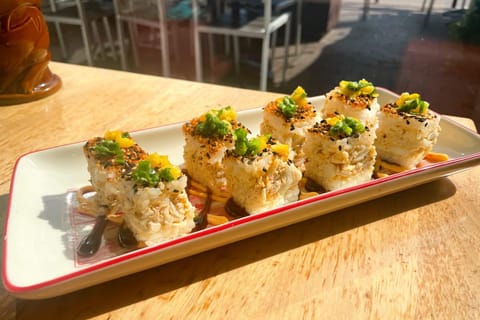
Signature dishes
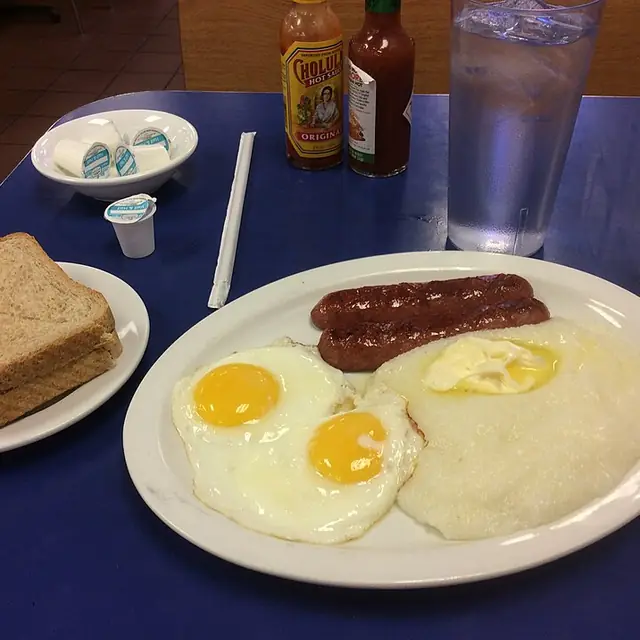
DC's defining sausage: a coarse-ground, lightly-smoked half-pork, half-beef link, split lengthwise on the griddle and tucked into a steamed bun under chili, mustard and onions.
Where: Ben's Chili Bowl, Weenie Beenie, Ben's Next Door
Price: $7.95 chili half-smoke (Ben's, 2025)
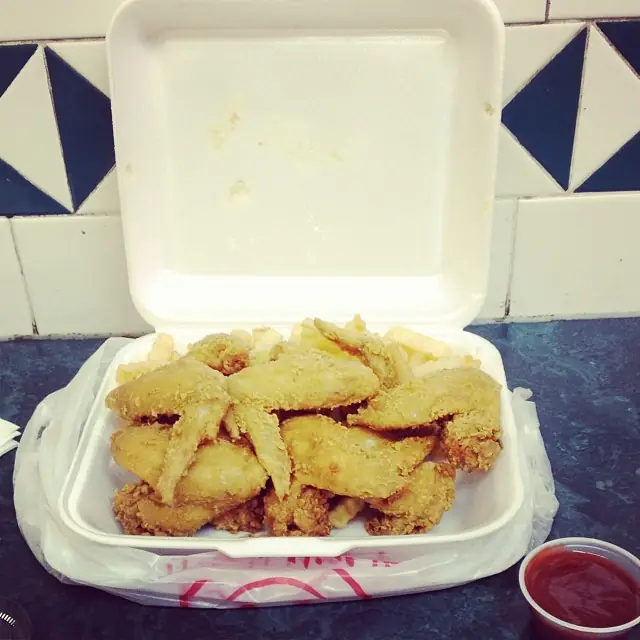
Chicken wings doused in mumbo sauce, DC's red-orange sweet-tangy condiment, served as the closing dish at the city's carryout counters from Petworth to Anacostia.
Where: Henry's Soul Cafe, Florida Avenue Grill, Oohh's & Aahh's
Price: $10-14 wings plate with mumbo sauce
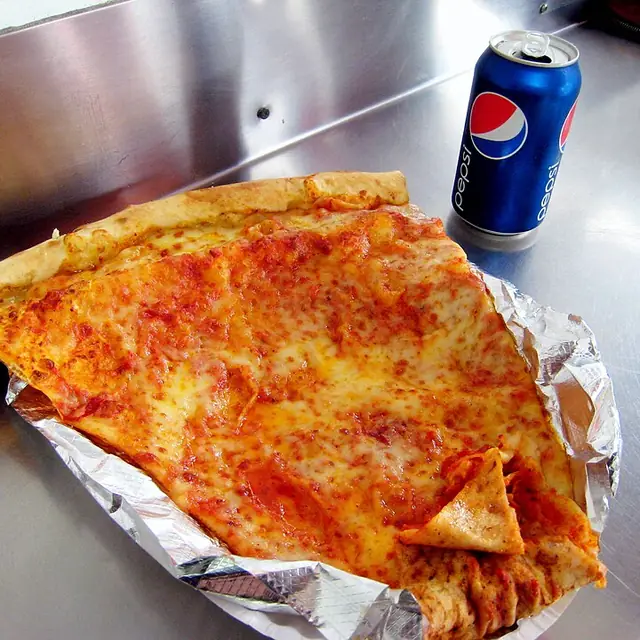
An eighteen-inch foldable pizza slice sold past 2am along Adams Morgan's 18th Street strip, the closing-time meal that absorbs a Saturday night.
Where: Pizza Mart Adams Morgan, Duccini's Pizza Adams Morgan, Jumbo Slice Pizza
Price: $6-7 per slice
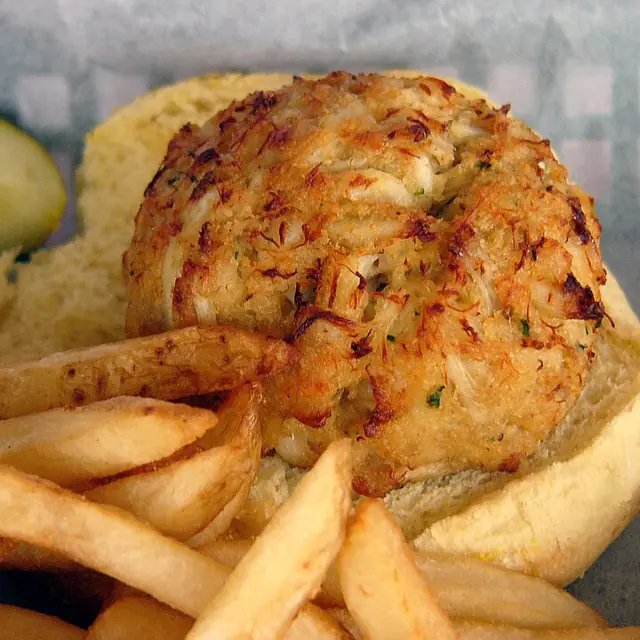
Plump lump-blue-crab cakes bound with the lightest possible mayo-and-cracker mixture and finished with Old Bay, the Chesapeake region's defining DC restaurant plate.
Where: Old Ebbitt Grill, The Salt Line
Price: $32-44 for two crab cakes
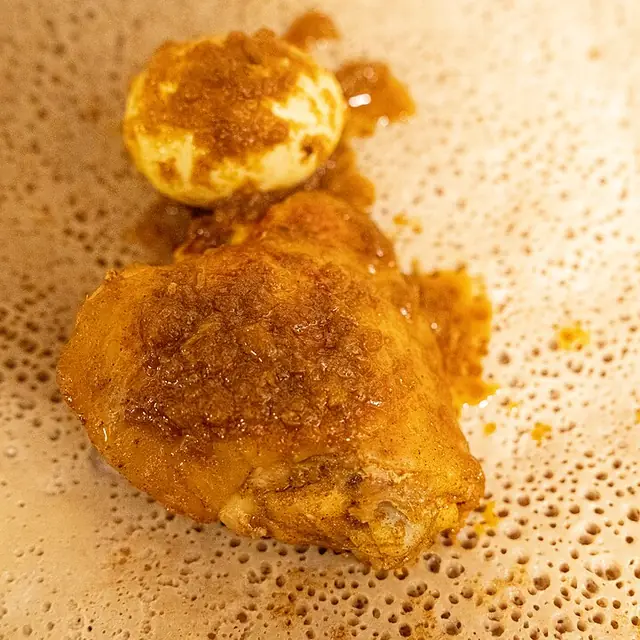
A long-cooked chicken stew bronzed with berbere and niter kibbeh, served on a round of injera flatbread alongside a hard-boiled egg, the centrepiece of DC's Ethiopian feasts.
Where: Dukem Ethiopian Restaurant
Price: $22-30 doro wat plate for one
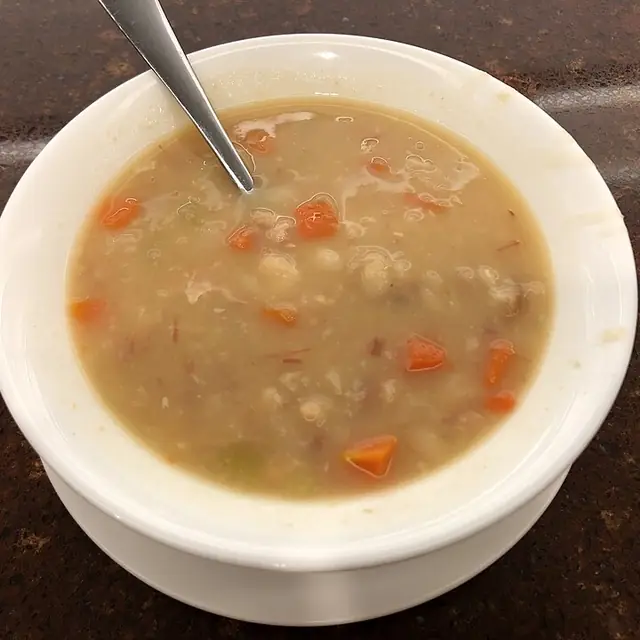
A simple navy bean soup with ham hock and mashed potato, on the menu of the United States Senate cafeteria every day since 1903 and still in DC's diner repertoire.
Where: Old Ebbitt Grill, Florida Avenue Grill
Price: $8-12 a bowl
Hand-patted thick corn cakes stuffed with cheese, beans or pork, griddled until golden and served with curtido pickle and tomato salsa, DC's defining street snack.
Where: Tortilla Cafe
Price: $3.50-4.50 per pupusa
Wild blue Gulf or Atlantic shrimp boiled in Old Bay seasoning and served chilled with cocktail sauce, a beer-and-newspaper plate at every DC seafood counter.
Where: The Salt Line, Maine Avenue Fish Market
Price: $16-22 per pound peel-and-eat
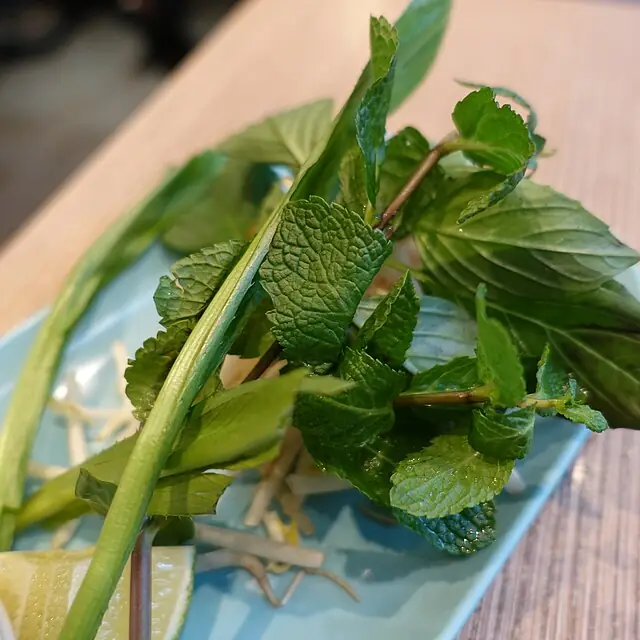
Vietnamese beef noodle soup, simmered overnight from oxtail and shin and finished with rice noodles, herbs and lime, the staple of the metro-DC Vietnamese diaspora.
Where: Pho 14 Columbia Heights
Price: $12-16 per bowl
The DC carryout three-piece: fried wings, beef fried rice and a small cup of mumbo sauce in a stacked styrofoam clamshell, the closing-time order at every neighbourhood spot.
Where: Henry's Soul Cafe, Florida Avenue Grill, Oohh's & Aahh's
Price: $10-13 for a three-piece-wing-and-rice combo
Chesapeake Bay's summer ritual: live Maryland blue crabs steamed with beer, vinegar and Old Bay, dumped onto a butcher-paper table and cracked open with wooden mallets, eaten with melted butter and pilsner.
Where: Maine Avenue Fish Market
Price: $60-130 per dozen (peak season prices)
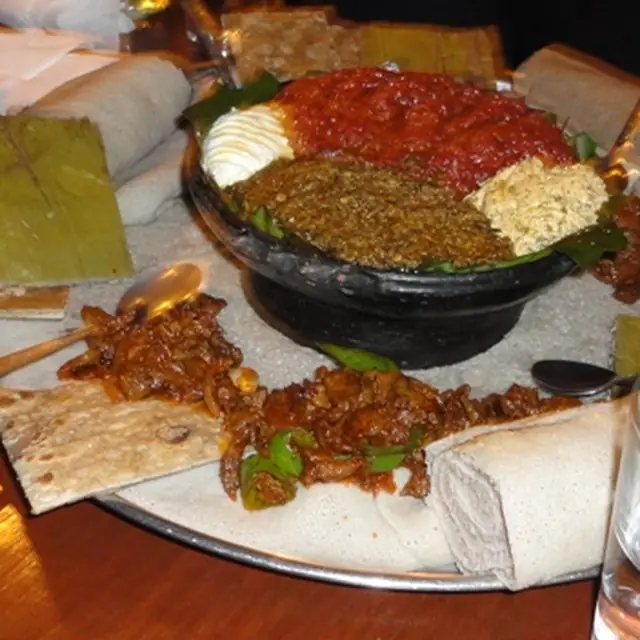
DC's Little Ethiopia signature: cubed lean raw beef warmed in spiced niter kibbeh and fiery mitmita chili, served on injera with ayib fresh cheese and gomen collards, with extra mitmita at the table.
Where: Dukem Ethiopian Restaurant, Chercher Ethiopian Restaurant
Price: $18-32
Half-shell oysters from Chincoteague, Rappahannock, Choptank and the Eastern Shore appellations, shucked to order on a bed of crushed ice with mignonette, lemon and saltines.
Where: Old Ebbitt Grill, The Salt Line
Price: $3-4 per oyster
Stretchy round breads pulled fresh off a wood-fired tabun oven, served with smoky hummus, baba ghanoush, muhammara and labneh. The DC fire-cooking template.
Where: Maydan, Albi
Price: $10-16 (bread and one dip)
Half-smoke
DC's defining sausage: a coarse-ground, lightly-smoked half-pork, half-beef link, split lengthwise on the griddle and tucked into a steamed bun under chili, mustard and onions.
History: The half-smoke was born on U Street. Ben Ali and his wife Virginia opened Ben's Chili Bowl at 1213 U Street NW in August 1958, in a former silent-movie house, and built the chili half-smoke into the city's defining sandwich. The link itself, larger and coarser than a hot dog and lightly smoked before being grilled, has been made for Ben's by Manger Packing in Maryland for decades. The U Street riots of April 1968 left Ben's as one of the few neighbourhood businesses standing. Weenie Beenie in Arlington claims to predate Ben's by a few years, but the chili-half-smoke template at Ben's remains the canonical DC dish.
Where to try it: Ben's Chili Bowl, Weenie Beenie, Ben's Next Door
Watch out for: Gluten
Mumbo sauce wings
Chicken wings doused in mumbo sauce, DC's red-orange sweet-tangy condiment, served as the closing dish at the city's carryout counters from Petworth to Anacostia.
History: Mumbo sauce (also written mambo) is a sweet, tangy, faintly hot red-orange sauce that took hold in Washington DC's Black carryout counters from the 1960s onward. It probably evolved from a Chicago-style barbecue sauce, brought south by Argia B Collins, but the DC version drifted sweeter and tangier, more ketchup-and-pineapple than smoke-and-vinegar. By the 1980s it had become the city's defining condiment for wings, fried chicken, fried rice and french fries from Wings-N-Things on Capitol Hill, Yum's, Danny's Sub and dozens of carryouts. Capital City Mumbo Sauce, founded 2011 in Anacostia, bottles the DC house version for grocery sale.
Where to try it: Henry's Soul Cafe, Florida Avenue Grill, Oohh's & Aahh's
Jumbo slice
An eighteen-inch foldable pizza slice sold past 2am along Adams Morgan's 18th Street strip, the closing-time meal that absorbs a Saturday night.
History: The jumbo slice was born on 18th Street NW in Adams Morgan as a late-1990s response to the corridor's late-night bar crowd. Pizza Mart on 18th Street, opened around 1999, and Duccini's Pizza on U Street both lay claim to popularising the format: eighteen-inch slices cut from a thirty-inch pie, served folded in foil after 22:00 and especially after 02:00. The slices are designed for the after-bar walk, not for serious eating; the cheese-to-sauce ratio is engineered for absorption rather than balance. The Pizza Mart-Duccini's rivalry defines the after-hours slice; both stay open past 04:00 on weekends.
Where to try it: Pizza Mart Adams Morgan, Duccini's Pizza Adams Morgan, Jumbo Slice Pizza
Watch out for: Gluten, Dairy
Chesapeake blue crab cake
Plump lump-blue-crab cakes bound with the lightest possible mayo-and-cracker mixture and finished with Old Bay, the Chesapeake region's defining DC restaurant plate.
History: The Chesapeake blue crab (Callinectes sapidus) has been the regional shellfish from Maryland to Virginia since pre-colonial times. The modern crab cake template, mostly meat with a near-invisible binder, dates from the 1930s Chesapeake Bay seafood houses; the Old Bay seasoning that finishes the cakes was invented in Baltimore in 1939 by German-immigrant Gustav Brunn. In DC, the high-end crab cake became a power-lunch dish in the postwar Capitol Hill steakhouses. Today Old Ebbitt Grill, founded 1856 and the city's oldest saloon, serves more than 1000 crab cakes a week. A standard order is two cakes broiled, never fried; the test of a kitchen is how invisible the binder is.
Where to try it: Old Ebbitt Grill, The Salt Line
Watch out for: Shellfish, Egg, Gluten
Doro wat with injera
A long-cooked chicken stew bronzed with berbere and niter kibbeh, served on a round of injera flatbread alongside a hard-boiled egg, the centrepiece of DC's Ethiopian feasts.
History: Washington DC has the largest Ethiopian population outside Addis Ababa, settled along Ninth Street NW in Shaw (Little Ethiopia) and Adams Morgan from the 1980s onward. The community arrived after the 1974 revolution; the unofficial Little Ethiopia designation came in 2005. Doro wat, the long-cooked chicken stew bronzed with berbere chili paste and niter kibbeh spiced butter, is the national dish of Ethiopia and the menu centrepiece in DC's Ethiopian rooms. It is eaten with the right hand from a shared round of injera flatbread, with a hard-boiled egg in the middle. Etete on 9th Street has run the canonical version since 2004; Dukem opened nearby in 1997.
Where to try it: Dukem Ethiopian Restaurant
Watch out for: Egg, Dairy
Senate bean soup
A simple navy bean soup with ham hock and mashed potato, on the menu of the United States Senate cafeteria every day since 1903 and still in DC's diner repertoire.
History: Senate bean soup has been on the menu of the United States Senate restaurant in the Capitol every day, almost without exception, since 1903. The origin story credits Senator Fred Dubois of Idaho, who in 1903 mandated the soup; an alternative credit goes to Senator Knute Nelson of Minnesota. The version is austere: navy beans simmered with smoked ham hocks, mashed potato to thicken, onion and seasoning, nothing else. The Senate kitchen will give the recipe out to any caller; it is among the most-published recipes in DC history. Outside the Capitol, the soup turns up at Bullfeathers on Capitol Hill and Old Ebbitt Grill.
Where to try it: Old Ebbitt Grill, Florida Avenue Grill
Salvadoran pupusas
Hand-patted thick corn cakes stuffed with cheese, beans or pork, griddled until golden and served with curtido pickle and tomato salsa, DC's defining street snack.
History: Washington DC has the largest Salvadoran population in the United States. The community settled along Mount Pleasant Street, Columbia Heights and Wheaton MD through the 1980s civil-war refugee waves, and pupuserias spread from the corner of 16th and Mount Pleasant outward. The pupusa, a thick hand-patted corn cake stuffed with cheese, refried beans, chicharron pork or loroco flower, is El Salvador's national dish and DC's defining street snack. It is griddled on a flattop until lightly golden, then served with curtido (a fermented cabbage relish) and a thin tomato salsa. Don Juan's on Mount Pleasant, Pupuseria San Miguel on 14th and Los Hermanos in Wheaton run the canonical versions.
Where to try it: Tortilla Cafe
Watch out for: Dairy, Corn
Old Bay shrimp
Wild blue Gulf or Atlantic shrimp boiled in Old Bay seasoning and served chilled with cocktail sauce, a beer-and-newspaper plate at every DC seafood counter.
History: Old Bay seasoning was developed by Gustav Brunn, a German-Jewish refugee who arrived in Baltimore in 1939 with little more than a hand-cranked spice grinder. He started the Baltimore Spice Company in a Light Street basement; Old Bay (named for the Old Bay Line steamship that ran the Chesapeake) launched the same year. The blend of celery salt, paprika, mustard, bay leaves, black pepper and red pepper became the regional seasoning for steamed crabs, but in DC kitchens it travelled to shrimp boils, fries and cocktails. McCormick acquired Old Bay in 1990; the recipe is unchanged.
Where to try it: The Salt Line, Maine Avenue Fish Market
Watch out for: Shellfish
Pho (Eden Center style)
Vietnamese beef noodle soup, simmered overnight from oxtail and shin and finished with rice noodles, herbs and lime, the staple of the metro-DC Vietnamese diaspora.
History: The Washington metro area has the third-largest Vietnamese-American population in the United States, concentrated at Eden Center in Falls Church and along Wilson Boulevard in Arlington. The community settled there from the 1975 fall of Saigon onward; Eden Center, opened 1984, became the cultural anchor. Pho, the long-simmered beef noodle soup, is the staple dish: oxtail, shin and beef bones simmered overnight with charred ginger, onion, star anise, cassia and clove, then strained over rice noodles and finished with rare beef slices, herbs, bean sprouts and lime. Within the city limits, Pho 14, Pho Viet on 14th Street and Pho 75 in Rosslyn run the canonical bowls.
Where to try it: Pho 14 Columbia Heights
Watch out for: Gluten
Wings, fried rice and mumbo sauce (carryout plate)
The DC carryout three-piece: fried wings, beef fried rice and a small cup of mumbo sauce in a stacked styrofoam clamshell, the closing-time order at every neighbourhood spot.
History: The DC carryout (pronounced "carry-out" as one word) is the city's defining late-night plate-format: a styrofoam clamshell holding fried chicken wings, a generous mound of beef-and-egg fried rice, and a portion cup of mumbo sauce on top. The format spread from Chinese-American takeaway counters across the city, mainly in Black neighbourhoods east of the Anacostia and along Georgia Avenue, through the 1970s and 1980s. The carryout plate is engineered as a single $10-12 meal that holds heat, travels in a bag and absorbs alcohol; it appears in every go-go-era reference and dozens of DMV rap lyrics. The chicken should be deep-fried to order, the rice sticky, the mumbo sauce on top.
Where to try it: Henry's Soul Cafe, Florida Avenue Grill, Oohh's & Aahh's
Watch out for: Gluten, Soy, Egg
Old Bay Steamed Blue Crabs
Chesapeake Bay's summer ritual: live Maryland blue crabs steamed with beer, vinegar and Old Bay, dumped onto a butcher-paper table and cracked open with wooden mallets, eaten with melted butter and pilsner.
History: The Chesapeake blue crab (Callinectes sapidus) is the defining commercial seafood of the Maryland-DC region; the Tidewater watermen of Maryland have harvested them commercially since the 19th century. The Old-Bay-and-vinegar steaming format codified in the early 20th century at Baltimore and DC crab houses. The Maine Avenue Fish Market in DC sells live blue crabs by the dozen and bushel, and crab houses across the DC metro area run all-you-can-eat steamed crabs from May through October. The Old Bay seasoning blend, developed in Baltimore by Gustav Brunn in 1939 and now owned by McCormick, is non-negotiable.
Where to try it: Maine Avenue Fish Market
Watch out for: Shellfish, Dairy
Ethiopian Kitfo
DC's Little Ethiopia signature: cubed lean raw beef warmed in spiced niter kibbeh and fiery mitmita chili, served on injera with ayib fresh cheese and gomen collards, with extra mitmita at the table.
History: Kitfo is one of Ethiopia's most distinctive dishes; the raw or barely-warmed beef preparation, similar in spirit to French tartare but Ethiopian in seasoning, is the national special-occasion meal. Washington DC has the largest Ethiopian-American population of any US city, centred around Adams Morgan, Logan Circle and Shaw, with the U Street corridor known as Little Ethiopia. The community arrived in waves from the 1970s onward; today Dukem, Etete and Chercher run authentic kitfo. The dish is served leb leb (briefly warmed), tire (fully raw) or yebesele (cooked). Mitmita, made of dried bird's eye chilies, cardamom, cloves and salt, is the structural seasoning.
Where to try it: Dukem Ethiopian Restaurant, Chercher Ethiopian Restaurant
Watch out for: Dairy
Chesapeake Bay raw oysters
Half-shell oysters from Chincoteague, Rappahannock, Choptank and the Eastern Shore appellations, shucked to order on a bed of crushed ice with mignonette, lemon and saltines.
History: The Chesapeake Bay has been the largest US oyster fishery for two centuries. Old Ebbitt Grill, founded in 1856 four blocks from the White House, has run a marble oyster bar continuously since the 19th century; its Oyster Riot each November is the national reference event. The Salt Line on Penn Quarter Avenue SE codifies the contemporary Chesapeake-meets-New-England oyster house.
Where to try it: Old Ebbitt Grill, The Salt Line
Watch out for: Molluscs
Maydan-style fire-cooked flatbread and dips
Stretchy round breads pulled fresh off a wood-fired tabun oven, served with smoky hummus, baba ghanoush, muhammara and labneh. The DC fire-cooking template.
History: Maydan opened in November 2017 on Florida Avenue NW with a central wood-fired hearth ringed by the kitchen line. Bon Appetit and Food and Wine both named it among the best new restaurants of 2018, and the James Beard Foundation made it a Best New Restaurant semifinalist that year. The bread is the structural element of the meal: stretched and clapped onto the tabun's hot stone, ballooning and char-spotting in under a minute. Albi by chef Michael Rafidi extends the Levantine-DC canon; Rafidi took the 2024 James Beard Outstanding Chef award.
Where to try it: Maydan, Albi
Watch out for: Gluten, Sesame, Dairy, Nuts