Signature dishes
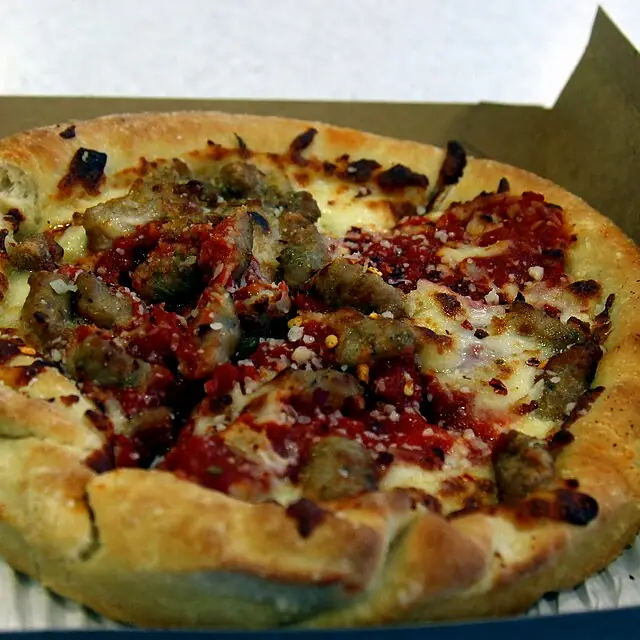
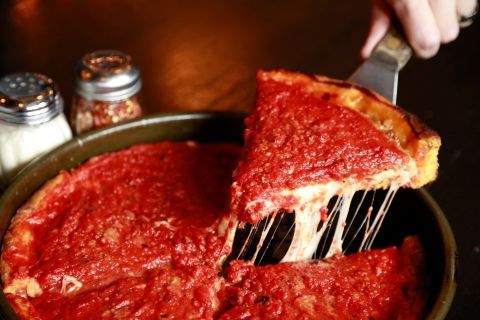
Chicago's defining pie, built upside down in a cast-iron pan: an inch of buttery cornmeal crust holds slabs of mozzarella, fennel-sausage and chunky tomato.
Where: Lou Malnati's (Lincoln Park), Pequod's Pizza, Pizano's Pizza & Pasta, Pizzeria Uno
Price: $22-32 for a small deep-dish (feeds two)
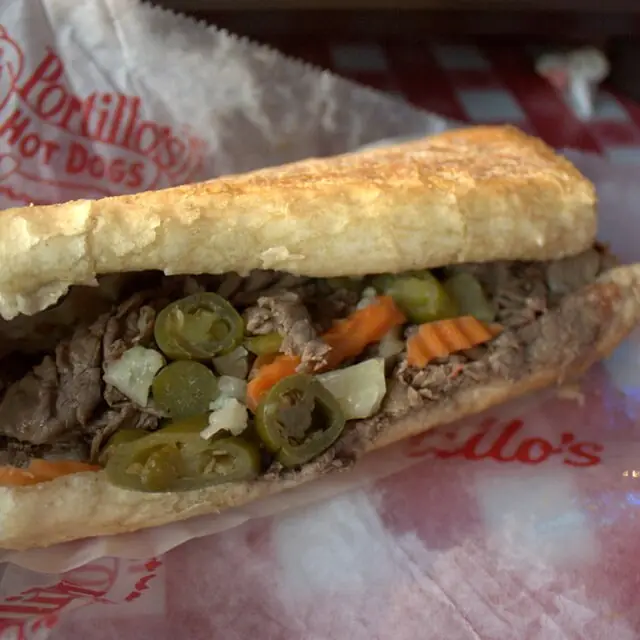
Thin-sliced roast beef on Gonnella French bread, ladled with peppery jus, finished with sweet peppers or giardiniera. Dipped wet is the canonical order.
Where: Mr. Beef on Orleans, Al's Beef (Taylor Street), Johnnie's Beef, Portillo's Hot Dogs
Price: $9-14
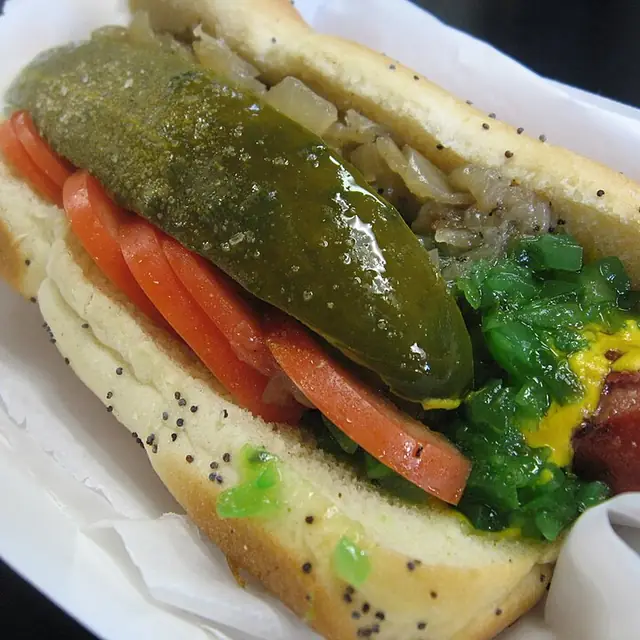
An all-beef Vienna frank on a poppy-seed bun, dragged through the garden: yellow mustard, neon-green relish, chopped onion, tomato, sport peppers, pickle, celery salt.
Where: Superdawg Drive-In, The Wieners Circle, Portillo's Hot Dogs, Gene & Jude's
Price: $4-7
Chicago's older everyday pizza: cracker-thin crust, edge-to-edge sausage and tomato, sliced into squares (party-cut) for sharing across a tavern table.
Where: Vito & Nick's Pizzeria, Pat's Pizza & Ristorante, Bonci Chicago
Price: $18-28 (14-inch tavern thin)
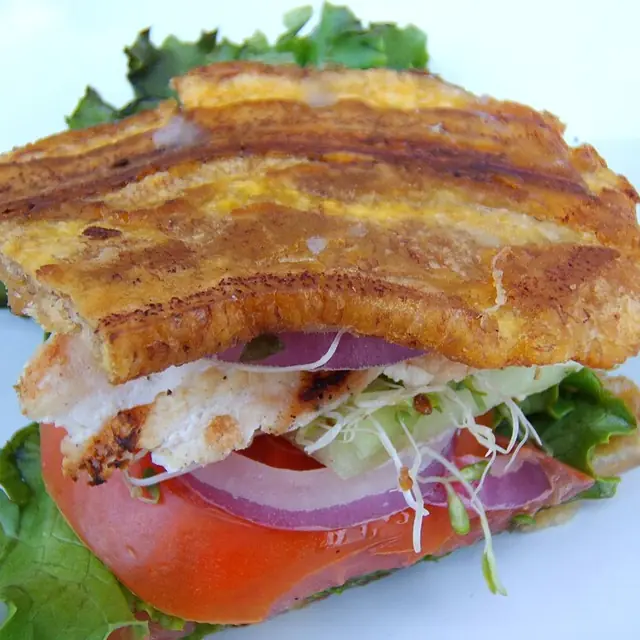
A Chicago invention: fried green-plantain slices used as bread, stuffed with garlicky steak or chicken, lettuce, tomato, mayo and a thin slice of white American cheese.
Where: Papa's Cache Sabroso, La Bomba, Borinquen Lounge
Price: $13-18
Smoked kielbasa and butter-fried pierogi: the everyday food of Chicago's Polish neighbourhoods, served with sauerkraut, sour cream and rye bread on the side.
Where: Staropolska Restaurant
Price: $12-22 (combo plate)
Mexican-style grilled corn, cut off the cob into a cup, layered with mayo, cotija cheese, chilli powder and lime: Chicago's ballpark and street-cart staple.
Where: La Michoacana Premium, Big Star
Price: $5-8
Pork-rib trimmings smoked in aquarium-style smokers over oak and hickory, sliced into cartilage-knobbed cubes, sauced in a sweet vinegar-based barbecue mop.
Where: Lem's Bar-B-Q, Honey 1 BBQ, Uncle John's BBQ
Price: $15-25 (tip plate with link)
Grant Achatz's Lincoln Park tasting menu: 18 to 22 courses of edible-balloon, painted-tablecloth, hot-pepper-ice theatre that codified modernist American fine dining.
Where: Alinea
Price: $285-465 per person
The bone-in heritage pork chop that anchored Paul Kahan's The Publican: rosemary-brined, hard-roasted, sliced off the bone, served with mustard and braised greens.
Where: The Publican, avec
Price: $48-62 (for two)
Cheddar-cheese popcorn and caramel corn mixed in the same bag: an only-in-Chicago snack invented by Garrett Popcorn, now copied across the country.
Where: Garrett Popcorn Shops
Price: $8-32 (regular to gallon tin)
Lake Michigan yellow perch fillets, cornmeal-dredged, deep-fried, served with tartar, lemon and rye: a Friday-fish-fry standard at South Side taverns and German halls.
Where: Calumet Fisheries
Price: $18-26 (fillet plate)
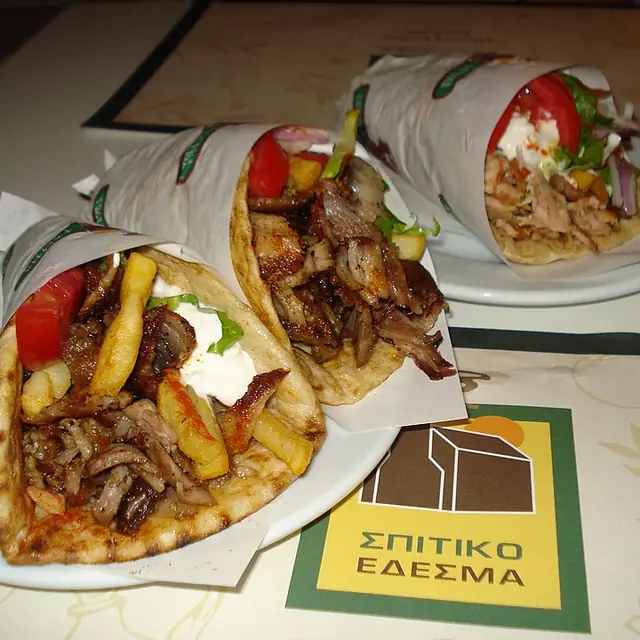
The cone-shaped beef-and-lamb gyros loaf that Chicago's Greektown standardised in the 1970s, thin shaved meat tucked into pita with tomato, onion and tzatziki, the Halsted Street lunch staple.
Where: Greek Islands
Price: $11-16
Five layered ice cream slices stacked on a single cone in a precise order: chocolate, strawberry, Palmer House, pistachio, orange sherbet. The Beverly neighbourhood institution sliced (not scooped) since 1926.
Price: $7 to $12
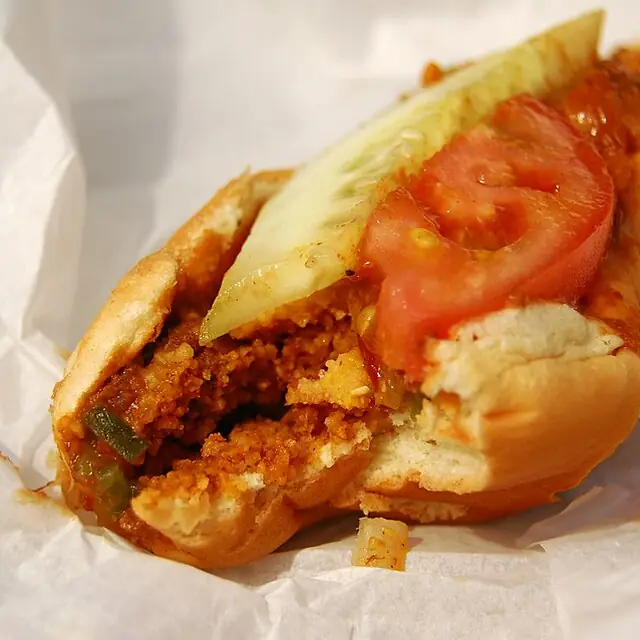
A whole Chicago-style tamale (machine-extruded cornmeal in waxed paper, not corn husks) crammed into a soft hot dog bun and smothered in spicy beanless chilli. South Side cult; Anthony Bourdain put it on TV.
Price: $5 to $10
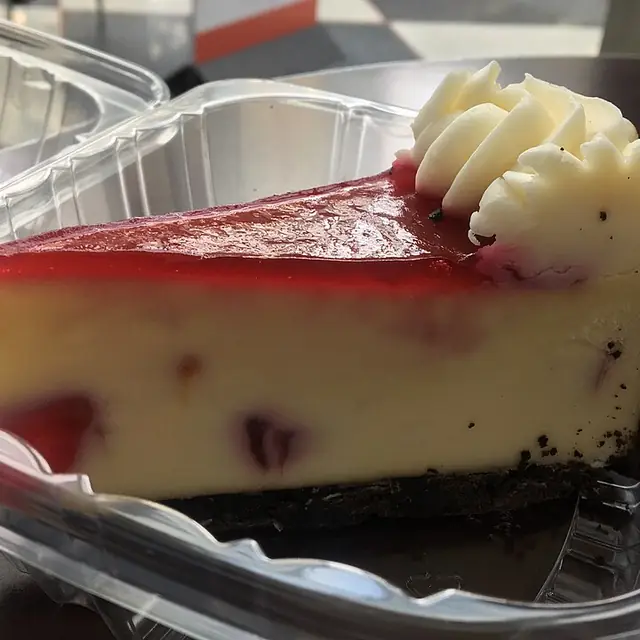
Chicago-style cheesecake: golden-brown skin, dense creamy interior, baked on an all-butter shortbread cookie crust. Created by Eli Schulman in 1980 for Taste of Chicago; now the city's signature dessert.
Price: $9 to $14
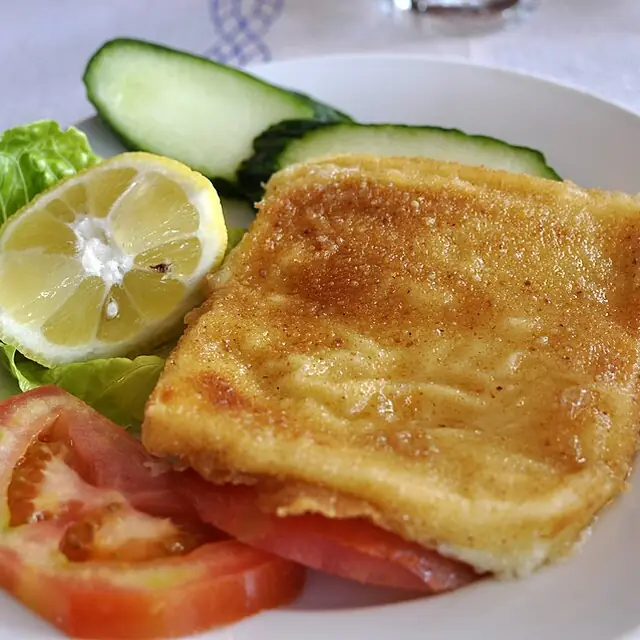
Floured kefalograviera cheese pan-fried in butter, doused in Metaxa brandy at the table and set alight to cries of OPA. Invented in Greektown Chicago in 1968, has nothing to do with Greece.
Where: Greek Islands
Price: $12 to $18
Three layers: banana cake with Bavarian custard, chocolate cake with strawberry glaze, yellow cake with fudge, all encased in whipped cream. South Side birthday-cake institution from the Atomic Age.
Where: Weber's Bakery
Price: $28 to $48 (whole cake)
Chicago deep-dish pizza
Chicago's defining pie, built upside down in a cast-iron pan: an inch of buttery cornmeal crust holds slabs of mozzarella, fennel-sausage and chunky tomato.
History: Pizzeria Uno on Ohio Street served the first deep-dish in 1943 under owner Ike Sewell and original cook Rudy Malnati Sr., whose family later launched Lou Malnati's. The pan-baked, cheese-on-the-bottom architecture was a deliberate break from the East Coast slice, designed to function as a meal rather than a snack. By the 1960s a parallel tradition (stuffed pizza, with a second layer of dough above the cheese) appeared at Nancy's and Giordano's. Across the city, tavern-cut thin (square-sliced) has always outsold deep-dish two to one with locals, but deep-dish is what the postcard sells and what the visitor expects.
Where to try it: Lou Malnati's (Lincoln Park), Pequod's Pizza, Pizano's Pizza & Pasta, Pizzeria Uno
Watch out for: Gluten, Dairy
Italian beef sandwich
Thin-sliced roast beef on Gonnella French bread, ladled with peppery jus, finished with sweet peppers or giardiniera. Dipped wet is the canonical order.
History: The Italian beef sandwich was invented in Chicago in the 1930s among Italian-American workers in the Taylor Street neighbourhood, who stretched cheap roast beef by slicing it paper-thin and serving it on jus-soaked bread. The Ferrari, Pacelli and Cingari families each claim a piece of the origin story. Al's Beef opened in 1938 on Taylor Street; Mr. Beef on Orleans, in River North, became the cabbie favourite a generation later. The 2022 FX series The Bear made the sandwich an international object, but inside the city it has always been a 4pm-after-work staple. Hot (with spicy giardiniera) or sweet (with bell peppers) is the first decision; dry, wet or dipped is the second.
Where to try it: Mr. Beef on Orleans, Al's Beef (Taylor Street), Johnnie's Beef, Portillo's Hot Dogs
Watch out for: Gluten
Chicago hot dog
An all-beef Vienna frank on a poppy-seed bun, dragged through the garden: yellow mustard, neon-green relish, chopped onion, tomato, sport peppers, pickle, celery salt.
History: Vienna Beef has been making the canonical frankfurter in Chicago since 1893, when Austro-Hungarian immigrants Emil Reichel and Sam Ladany debuted theirs at the World's Columbian Exposition. The fully dressed Chicago dog crystallised during the Depression, when Maxwell Street vendors gave you a hot meal of a frank, salad and pickle for a nickel. Ketchup has been banned by unwritten city law for at least sixty years, a rule that locals enforce with both gentle eye-rolling and absolute seriousness; the prohibition was reaffirmed by the late Mayor Richard M. Daley in public on more than one occasion. The poppy-seed bun is from S. Rosen's, the city's other 100-year-old bakery.
Where to try it: Superdawg Drive-In, The Wieners Circle, Portillo's Hot Dogs, Gene & Jude's
Watch out for: Gluten
Tavern-cut thin pizza
Chicago's older everyday pizza: cracker-thin crust, edge-to-edge sausage and tomato, sliced into squares (party-cut) for sharing across a tavern table.
History: Chicago's tavern-style thin predates deep-dish by a generation. The cracker-crust, square-cut pizza emerged in the 1930s in neighbourhood taverns on the South and West sides, designed to be eaten standing up with one hand and a beer in the other. The hallmarks are uniform: a docked, rolled-out crust no thicker than three millimetres; a thin layer of tangy tomato sauce; a low-moisture cheese blend; and edge-to-edge fennel-sausage crumble. Vito & Nick's, in Ashburn since 1949, is the canonical reference, with Pat's Pizza in Lincoln Park and Marie's in Garfield Ridge as the contemporary picks. Locals order it party-cut.
Where to try it: Vito & Nick's Pizzeria, Pat's Pizza & Ristorante, Bonci Chicago
Watch out for: Gluten, Dairy
Jibarito
A Chicago invention: fried green-plantain slices used as bread, stuffed with garlicky steak or chicken, lettuce, tomato, mayo and a thin slice of white American cheese.
History: The jibarito was invented in 1996 by Juan 'Pete' Figueroa at Borinquen Restaurant in Humboldt Park, the Puerto Rican spine of Chicago. Figueroa adapted a recipe described in the San Juan newspaper El Vocero, swapping bread for twice-fried, flattened green plantain. The sandwich spread fast through the Paseo Boricua corridor on Division Street, then onto Latin-American menus across the city. Borinquen closed in 2018; Borinquen Lounge on California Avenue carries the family recipe, and a dozen other Humboldt Park kitchens serve their own. The seasoning (a Puerto Rican mojo of garlic, oregano, olive oil and lime) is what separates a good jibarito from a passable one.
Where to try it: Papa's Cache Sabroso, La Bomba, Borinquen Lounge
Watch out for: Dairy
Polish sausage and pierogi
Smoked kielbasa and butter-fried pierogi: the everyday food of Chicago's Polish neighbourhoods, served with sauerkraut, sour cream and rye bread on the side.
History: Chicago has had the largest Polish population of any city outside Warsaw since the 1900s, anchored along Milwaukee Avenue from West Town up through Avondale, Jefferson Park and Portage Park. Smoked kielbasa and pierogi are the everyday foods of the neighbourhood: pork-and-veal sausage, garlic-and-marjoram seasoned, smoked at small Polish butchers like Bobak's, Andy's, Joe's and Wally's Market. Pierogi run in two camps: ruskie (potato and farmer's cheese) and savoury meat. Staropolska in Belmont Cragin, Smak-Tak in Jefferson Park and Pierogi Heaven downtown carry the standard. Easter morning at Pulaski Park is when the whole community queues for fresh-baked babka.
Where to try it: Staropolska Restaurant
Watch out for: Gluten, Dairy
Elote in a cup
Mexican-style grilled corn, cut off the cob into a cup, layered with mayo, cotija cheese, chilli powder and lime: Chicago's ballpark and street-cart staple.
History: Elote (corn on the cob) and esquites (the same flavours in a cup) crossed from central Mexico into Chicago via Pilsen and Little Village paleterias and pushcarts in the 1980s. The cup format took off because it was easier to eat on the move: corn cut from a grilled cob, butter, mayo, cotija, chilli powder and lime juice, scooped with a spoon. By the 2010s the elote cart became as much a part of the Chicago summer streetscape as the hot dog wagon. Wrigley Field added a stand in 2018 and the AT&T Plaza outside the United Center followed. La Michoacana Premium and the carts along 26th and 18th Streets are the canonical references; the Wrigley cup is the visitor's gateway.
Where to try it: La Michoacana Premium, Big Star
Watch out for: Dairy, Egg
South Side rib tips
Pork-rib trimmings smoked in aquarium-style smokers over oak and hickory, sliced into cartilage-knobbed cubes, sauced in a sweet vinegar-based barbecue mop.
History: Chicago's barbecue tradition runs through the Great Migration: African-American cooks from Mississippi and Tennessee brought wood-smoking up to the South and West sides between the 1910s and the 1960s. The Chicago particular is the aquarium smoker, a glass-and-steel cabinet packed with oak and hickory, designed for the city's lots and ordinances. Rib tips (the cartilage-rich trim from St. Louis-cut spare ribs) became the everyman cut: cheaper than ribs, deeper-flavoured, served in cubes with hot links, white bread and a tangy-sweet sauce. Lem's Bar-B-Q on 75th Street, open since 1954, is the cathedral. Honey 1 in West Town and Uncle John's on the South Side are the second tier.
Where to try it: Lem's Bar-B-Q, Honey 1 BBQ, Uncle John's BBQ
Watch out for: Gluten (white bread)
Publican-style pork chop
The bone-in heritage pork chop that anchored Paul Kahan's The Publican: rosemary-brined, hard-roasted, sliced off the bone, served with mustard and braised greens.
History: Paul Kahan and Donnie Madia opened The Publican on Fulton Market in October 2008, four blocks from the old Union Stockyards, with a menu built around pork. The bone-in heritage chop (from Becker Lane Farm in Iowa and Slagel Family Farm in Illinois) became the room's signature: brined in rosemary and sage, hard-roasted, sliced thick off the bone, served family-style with mustard and braised greens. The dish reframed Midwest fine dining around its agricultural backbone. Kahan's One Off Hospitality group spun off Avec, Big Star and Publican Quality Bread from the same block.
Where to try it: The Publican, avec
Chicago mix popcorn
Cheddar-cheese popcorn and caramel corn mixed in the same bag: an only-in-Chicago snack invented by Garrett Popcorn, now copied across the country.
History: Garrett Popcorn Shops opened on Madison Street in the Loop in 1949. The famous mix (cheddar cheese and CaramelCrisp in one bag) was introduced in the 1970s and has been the takeaway-bag souvenir of choice from O'Hare and Midway ever since. The cheese is sharp Wisconsin cheddar; the caramel is hand-cooked in copper kettles with butter and sugar. The queues at the Michigan Avenue flagship outside the original Garrett shop became enough of a fixture that the tourist board started photographing them. The store name was changed from 'Chicago Mix' to 'Garrett Mix' in 2014 after a trademark settlement, but locals still call the snack the original name.
Where to try it: Garrett Popcorn Shops
Watch out for: Dairy
Lake perch fry
Lake Michigan yellow perch fillets, cornmeal-dredged, deep-fried, served with tartar, lemon and rye: a Friday-fish-fry standard at South Side taverns and German halls.
History: Lake Michigan yellow perch was the cheap workingman's fish in Chicago through the 19th and 20th centuries: pulled from the lake by Polish and Croatian commercial fishermen, fried at Friday-night fish fries in Bridgeport, Pullman and Roseland taverns. Commercial perch fishing in Lake Michigan collapsed in the late 1990s under invasive-mussel pressure on the food chain; the fillets on Chicago menus today are mostly Canadian-caught from Lake Erie and the Saskatchewan lakes. Calumet Fisheries on 95th Street, smoking chubs since 1948, is the smokehouse reference; Edgebrook's Superdawg and South Side taverns still serve Friday perch with rye, tartar, lemon and a beer.
Where to try it: Calumet Fisheries
Watch out for: Fish, Gluten
Greek-Chicago gyros
The cone-shaped beef-and-lamb gyros loaf that Chicago's Greektown standardised in the 1970s, thin shaved meat tucked into pita with tomato, onion and tzatziki, the Halsted Street lunch staple.
History: Greek immigrants arrived in Chicago in volume in the 1900s, settling around Halsted and Harrison on the Near West Side, the Greektown of legend. In 1973 the Apostolou brothers and the Garlanis family at Parkview Restaurant in Skokie began turning out the cone-shaped, vertically-roasted gyros loaf of beef and lamb, reportedly America's first commercial frozen gyros cone. Kronos Foods, founded the same year in Chicago, scaled it nationally. The Halsted Street strip (Greek Islands and Artopolis) has been Greektown's food row since the original district was bulldozed for the UIC campus in 1965.
Where to try it: Greek Islands
Watch out for: Gluten, Dairy
Rainbow Cone
Five layered ice cream slices stacked on a single cone in a precise order: chocolate, strawberry, Palmer House, pistachio, orange sherbet. The Beverly neighbourhood institution sliced (not scooped) since 1926.
History: Joe and Katherine Sapp opened the Original Rainbow Cone at 9233 South Western Avenue in Chicago's Beverly neighbourhood in 1926. The signature five-flavour stack of chocolate, strawberry, Palmer House (vanilla with cherries and walnuts), pistachio almond and orange sherbet was sliced from bricks with a flat paddle, an early-20th-century method the shop still uses today. Now run by third-generation owner Lynn Sapp, Rainbow Cone celebrated its 100th anniversary in 2026 and has begun national expansion, but the Beverly flagship and a Navy Pier outpost are the canonical Chicago locations.
Watch out for: Dairy, Nuts, Egg
Mother-in-law sandwich
A whole Chicago-style tamale (machine-extruded cornmeal in waxed paper, not corn husks) crammed into a soft hot dog bun and smothered in spicy beanless chilli. South Side cult; Anthony Bourdain put it on TV.
History: The mother-in-law emerged in the 1950s on Chicago's South Side, where the city's unique cornmeal tamale tradition (rolled in paper, steamed in hot-dog warmers) met the chilli-on-everything sandwich culture of the Midwest. The name comes from the joke that both kinds of mother-in-law give you heartburn. Fat Johnnie's at 7242 S Western Avenue and Johnny O's on 35th Street are the canonical operators; both have served the sandwich continuously since the 1970s. The tamales come from only two Chicago manufacturers, Tom Tom or Supreme. Anthony Bourdain featured it on No Reservations in 2008, calling it the evil step-brother of the hot dog.
Watch out for: Gluten, Dairy
Eli's Cheesecake
Chicago-style cheesecake: golden-brown skin, dense creamy interior, baked on an all-butter shortbread cookie crust. Created by Eli Schulman in 1980 for Taste of Chicago; now the city's signature dessert.
History: Eli Schulman ran Eli's Ogden Huddle (1940), Eli's Stage Delicatessen, and Eli's The Place for Steak (1966) in Chicago, where Frank Sinatra and Sammy Davis Jr. were regulars. In the late 1970s he developed his cheesecake recipe over a year of after-lunch testing, finalising four versions: original plain, chocolate chip, cinnamon raisin, and Hawaiian. The cake debuted at the inaugural Taste of Chicago in 1980 and sold so well that Eli's Cheesecake Company spun off as a standalone business. Eli's Original Plain has sold more than 2 million slices at Taste of Chicago and is consistently called Chicago's most famous dessert.
Watch out for: Dairy, Gluten, Egg
Flaming saganaki
Floured kefalograviera cheese pan-fried in butter, doused in Metaxa brandy at the table and set alight to cries of OPA. Invented in Greektown Chicago in 1968, has nothing to do with Greece.
History: Flaming saganaki was invented in 1968 at the Parthenon restaurant on Halsted Street in Chicago's old Greektown. Owner Chris Liakouras put a match to brandy-doused fried cheese at the suggestion of a regular customer; the table cried OPA in delight, and the format was born. Every other Greek restaurant on Halsted adopted it within months. Saganaki itself (pan-fried cheese with lemon) is an ancient Greek meze, but the flaming brandy treatment is a 100% Chicago invention. The Parthenon closed in 2016 after 48 years, but the tradition is carried on at Greek Islands (since 1971), Athena, 9 Muses and Ithaki Estiatorio on the surviving South Halsted strip.
Where to try it: Greek Islands
Watch out for: Dairy, Gluten
Atomic Cake
Three layers: banana cake with Bavarian custard, chocolate cake with strawberry glaze, yellow cake with fudge, all encased in whipped cream. South Side birthday-cake institution from the Atomic Age.
History: Atomic Cake was created in the late 1940s or early 1950s by baker George Kremm while he worked at Calumet Bakery in Chicago's South Deering neighbourhood. Kremm named it in honour of the Atomic Age fascination of the postwar years. He took the recipe with him when he opened Liberty Bakery in Roseland in the 1950s, and the cake spread across South Side Bohemian and Polish bakeries. Today Calumet Bakery in Lansing, Weber's Bakery in Garfield Ridge, and Wolf's Bakery in Evergreen Park are the canonical Chicago Atomic Cake bakers. The cake is the default birthday cake on the South Side; rarely seen north of the Loop.
Where to try it: Weber's Bakery
Watch out for: Gluten, Dairy, Egg