

Viator · 3.5 h
Old Monterey Walking Food Tour
Discover Monterey Through Its Flavors Experience Old Monterey like never before on this leisurely, guided food tour that highlights the best local flavors and hidden ...
fromUSD 175 Check dates
The plates that define Carmel-by-the-Sea: what they are, and where to eat the canonical version.
The plates that define Carmel-by-the-Sea: what they are, where they came from, and where to eat the canonical version.
The shellfish that fed Carmel's artists' colony, now farmed in Monterey Bay and served as tender pan-seared steaks in the village's seafood rooms.
Where to try it: Flying Fish Grill
Price: $40-60 as a main
Abalone is the founding dish of bohemian Carmel. In the early 1900s the artists' colony pried the shellfish off the rocks below the village, pounded it on driftwood and grilled it at beach bonfires, chanting verses of the Abalone Song as it cooked. Overharvesting closed the wild fishery, so today's abalone is farm-raised in Monterey Bay, and kitchens like Flying Fish Grill in Carmel Plaza treat it as the luxury it became.
Watch out for: Shellfish
Crisp-fried market squid from one of America's most storied squid fisheries, the default starter on tables from Carmel pubs to seafood grills.
Where to try it: Brophy's Tavern, Flaherty's Seafood Grill & Oyster Bar
Price: $16-20 as a starter
Monterey Bay has run a commercial squid fishery since Chinese and later Sicilian fishing families built it in the 19th and early 20th centuries, and market squid remains one of California's biggest catches. On the Monterey Peninsula the local habit is to eat it simply: dusted, flash-fried and squeezed with lemon. In Carmel it opens meals everywhere from Brophy's Tavern, where it headlines the pub menu, to Flaherty's crispy calamari appetiser.
Watch out for: Shellfish, Gluten
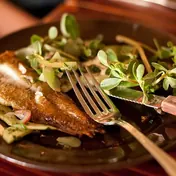
Small Pacific flatfish, floured and pan-fried whole with lemon butter, an old Monterey coast grill order that Carmel's seafood houses still honour.
Where to try it: Flaherty's Seafood Grill & Oyster Bar
Price: $25-35 as a main
Pacific sanddabs school on the sandy bottom of Monterey Bay, and for over a century they were the workaday fish of the California coast grill: too small and delicate to travel well, so they stayed a regional treat. The classic treatment survives almost unchanged, lightly breaded, pan-fried and finished with a lemon butter. At Flaherty's in Carmel they arrive dusted in sourdough crumbs under a lemon tarragon beurre blanc, one of the village's most local plates.
Watch out for: Fish, Gluten, Dairy
Viator · 3.5 h
Discover Monterey Through Its Flavors Experience Old Monterey like never before on this leisurely, guided food tour that highlights the best local flavors and hidden ...

Viator · 3.2 h
Carmel-by-the-Sea's original and only locally owned food tour, rooted in this community since 2012. Discover the village's best-kept culinary secrets on this 3-hour gu...

Viator · 1.5 h
The ONLY Thai cooking class in Monterey! Fun & Tasty Party + Memorable Experience Plan your special holidays, surprise date night, birthday, bachelorette parties, comp...
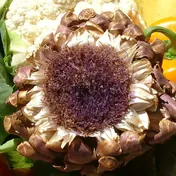
Artichokes from the fields half an hour north of Carmel, grilled, fried or stuffed; the vegetable the whole Monterey coast claims as its own crop.
Where to try it: Hog's Breath Inn, Vesuvio
Price: $14-20 as a starter
Castroville, up Highway 1 from Carmel, has called itself the Artichoke Center of the World since the 1920s, when Italian growers planted the Salinas Valley's foggy edge with globe artichokes. The crop never left, and neither did the local habit of treating artichokes as a main event rather than a garnish. In Carmel that means grilled Castroville artichokes at the restored Hog's Breath Inn and fried artichoke crochette at Vesuvio, both minutes from the fields that grew them.
Creamy clam chowder as poured across the Monterey Peninsula, sampled cup by cup on the wharf and ladled all day at Carmel's village seafood grills.
Where to try it: Flaherty's Seafood Grill & Oyster Bar, Hog's Breath Inn
Price: $10-16 a cup or bowl
Chowder came to Monterey Bay with New England fishermen and stayed because the wharf trade made it a calling card: to this day the stalls of Monterey's Old Fisherman's Wharf hand out chowder samples to walkers, each house claiming the creamiest pot. Carmel's version of the ritual is calmer, a cup at Flaherty's, whose menu leads with its famous clam chowder, or a bowl at the Hog's Breath Inn between courses of steak.
Watch out for: Shellfish, Dairy, Gluten
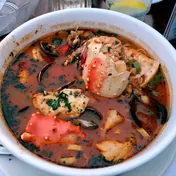
The Italian-Californian fishermen's stew of crab, shellfish and tomato broth, claimed by every coast town on Monterey Bay and served across Carmel.
Where to try it: Dametra Cafe, Nora's
Price: $30-45
Cioppino grew out of Italian immigrant fishing communities on the California coast, a pot built from whatever the boats brought in, thickened with tomato and wine. Monterey Bay's Sicilian fleet made it a peninsula dish as much as a San Francisco one, and it never left the local table. In Carmel it spans the price scale: the house pride at Dametra Cafe on Ocean Avenue, and a scallop-loaded version at Nora's comfort-food dining room on San Carlos Street.
Watch out for: Shellfish, Fish
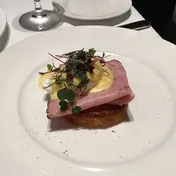
The hollandaise-crowned breakfast that Carmel adopted as a competitive sport, with one Mission Street diner listing more than twenty variations.
Where to try it: Katy's Place
Price: $18-26
Eggs Benedict is a New York invention of the late 19th century, but Carmel gave it a second home. Katy's Place opened on Mission Street in 1982 and built its reputation on the dish, styling itself the Capital of Eggs Benedict and keeping more than twenty versions on the menu at once, building outward from the classic. In a village that eats breakfast early and seriously, the Benedict became the standing order.
Watch out for: Egg, Gluten, Dairy
The Tuck Box's spongy house scones with olallieberry preserves and orange marmalade, an English tearoom ritual kept alive in a fairy-tale cottage.
Where to try it: The Tuck Box
Price: $8-14 with tea
When two English sisters opened the Tuck Box tearoom in a 1927 Hugh Comstock cottage in the early 1940s, they fixed cream tea into Carmel's routine. The house scones, closer to a griddle muffin than a crumbly British scone, come with preserves made in-house, and the olallieberry, a blackberry cross bred on the mid-century Pacific coast, became the signature flavour. The cottage has served them since, and still opens at 07:30 daily.
Watch out for: Gluten, Dairy, Egg
Carmel-by-the-Sea's signature dishes include Monterey Bay abalone, Monterey Bay calamari, Sand dabs, Castroville artichoke, Monterey-style clam chowder. See our signature dishes chapter for where to eat each.