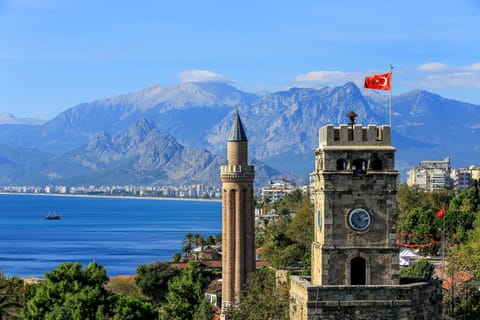
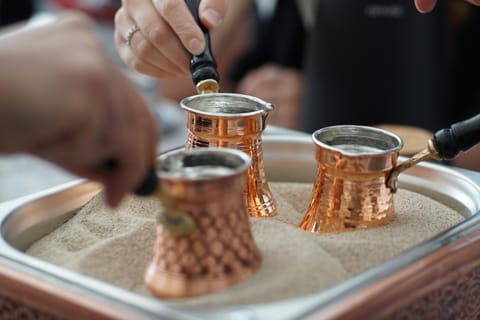
How Antalya came to eat the way it does: the people, migrations and accidents that shaped the plate.
Key eras
-
Port city founded, 159 to 138 BC
Turkish Wikipedia says King Attalos II of Pergamon (159 to 138 BC) had a port city founded here and named it Attaleia after himself. The municipality adds that the kitchen took in Arab and African influence because Antalya was a city of trade and tourism.
-
Tahini from Manavgat, 1450s
Manavgat's tax books from the 1450s record tahinhanes, the workshops that made tahini, and the registered Manavgat sesame file says the district made tahini for the Ottoman palace tables. Tahini is the base of the tarator under Antalya piyaz and tops its pumpkin dessert, whose registered recipe takes tahini from Manavgat sesame.
-
Yörük herders, 16th century
An Ottoman survey from the late 16th century records the Varsak Yörük community near Antalya, herders who wintered on the plain north of the city and summered on the Korkuteli plateaus. The 2024 Yörük workshop book published by Muratpaşa Municipality lists lamb tandır among Yörük dishes and says slow-cooked tandır dishes were common in winter quarters.
-
Antalya-style piyaz, almost a century old by 2017
The geographical-indication filing says the Antalya way of making piyaz is almost a hundred years old. Unlike piyaz elsewhere in Turkey, a salad, it is a bean main course under tarator sauce. TÜRKPATENT registered Antalya piyazı on 29 December 2017 at the request of the Antalya Chamber of Commerce and Industry.
Taste it todayAntalya piyazı (tahinli piyaz) -
Family restaurants, 1930 to 1996
Börekçi Tefik Dede dates itself to 1930 and 7 Mehmet to 1937. Parlak has served in Zincirli Han since 1954, Şişçi Ramazan dates its flavours to 1970, Çorbacı Şemsi to 1976, and Piyazcı Ahmet began in 1996 in a shop of about 20 square metres.
-
Registered dishes, 2017 to 2022
Antalya piyazı was registered on 29 December 2017, kabak tatlısı on 12 April 2021, serpme böreği on 26 April 2021 and paça çorbası on 24 August 2022. The paça file traces the soup to the 1950s, and the serpme börek file traces the börek to a Ramadan custom of giving alms.
Immigrant influences
- Yörük herders
- Lamb tandır, keşkek and tarhana soup are among the dishes the Yörük workshop book lists as Yörük, and the municipality calls the Yörük effect on Antalya's kitchen considerable.
- Arab and African influence
- The municipality says Antalya's cuisine took in Arab and African influence as a city of trade and tourism, and its list of local flavours includes Arap kadayıfı and humus.
- Hometown and expatriate associations
- Eighty associations from Turkey's regions and other countries cook regional dishes at stalls in the 10th Yöreler Renkler Festival, held 5 to 13 September 2026.
Signature innovations
- Tahinli piyaz: beans under a tarator sauce, eaten as a main course, registered in 2017
- Antalya kabak tatlısı: sugar-cured pumpkin baked, then tahini and walnuts, registered in 2021Taste it todayAntalya kabak tatlısı
- Antalya serpme böreği: hand-thrown paper-thin dough with a mince or cheese filling, once called fıtır börekTaste it todayAntalya serpme böreği
- Antalya paça çorbası: head-meat soup thickened with egg, saffron and flour, served with koşma simitTaste it todayAntalya paça çorbası (kelle paça)
- Şiş köfte, minced meat on skewers, served with piyaz and kabak tatlısıTaste it todayŞiş köfte
- Hibeş, a meze of tahini, lemon, garlic and cumin that Turkish Wikipedia calls native to AntalyaTaste it todayHibeş
- Turunç peel jam, the bitter-orange preserve that became a symbol of Antalya
Book food experiences in Antalya