Signature dishes
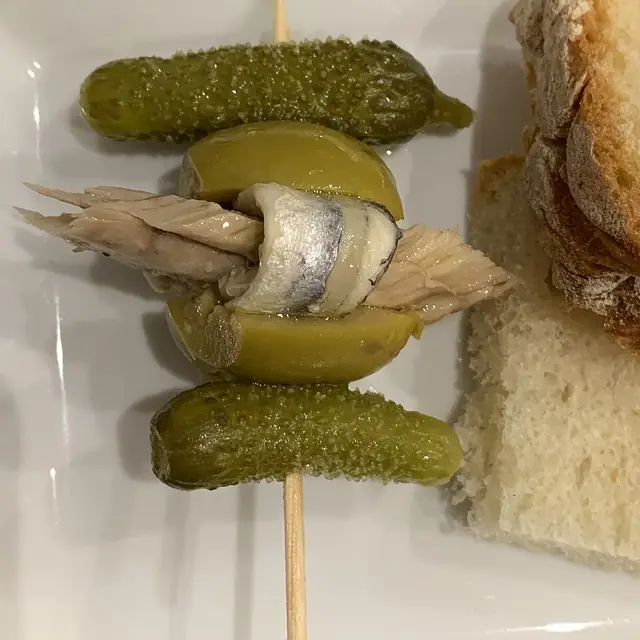
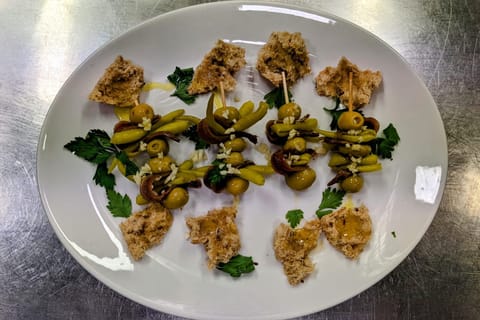
The gilda is San Sebastian's defining pintxo: a single toothpick skewer of anchovy from Cantabrico, a green pickled olive and one or two Ibarra guindilla peppers, briny and sharp, eaten in two bites.
Where: Antonio Bar, Bar Sport, Atari Gastroteka
Price: €2.50-4 per skewer
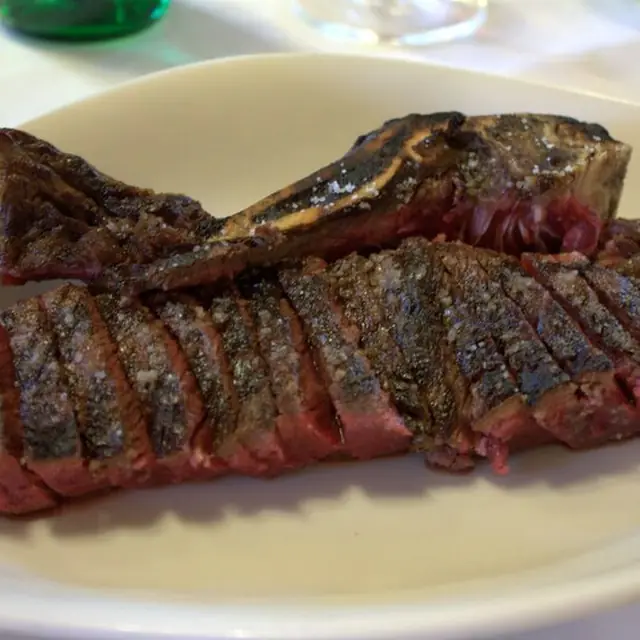
The Basque txuleta is a bone-in ribeye from old dairy cattle (vaca vieja, 8 to 14 years), aged 30 days, salted heavily and cooked rare over oak embers. Served on a sizzling plate so the diner finishes to taste.
Where: Bar Nestor, Casa Urola, Bodegon Alejandro
Price: €70-90 per kilo, sold by weight
Kokotxas are the throat glands of hake, gelatinous wedges of cartilage and flesh that emulsify into the Basque pil pil sauce, cooked slowly in olive oil and garlic until the gelatin forms a green-tinted emulsion.
Where: Casa Urola, Bodegon Alejandro, Kokotxa
Price: €22-32 per portion
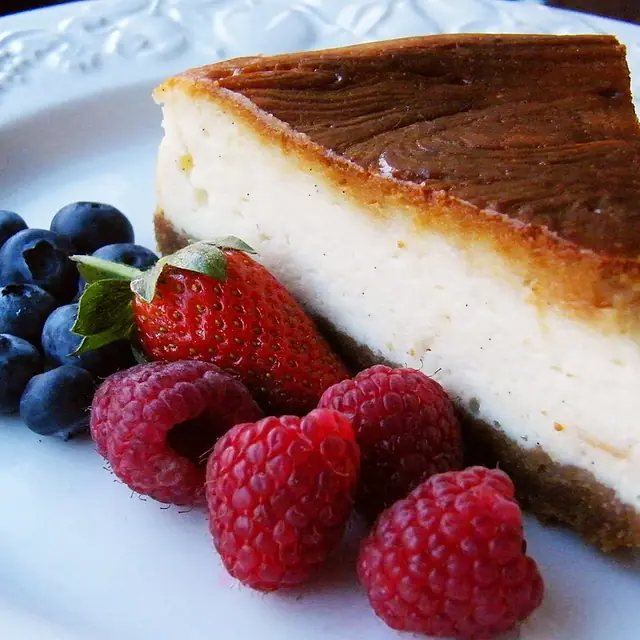
Crustless cheesecake baked at very high heat in a parchment-lined tin until the top caramelises black, the centre still soft and jiggly. Lemon-sharp interior, slightly bitter crust. Invented at La Vina in 1990.
Where: La Vina, Pasteleria Otaegui, Pasteleria Geltoki
Price: €4-5 per slice, €35-45 per whole cake
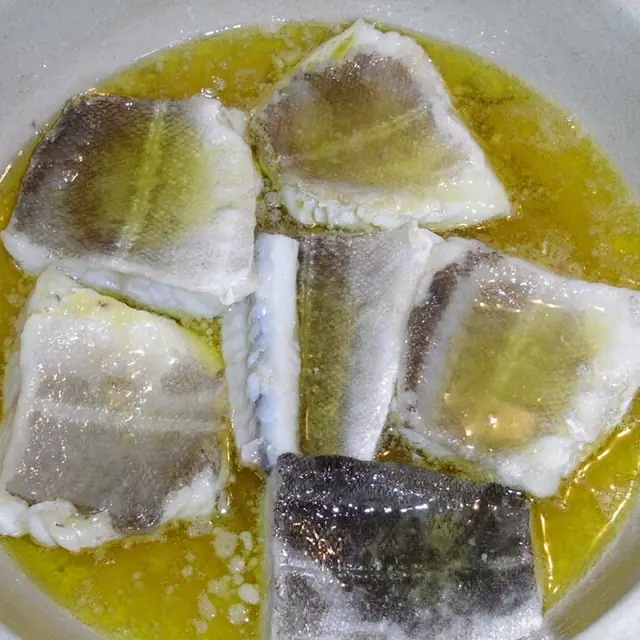
Bacalao al pil pil is salt cod slowly cooked in olive oil with garlic until the gelatin from the skin emulsifies the oil into a creamy pale-yellow sauce, served in the earthenware cazuela it was cooked.
Where: Casa Vergara, Bodegon Alejandro
Price: €18-26 per plate
Txangurro al horno is Basque baked spider crab, the picked white meat stuffed back into the shell with sherry, leeks, tomato and breadcrumbs, then baked until the top crisps to a golden crust.
Where: Ganbara, Casa Urola, Bodegon Alejandro
Price: €22-32 per portion
Cantabrian fresh anchovy, salt-cured or vinegar-marinated, the cornerstone of the Basque pintxo. A single fillet on toasted bread, dressed with olive oil and a curl of pickled vegetable, the canonical counter snack.
Where: Bar Txepetxa, Antonio Bar, Bar Sport
Price: €3-5 per pintxo, €12-18 per tin
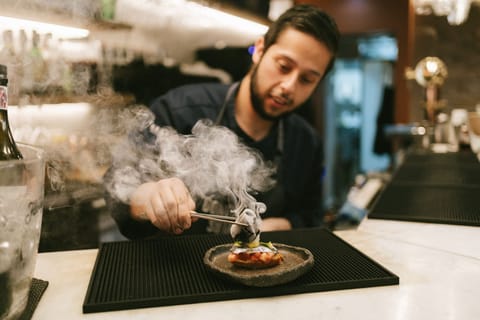
Pintxos de autor are the modern San Sebastian pintxos: small hot plates cooked to order, technique-driven and chef-led, descending from the 1990s Cuchara de San Telmo and Borda Berri kitchens.
Where: La Cuchara de San Telmo, Borda Berri
Price: €4-9 per pintxo
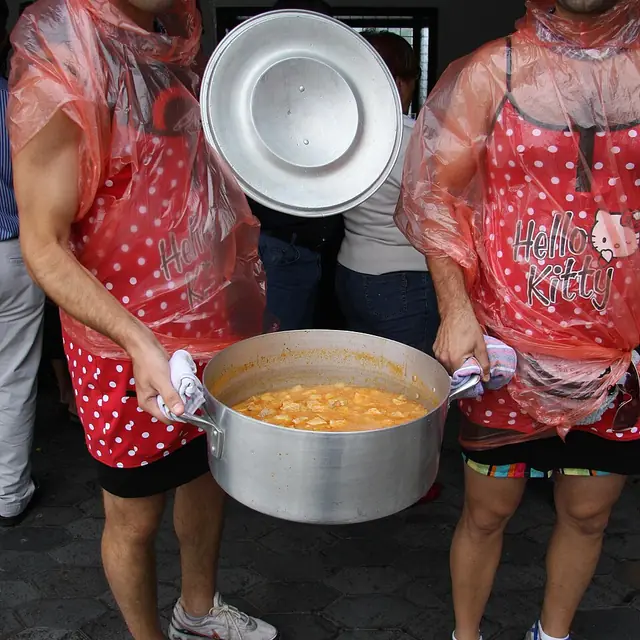
Basque tuna and potato stew, originally cooked by fishermen at sea in a marmita from the day's bonito catch, choricero-pepper pulp, ripe tomato, green pepper and potatoes broken into chunks so starch thickens the broth.
Where: Casa Urola, Bodegon Alejandro, Casa Vergara, Gandarias
Price: €16-26
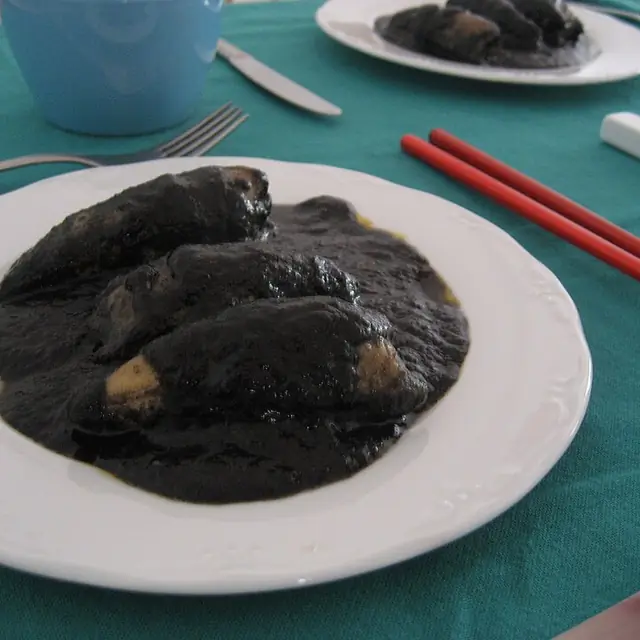
Baby squid braised in their own ink with onions, garlic, green pepper and a splash of brandy, served over white rice. The Basque coast's dramatic dish, jet-black and intensely savoury.
Where: Casa Urola, Casa Vergara, Bartolo, Bodegon Alejandro
Price: €18-28
Dry, lightly oxidised Basque cider made from Euskal Sagar apple varieties, poured from arm's-length above the head into a wide glass to release the spritz. The sidreria txotx season runs January to April.
Where: Akerbeltz, Bar Sport, Casa Vergara
Price: €3-5 a pour
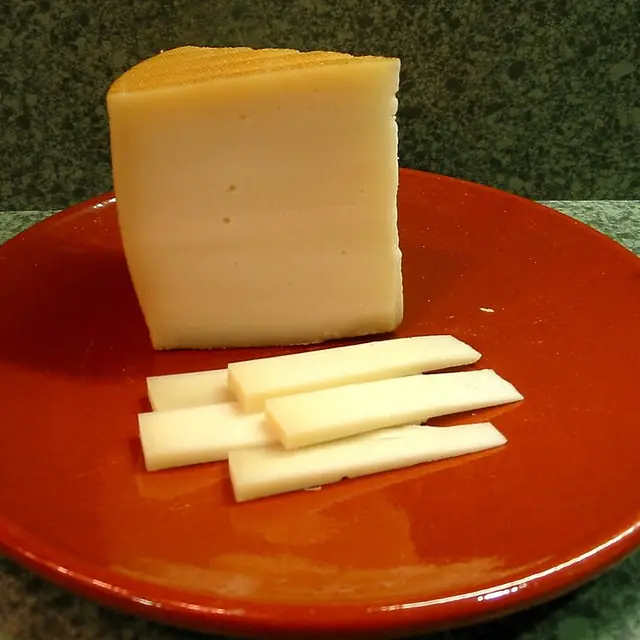
Raw sheep-milk cheese aged 2 to 12 months from the Latxa and Carranzana breeds of the Basque highlands. Smoked or unsmoked, with a firm-but-yielding texture and intense lamb-meadow flavour. PDO since 1987.
Where: Ganbara, Atari Gastroteka, La Vina, Casa Vergara
Price: €6-14 per portion
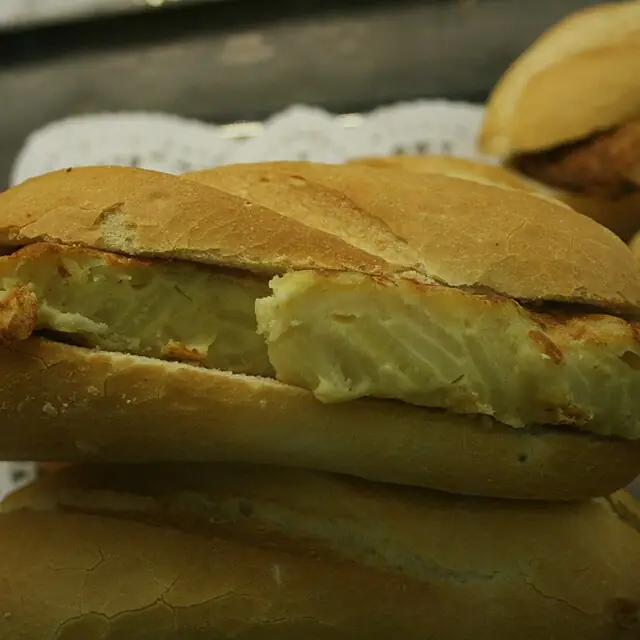
San Sebastián's tortilla de patatas is the just-set Spanish potato omelette: slow-confit potatoes and onions bound in barely-cooked egg, sliced like a torte and served as a pintxo at every Parte Vieja bar.
Where: Antonio Bar, Bar Bergara, La Cuchara de San Telmo, Bartolo
Price: €3-€5 per pintxo
Carrillera de ternera is San Sebastián's slow-braised beef-cheek pintxo: meltingly tender cheek finished in a deep red-wine reduction, plated on a slice of bread at the pintxo counter.
Where: La Cuchara de San Telmo, Borda Berri, Galerna Jan Edan, Sirimiri Gastroleku
Price: €4-€6 per pintxo
Gilda
The gilda is San Sebastian's defining pintxo: a single toothpick skewer of anchovy from Cantabrico, a green pickled olive and one or two Ibarra guindilla peppers, briny and sharp, eaten in two bites.
History: The gilda was assembled in 1946 at Casa Vallés on Calle Reyes Catolicos by the Vallés family, who named the dish for Rita Hayworth's character in the 1946 Charles Vidor film of the same name, a femme fatale 'salty and slightly piquant' like the skewer itself. The first version stacked one anchovy, one olive and one guindilla pepper. Modern San Sebastian gildas now run to two anchovies and two olives, sometimes a third guindilla. The dish became the structural opener of the Basque pintxo crawl and the canonical first bite in any Donostian bar. Antonio Bar in the Centro and the gilda counters around the Old Town all build on the Valles 1946 template.
Where to try it: Antonio Bar, Bar Sport, Atari Gastroteka
Watch out for: Fish
Txuleta
The Basque txuleta is a bone-in ribeye from old dairy cattle (vaca vieja, 8 to 14 years), aged 30 days, salted heavily and cooked rare over oak embers. Served on a sizzling plate so the diner finishes to taste.
History: The Basque txuleta tradition descends from the asador kitchens of Tolosa and Gernika, where retired dairy cattle (vaca vieja, often Galician Rubia Gallega or Basque pirenaica) were aged for the deep marbled fat and cooked over oak coals on simple iron grills (parrillas). Bar Nestor in San Sebastian, since 1980, became the canonical city counter for the dish, serving txuleta for two with the tomato salad and pimientos de Padron as the only sides. The dish moved into the Michelin canon through Casa Julian in Tolosa and Asador Etxebarri in Axpe (Atxondo) under Bittor Arginzoniz. In San Sebastian, Casa Urola, Eme Be Garrote and Bar Nestor anchor the canonical txuleta service in 2026.
Where to try it: Bar Nestor, Casa Urola, Bodegon Alejandro
Watch out for: None typical
Kokotxas de merluza al pil pil
Kokotxas are the throat glands of hake, gelatinous wedges of cartilage and flesh that emulsify into the Basque pil pil sauce, cooked slowly in olive oil and garlic until the gelatin forms a green-tinted emulsion.
History: The kokotxa dish entered the Basque canon in the 19th-century fishing tradition of Pasaia and Hondarribia, where the throat glands (once discarded) were taken home by fishermen's families and cooked in garlic-and-oil cazuelas. The pil pil emulsion technique (shaking the pan to bind the hake gelatin into a green sauce) descends from the bacalao al pil pil tradition of the Basque cod trade. Casa Urola and Bodegon Alejandro in San Sebastian's Old Town anchor the canonical kokotxas service since the mid-20th century. Kokotxa restaurant on Calle Campanario takes its name from the dish and holds a Michelin star.
Where to try it: Casa Urola, Bodegon Alejandro, Kokotxa
Watch out for: Fish
Tarta de queso vasca (Basque burnt cheesecake)
Crustless cheesecake baked at very high heat in a parchment-lined tin until the top caramelises black, the centre still soft and jiggly. Lemon-sharp interior, slightly bitter crust. Invented at La Vina in 1990.
History: Santiago Rivera invented the tarta de queso vasca at La Vina on Calle 31 de Agosto in 1990, while finishing his culinary training. The recipe blasts a 2-kilogram batter of full-fat cream cheese, sugar, eggs, cream and a small amount of flour in a 220C oven for 50 minutes until the top blackens and the centre remains soft. The dish stayed local until 2019, when the New York Times named it flavour of the year and the recipe travelled to cafes from Tokyo to New York under the name Basque burnt cheesecake or San Sebastian cheesecake. La Vina alone produces over 100 cakes daily; Otaegui in the Old Town and Geltoki in Amara now also sell wedges of their own versions.
Where to try it: La Vina, Pasteleria Otaegui, Pasteleria Geltoki
Watch out for: Eggs, Dairy, Gluten
Bacalao al pil pil
Bacalao al pil pil is salt cod slowly cooked in olive oil with garlic until the gelatin from the skin emulsifies the oil into a creamy pale-yellow sauce, served in the earthenware cazuela it was cooked.
History: Bacalao al pil pil grew out of the Basque salt cod trade, which had Basque boats fishing the Newfoundland banks from the 16th century and Bilbao as the main Spanish port for the product. Bilbao legend dates the dish to 1836, when a merchant named Simon Gurtubay is said to have over-ordered salt cod just before the Carlist siege and the city cooked its way through the surplus with the garlic and oil still to hand; historians treat the story as folklore, since no shipping record supports it. The pil pil emulsion technique (the gentle shaking of the cazuela to bind the cod gelatin with garlic-infused oil) developed in Basque kitchens through the 19th century and remains the canonical preparation for salt cod across the Basque Country. Casa Vergara in San Sebastian's Old Town serves it as a pintxo; Bodegon Alejandro serves the full plate.
Where to try it: Casa Vergara, Bodegon Alejandro
Watch out for: Fish
Txangurro al horno
Txangurro al horno is Basque baked spider crab, the picked white meat stuffed back into the shell with sherry, leeks, tomato and breadcrumbs, then baked until the top crisps to a golden crust.
History: Txangurro is the Basque word for spider crab (the Cantabrian centollo). The baked preparation (txangurro al horno) was popularised in San Sebastian in the early 20th century at Casa Nicolasa and developed into the canonical Basque seafood plate by the 1960s. The stuffing technique borrows from the French Basque mode of dressing crab in its own shell; the local addition is the brandy or Jerez splash and the breadcrumb top. Ganbara on San Jeronimo runs the canonical pintxo version (small clay dish, baked individually); the full dinner-plate version appears at Casa Urola, Bodegon Alejandro and the Belle Epoque hotel dining rooms.
Where to try it: Ganbara, Casa Urola, Bodegon Alejandro
Watch out for: Shellfish, Gluten, Dairy
Anchoa fresca (Cantabrian anchovy)
Cantabrian fresh anchovy, salt-cured or vinegar-marinated, the cornerstone of the Basque pintxo. A single fillet on toasted bread, dressed with olive oil and a curl of pickled vegetable, the canonical counter snack.
History: The Cantabrian anchovy (engraulis encrasicolus) has anchored the Basque fishing industry from the 19th-century Bermeo and Getaria salting houses through the modern brine industry of Santona. The vinegar-cured version (boqueron) and the salt-cured version (anchoa) became the canonical pintxo bases in the 1940s, with Casa Vallés-style gildas using the cured fillets. Bar Txepetxa on Pescaderia in San Sebastian has cured white anchovies by a guarded family recipe since 1972, served on toasted bread with a dozen topping options. The Getaria boats land the anchovy fleet from April through July; the brine production runs year-round.
Where to try it: Bar Txepetxa, Antonio Bar, Bar Sport
Watch out for: Fish
Pintxos de autor
Pintxos de autor are the modern San Sebastian pintxos: small hot plates cooked to order, technique-driven and chef-led, descending from the 1990s Cuchara de San Telmo and Borda Berri kitchens.
History: Pintxos de autor (signature pintxos) emerged in San Sebastian's Old Town in the late 1990s when chefs trained at Lasarte (Martin Berasategui) and El Bulli (Ferran Adria) opened small counters that served made-to-order plates instead of the bar-display cold pintxos that had been the city standard. La Cuchara de San Telmo (1999) led the wave with the carrillera al vino tinto; Borda Berri followed with the risotto de Idiazabal. The Basque Culinary Center, opened in 2011, became the formal training pipeline for the pintxos de autor generation.
Where to try it: La Cuchara de San Telmo, Borda Berri
Watch out for: Varies
Marmitako
Basque tuna and potato stew, originally cooked by fishermen at sea in a marmita from the day's bonito catch, choricero-pepper pulp, ripe tomato, green pepper and potatoes broken into chunks so starch thickens the broth.
History: Marmitako (literally 'from the pot') was the fishermen's lunch aboard Basque bonito boats from at least the 19th century. The dish came ashore through the cofradias (fishermen's cooperatives) and is now a summer staple of every Basque txoko (private dining society). Casa Urola and Bodegon Alejandro keep the canonical Donostia version on the menu during bonito season (June to October).
Where to try it: Casa Urola, Bodegon Alejandro, Casa Vergara, Gandarias
Watch out for: Fish
Txipirones en su Tinta
Baby squid braised in their own ink with onions, garlic, green pepper and a splash of brandy, served over white rice. The Basque coast's dramatic dish, jet-black and intensely savoury.
History: Txipirones en su tinta (baby squid in their own ink) has been cooked along the Basque coast since at least the 17th century, with Bilbao and Donostia each claiming separate variants. The Donostia version is sweeter from a deeper sofrito. Casa Urola, Casa Vergara and Bartolo all run defensible versions on their daily menus.
Where to try it: Casa Urola, Casa Vergara, Bartolo, Bodegon Alejandro
Watch out for: Shellfish
Sidra Vasca
Dry, lightly oxidised Basque cider made from Euskal Sagar apple varieties, poured from arm's-length above the head into a wide glass to release the spritz. The sidreria txotx season runs January to April.
History: Basque sidra (cider) has been made in the Astigarraga and Hernani area inland from Donostia since at least the 12th century. The sidreria txotx ritual, where guests catch the wine straight from a hole-punched barrel onto their glasses, dates to the 19th century. Petritegi, Zapiain and Saizar are the canonical sidreria visits; Donostia bars including Akerbeltz and Bar Sport pour the cider year-round.
Where to try it: Akerbeltz, Bar Sport, Casa Vergara
Watch out for: Sulphites
Idiazabal
Raw sheep-milk cheese aged 2 to 12 months from the Latxa and Carranzana breeds of the Basque highlands. Smoked or unsmoked, with a firm-but-yielding texture and intense lamb-meadow flavour. PDO since 1987.
History: Idiazabal cheese has been made in the Basque Country and Navarre highlands since pre-Roman times, traditionally by shepherds who smoked the cheese over beech and hawthorn wood to preserve it. The PDO classification covers cheese from raw milk of Latxa and Carranzana sheep only. La Vina del Ensanche, Ganbara and Atari Gastroteka all carry serious Idiazabal selections.
Where to try it: Ganbara, Atari Gastroteka, La Vina, Casa Vergara
Watch out for: Dairy
Tortilla de patatas
San Sebastián's tortilla de patatas is the just-set Spanish potato omelette: slow-confit potatoes and onions bound in barely-cooked egg, sliced like a torte and served as a pintxo at every Parte Vieja bar.
History: The tortilla de patatas is Spain's most-served dish, but the Basque pintxo-bar tradition gave it the just-set (poco hecho) form that defines the San Sebastián version: the egg should run when cut. Antonio Bar on Calle de Bergara (the current owners took over in 1995) is widely cited (San Sebastián tourism, Time Out, Eater) as the city's reference tortilla, taken off the heat with the centre still liquid. Bar Bergara on the same street and La Cuchara de San Telmo in the Parte Vieja keep their own signature versions on the bar all day. The pintxo cut (a thin wedge served at the counter) is the form to order.
Where to try it: Antonio Bar, Bar Bergara, La Cuchara de San Telmo, Bartolo
Watch out for: Egg
Carrillera de ternera
Carrillera de ternera is San Sebastián's slow-braised beef-cheek pintxo: meltingly tender cheek finished in a deep red-wine reduction, plated on a slice of bread at the pintxo counter.
History: Slow-braised beef cheek became the marquee pintxo of San Sebastián's Parte Vieja in the 2000s, when La Cuchara de San Telmo opened on Calle del 31 de Agosto in 1999 and the pintxos-de-autor wave moved the genre from the counter-cold tradition to hot small-plate cooking. La Cuchara's carrillera al vino tinto is now widely cited (Lonely Planet, Eater, San Sebastián tourism) as the canonical version. Borda Berri across the alley runs an even more concentrated reduction; Galerna Jan Edan in Gros plates a refined Iberico-pork-and-beef-cheek hybrid. Order at the bar; the cheek is dished from a steaming pan beside the till.
Where to try it: La Cuchara de San Telmo, Borda Berri, Galerna Jan Edan, Sirimiri Gastroleku
Watch out for: Gluten