Guided tour · 3 hours
San Sebastian: Pintxos and Wine Tour
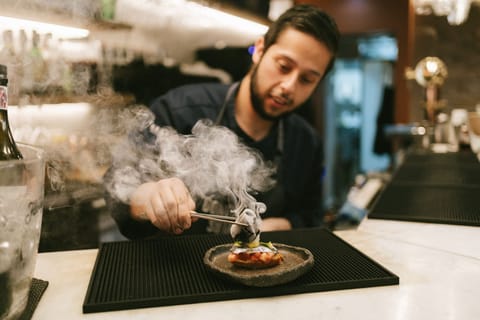
Visit the best pintxos and wine bars in San Sebastian on an exclusive tour. Discover some of the best local, family-run eateries and hidden gems.
from€103 Check dates
Also: Food History in San Sebastian
How San Sebastián came to eat the way it does: the people, migrations and accidents that shaped the plate.
How San Sebastián came to eat the way it does: the people, migrations and accidents that shaped the plate.
From the 1840s onwards, men in San Sebastian began forming private gastronomic societies (txokos), members-only kitchens where the locals could cook and eat together without women present. The institution remains active in 2026 with over 100 txokos in the city, and the format helped seed the city's distinctive culture of cooking as a public social act.
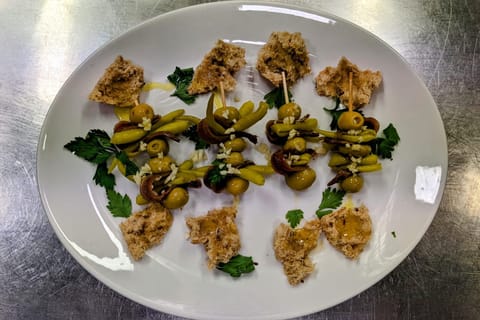
The pintxo (the Basque tapa, the small bite skewered with a toothpick) emerged in Basque taverns in the early 20th century; the canonical gilda pintxo (anchovy, olive, guindilla pepper) was assembled at Casa Vallés on Reyes Catolicos in 1946 and named for the Rita Hayworth film. The dish became the structural opener of every Basque pintxo crawl and remains the canonical first order across the city in 2026.
In December 1976, a group of young Basque chefs led by Juan Mari Arzak and Pedro Subijana met at the Jaizubia restaurant in Gipuzkoa and launched the Nueva Cocina Vasca, the Basque version of the French Nouvelle Cuisine movement. They committed to short menus, lighter sauces, market produce and a regional identity rooted in Basque ingredients. The movement reshaped Basque restaurant cooking within a decade.
Juan Mari Arzak earned three Michelin stars at Arzak in 1989, the first Basque restaurant to do so. Martin Berasategui (Lasarte-Oria) followed in 2001. Pedro Subijana at Akelarre completed the trio in 2007 after 25 years with two stars. By 2026 the city's metropolitan area holds three three-star restaurants, more per capita than any other city in the world.
In 1990, Santiago Rivera, finishing his culinary training, baked a crustless cheesecake at very high heat in a wood-paper-lined tin until the top caramelised black at La Vina on Calle 31 de Agosto. The dish, the tarta de queso La Vina, became internationally famous over the next 30 years; the New York Times named it flavour of the year in 2021.
In 2011, the Basque Culinary Center opened in Donostia as Spain's first four-year university gastronomy degree, with Arzak, Subijana, Berasategui and Aduriz on the founding board. The decade also brought the Gros wave: Galerna (2016), Topa Sukalderia (2017), Casa 887, Sakona Coffee Roasters and Mala Gissona Beer House.
Guided tour · 3 hours
Visit the best pintxos and wine bars in San Sebastian on an exclusive tour. Discover some of the best local, family-run eateries and hidden gems.

Guided tour · 2.5 hours
Escape the crowds and dive into the authentic flavors of San Sebastian as you taste lesser-known favorites and iconic bites in the Centro neighborhood.
Guided tour · 4.5 hours
Embark on a culinary journey in San Sebastián. Walk through the charming old town to our "gastronomical club," where you'll create and savor 4 pintxos, a Basque cheese...