Pa amb tomaquet ★ 4.9
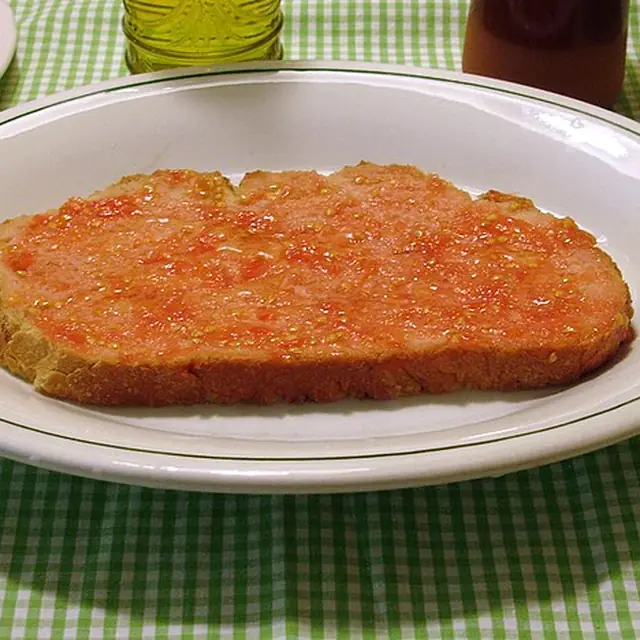
Pa amb tomaquet is Catalonia's table starter: a pan de payés sourdough rubbed with garlic, rubbed with halved fresh tomato, doused with olive oil and salt.
Where: Cal Pep, Bar Pinotxo, El Xampanyet, 7 Portes
Price: 3 to 6 euros
The plates that define Barcelona: what they are, and where to eat the canonical version.
The plates that define Barcelona. what they are, where they came from, and where to eat the canonical version.
Pa amb tomaquet is Catalonia's table starter: a pan de payés sourdough rubbed with garlic, rubbed with halved fresh tomato, doused with olive oil and salt.
Where: Cal Pep, Bar Pinotxo, El Xampanyet, 7 Portes
Price: 3 to 6 euros
Bombas are Barceloneta's contribution to the Catalan tapa: a potato croquette filled with seasoned ground meat, deep-fried and finished with hot aioli and red pepper sauce.
Where: La Cova Fumada, Quimet i Quimet, Bormuth, Bar del Pla
Price: 3 to 5 euros per piece
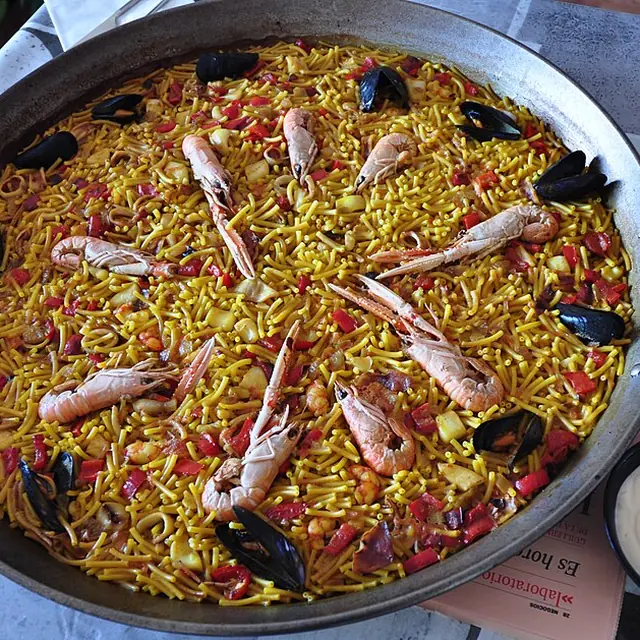
Fideua is the Valencian-Catalan noodle paella: short fideos toasted dry in olive oil, then cooked in fish stock with squid and seafood until the noodles stand straight.
Where: Els Pescadors, Can Sole, 7 Portes
Price: 18 to 28 euros per person
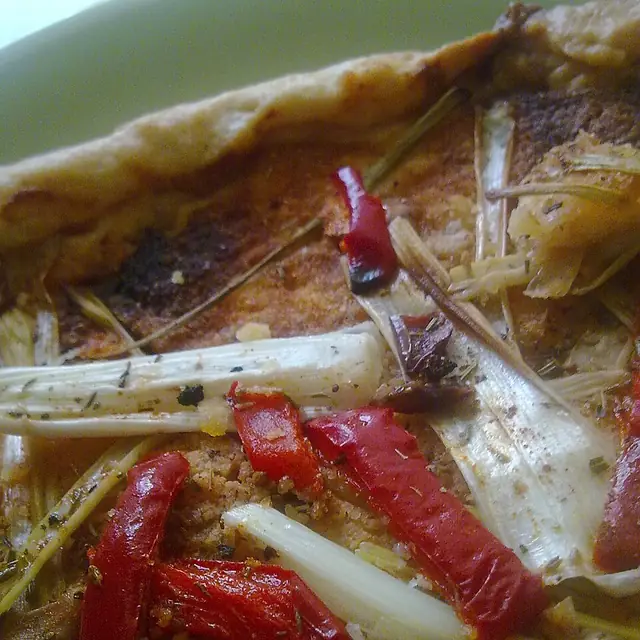
Calçots are a Catalan winter ritual: long, thin spring onions grilled black over a fire, peeled by hand at the table and dipped in red romesco sauce by the handful.
Where: Casa Amalia, Can Vilaro, 7 Portes
Price: 35 to 50 euros for a full calcotada
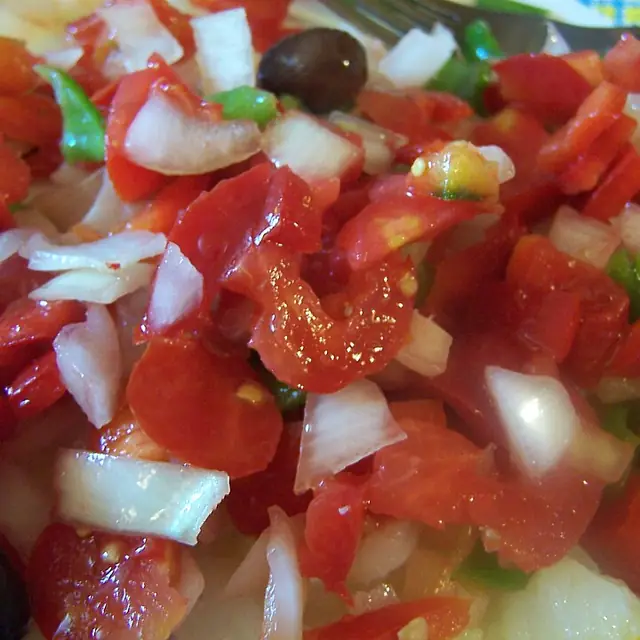
Esqueixada is a Catalan summer salad: salt-cod, hand-shredded raw, with tomato, sweet onion, black olives, dressed with olive oil and a splash of red wine vinegar.
Where: Casa Amalia, Can Vilaro, Cerveseria Catalana
Price: 10 to 16 euros
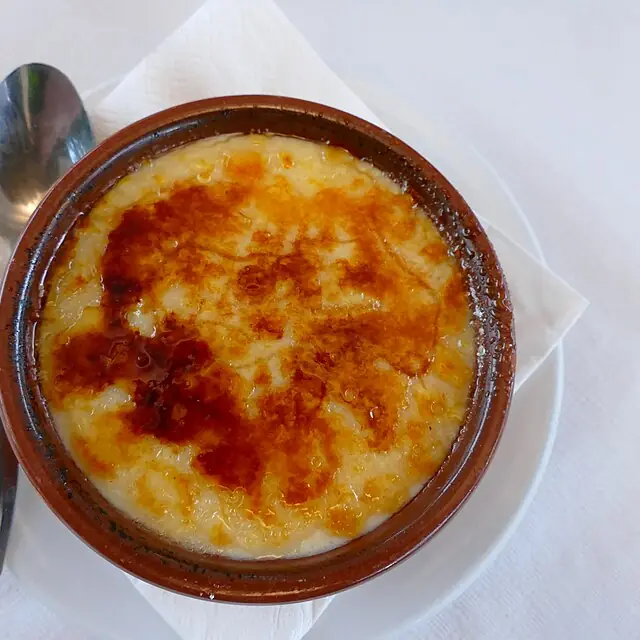
Crema catalana is Catalonia's signature dessert: a citrus-and-cinnamon-flavoured pastry cream baked thin and topped with a hand-torched layer of brittle caramelised sugar.
Where: Casa Leopoldo, 7 Portes, Semproniana, Bar del Pla
Price: 6 to 9 euros
Paella mar i muntanya is Catalonia's sea-and-mountain paella: a Valencian-rooted rice cooked in a wide flat pan with both chicken and prawns, the canonical surf-and-turf.
Where: 7 Portes, Els Pescadors, Can Sole
Price: 22 to 32 euros per person
Pintxos are the Basque counter ritual taken on by Barcelona's pintxos rooms: small bites pinned to a slice of bread with a toothpick, paid by counting the picks at the end.
Where: Sagardi, Euskal Etxea, Maitea
Price: 3 to 5 euros per pintxo
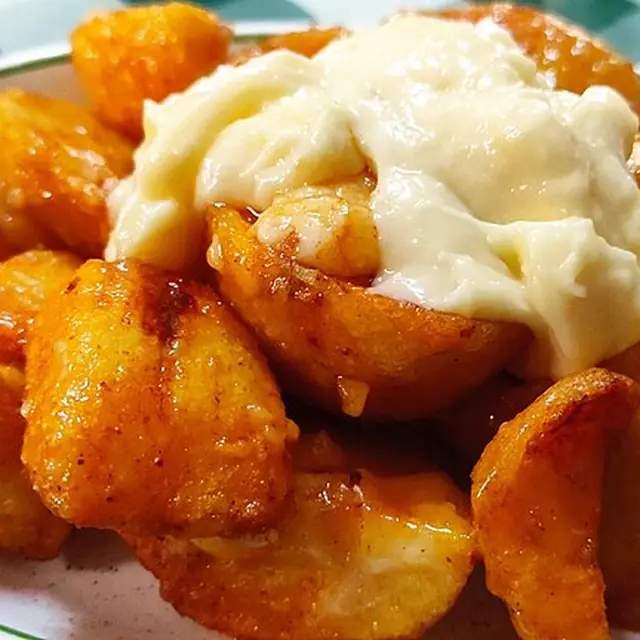
Patatas bravas are Barcelona's tapas standard: cubed potato, double-fried to golden, topped with the two canonical sauces, white aioli and red salsa picante.
Where: Bar Tomas, Tapas 24, Bar del Pla
Price: 5 to 9 euros
Jamon iberico de bellota is the canonical Spanish cured ham: black-hoof pigs fattened on acorns across the dehesa of Extremadura, Andalusia and Salamanca, salt-cured and air-dried for around three years, sliced paper-thin at the bar.
Where: Cerveseria Catalana, Cal Pep
Price: 18 to 28 euros per plate
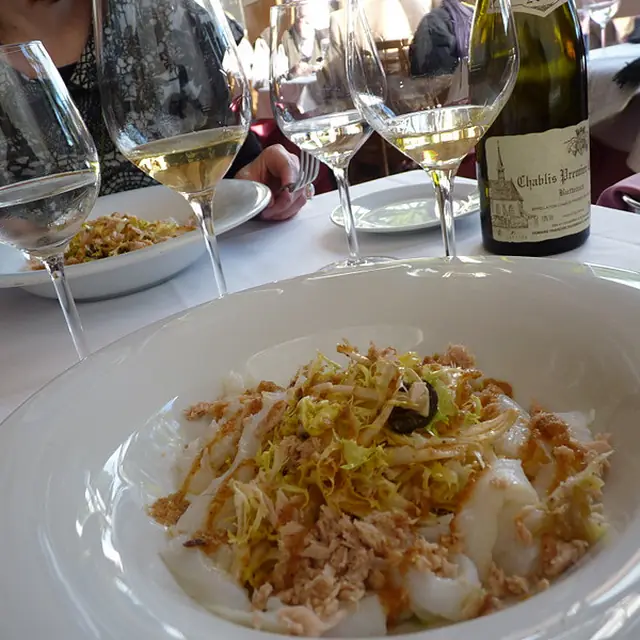
Xato is a Catalan winter salad from the Sitges coast: salt cod, anchovies, tuna and olives on lettuce, dressed with a thick romesco-style xato sauce made from peppers and almonds.
Where: Casa Amalia, 7 Portes
Price: 10 to 16 euros
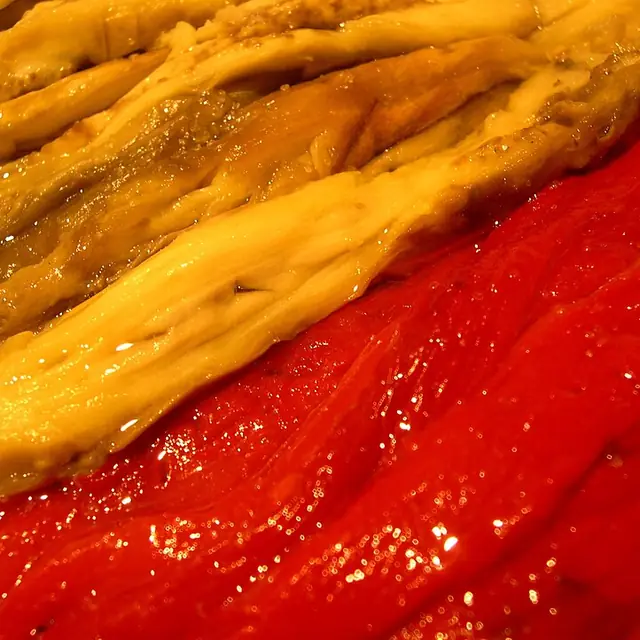
Escalivada is Catalonia's smoke-grilled vegetable salad: aubergine, peppers and onions cooked over flame until charred, peeled, sliced, dressed only with olive oil and salt.
Where: Casa Amalia, Mont Bar, Bar del Pla
Price: 8 to 14 euros
Arros negre is Catalonia's coal-black rice: short-grain Spanish rice cooked in cuttlefish ink and seafood stock until each grain is jet-black, topped with squid rings and a sharp aioli on the side.
Where: 7 Portes, Cal Pep, Can Sole, Els Pescadors
Price: €18-€28
Vermut is Catalonia's 13:00 ritual: a glass of red sweet vermouth poured over ice with an orange slice and an olive, drunk standing at a counter with a plate of salted anchovies, olives or chips before lunch.
Where: Quimet i Quimet, El Xampanyet, Bormuth, Vinitus
Price: €3-€6
Pa amb tomaquet is Catalonia's table starter: a pan de payés sourdough rubbed with garlic, rubbed with halved fresh tomato, doused with olive oil and salt.
History: The ritual emerged in the late 19th century, when tomatoes from the New World entered the rural Catalan diet and a stale slice of country bread became a vehicle for tomato pulp. Josep Pla wrote about it in the 1920s as 'the simplest thing in Catalonia.' Today the dish anchors every Catalan table and bar: in Barcelona, the rubbed bread comes before any tapas plate. The Pinotxo counter at the Boqueria, Cal Pep's standing bar, and 7 Portes all serve the canonical version: thick-cut country bread, large dry-rubbed garlic clove, sliced tomato held by the cut-side and dragged across the toast, finishing oil and Maldon salt.
Where to try it: Cal Pep, Bar Pinotxo, El Xampanyet, 7 Portes
Watch out for: Gluten
Bombas are Barceloneta's contribution to the Catalan tapa: a potato croquette filled with seasoned ground meat, deep-fried and finished with hot aioli and red pepper sauce.
History: La Cova Fumada on Carrer del Baluard invented the bomba in 1944. The name comes from the round grenade-like shape; the original was meant as a working-class quick lunch for the Barceloneta dock workers. The recipe has stayed the same: cooked potato mashed and shaped into a ball around seasoned ground beef and pork, breadcrumbed, deep-fried, served with two sauces, the white garlic-and-oil aioli and the red pepper-and-paprika 'salsa picante'. Now every Catalan tapas counter in Barcelona has a version; La Cova Fumada still owns the canonical reading. Around the corner, La Bombeta and El Vaso de Oro both run their own variants.
Where to try it: La Cova Fumada, Quimet i Quimet, Bormuth, Bar del Pla
Watch out for: Gluten, Egg
Fideua is the Valencian-Catalan noodle paella: short fideos toasted dry in olive oil, then cooked in fish stock with squid and seafood until the noodles stand straight.
History: Fideua emerged in the 1930s on a Valencia fishing boat near Gandia. The crew's cook was making paella and ran out of rice, so substituted dried short fideo noodles. The dish travelled along the Catalan coast and by the 1950s every Mediterranean Catalan-coast town had its own version. The Barcelona reading layers shorter fideo noodles, dry-toasted in olive oil to nutty colour, then a fish-stock simmer with squid, prawns, and rouge fish. The serving comes with aioli on the side to dollop on top. Els Pescadors in Poblenou cooks the most lauded version in the city; the Barceloneta seafront rooms keep close.
Where to try it: Els Pescadors, Can Sole, 7 Portes
Watch out for: Gluten, Shellfish
Calçots are a Catalan winter ritual: long, thin spring onions grilled black over a fire, peeled by hand at the table and dipped in red romesco sauce by the handful.
History: The calçotada was born in Valls (Tarragona) in the late 19th century: a farmer named Xat de Benaiges discovered that re-planting harvested onions and then earthing them up produced a tender, longer white shoot. By the 1940s the Valls Festa del Calçot was the centrepiece of Catalan winter food culture. The technique: grill calçots until black over vine cuttings, wrap in newspaper to steam, then peel each black layer back to reveal the soft inner. Dip in romesco (a sauce of dried nyora peppers, almonds, garlic, hazelnuts, bread, olive oil). Eat with the hands, head tilted back, wearing a bib. In Barcelona, the season runs January to March; restaurants run prefix-priced 35 to 50 euro calcotada lunches.
Where to try it: Casa Amalia, Can Vilaro, 7 Portes
Watch out for: Nuts
Esqueixada is a Catalan summer salad: salt-cod, hand-shredded raw, with tomato, sweet onion, black olives, dressed with olive oil and a splash of red wine vinegar.
History: Esqueixada (Catalan for 'torn') belongs to the wider Mediterranean cooking-without-fire summer tradition: the salt-cod is desalted in cold water for 24 hours, then shredded by hand rather than knifed. The dish belongs to the inland Catalan kitchens where salt-preserved bacallà was the working-class fish; Barcelona refined it into a sit-down summer starter by the 1900s. The canonical version layers shredded cod over halved cherry tomatoes, ribbons of sweet white onion, oil-cured black olives, and a few drops of olive oil and Pedro Ximenez vinegar. Casa Amalia and Can Vilaro both run the textbook plate; modern Catalan rooms like Mont Bar plate it with heirloom tomatoes.
Where to try it: Casa Amalia, Can Vilaro, Cerveseria Catalana
Watch out for: Fish
Crema catalana is Catalonia's signature dessert: a citrus-and-cinnamon-flavoured pastry cream baked thin and topped with a hand-torched layer of brittle caramelised sugar.
History: The dessert predates the French creme brulee; written recipes go back to medieval Catalan kitchens of the 14th century, when monks at Sant Cugat del Vallès cooked a version flavoured with lemon zest, cinnamon and a hard-caramel sugar lid. The earliest version was eaten with bread on Saint Joseph's day in March; by the 19th century it had spread to every Catalan kitchen as the canonical sweet course. Barcelona's restaurants today serve it from December to August; the trick is the careful baking of the cream and then the burn-pass with a salamander iron rather than a torch. Casa Leopoldo runs the classic version; Disfrutar deconstructs and reassembles it as a modernist tasting course.
Where to try it: Casa Leopoldo, 7 Portes, Semproniana, Bar del Pla
Watch out for: Dairy, Egg
Paella mar i muntanya is Catalonia's sea-and-mountain paella: a Valencian-rooted rice cooked in a wide flat pan with both chicken and prawns, the canonical surf-and-turf.
History: Valencia invented the paella in the 18th century with rabbit, snails and green beans. Catalonia's coast brought the dish to Barcelona by the early 20th century with the sea-and-mountain twist: chicken from the hills, prawns from the harbour, the saffron-and-paprika sofrito a Catalan signature. 7 Portes in the Born has cooked the dish on the bone since 1836; Els Pescadors in Poblenou and Can Sole in the Barceloneta both run versions on the seafront. The technique is unchanged: short-grain bomba or calasparra rice, hot stock added in one shot, no stirring, 18 to 20 minutes uncovered, the bottom socarrat crust the goal.
Where to try it: 7 Portes, Els Pescadors, Can Sole
Watch out for: Shellfish
Pintxos are the Basque counter ritual taken on by Barcelona's pintxos rooms: small bites pinned to a slice of bread with a toothpick, paid by counting the picks at the end.
History: The pintxos format arrived from the Basque country to Barcelona in the 1990s with Sagardi and Euskal Etxea. The Basque ritual: bar staff bring out plates of pintxos in waves, customers grab what they want and stack the toothpicks on their plate. At the end the bartender counts the toothpicks and tells you the bill. Each pintxo is typically 2 to 3 euros, and the trick is to keep pace with the new plates as they arrive. Barcelona's two best Basque rooms are Sagardi on Carrer de l'Argenteria and Euskal Etxea on the Plaçeta de Montcada, both running the canonical toothpick counter from 19:00 every weeknight.
Where to try it: Sagardi, Euskal Etxea, Maitea
Watch out for: Gluten, Fish
Patatas bravas are Barcelona's tapas standard: cubed potato, double-fried to golden, topped with the two canonical sauces, white aioli and red salsa picante.
History: The dish travelled from 1950s Madrid bars where 'a la brava' meant 'rough' or 'spicy'. The Catalan version split the sauce in two: the white garlic-and-olive-oil aioli and the red paprika-and-vinegar salsa brava. Bar Tomas in Sarria, founded 1949, runs the canonical recipe with hand-cut cubes; the sauces are made from scratch every morning. Most Barcelona bars do their own version; the test is whether the potato is properly double-fried (soft inside, crisp outside) and whether the two sauces are made in-house. Tapas 24 by Carles Abellan does a notably good version; Bar del Pla in the Born plates them with the sauces dolloped on top.
Where to try it: Bar Tomas, Tapas 24, Bar del Pla
Watch out for: Egg
Jamon iberico de bellota is the canonical Spanish cured ham: black-hoof pigs fattened on acorns across the dehesa of Extremadura, Andalusia and Salamanca, salt-cured and air-dried for around three years, sliced paper-thin at the bar.
History: The Iberian black-hoof pig has roamed the dehesa oak savannahs of southwest Spain since pre-Roman times. The bellota grade requires a montanera of more than 60 days on acorns and pasture, the pigs going out between October and mid-December and gaining at least 46 kg before slaughter by the end of March; most runs last three to four months, which is what brings the fat content high and the meat depth. Catalan bars serve Iberico cut by hand from a wooden jamonero stand; the muscle slices are 1mm thin. In Barcelona, Cerveseria Catalana and Cal Pep both put a plate of Iberico on the counter. The slicer is the trick: a long thin knife is run along the bone, the slice falling onto the plate fat-side up, served at room temperature with crusty bread.
Where to try it: Cerveseria Catalana, Cal Pep
Xato is a Catalan winter salad from the Sitges coast: salt cod, anchovies, tuna and olives on lettuce, dressed with a thick romesco-style xato sauce made from peppers and almonds.
History: Xato originated in the Sitges and Vilanova fishing villages southwest of Barcelona in the 17th century, when winter salt cod was the dock-worker staple and the local nyora peppers, almonds and hazelnuts made up a rust-coloured sauce called xato (or 'chato'). The sauce is a romesco cousin: nyora pepper pulp, toasted almonds and hazelnuts, garlic, bread, oil and vinegar, blitzed to a thick paste. The xatonada tradition is the post-Christmas weekend xato lunch served from January to March at Vilanova, Sitges, Vilafranca and El Vendrell. Barcelona's Casa Amalia and 7 Portes both run a version through winter.
Where to try it: Casa Amalia, 7 Portes
Watch out for: Nuts, Fish
Escalivada is Catalonia's smoke-grilled vegetable salad: aubergine, peppers and onions cooked over flame until charred, peeled, sliced, dressed only with olive oil and salt.
History: Escalivada (Catalan for 'cooked in the embers') goes back to medieval Catalan farm cooking, when vegetables were cooked in the dying embers of the fire overnight. The dish appears in 18th-century Catalan cookbooks: aubergines, red peppers and onions roasted whole until the skin chars, then peeled and sliced. The dressing is austere: only olive oil, salt and (optionally) an anchovy or sliced garlic on top. Barcelona's bistros run it as a summer starter from May to October, the vegetables straight from the Boqueria. Casa Amalia, Mont Bar and Bar del Pla all run textbook versions; modern rooms like Disfrutar deconstruct it into a tasting course.
Where to try it: Casa Amalia, Mont Bar, Bar del Pla
Arros negre is Catalonia's coal-black rice: short-grain Spanish rice cooked in cuttlefish ink and seafood stock until each grain is jet-black, topped with squid rings and a sharp aioli on the side.
History: Arros negre is a Catalan coastal classic, codified in the rice-growing Albufera and Tarragona regions in the 19th century and adopted by Barcelona seafood houses as a signature dinner plate. The dish uses bomba rice cooked in cuttlefish ink until the grains turn glossy black, with a thin caramelised socarrat at the pan bottom. 7 Portes (founded 1836 at the harbour, the city's oldest seafood house) plates the canonical version daily; Cal Pep at the Born serves a refined small portion; Can Sole and Els Pescadors keep the tradition alive in Barceloneta and Poblenou. Always served with allioli on the side, spooned over to cut the briny depth.
Where to try it: 7 Portes, Cal Pep, Can Sole, Els Pescadors
Watch out for: Fish, Shellfish, Egg
Vermut is Catalonia's 13:00 ritual: a glass of red sweet vermouth poured over ice with an orange slice and an olive, drunk standing at a counter with a plate of salted anchovies, olives or chips before lunch.
History: The Catalan vermouth tradition was built in early-20th-century Reus, where the wine industry developed sweet aromatised vermouths flavoured with wormwood, gentian and orange peel. By the 1920s the hora del vermut had become a Sunday ritual across Catalonia: a stand-up drink at the counter before the long lunch. The tradition was revived in the 2010s by a wave of dedicated vermouth bars (Quimet i Quimet, Bormuth, El Xampanyet) and now defines Barcelona's pre-lunch culture. The drink is always poured over ice with orange and a green olive; the conserva plates on the counter are part of the ritual.
Where to try it: Quimet i Quimet, El Xampanyet, Bormuth, Vinitus
Watch out for: Fish, Gluten

Guided tour · 3 hours
Food Lover Tour Explores Barcelona the local way, after dark, one bar at a time. This evening tapas crawl is all about great food and the stories behind the bars where...
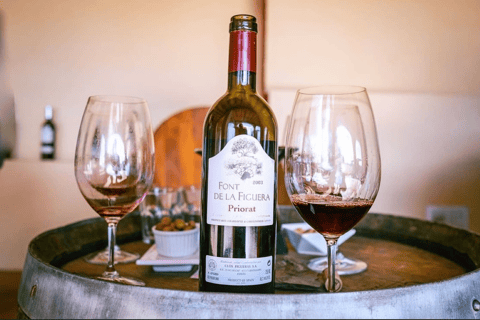
Day trip · 10 hours
Welcome to a unique experience in the heart of Priorat, a region with some of Spain's most outstanding red wines. The only one classified under the DOC label near Barcelona.
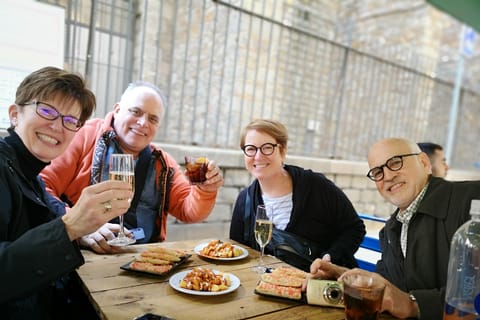
Private tour · 5 hours
Combine a visit to the Sagrada Familia with a full tasting of the best Spanish gastronomy, paired with traditional drinks from the region. Enjoy skip-the-line entrance...
Barcelona's signature dishes include Pa amb tomaquet, Bombas (potato fritters), Fideua, Calcots with romesco, Esqueixada. See our signature dishes chapter for where to eat each.