Kranjska klobasa ★ 5.0
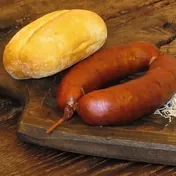
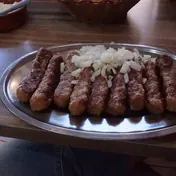
Kranjska klobasa is Slovenia's Carniolan sausage, a smoked pork sausage with an EU Protected Geographical Indication. Served boiled, with mustard.
Where: Klobasarna, Gostilna Sokol, Slovenska hisa Figovec
Price: €4-8
The plates that define Ljubljana: what they are, and where to eat the canonical version.
The plates that define Ljubljana. what they are, where they came from, and where to eat the canonical version.
Kranjska klobasa is Slovenia's Carniolan sausage, a smoked pork sausage with an EU Protected Geographical Indication. Served boiled, with mustard.
Where: Klobasarna, Gostilna Sokol, Slovenska hisa Figovec
Price: €4-8
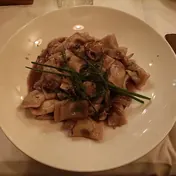
Hat-shaped potato dumplings from Idrija, made of thin pasta dough wrapped around seasoned potato. The first Slovenian dish to gain EU Traditional Speciality.
Where: Druga Violina, Gostilna Sokol, Gostilna Sestica
Price: €8-14
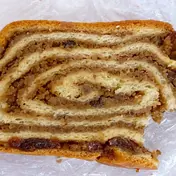
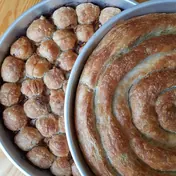
Potica is Slovenia's protected rolled walnut cake, an EU Traditional Speciality Guaranteed since April 2021. Yeast dough rolled paper-thin around a filling.
Where: Slovenska hisa Figovec, Pekarna Osem, Vodnikov Hram
Price: €4-8 per slice
Struklji are rolled dumplings filled with sweet or savoury fillings, served as a starter, side or dessert. Cottage cheese, walnut, tarragon and apple are the.
Where: Druga Violina, Slovenska hisa Figovec, Vodnikov Hram
Price: €6-12
A layered Pannonian cake from the Prekmurje region in Slovenia's east, with EU protected designation. Four fillings (poppy seed, cottage cheese, walnut.
Where: Slovenska hisa Figovec, Vodnikov Hram, Druga Violina
Price: €4-7 per slice
Jota is a sauerkraut, bean and potato stew from the Karst region in western Slovenia, often finished with pork or smoked ham. A TableJourney editor pick.
Where: Vodnikov Hram, Gostilna Sokol, Gostilna Sestica
Price: €8-14
Bograc is the Pannonian goulash of Slovenia's Prekmurje region, traditionally made with four meats (pork, beef, lamb and game) in a paprika-rich red base.
Where: Slovenska hisa Figovec, Gostilna Sestica, Vodnikov Hram
Price: €10-16
Karst pršut is the Slovenian dry-cured ham from the Karst plateau, aged through the seasonal bora wind that gives it its distinctive saltiness.
Where: Gostilna As, Spajza, Wine Bar Suklje
Price: €10-18 for a platter
Zganci is the Slovenian Alpine answer to polenta, a buckwheat or maize porridge served with bacon crackling, sour milk or sauerkraut. A TableJourney pick.
Where: Ja, pr' Lectar, Slovenska hisa Figovec, Gostilna Sokol
Price: €6-10
Kranjska klobasa is Slovenia's Carniolan sausage, a smoked pork sausage with an EU Protected Geographical Indication. Served boiled, with mustard.
History: Kranjska klobasa traces to 19th-century Carniola, the Habsburg duchy that became Slovenia. The EU Protected Geographical Indication was granted in January 2015 after objections from Austria, Germany and Croatia were resolved, restricting production to defined Slovenian territory and the recipe: 80 percent pork, 20 percent beef, salt, garlic, pepper, smoked over beech. Klobasarna on Ciril-Metodov trg has anchored the city's sausage counter trade for the last decade.
Where to try it: Klobasarna, Gostilna Sokol, Slovenska hisa Figovec
Watch out for: Gluten (in the Kaiser roll)
Hat-shaped potato dumplings from Idrija, made of thin pasta dough wrapped around seasoned potato. The first Slovenian dish to gain EU Traditional Speciality.
History: Zlikrofi recipe dates to mid-19th-century Idrija and likely arrived with German mining families from Transylvania. The name probably comes from German schlichtkrapfen, slippery dumpling. They were protected at Slovenian national level in 2002 and at EU level in 2010, becoming the first Slovenian dish to gain TSG status. Traditional service is with bakalca, a mutton-and-lamb stew.
Where to try it: Druga Violina, Gostilna Sokol, Gostilna Sestica
Watch out for: Gluten, Egg
Potica is Slovenia's protected rolled walnut cake, an EU Traditional Speciality Guaranteed since April 2021. Yeast dough rolled paper-thin around a filling.
History: Potica appears in the first book printed in the Slovenian language in the 16th century. The name comes from the verb poviti, to wrap. Traditional fillings divide by social class: walnut and cream for wealthy households, herbed fillings for working families. EU Traditional Speciality Guaranteed (TSG) since April 2021. Served at Christmas, Easter, weddings.
Where to try it: Slovenska hisa Figovec, Pekarna Osem, Vodnikov Hram
Watch out for: Gluten, Egg, Walnut
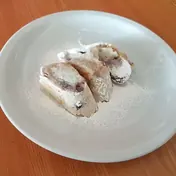
Struklji are rolled dumplings filled with sweet or savoury fillings, served as a starter, side or dessert. Cottage cheese, walnut, tarragon and apple are the.
History: Struklji appear in 16th-century Slovenian cookbooks and remain the most versatile dish of the national kitchen. Boiled or steamed in a cloth, sliced and served warm with melted butter and breadcrumbs. Slovenian gostilne run both sweet (cottage cheese with raisins) and savoury (mushroom, buckwheat) variants. Druga Violina runs a daily rotating struklji menu.
Where to try it: Druga Violina, Slovenska hisa Figovec, Vodnikov Hram
Watch out for: Gluten, Dairy, Egg
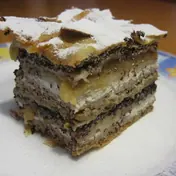
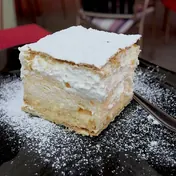
A layered Pannonian cake from the Prekmurje region in Slovenia's east, with EU protected designation. Four fillings (poppy seed, cottage cheese, walnut.
History: Gibanica comes from the Prekmurje region, the part of Slovenia east of the Mura that spent centuries under Hungarian rule. The four-filling structure (mak poppy, skuta cheese, orehi walnut, jabolka apple) and EU protected designation make it the most architecturally complex of the Slovenian cake tradition. Slovenska hisa Figovec serves a strong version.
Where to try it: Slovenska hisa Figovec, Vodnikov Hram, Druga Violina
Watch out for: Gluten, Egg, Dairy, Walnut, Poppy seed
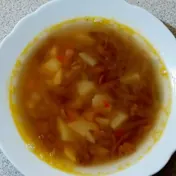
Jota is a sauerkraut, bean and potato stew from the Karst region in western Slovenia, often finished with pork or smoked ham. A TableJourney editor pick.
History: Jota crosses the Slovenian-Italian Karst border and is found in both Friulian and Slovenian Istrian cuisine. The Slovenian version leans on the slow-cooked combination of fermented cabbage (sauerkraut), borlotti beans, potato and a smoked pork hock. It is the canonical winter peasant stew of the Karst plateau.
Where to try it: Vodnikov Hram, Gostilna Sokol, Gostilna Sestica
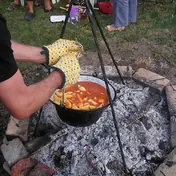
Bograc is the Pannonian goulash of Slovenia's Prekmurje region, traditionally made with four meats (pork, beef, lamb and game) in a paprika-rich red base.
History: Bograc comes from the Hungarian Pannonian tradition that fed Slovenia's eastern Prekmurje for centuries. The dish takes its name from bogracs, the iron pot it cooks in over an open fire. Four meats (pork, beef, lamb, game) is canonical; modern Slovenian Pannonian kitchens often use three or two. Lendava in Prekmurje runs an annual Bogracfest cooking competition every August, the largest bograc cooking event in Slovenia and a touchstone for the dish's living tradition.
Where to try it: Slovenska hisa Figovec, Gostilna Sestica, Vodnikov Hram
Karst pršut is the Slovenian dry-cured ham from the Karst plateau, aged through the seasonal bora wind that gives it its distinctive saltiness.
History: Karst pršut traces to the limestone plateau between Trieste and Slovenian Istria, where the bora wind, cool winters and low humidity have made dry-curing a regional speciality for centuries. The Slovenian version differs from Italian Carso prosciutto in being slightly drier and more pronounced in salt, registered as Kraski prsut PGI in 2012.
Where to try it: Gostilna As, Spajza, Wine Bar Suklje
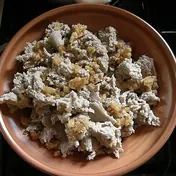
Zganci is the Slovenian Alpine answer to polenta, a buckwheat or maize porridge served with bacon crackling, sour milk or sauerkraut. A TableJourney pick.
History: Zganci is the working-day winter staple of the Slovenian Alpine peasantry, eaten through the cold months with whatever fat and ferment was available. Buckwheat is the most traditional grain in Carniola, though maize zganci exist further south. Ja, pr' Lectar runs a faithful version in the Ljubljana old town.
Where to try it: Ja, pr' Lectar, Slovenska hisa Figovec, Gostilna Sokol
Ljubljana's signature dishes include Kranjska klobasa, Idrijski zlikrofi, Potica, Struklji, Prekmurska gibanica. See our signature dishes chapter for where to eat each.