How Warsaw came to eat the way it does: the people, migrations and accidents that shaped the plate.

Key eras

1500s-1700s, the magnates' table

Warsaw food in the Commonwealth period ran on the magnates' table: heavily-spiced meats imported through the Vasa-era trade routes, kasza staples for the rural side, and the early grammar of bigos, pierogi and barszcz that survives today. The royal court at Wilanow and Lazienki ran French-trained kitchens that pulled the city upward technically.

1860s-1939, the Blikle century

A. Blikle opened on Nowy Swiat in 1869 and made rose-filled paczki the city's signature pastry; Wedel opened the Szpitalna chocolate cafe in 1894. The pre-war Jewish quarter on Muranow and Nalewki anchored herring, dairy and Sabbath cholent. Restaurants like U Wierzbickiego became the bourgeois canon; bourgeois eating peaked around 1930.

1944-1945, destruction

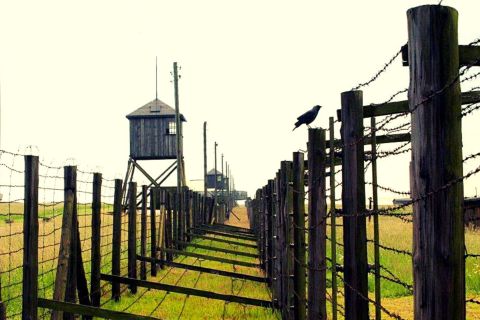
The Warsaw Uprising and the systematic German destruction afterwards levelled around 85 percent of the city, including the Jewish quarter on Muranow, the central restaurants, and the food markets. The pre-war culinary world ended in 1944. Nothing pre-war survives in its original building outside Praga, the right bank that escaped destruction.

1950s-1989, the milk bar era

Post-war reconstruction rebuilt Warsaw on socialist lines, and the bar mleczny became the state-subsidised everyday lunch counter. Bar Prasowy opened 1954, Bar Familijny in the same decade, both still running today on the same vinyl tables. Vodka was cheap, meat was rationed, and the canon of pierogi, schabowy and zurek became the working-class default.

1989-2008, post-transition reinvention

The transition opened Warsaw to McDonald's, then to Italian fresh-pasta, then to a creative-class generation cooking in French-trained kitchens. Magda Gessler opened Polka in the Old Town, Cafe Bristol reopened the pre-war room, and the first generation of post-communist private restaurants found their feet.

2011-present, the Amaro era

Wojciech Modest Amaro opened Atelier Amaro in 2011 and earned Poland's first Michelin star in 2013, putting modern Polish cooking on the international map. After Amaro came Bez Gwiazdek (Robert Trzopek), Nolita, and Epoka (Marcin Przybysz). Today the city runs Italian, Asian and modern Polish in parallel with the surviving milk bars.
Immigrant influences

  • Polish Jewry (pre-1939): The pre-war Jewish community of Warsaw (roughly 30 percent of the city) gave the modern table herring in cream and onion, cholent, tzimmes, beigel and the dairy cafes of Nalewki and Tlomackie. Almost all of it was lost in the Holocaust; the POLIN museum on Muranow now documents what remained.
  • Ukrainian (pierogi ruskie origin): Pierogi ruskie (Ruthenian pierogi), the canonical potato-and-quark pierogi, take their name from the Ruthenian (western Ukrainian) Carpathian uplands of the old Commonwealth. The dumpling tradition became Warsaw's default after Polish repatriation from the eastern borderlands after 1945.
  • Vietnamese (post-1989): Vietnamese immigration since the 1990s built a substantial community around the now-closed Stadion Dziesieciolecia market, which spread pho counters, banh mi shops and Asian groceries across the centre. Today Vietnamese is the second-most-cooked non-Polish cuisine in Warsaw after Italian.
  • Italian (post-1989): An Italian wave through the 1990s and 2000s seeded fresh-pasta-by-Italians rooms across the city, from the Old Town trattorie to the Mokotow neighbourhood bistros. The Italian influence sets the bar for modern Polish kitchens that import European technique.
  • Ukrainian (post-2022): The post-2022 Ukrainian refugee community added a layer of Ukrainian home cooking back into the city, with new borscht counters and varenyky shops opening across Wola, Mokotow and Praga. The cuisines overlap so heavily that Ukrainian and Polish neighbourhood rooms are often hard to tell apart.

Signature innovations

  • Pierogi ruskie, the Ruthenian potato-and-quark dumpling adopted as the Polish default
  • Bar mleczny, the socialist-era milk bar canteen still feeding the city today
  • Paczek z roza, the rose-petal-jam doughnut codified at Blikle from 1869
  • Polish vodka tradition, with bison-grass Zubrowka the most-exported Polish spirit
  • Modern Polish fine dining, after Atelier Amaro earned the country's first Michelin star in 2013

Food History in Warsaw, FAQ

When is the best time to eat in Warsaw?

Peak food season in Warsaw is year-round.

What time do people eat in Warsaw?

Local dining hours: lunch around 12:30, dinner from 19:30.

How does tipping work in Warsaw?

service is typically included; small extra is welcome but not expected.

What is the one dish to try in Warsaw?

Ask the next local you meet what they would order. Warsaw rewards trust.

← Back to Warsaw food guide