
Hollandse Nieuwe Haring is a signature dish of Netherlands; we have verified places to eat it in Amsterdam, Rotterdam and Utrecht. Hollandse Nieuwe is the first herring of the season, cured the Dutch way and eaten raw with pickles and chopped onion at Amsterdam's herring stalls.
Hollandse Nieuwe Haring · Amsterdam
Hollandse Nieuwe is the first herring of the season, cured the Dutch way and eaten raw with pickles and chopped onion at Amsterdam's herring stalls.
Herring is caught between the end of May and the beginning of July, when it is richest in oil, and the Dutch way of gibbing and brining it dates to the Middle Ages. Dutch-made Hollandse Nieuwe holds an EU TSG certification, and EU rules require the fish to be frozen at minus 20 degrees for 24 hours. Herring is sold all year in Amsterdam, but the new catch is celebrated from mid-June on Vlaggetjesdag, with a herring party at Cafe Hoppe on the Spui. Frens on the Koningsplein serves it with onion and gherkin.
Where to eat in Amsterdam:
- Frens Haringhandel
- Stubbe's Haring
Where to eat Hollandse Nieuwe Haring in Amsterdam: the editor picks
Hollandse Nieuwe Herring · Rotterdam
Young lightly cured North Sea herring, cleaned and brined at sea, served whole with raw onion and pickled gherkins. The quintessential Dutch street food, consumed by holding the fish by the tail.
Where to eat in Rotterdam:
- Markthal Rotterdam
- Binnenrotte Market
Where to eat Hollandse Nieuwe Herring in Rotterdam: the editor picks
Hollandse Nieuwe (Fresh Herring) · Utrecht
Raw Dutch new herring held by the tail and eaten in one bite, or chopped and served with raw onion and pickles. The first catch of the season is a national event.
Dutch herring culture is medieval in origin; the Maatjesharing salt-curing technique was refined in the 14th century. The Hollandse Nieuwe season is declared annually when the fat content of the North Sea herring reaches 16 percent, usually late May or early June. Utrecht's Vismarkt sold fresh haring continuously from the medieval period; the stall tradition persists today.
Where to eat in Utrecht:
- Boerenmarkt Snack Stalls
- Biologische Boerenmarkt Vredenburg
Where to eat Hollandse Nieuwe (Fresh Herring) in Utrecht: the editor picks
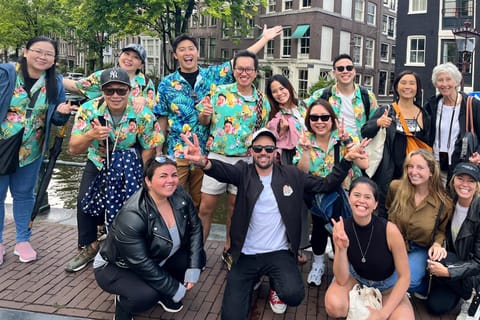
Taste Hollandse Nieuwe Haring with a local in Amsterdam