How Oaxaca came to eat the way it does: the people, migrations and accidents that shaped the plate.
Key eras
-
Pre-Hispanic Zapotec era (500 BCE to 1521)
Monte Alban as the Zapotec capital from roughly 500 BCE structured the Valle Central food economy around criollo maize, cacao, beans, squash and chiles, with tejate already a ritual cacao-and-maize drink at the markets of Tlacolula and Etla.
Taste it todayCriollo -
Spanish colonial arrival and the seven moles (1521 onward)
The 1521 Spanish arrival in Oaxaca added pork, beef, sugar, almonds, sesame and Old World spices to indigenous ingredients, and the convents of Centro became the laboratory where the seven canonical moles (negro, coloradito, amarillo, verde, chichilo, manchamanteles, rojo) took their modern form across two centuries.
-
Mayordomo and the 20th-century chocolate trade (1956 onward)
Chocolate Mayordomo opened in 1956 from a Tlacolula family, anchoring the Mina-and-20-de-Noviembre chocolate block in Centro and codifying the stone-ground cacao-tablet-for-chocolate-de-agua tradition every Oaxacan home drinks at breakfast.
Taste it todayChocolate Mayordomo -
Modern Mexican cuisine and the Michelin star (2010s to 2026)
Rodolfo Castellanos opened Origen in 2011 on Benito Juarez; Alejandro Ruiz brought modern Oaxacan technique to Constitucion at Casa Oaxaca; in 2024 Thalia Barrios Garcia won Mexico's first regional Michelin star at Levadura de Olla, and in 2026 Olga Cabrera of Tierra del Sol was named Mexico's Restaurant of the Year.
Immigrant influences
- Spanish (Basque)
- Brought wood-fired grilling, paella, chuleton and the Asador Vasco tradition that fills the Zocalo's upper portales since the 1970s.
- Lebanese-Mexican
- Smaller in Oaxaca than in Puebla or Mexico City, but the trompo-style spit-grill tradition arrived in mid-century and shaped some of the city's modern al-pastor stands.
- Italian
- El Sol y La Luna on Pino Suarez and several Andador rooms brought wood-fired pizza and handmade pasta to Centro since the 1990s.Taste it todayEl Sol y La Luna
- Diaspora US-Mexican
- Returning Oaxacans from Los Angeles and Chicago contributed to the modern coffee culture, sourdough trend and Pluma-region specialty bean awareness.
Signature innovations
- The seven moles canon (negro, coloradito, amarillo, verde, chichilo, manchamanteles, rojo)
- Stone-ground chocolate-on-demand at the Mayordomo counter (Chocolate de agua)
- Tejate as Cultural Heritage of Oaxaca (declared in 2023)
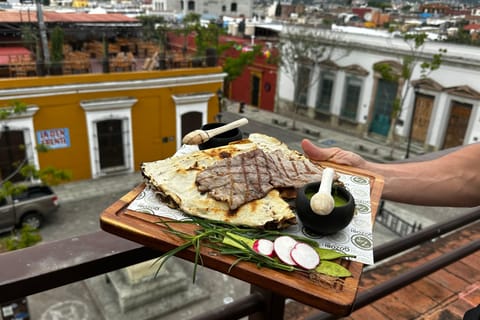
- Tlayuda as the giant comal-charred tortilla pizza traditionTaste it todayTlayuda
- Mezcal as a UNESCO-designated cultural product of OaxacaTaste it todayMezcal
- The Pasillo de Humo grill alley at Mercado 20 de Noviembre
- Levadura de Olla wins Mexico's first regional Michelin star (2024)Taste it todayLevadura de Olla
- Tierra del Sol named Mexico's Restaurant of the Year for 2026Taste it todayTierra del Sol
Book food experiences in Oaxaca