Key eras
Edo period: oyster rafts and the kaki-bune
Oyster cultivation in Hiroshima Bay is recorded from the sixteenth century, and by the Edo period Hiroshima growers were shipping live oysters to Osaka on boats that doubled as floating restaurants. Those kaki-bune are the direct ancestor of the moored oyster boat that Kanawa still operates on the Motoyasu river, and of the modern kaki-goya sheds on the waterfront.
1901: anago-meshi at the ferry crossing
Anagomeshi Ueno opened at Miyajimaguchi in 1901, selling grilled conger eel on rice cooked in stock made from the bones, packed as a bento for passengers crossing to Itsukushima. Conger eel was abundant in the Seto Inland Sea and leaner than the freshwater unagi eaten elsewhere, and the dish became the defining food of the crossing.
1945 to 1965: okonomiyaki as reconstruction food
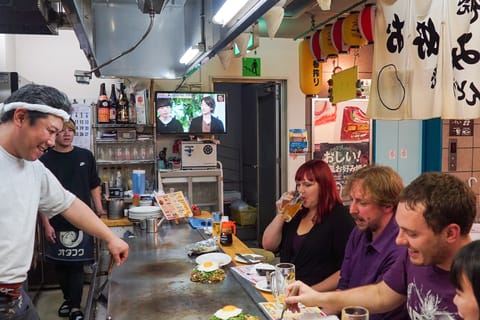
After the atomic bombing, flour from relief supplies and sheet-metal griddles produced a cheap hot meal that could be cooked anywhere. Stalls filled the Nishi-Shintenchi square, at one point around fifty of them. Ise Mitsuo, trading as Mitchan, is credited with fixing the layered build and adding noodles. In 1965 the stalls were rehoused in one building, which became Okonomimura.
2000s: soupless tantanmen and the tsukemen export
Two noodle dishes redrew the city's map in the 2000s. Hiroshima tsukemen, cold noodles with a chilli dipping sauce, spread out of Shintenchi shops such as Bakudanya and onto menus nationally. At the same time shirunashi tantanmen, a broth-free reworking of the Sichuan dish, took hold across the centre with heat and numbing graded separately at no extra cost.