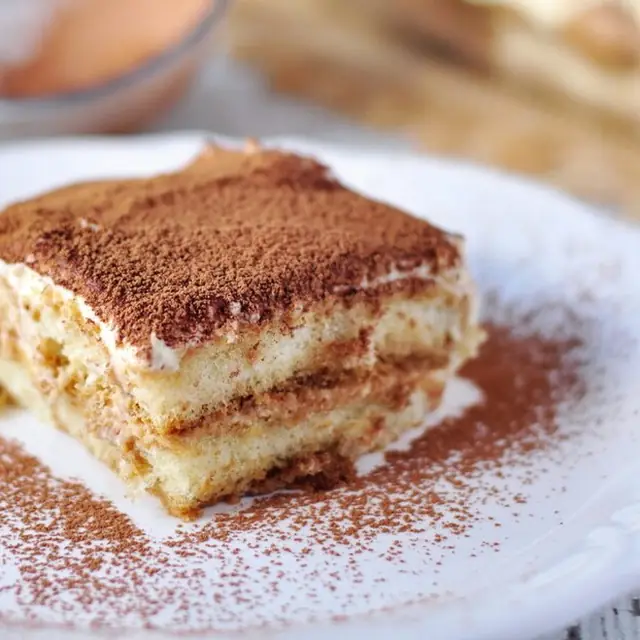
A dessert of espresso-soaked savoiardi and mascarpone cream under cocoa; Le Beccherie in Treviso says its version was codified there in 1972.

Le Beccherie, a restaurant in Piazza Ancilotto in Treviso, says on its own site that tiramisù took shape in its kitchen between 1971 and 1972, when Alba Campeol and the pastry chef experimented with zabaione and coffee. Wikipedia calls the origin unclear: obituaries of Ado Campeol give 24 December 1969, the dessert was on Le Beccherie's menu in 1972, and a semi-frozen tiremesù at Pieris in Friuli is also cited. In 2017 the Italian ministry listed it among Friuli-Venezia Giulia's traditional products.
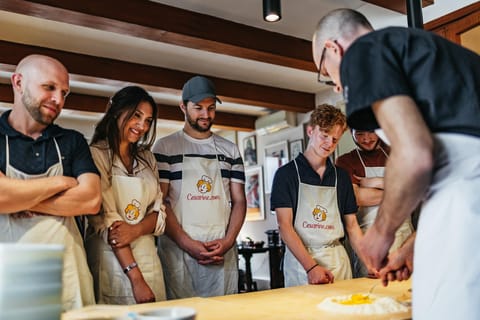
Where to eat Tiramisu in Venice

3 editor picks for Tiramisu in Venice, ranked by editorial score. All Venice signature dishes · Tiramisu across every city.

Book food experiences in Venice

See all 2,265 food experiences in Venice

Make it at home

Serves 64 hrEasy

Ingredients

  • 6 very fresh large egg yolks, at room temperature
  • 4 very fresh large egg whites, at room temperature
  • 150g caster sugar
  • 500g good fresh mascarpone (Galbani Santa Lucia is the canonical Italian brand; or hand-made if you have access)
  • Pinch of fine sea salt
  • 1 tsp vanilla extract (or seeds of 1 vanilla pod)
  • Optional: 2 tbsp dry Marsala wine or dark rum (modern addition; the original Treviso recipe did not include alcohol)
  • About 30 savoiardi sponge fingers (ladyfingers; the Italian Italian-imported brand Vicenzi or Forno Bonomi)
  • 400ml strong fresh espresso, cooled to room temperature
  • 1 tbsp granulated sugar dissolved in the espresso (the Veneto version is moderately sweet, not bitter)
  • Unsweetened cocoa powder for dusting (the darkest you can find)
  • Optional: 20g grated dark chocolate (70 percent) for finishing

Method

  1. Brew the espresso, stir in 1 tbsp sugar to dissolve, cool to room temperature in a wide shallow dish.
  2. Separate the eggs carefully (no yolk in the whites). Keep both at room temperature.
  3. In a large bowl set over a pot of barely simmering water (a double boiler), whisk the egg yolks with 100g sugar until the mixture thickens, pales and reaches 70 degrees Celsius (about 4 minutes); this gently pasteurises the yolks for safety. Remove from heat.
  4. Continue whisking off the heat for 60 seconds until cooled slightly, then beat in the mascarpone, vanilla, optional Marsala and a pinch of salt with a wooden spoon (do not over-whip the mascarpone; it splits if treated roughly). The mixture should be thick, smooth and pale yellow.
  5. In a separate clean dry bowl, whisk the egg whites with 50g sugar to stiff glossy peaks.
  6. Fold the whipped whites gently into the mascarpone mixture in three additions; this is the structural step for the fluffy texture. The final cream should be light and mousse-like.
  7. Assemble: dip each savoiardo briefly (1 second per side; do not soak or they collapse) into the cooled espresso, then lay in a single layer in a 25 by 20cm glass dish or ceramic baker; fit them snugly.
  8. Spoon half the mascarpone cream over the soaked savoiardi in an even layer; smooth with the back of a spoon.
  9. Repeat: a second layer of dipped savoiardi, then the remaining mascarpone cream.
  10. Cover loosely with cling film and refrigerate at least 4 hours (overnight is better; the flavours meld and the texture sets).
  11. Just before serving, dust the entire top with cocoa powder pressed through a fine sieve to a thick even layer.
  12. Optional: shave dark chocolate over the cocoa.
  13. Serve cold, scooped or sliced; a glass of Venetian-style coffee or a dessert wine alongside.

Editor tip. The eggs must be very fresh; the gentle double-boiler pasteurisation step makes the dish safer to serve and is structural for stability. Italian savoiardi are essential; soft American ladyfingers turn to mush. Dip the savoiardi briefly only; a quick dip in and out is correct, soaking is wrong.

Common allergens: Gluten, Dairy, Egg.