How Naples came to eat the way it does: the people, migrations and accidents that shaped the plate.
Key eras
Greek and Roman foundations (600 BC to 500 AD)
The Greeks who founded Neapolis brought wheat cultivation, olive pressing and the flatbread tradition to the Campanian coast. Under Rome, Naples became the breadbasket of the empire: garum (fermented fish sauce), wine from Vesuvian slopes and the first durum wheat pasta shapes all trace to this period. The city's position as a port meant North African spices and Levantine ingredients arrived continuously.
Aragonese and Spanish rule (1442 to 1734)
The Kingdom of Naples under Aragon and then Spanish Habsburgs brought the Americas to the Neapolitan table. Tomatoes, chilli, potatoes and courgettes landed in the 16th century and were initially shunned. Antonio Latini published the first tomato sauce recipe in 1694. By 1700 the tomato had become central to the diet of the poor, called 'lazzari', who ate it raw with bread. Pizza as a flatbread with tomato took shape during this century.
Bourbon Kingdom and the birth of modern pizza (1734 to 1861)
The Bourbon court of the Two Sicilies created the split between cucina povera (the street food of lazzari) and the elaborate French-influenced court cuisine. By 1807 Naples had 54 dedicated pizzerias. In 1889 Raffaele Esposito of Pizzeria Brandi baked the margherita for Queen Margherita of Savoy, topping it with tomato, mozzarella and basil in the colours of the newly unified Italian flag. The thank-you letter still hangs at Brandi today.
Post-unification migration and export (1861 to 1945)
Mass emigration from Naples to New York, Boston and Buenos Aires between 1880 and 1920 seeded Neapolitan food traditions worldwide. Lombardi's on Spring Street (1905) brought the Neapolitan pizza to America. Back home the ragu napoletano, spaghetti alle vongole and the pasticceria tradition (babà, sfogliatella, pastiera) consolidated as the city's Sunday ritual during this period.
Post-war recovery and modern recognition (1945 to present)
Post-war Naples codified its street food culture: friggitorie selling cuoppo di mare, Pasticceria Attanasio frying sfogliatelle since 1930, Gay-Odin's foresta chocolate log becoming the city's confectionery signature. In 2010 the True Neapolitan Pizza Association secured EU TSG status for pizza napoletana. In 2017 UNESCO recognised the art of the Neapolitan pizzaiolo as Intangible Cultural Heritage of Humanity.
Immigrant influences
- Spanish and South American (16th century): Spanish rule brought tomatoes, potatoes and chilli from the Americas, transforming Neapolitan cooking from grain and legume based to the tomato-anchored cuisine it is today.
- French Bourbon court (18th century): The Bourbon court introduced French pastry technique, enriching the Neapolitan dolci tradition with the mille-feuille pastry that became sfogliatella, and the brioches that evolved into the babà.
- North African traders (medieval to 19th century): Centuries of Arab maritime trade brought saffron, couscous technique and dried pasta shapes through the Palermo-Naples corridor, reinforcing the Campanian pasta and spice pantry.
- Neapolitan diaspora to America (1880 to 1920): The reverse influence: Neapolitan emigrants who adapted pizza for American tastes (thicker crust, larger portions) sent back a feedback loop that eventually pushed Naples to clarify and codify what authentic pizza is.
Signature innovations
- Pizza margherita (1889): the modern topping template that spread Neapolitan pizza across the world
- Sfogliatella (18th century): the laminated pastry shell, adapted from a Santa Rosa convent recipe into the city's defining pastry
- Babà au rhum: rum-soaked yeast cake brought to Paris by the King of Poland and returned to Naples via French pastry technique
- Ragu napoletano: a 6 to 8 hour slow-cooked meat sauce that became the defining Sunday ritual across Southern Italy
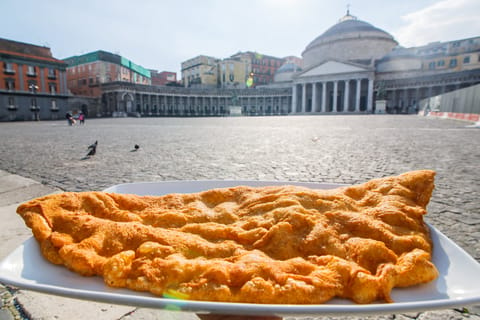
- Pizza fritta: fried pizza dough filled with ricotta and salami, born in post-war Naples when wood-fired ovens were too costly for street cooks
- AVPN (1984): the world's first pizza certification body, setting the legal and technical standard for Neapolitan pizza globally
Food History in Naples, FAQ
When is the best time to eat in Naples?
Peak food season in Naples is year-round.
What time do people eat in Naples?
Local dining hours: lunch around 12:30, dinner from 19:30.
How does tipping work in Naples?
service is typically included; small extra is welcome but not expected.
What is the one dish to try in Naples?
Ask the next local you meet what they would order. Naples rewards trust.