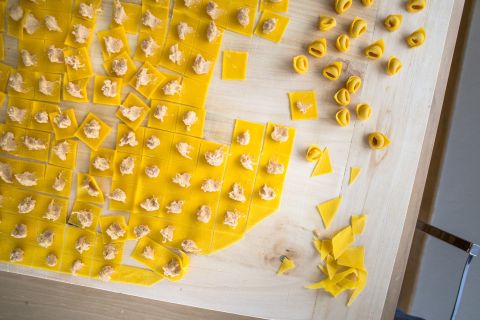
How Bologna came to eat the way it does: the people, migrations and accidents that shaped the plate.
Key eras
1088, the founding of the University of Bologna
The University of Bologna, founded in 1088 and the oldest in the Western world, drew clerics, scholars and merchants to the city from across Europe, creating the demand for inns, taverns and the buca cellar osterias that still shape the city's dining culture; the late-medieval salumeria tradition and the porticoed Quadrilatero market grid both date from this same period.
1465, Osteria del Sole
The Osteria del Sole on Vicolo Ranocchi opened in 1465 as a wine-only tavern, and now operates as the oldest continuously running osteria in Italy. Regulars still bring food from the surrounding Quadrilatero salumerie and drink Lambrusco and Sangiovese; the wine-only model is a 560-year fixed business plan.
1661, the first mortadella regulation
Cardinal Farnese, the papal legate of Bologna, issued the first formal mortadella regulation on 24 October 1661, defining the legal pork-and-spice ratio and banning adulteration. The Cardinal's decree established the precedent for the IGP designation that the European Commission would grant 337 years later.
1880-1924, Atti and Paolo Atti & Figli
The Atti and Paolo Atti & Figli salumeria-and-pasticceria shops both opened on Via Drapperie and Via Caprarie in 1880, codifying the modern Bolognese salumeria format and the certosino di Bologna recipe. The four-generation family business still operates from the original 19th-century counters.
1974-1982, the Camera di Commercio recipe deposits
The Confraternita del Tortellino and Accademia Italiana della Cucina deposited the legal Bolognese tortellino recipe with the Camera di Commercio on 7 December 1974. The same body deposited the official ragu alla bolognese recipe on 17 October 1982, and the lasagne verdi recipe in 2003, codifying the canonical Bolognese carte by notarial act.
1998-now, IGP mortadella and the modern wave
The European Commission granted Mortadella di Bologna IGP status on 12 June 1998, restricting production to Emilia-Romagna. Modern rooms like Ahime, Trattoria di Via Serra, Oltre and Forno Brisa now run alongside the century-old institutions, with natural wine, sourdough fermentation and modern technique reading the canon through a new lens.
Immigrant influences
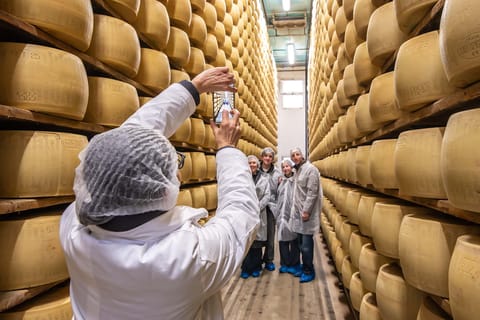
- Emilian Apennine (Modena, Reggio, Parma): The Emilian Apennine villages (Modenese, Reggiana, Parmense) sent the salumeria tradition (prosciutto, mortadella, culatello), the Parmigiano Reggiano cheese, the balsamico tradition and the sfoglia pasta to Bologna from the medieval period onward.
- Romagnola (Forli, Ravenna, Cesena): The Romagnola coast brought the piadina, the squacquerone cheese, the Sangiovese di Romagna wine and the Adriatic seafood tradition that runs alongside the Emilian land cuisine in modern Bologna.
- South Italian (1950s-80s): Post-war migration from Sicily, Puglia and Campania brought pizza al taglio, espresso bar culture, pizzeria-and-mozzarella businesses and the Neapolitan sfogliatella to the Centro Storico and the post-industrial Bolognina.
- Chinese (1980s-now): Chinese migration to Bolognina from the 1980s onward built a small Chinatown around Via Albani and Via Tiarini, with groceries, Sichuan and Cantonese kitchens now part of the multi-ethnic food map of the post-industrial north.
- Bangladeshi and Pakistani: South Asian migration to the city from the 1990s onward built halal Pakistani-Indian kitchens and the Bolognina spice shops, with biryani, Mughlai curry and the late-night kebab counters of the University quarter.
- North African and Middle Eastern: Egyptian, Moroccan and Tunisian migration brought halal kebab counters, Levantine mezze rooms and the shawarma trade across the eastern quarter, with the late-night counters around Via Zamboni now a fixture of the student late-night map.
Signature innovations
- Tagliatelle al ragu, the canonical legal recipe deposited 1982
- Tortellini in brodo, the 1974 deposited Sunday-and-Christmas pasta
- Lasagne verdi alla bolognese, the seven-layer green-pasta lasagne
- Mortadella di Bologna IGP, the 1661 regulated, 1998 IGP-protected sausage
- Crescentine and tigelle, the Apennine flatbread tradition
- Gnocco fritto, the fried-bread antipasto served with salumi
- Cotoletta alla bolognese, the 2004 deposited prosciutto-and-Parmigiano escalope
- Friggione, the 2009 deposited slow-cooked onion-and-tomato side
- Certosino di Bologna, the 14th-century Christmas spice cake
- Osteria del Sole, the 1465 wine-only tavern model
Food History in Bologna, FAQ
When is the best time to eat in Bologna?
Peak food season in Bologna is year-round.
What time do people eat in Bologna?
Local dining hours: lunch around 12:30, dinner from 19:30.
How does tipping work in Bologna?
service is typically included; small extra is welcome but not expected.
What is the one dish to try in Bologna?
Ask the next local you meet what they would order. Bologna rewards trust.