

The plates that define Galway: what they are, where they came from, and where to eat the canonical version.
Signature dishes
-
Galway Native Oysters ★ 4.9
Galway native flat oysters from Clarenbridge and Kilcolgan tidal beds are the defining food of the city; eaten cold on the half-shell with brown bread and Guinness.
Where to try it: Moran's on the Weir, Ard Bia at Nimmos, Aniar, Oscar's Seafood Bistro
Price: €2-3 per oyster, minimum 6
Galway Bay has been the centre of Irish flat oyster cultivation since at least the 16th century, when Spanish merchants traded wine at the Spanish Arch for shellfish from the Clarenbridge tidal flats 20km south. The Clarenbridge Oyster Festival, founded in 1954, was the world first dedicated oyster festival, transforming the native Ostrea edulis from a subsistence food into a globally recognised product. Morans on the Weir, operating since 1760 in Kilcolgan, is the oldest continuous oyster-serving establishment in Ireland.
Watch out for: Molluscs
-
Galway Bay Seafood Chowder ★ 4.7
Galway Bay seafood chowder is the city essential bowl: smoked haddock, Atlantic prawns and fresh mussels in a cream base with brown soda bread on the side.
Where to try it: Blackrock Cottage, Oscar's Seafood Bistro, McDonagh's Seafood House, Corrib House Tea Rooms
Price: €10-16
Chowder arrived in Galway through the Atlantic fishing tradition, drawing on the French and New England pot-based fish stews that travelled with sailors and merchants. The Galway version became distinct through the use of Connemara smoked haddock alongside fresh shellfish, the cream base enriched with local dairy, and the mandatory accompaniment of brown soda bread. Blackrock Cottage in Salthill made the version with smoked fish its signature and has served the dish overlooking Galway Bay for decades. The Saturday Market at St Nicholas Church was where the key components converged: smoked fish, fresh shellfish, Connacht cream and sourdough from market stalls.
Watch out for: Fish, Milk, Shellfish, Gluten
-
Connemara Smoked Salmon ★ 4.8
Connemara smoked salmon from the Atlantic coast is cold-smoked over oak; served at Galway tables on brown bread with capers and lemon as the defining local starter.
Where to try it: Sheridans Cheesemongers, McCambridge's, Ard Bia at Nimmos, Blackrock Cottage
Price: €12-18 as a starter
Cold-smoking of salmon on the Connemara coast became a commercial cottage industry in the 20th century, with the Connemara Smokehouse at Bunowen Pier in Ballyconneely established in the 1980s as the first artisan smokehouse to supply Galway restaurants. Sheridans Cheesemongers, founded in 1995 on Churchyard Street, brought Connemara smoked salmon to a national audience through their Galway Saturday Market stall. The distinction lies in the oak smoke and the short brine, which produces a silkier texture than the stronger Norwegian-style smoked salmon.
Watch out for: Fish
Book food experiences in Galway
-
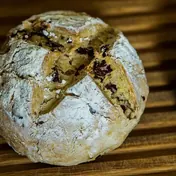
Brown Soda Bread ★ 4.6
Brown soda bread is the bread of Galway and all of Ireland; bicarbonate-leavened, made with buttermilk and wholemeal flour, it arrives warm at every table in the city.
Where to try it: Galway Saturday Market, McCambridge's, Dela, Ard Bia at Nimmos
Price: €3-5 a loaf
Soda bread became the staple bread of Ireland after baking soda reached Irish kitchens in the 1840s, coinciding with the Famine when yeast was scarce and ovens were rare. The western Irish version uses wholemeal flour from locally milled grains and buttermilk from local dairy, producing a dense, nutty loaf. The Saturday Market bakers and the farmhouse kitchen tradition across Connacht sustained the Galway soda bread tradition. O Connors Traditional Bakery and the Galway Saturday Market bakers are the best places to buy authentic Galway soda bread.
Watch out for: Gluten, Milk
-
Connacht Mountain Lamb ★ 4.7
Connacht mountain lamb grazed on Connemara bog and heather has a distinctive mineral depth; roasted or braised, it appears on Galway best menus from Aniar to Kai.
Where to try it: Aniar, Kai Restaurant, Ard Bia at Nimmos, Dela
Price: €22-38 as a main course
The limestone grassland and heather bog of Connemara produce lamb with a flavour profile unlike lowland-grazed animals, with herbal and mineral notes from bog-raised grass. Connacht sheep farming predates the Norman conquest and the Connemara breed was developed for the harsh Atlantic climate. JP McMahon at Aniar made Connacht lamb a flagship ingredient in the Michelin-starred tasting menu, sourcing from a single Connemara farm and serving every cut from loin to belly across a multi-course sequence.
-
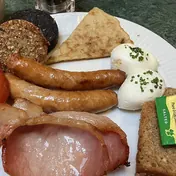
Irish Potato Boxty ★ 4.3
Boxty is the western Irish potato pancake: half grated raw potato, half mashed, fried to a crisp outer crust and served in Galway pubs and casual restaurants year-round.
Where to try it: Gourmet Food Parlour, John Keogh's, Dela, Brasserie on the Corner
Price: €10-16 as a lunch main
Boxty belongs to the potato-kitchen traditions of western Irish counties, particularly Connacht and Ulster, where the potato was the dominant subsistence crop before the Great Famine. The name comes from the Irish aran bocht ti, meaning poor-house bread, reflecting the dish origins as a way to use every part of the potato harvest including the starchy water from grating. The Gourmet Food Parlour in Galway and John Keoghs gastropub both run boxty as a fixture on their full-Irish and lunch menus, continuing the tradition of cooking the dish with local Connacht floury potato varieties like Kerr Pink and Golden Wonder.
Watch out for: Gluten, Milk, Egg
-
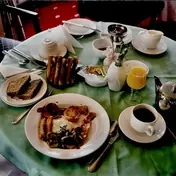
Full Irish Breakfast ★ 4.5
The full Irish breakfast in Galway includes back bacon, pork sausage, white and black pudding, a free-range egg, grilled tomato and mushroom with brown soda bread toast.
Where to try it: Corrib House Tea Rooms, Dela, Brasserie on the Corner, Gourmet Food Parlour
Price: €12-18
The full cooked Irish breakfast evolved from the Victorian-era farmhouse kitchen tradition. The inclusion of white and black pudding distinguishes the Irish breakfast from its English cousin; Irish puddings use oatmeal as the grain filler in white pudding and pork blood in black pudding. In Galway the breakfast culture was anchored around the Saturday Market visitor trade and Galway Races crowds. Corrib House Tea Rooms became one of the city most-loved breakfast rooms and the Saturday morning full Irish after market shopping is one of Galway most embedded food customs.
Watch out for: Gluten, Egg, Milk
-
Galway Bay Mussels ★ 4.6
Galway Bay mussels steamed in white wine with garlic and cream are the city most ordered shared plate; served in the pot with crusty bread to soak the broth.
Where to try it: McDonagh's Seafood House, Oscar's Seafood Bistro, Dela, Brasserie on the Corner
Price: €14-20 as a starter or shared plate
Mussel cultivation in Galway Bay has been practised since at least the early 20th century, with rope-cultured mussels farmed on the tidal ropes along the Connemara coast. The French moules mariniere preparation arrived in Galway through the restaurant culture that grew in the 1980s and 1990s. McDonaghss Seafood House on Quay Street was among the first to serve Galway Bay mussels in a cream sauce to visitors and locals alike, and the dish became a permanent fixture across the city casual dining rooms.
Watch out for: Molluscs, Milk, Gluten
-
Burren Farmhouse Cheese Board ★ 4.8
The Burren and West Cork farmhouse cheese board at Sheridans Galway is the definitive Irish cheese course: Gubbeen, Ardrahan, Cashel Blue and Durrus on one slate.
Where to try it: Sheridans Cheesemongers, Aniar, Ard Bia at Nimmos, Cava Bodega
Price: €12-18 as a cheese course
The Irish farmhouse cheese revival began in the 1970s when cheesemakers in Munster and West Cork started producing raw-milk artisan cheeses using Irish pasture milk. Sheridans Cheesemongers, founded by Kevin and Seamus Sheridan on Churchyard Street Galway in 1995, was the most important factor in making Irish farmhouse cheese commercially viable, connecting small producers in West Cork and Munster to the Dublin food scene. The Galway Saturday Market Sheridans counter became the city cheese anchor where visitors first encountered Gubbeen, Ardrahan and Cashel Blue.
Watch out for: Milk
-
Corrib River Brown Trout ★ 4.5
Wild Corrib River brown trout pan-fried in Irish butter with lemon and almonds is Galway river dish; available at Ballynahinch Castle and seasonal Connacht restaurants.
Where to try it: Oscar's Seafood Bistro, Aniar, Hooked
Price: €24-34 as a main course
The Corrib River flowing from Lough Corrib through Galway city to the sea has been fished for wild brown trout and Atlantic salmon for centuries. The Claddagh fishing village at the river mouth managed the trout and salmon fishery under its own customary law. Wild brown trout from the Corrib has a distinctly sweet, clean flavour from the clear limestone-filtered water of Lough Corrib, quite different from farmed trout. The dish appears on menus at Ballynahinch Castle and at seasonal Galway restaurants that buy direct from licensed Corrib gillies.
Watch out for: Fish, Milk, Tree nuts
-
Wild Atlantic Seaweed Dishes ★ 4.6
Wild Atlantic seaweed harvested from Connemara shores appears on Galway menus as dulse with oysters, sea lettuce in salads and carrageen moss panna cotta at Aniar.
Where to try it: Aniar, Kai Restaurant, Ard Bia at Nimmos, Oscar's Seafood Bistro
Price: €8-16 as a course or addition
Seaweed has been harvested and eaten along the Irish Atlantic coast for millennia; carrageen moss was used as a setting agent for puddings long before commercial gelatine, and dulse was gathered from the shore at low tide. The Aran Islands have the most continuous tradition of eating fresh seaweed, with islanders gathering dulse and dillisk directly from the limestone shoreline. JP McMahon at Aniar elevated Galway seaweed from subsistence food to haute cuisine ingredient, incorporating sea lettuce, dulse and carrageen into tasting menu courses.
Watch out for: Iodine (high)
-
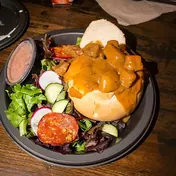
Guinness Beef Stew ★ 4.5
Ireland's defining pub stew: chunks of grass-fed Connacht beef braised long and slow with onion, carrot, parsnip and pearl barley in a dark Guinness gravy, served with buttered brown soda bread.
Where to try it: Tigh Neachtain, The King's Head, The Quays Bar, Crane Bar
Price: €16-24
Beef and Guinness stew (also called Stobhach Gaelach) emerged in 19th-century Irish pubs as a slow-cooked pot dish using cheap beef cuts and the country's most accessible dark malt beer (Guinness, brewed in Dublin since 1759). The dish became the canonical pub-grub winter Sunday lunch across Ireland. Galway and Connacht versions include parsnip and pearl barley and lean toward grass-fed Connemara mountain beef. Galway pubs that run benchmark versions include Tigh Neachtain and The Quays Bar. The stew should braise at least 3 hours; the gravy should be glossy mahogany.
Watch out for: Gluten, Dairy, Sulphites


Signature Dishes in Galway, FAQ
What food is Galway known for?
Galway's signature dishes include Galway Native Oysters, Galway Bay Seafood Chowder, Connemara Smoked Salmon, Brown Soda Bread, Connacht Mountain Lamb. See our signature dishes chapter for where to eat each.