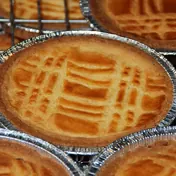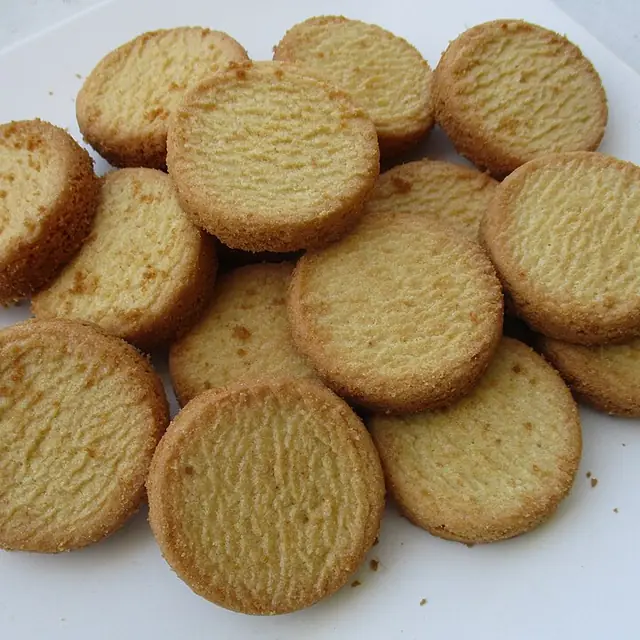
Palets bretons are thick salted-butter shortbread discs, crisp at the edge and sandy at the centre, baked in a ring so they rise straight rather than spread.

The biscuit belongs to the same family as the flatter, wider sablé breton, and the two names are used loosely across Brittany, but the palet is by convention the thicker one, at least a centimetre deep. Both descend from the region's habit of baking with salted butter in quantities that would be unusual anywhere else in France, and both were sold from the late nineteenth century onwards by the Breton biscuit factories at Pont-Aven, Quimper and Saint-Michel-Chef-Chef. The fleur de sel and the yolks are what separate a palet from a British shortbread: it is saltier, richer and shorter, and it crumbles rather than snaps.
Where to eat Palet breton in Rennes

3 editor picks for Palet breton in Rennes, ranked by editorial score. All Rennes signature dishes · Palet breton across every city.

  • Pâtisserie Le Daniel

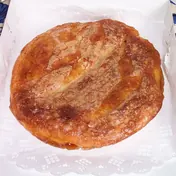
    Order Kouign-amann in salted Breton butter

    Pâtisserie Le Daniel is the Meilleur Ouvrier de France house of Laurent Le Daniel in Rennes, running since 1998 with its flagship facing the Halles Centrales.

  • Maison Bouvier

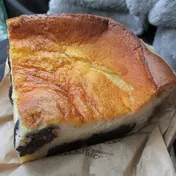
    Order Kouign-amann

    Maison Bouvier runs its pâtisserie and chocolaterie across Rennes, the Place Toussaints shop as flagship and a counter in the Hoche Visitation centre.

  • Maison Larnicol

    Order Kouignettes in a dozen flavours

    Maison Larnicol stacks its bite-size kouignettes on Rue Le Bastard in Rennes, the Breton chocolatier founded by Meilleur Ouvrier de France Georges Larnicol.

Make it at home

Serves 122 hrEasy

Ingredients

  • 150g salted butter, softened
  • 130g caster sugar
  • 3 egg yolks
  • 200g plain flour
  • 8g baking powder
  • 2g fleur de sel
  • 1 egg yolk for glazing

Method

  1. Beat the butter and sugar until pale and light, then beat in the three yolks.
  2. Sift in the flour and baking powder with the fleur de sel and fold to a soft dough.
  3. Roll the dough between two sheets of parchment to a thickness of 1cm and chill for at least an hour until firm.
  4. Stamp out 6cm discs and set each one inside a greased 6cm metal ring on a lined tray. The rings stop them spreading.
  5. Brush the tops with beaten yolk and drag a fork across in a criss-cross.
  6. Bake at 170C for 18 to 20 minutes until golden. Cool in the rings for five minutes before lifting off.

Editor tip. Without rings the dough spreads into thin biscuits. Metal poaching rings or a deep muffin tin both work if you do not have proper tart rings.

Common allergens: Gluten, Eggs, Dairy.