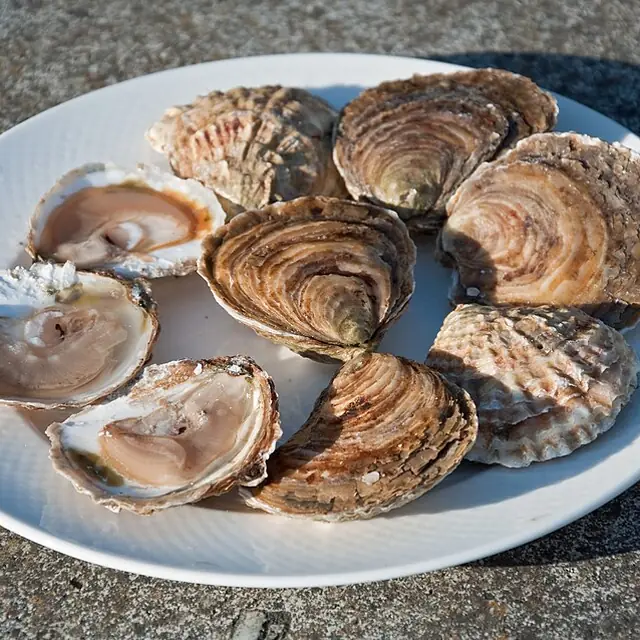
Cancale oysters come from the beds in the Bay of Mont-Saint-Michel an hour north of Rennes, flat plates and cupped creuses that carry an iodine bite from a fourteen-metre tide.

Cancale has been an oyster town since Roman times and supplied the French court from the seventeenth century onwards; the flat native oyster, the plate, was dredged wild until overfishing and disease all but destroyed the beds in the twentieth century. Cultivated creuses now make up most of the harvest, grown on trestles in the bay and finished in some of the strongest tidal currents in Europe, which is what gives them their firmness and their salinity. Rennes eats them without ever going to Cancale: the oysters travel the sixty kilometres inland the same morning and land on the Marché des Lices stalls and the seafood counters in town.


Where to eat Huîtres de Cancale in Rennes

3 editor picks for Huîtres de Cancale in Rennes, ranked by editorial score. All Rennes signature dishes · Huîtres de Cancale across every city.

  • Marché des Lices

    The Marché des Lices has run in Rennes since 1622 and now packs close to 300 stallholders onto Place des Lices every Saturday, France's second-largest market.

  • Peska

    Order Sole meunière with fermented rhubarb and fish jus

    Peska is a Mediterranean-leaning fish bistro on Rue Saint-Malo in Rennes, Pauline Iafrate cooking sole meunière and marinated mackerel to order.

  • Le Galopin

    Order Six Cancale oysters, then the 600g lobster with house fries

    Le Galopin has run its seafood brasserie on Avenue Jean Janvier in Rennes since 1965, Cancale oysters and whole lobster a short walk from the station.

Make it at home

Serves 425 minIntermediate

Ingredients

  • 24 oysters, unopened, heavy for their size
  • 1 shallot, very finely diced
  • 3 tbsp red wine vinegar
  • Coarsely cracked black pepper
  • Rye or sourdough bread
  • Salted Breton butter
  • 1 lemon
  • Crushed ice, to serve

Method

  1. Make the mignonette an hour ahead: stir the shallot into the vinegar with a good grind of pepper and leave it to macerate.
  2. Scrub the oysters under cold running water and discard any that stay open when tapped.
  3. Hold each oyster flat-side up in a folded cloth, work the knife into the hinge and twist rather than lever. Slide the blade along the top shell to cut the muscle.
  4. Lift off the top shell, check for grit and cut under the oyster to free it from the cup.
  5. Set the oysters on crushed ice as you go, keeping the liquor in the shell.
  6. Serve with the mignonette, lemon wedges, buttered rye bread and a glass of dry cider or Muscadet.

Editor tip. Tip out the first liquor and wait a minute: the oyster refills the shell with cleaner brine and the flavour is better for it.

Common allergens: Molluscs.