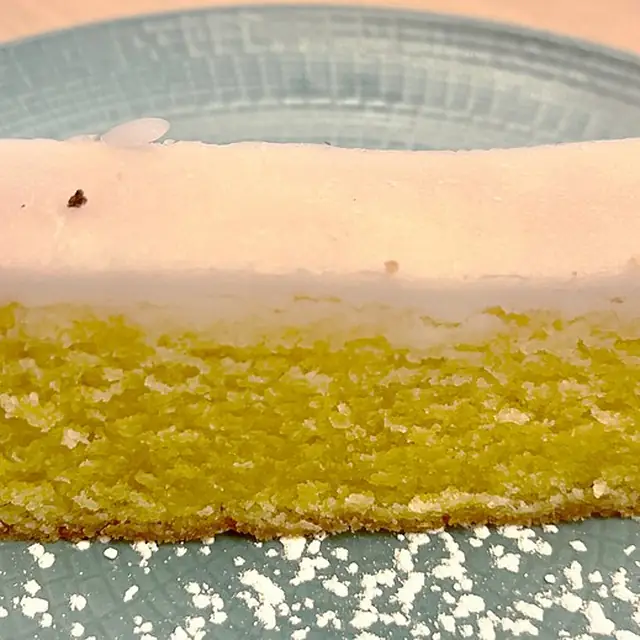
A dense almond cake soaked and iced with rum, sweet enough to keep for weeks. It is the edible trace of Nantes as a colonial sugar and rum port, and every boulangerie in the centre sells its own version.

The gâteau nantais is a 19th-century city cake built out of exactly what the port had too much of: cane sugar refined on the quays and rum shipped in from the Antilles. It was made heavy on both deliberately, because a cake carrying that much sugar and spirit keeps and travels. The result is a low, close-textured almond cake with a thin white rum icing set hard on top, sold in the same window as the berlingots. Nantes cannot tell that part of its food history without also naming the trade that funded it: the city was France's leading slave-trading port in the 18th century, and the sugar and rum economy of the quays is the direct reason this cake tastes the way it does.


Where to eat Gâteau nantais in Nantes

5 editor picks for Gâteau nantais in Nantes, ranked by editorial score. All Nantes signature dishes · Gâteau nantais across every city.

Make it at home

Serves 82 hrEasy

Ingredients

  • 150g unsalted butter, softened
  • 150g caster sugar
  • 150g ground almonds
  • 50g plain flour
  • 3 eggs
  • 4 tablespoons dark rum, plus 1 more for the icing
  • Pinch of salt
  • For the icing: 150g icing sugar
  • 1 tablespoon water

Method

  1. Heat the oven to 170C. Butter and line a 20cm round tin.
  2. Beat the butter and sugar until pale and light, then beat in the eggs one at a time. If it curdles, add a spoonful of the flour.
  3. Fold in the ground almonds, flour and salt, then 2 tablespoons of the rum. The batter is thick; do not try to loosen it.
  4. Scrape into the tin, level the top, and bake 35 to 40 minutes until a skewer comes out with a crumb or two. Brush the remaining 2 tablespoons of rum over the hot cake and leave it in the tin for 20 minutes so it drinks it in, then turn out and cool completely.
  5. Beat the icing sugar with the water and the last tablespoon of rum until thick but pourable. Pour over the cold cake and spread to the edges with a palette knife. Leave several hours to set to a firm white crust.

Editor tip. The cake is better on day two and better again on day three. Do not ice it until it is cold, or the icing sinks in and stays tacky instead of setting hard.

Common allergens: Nuts, Eggs, Dairy, Gluten.