Signature dishes
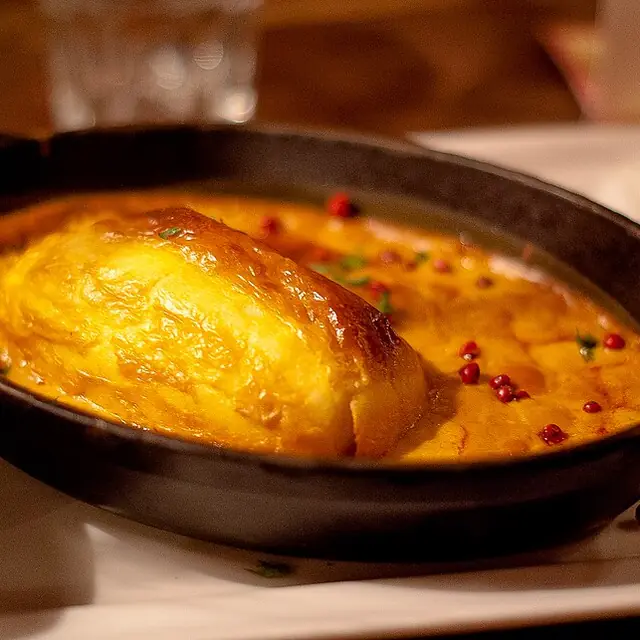
The quenelle de brochet is a poached pike dumpling the size of a fist, airy from egg white folded into a fish forcemeat, served bathed in sauce Nantua of crushed Ain river crayfish.
Where: Daniel et Denise Saint-Jean, Le Garet, Chez Paul
Price: €18 to €26
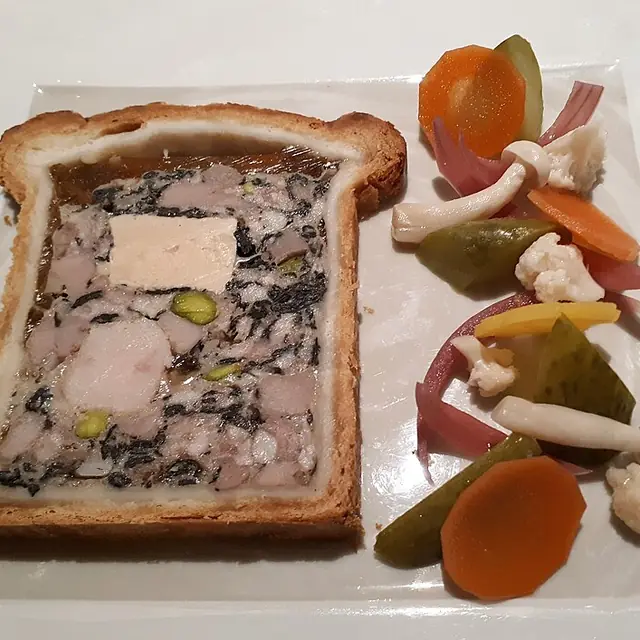
The Lyonnais pate en croute is a farce of pork, poultry, foie gras and sometimes truffle encased in a buttery pastry crust, cut in thick slabs at the counter.
Where: Daniel et Denise Saint-Jean, Boucherie Trolliet, Jaja Bistro
Price: €12 to €18 per slice
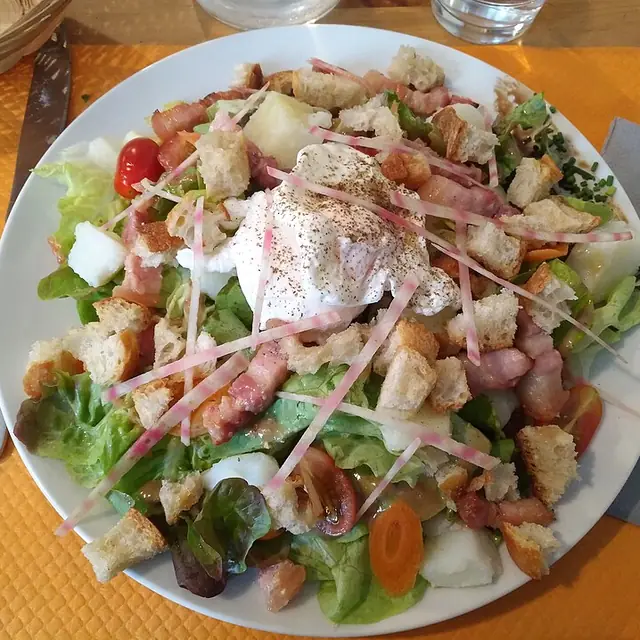
The salade lyonnaise is a warm salad of frisee dressed with lardons, croutons and a poached egg on top, dressed with a mustard-and-vinegar vinaigrette that wilts the leaves slightly from the heat of the bacon fat.
Where: Cafe-Comptoir Abel, Le Garet, Le Bouchon des Filles
Price: €10 to €15
The praluline is a Lyon-invented brioche bread studded throughout with pink-praline almonds, the crushed sugar caramelising into the crumb as it bakes so the loaf pulls apart in streaks of caramel and pink.
Where: Pralus Presqu'ile, Daniel et Denise Croix-Rousse
Price: €14 to €20 for a whole loaf
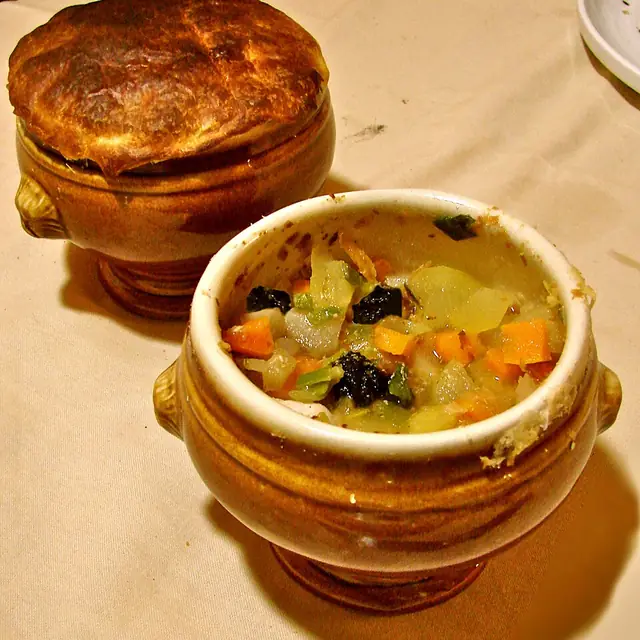
The soupe VGE is a single-serving beef and truffle broth sealed under a puff-pastry dome that you crack at the table, releasing the steam and aroma of black truffle in one theatrical moment.
Where: L'Auberge du Pont de Collonges (Paul Bocuse)
Price: €58 to €75
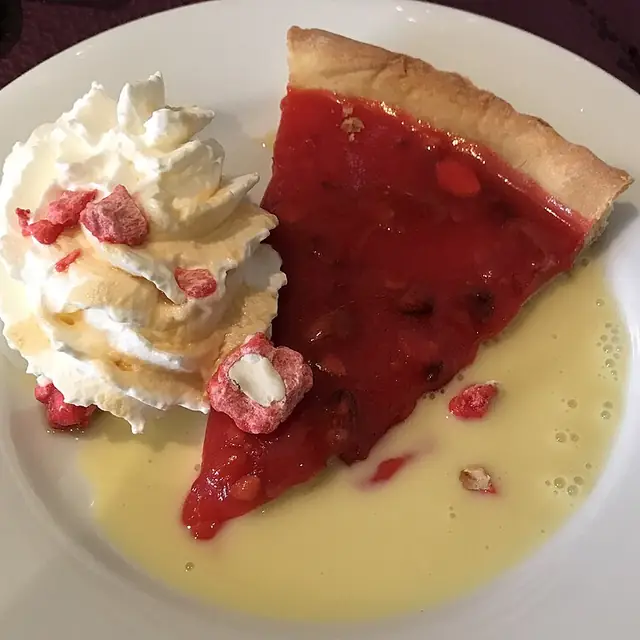
The tarte aux pralines is the Lyonnais pink-praline tart: a short-pastry shell filled with a molten pink-praline cream that sets to a glossy, sticky, intensely sweet slab, sold by the slice at every bakery in the city.
Where: Pignol, Bouillet
Price: €4 to €7 per slice
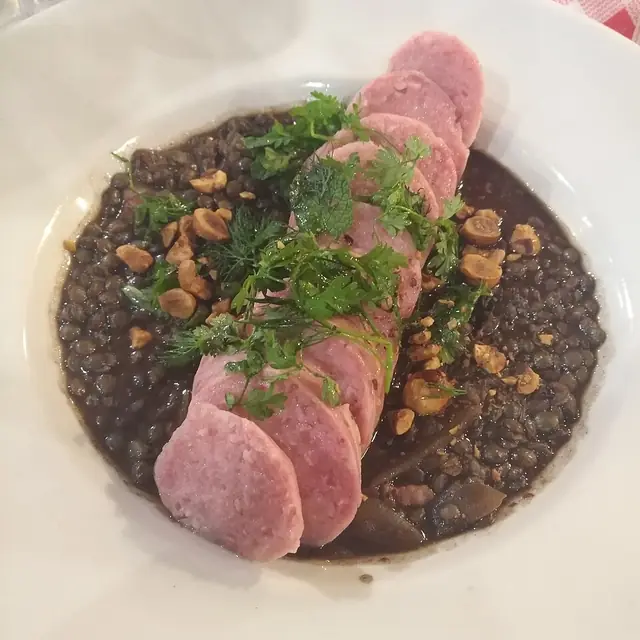
The saucisson de Lyon is a large-format cooked pork sausage, a close relative of the cervelas, with a loose grain and a mild seasoning, served sliced thick and eaten warm with boiled potatoes and mustard in every
Where: Sibilia at Halles Paul Bocuse, Boucherie Trolliet, Le Garet
Price: €14 to €20
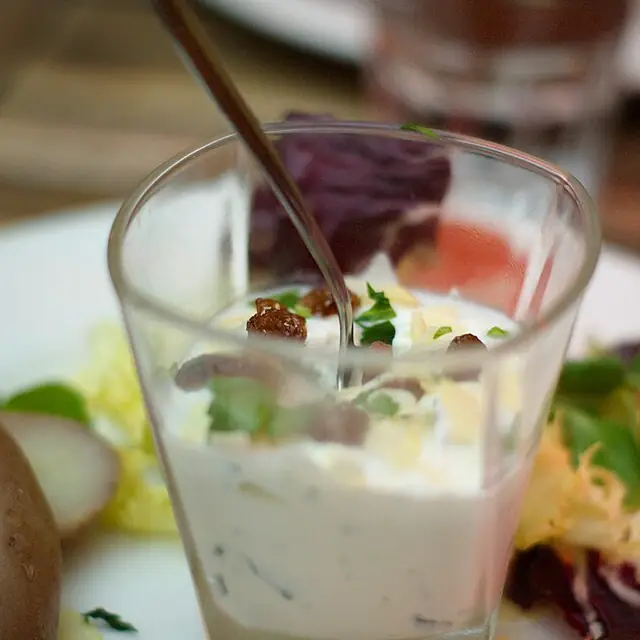
Cervelle de canut is a fresh fromage blanc beaten with shallots, garlic, chives, olive oil and vinegar to the consistency of thick cream: the original cheap-and-sharp Lyon cheese course.
Where: Le Bouchon des Filles, Cafe-Comptoir Abel, Le Musee
Price: €7 to €11
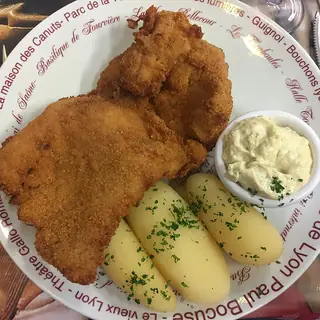
Tablier de sapeur is breaded and fried tripe (specifically the gras-double, the second stomach of the cow), traditionally marinated in white wine and mustard before being coated in breadcrumbs and pan-fried until golden.
Where: Le Garet, Cafe-Comptoir Abel, Le Musee
Price: €14 to €22
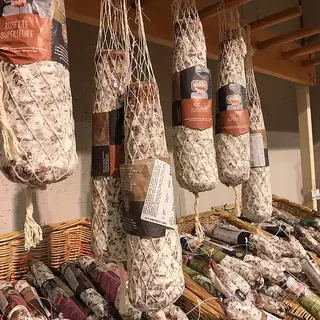
Rosette de Lyon is a cured dry sausage of the Lyon region, made from coarse-cut pork shoulder and back fat, cured for at least 2 months in a natural casing tied in distinctive cross-knot fashion.
Where: Boucherie Trolliet, Sibilia at Halles Paul Bocuse
Price: €18 to €28 per kg
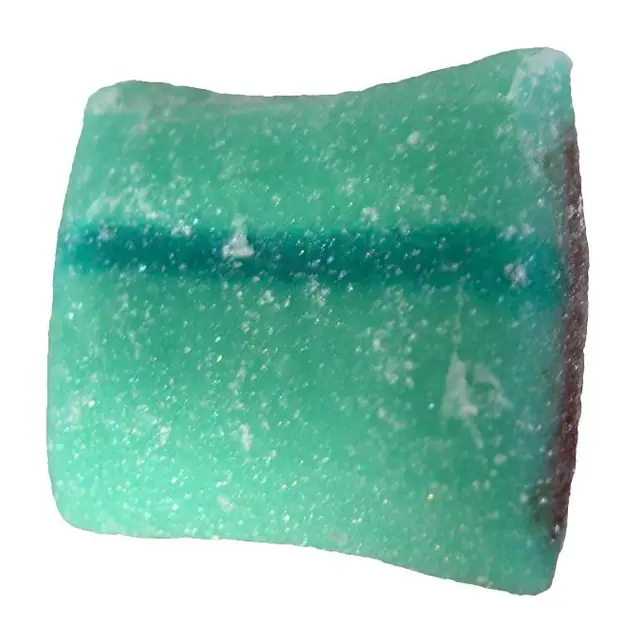
Coussin de Lyon is a cushion-shaped chocolate confection with an almond marzipan exterior tinted pale green to evoke the silk cushion that once carried Lyon's wax votive offering, filled with Curacao-perfumed chocolate
Where: Voisin Chocolatier Lyon
Price: €12 to €28 per box
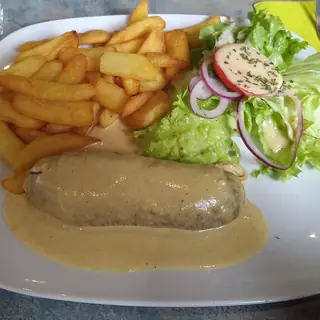
Andouillette lyonnaise is a coarsely-cut tripe sausage of pork chitterlings and stomach, sometimes with veal, served hot from the pan with a Dijon mustard sauce, sometimes a creamy cotes-du-rhone reduction.
Where: Cafe-Comptoir Abel, Chez Hugon, Le Bouchon des Filles
Price: €18 to €24
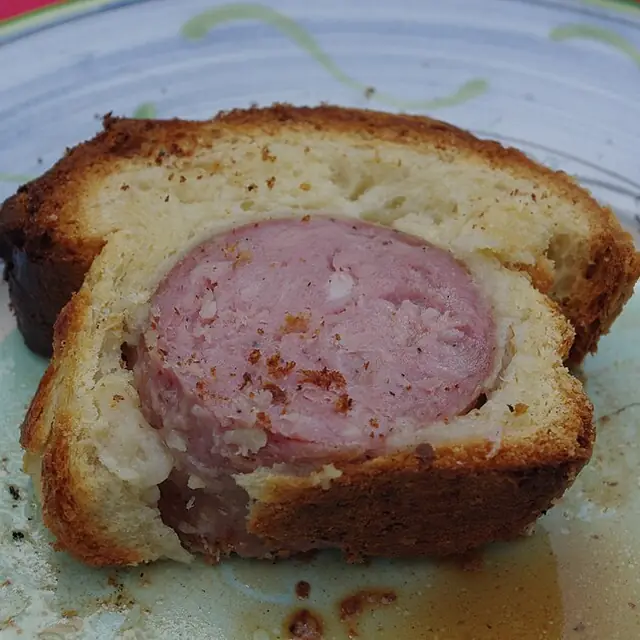
Lyonnais cooking sausage poached, cooled, then baked inside a buttery brioche loaf. Sliced warm into thick rounds and served with a mustard cream, the bouchon lunch classic.
Where: Brasserie Georges, Daniel et Denise Saint-Jean, Le Garet
Price: €16-24
Thin diamond-cut strips of orange-blossom-and-rum dough, deep-fried until pale gold and shower-dusted with fine sugar. The Lyon Mardi Gras pastry, eaten warm from a paper cone.
Where: Pralus Presqu'ile, Bernachon, Pignol
Price: €2-5 per 100g
Quenelle de brochet sauce Nantua
The quenelle de brochet is a poached pike dumpling the size of a fist, airy from egg white folded into a fish forcemeat, served bathed in sauce Nantua of crushed Ain river crayfish.
History: The quenelle appeared in Lyon records from the 18th century as a way to stretch expensive river pike. Bouchon cooks refined the texture across generations until the version Eugenie Brazier served in the 1920s became the standard: three times the size of an egg, blond on the exterior, molten within. The sauce Nantua, made from ecrevisses of the Ain and Dombes, links the dish geographically to the rivers that drain into the Rhone east of the city. Today the quenelle carries AOC application status under the Label Bouchons Lyonnais programme.
Where to try it: Daniel et Denise Saint-Jean, Le Garet, Chez Paul
Watch out for: Fish, Crustaceans, Eggs, Gluten, Dairy
Pate en croute
The Lyonnais pate en croute is a farce of pork, poultry, foie gras and sometimes truffle encased in a buttery pastry crust, cut in thick slabs at the counter.
History: Pate en croute in Lyon traces back to the charcutiers of the Renaissance, when the covered pastry casing was the only reliable way to transport cured forcemeat. The world championship, held annually in Lyon, has elevated the craft since 2009. Daniel et Denise won twice, and the event now draws competitors from 20 countries. Lyon's covered market Halles Paul Bocuse sells the winning formula at Boucherie Trolliet year-round, cementing the dish as the city's most articulate charcuterie export.
Where to try it: Daniel et Denise Saint-Jean, Boucherie Trolliet, Jaja Bistro
Watch out for: Gluten, Eggs, Dairy, Pork
Salade lyonnaise
The salade lyonnaise is a warm salad of frisee dressed with lardons, croutons and a poached egg on top, dressed with a mustard-and-vinegar vinaigrette that wilts the leaves slightly from the heat of the bacon fat.
History: The salade lyonnaise is the starter that separates a bouchon from a restaurant: frisee was the cheap green of the Lyonnais working table, bacon fat the luxury the weaver's kitchen could afford in modest quantity. The warm format, with a poached egg releasing its yolk into the vinaigrette, appeared in Lyon bouchon recipes from the 19th century. It travels poorly to other cities because the frisee needs to be dressed at the last second with the hot fat, which is why the best versions are always eaten two minutes after leaving the kitchen.
Where to try it: Cafe-Comptoir Abel, Le Garet, Le Bouchon des Filles
Watch out for: Eggs, Gluten
Praluline brioche
The praluline is a Lyon-invented brioche bread studded throughout with pink-praline almonds, the crushed sugar caramelising into the crumb as it bakes so the loaf pulls apart in streaks of caramel and pink.
History: Auguste Pralus invented the praluline in 1955 at his patisserie in Roanne, and the family opened a Lyon counter that became the city's compulsory souvenir. The pink praline itself, a sugar-coated almond dyed with carmine, is an older Lyonnais product from the region around Montargis; Pralus folded it into brioche dough and created a format now sold across France. The whole loaf is sold at room temperature and survives a day's travel, which is why every tourist leaves Lyon with one under their arm.
Where to try it: Pralus Presqu'ile, Daniel et Denise Croix-Rousse
Watch out for: Gluten, Eggs, Dairy, Tree nuts (almonds)
Soupe VGE (Soupe aux truffes Paul Bocuse)
The soupe VGE is a single-serving beef and truffle broth sealed under a puff-pastry dome that you crack at the table, releasing the steam and aroma of black truffle in one theatrical moment.
History: Paul Bocuse created this dish on 25 February 1975 when the Elysee Palace held a lunch in his honour at which President Valery Giscard d'Estaing presided; hence VGE. Bocuse designed the pastry dome as a personal flourish, the dome echoing the shape of the palace roof above. The dish has remained on the menu at L'Auberge du Pont de Collonges unchanged since that day, and is now Lyon's most-replicated dish: every serious bouchon kitchen has a truffle broth on the winter carte that traces its DNA back to Bocuse's original.
Where to try it: L'Auberge du Pont de Collonges (Paul Bocuse)
Watch out for: Gluten, Dairy
Tarte aux pralines
The tarte aux pralines is the Lyonnais pink-praline tart: a short-pastry shell filled with a molten pink-praline cream that sets to a glossy, sticky, intensely sweet slab, sold by the slice at every bakery in the city.
History: The pink praline, a sugar-coated almond made in Lyon since the 17th century, was traditionally sold as a sweet in its own right before bakers started folding it into cream and tart shells. The tarte aux pralines appears in Lyonnais pastry records from the late 19th century and is now the city's most-reproduced souvenir: Pignol bakes it at Place Bellecour, Bouillet at Croix-Rousse, and every market stall sells its own version. The pink colour comes from carmine dye in the praline coating.
Where to try it: Pignol, Bouillet
Watch out for: Gluten, Dairy, Eggs, Tree nuts (almonds)
Saucisson de Lyon
The saucisson de Lyon is a large-format cooked pork sausage, a close relative of the cervelas, with a loose grain and a mild seasoning, served sliced thick and eaten warm with boiled potatoes and mustard in every
History: Pork charcuterie has defined Lyon's food culture since the medieval period, when the city's position on the Rhone trade route made it a hub for preserved meats moving north from Provence and south from Burgundy. The saucisson de Lyon, made from coarsely ground pork shoulder with back fat and a mild spice blend, settled into its current form in the 19th century as the working-meal staple of the canut quarter. Today it appears on every Label Bouchons Lyonnais menu as a protected category under the association's quality rules.
Where to try it: Sibilia at Halles Paul Bocuse, Boucherie Trolliet, Le Garet
Watch out for: Pork, Gluten
Cervelle de canut
Cervelle de canut is a fresh fromage blanc beaten with shallots, garlic, chives, olive oil and vinegar to the consistency of thick cream: the original cheap-and-sharp Lyon cheese course.
History: The name translates roughly as 'silk-weaver's brain', a satirical swipe from the bourgeoisie at the Croix-Rousse canuts who could only afford fresh cheese rather than aged wheels. The canuts ate it on bread with onion and vinegar as a mid-morning meal called the machon. Today cervelle de canut appears on every bouchon menu as a starter or cheese course, and the machon tradition survives every third Friday of the month at a handful of Lyon bouchons that open at 09:30 for the original format.
Where to try it: Le Bouchon des Filles, Cafe-Comptoir Abel, Le Musee
Watch out for: Dairy
Tablier de sapeur
Tablier de sapeur is breaded and fried tripe (specifically the gras-double, the second stomach of the cow), traditionally marinated in white wine and mustard before being coated in breadcrumbs and pan-fried until golden.
History: The dish takes its name from the leather apron of a sapeur (military engineer), which the breaded tripe resembles in shape and colour. The renaming is generally attributed to Marechal de Castellane, military governor of Lyon from 1850 and a former sapeur, who was a known enthusiast of tripe dishes. It became a Lyonnais bouchon classic in the 19th century when offal was the working-class protein, and the technique of long marination followed by breadcrumb crust was perfected at the bouchons of the Croix-Rousse silk-weaver quarter. Today it carries the Label Bouchons Lyonnais certification.
Where to try it: Le Garet, Cafe-Comptoir Abel, Le Musee
Watch out for: Gluten, Eggs
Rosette de Lyon
Rosette de Lyon is a cured dry sausage of the Lyon region, made from coarse-cut pork shoulder and back fat, cured for at least 2 months in a natural casing tied in distinctive cross-knot fashion.
History: Rosette de Lyon takes its name from the rosette-shaped end-cap of the large pork intestine used as the casing. The technique dates to the late 19th century when Lyonnais charcutiers refined the long-cure dry sausage tradition of the Rhone valley. It remains a fixture of the salade lyonnaise, the bouchon apero board, and the bistro charcuterie plate. Halles Paul Bocuse's Sibilia and Boucherie Trolliet sell the canonical versions.
Where to try it: Boucherie Trolliet, Sibilia at Halles Paul Bocuse
Watch out for: Pork
Coussin de Lyon
Coussin de Lyon is a cushion-shaped chocolate confection with an almond marzipan exterior tinted pale green to evoke the silk cushion that once carried Lyon's wax votive offering, filled with Curacao-perfumed chocolate
History: The Coussin de Lyon was created in 1960 by Voisin Chocolatier to commemorate a 1643 votive offering of a silk cushion bearing a candle that the city's notables gave to the Virgin Mary at the Fourviere basilica to ward off the plague. The recipe is patented to Voisin and the silhouette is registered; the boxes sold from the Voisin counters on Place Bellecour and Rue de Brest are the canonical version.
Where to try it: Voisin Chocolatier Lyon
Watch out for: Almonds, Dairy
Andouillette lyonnaise
Andouillette lyonnaise is a coarsely-cut tripe sausage of pork chitterlings and stomach, sometimes with veal, served hot from the pan with a Dijon mustard sauce, sometimes a creamy cotes-du-rhone reduction.
History: Andouillette has its own French association of defenders, the AAAAA (Association Amicale des Amateurs d'Andouillette Authentique), and the Lyon version uses a coarser cut and stronger Beaujolais marination than the Troyes version. The Bobosse atelier in Pelussin (Loire), 60 km south of Lyon, is the most celebrated supplier; the city's bouchons buy direct. The dish is a Label Bouchons Lyonnais certified classic.
Where to try it: Cafe-Comptoir Abel, Chez Hugon, Le Bouchon des Filles
Watch out for: Pork
Saucisson brioché
Lyonnais cooking sausage poached, cooled, then baked inside a buttery brioche loaf. Sliced warm into thick rounds and served with a mustard cream, the bouchon lunch classic.
History: Saucisson brioché belongs to the Lyonnais bouchon canon codified by the meres of the early 20th century. The sausage, traditionally a lightly garlic-and-wine cured saucisson de Lyon (a fresh cooking salami, not the dried rosette), is wrapped in an enriched brioche and baked slowly so the sausage finishes inside the loaf. Bocuse the elder served it at his Collonges restaurant; the bouchons in Vieux Lyon still use it as the canonical entree.
Where to try it: Brasserie Georges, Daniel et Denise Saint-Jean, Le Garet
Watch out for: Gluten, Egg, Dairy
Bugnes lyonnaises
Thin diamond-cut strips of orange-blossom-and-rum dough, deep-fried until pale gold and shower-dusted with fine sugar. The Lyon Mardi Gras pastry, eaten warm from a paper cone.
History: Bugnes are Lyon's Mardi Gras specialty, on sale at every patisserie from Epiphany through Lent. The Lyonnais form is the thin crisp version (bugnes fines), not the puffy soft version of nearby Saint-Etienne. Pignol, Bernachon and Voisin all run a bugnes season; Maison Pralus carries them at the Presqu'ile shop, and stalls at the Marche Saint-Antoine fry them on the spot during Carnival.
Where to try it: Pralus Presqu'ile, Bernachon, Pignol
Watch out for: Gluten, Egg, Dairy


