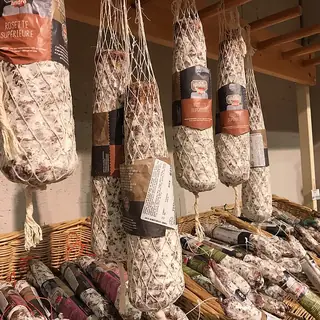
Rosette de Lyon is a dry pork sausage from the Lyon region, named after the rosette casing it is stuffed into and dried for about fifty days or more.

French Wikipedia describes the rosette as a dry sausage of pork meat and fat from the Lyon region, rural in origin, stuffed into the final part of the pork intestine and tied so that it keeps its shape while drying. It takes its name from that casing, called rosette because of its colour, and needs at least about fifty days of drying and maturing before it is eaten. The page classes it as superior-quality dry charcuterie and cites a Label Rouge specification for the rosette and the Jésus de Lyon. The traditional mâchon includes pork products such as rosette.

Where to eat Rosette de Lyon in Lyon

1 editor pick for Rosette de Lyon in Lyon, ranked by editorial score. All Lyon signature dishes · Rosette de Lyon across every city.

  • Sibilia at Halles Paul Bocuse

    • ★ 4.5
    • Charcuterie

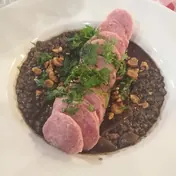
    Try Spoon-moulded pike quenelle

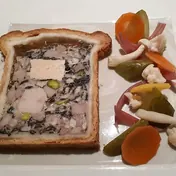
    Sibilia sells Lyonnais specialities in the Halles de Lyon-Paul Bocuse: dry sausages, andouillettes, pike quenelles, terrines and pâtés en croûte.

Book food experiences in Lyon

See all 662 food experiences in Lyon

More places near Sibilia at Halles Paul Bocuse

Not on this list, but close by, nearest first. Every one is in our guide with its address, hours and what to order.

Make it at home

Serves 1P60DAdvanced

Ingredients

  • 1.2kg pork shoulder (around 70% lean)
  • 300g pork back fat
  • 30g fine sea salt (2% by weight; non-iodised)
  • 3g curing salt (pink salt, sodium nitrite Cure #2 for long curing)
  • 5g dextrose or caster sugar
  • 3g black pepper, coarsely ground
  • 2g whole black peppercorns
  • 1 garlic clove, finely minced
  • 50ml dry red wine
  • Bactoferm starter culture (T-SPX), used per packet directions
  • Wide hog or beef bung casing, soaked in lukewarm water 30 minutes

Method

  1. Cube the pork shoulder and back fat into 2cm pieces. Spread on a tray and freeze 30 minutes until firm but not frozen.
  2. Grind the chilled pork and fat together through the coarse plate (8mm) of a meat grinder. Keep cold.
  3. Mix the salt, curing salt, dextrose, ground pepper, peppercorns, garlic, wine and starter culture (per packet instructions). Combine thoroughly with the ground meat for 3 minutes until tacky.
  4. Stuff firmly into the soaked beef bung casing using a sausage stuffer, expelling all air. Tie tightly at both ends with butcher's twine. Prick all over with a sausage pricker.
  5. Hang in a warm humid place (24C, 90% humidity) for 24 hours for the starter culture to activate.
  6. Move to a curing chamber at 12 to 15C and 75 to 80% humidity. Cure for 8 to 10 weeks until the sausage loses 35% of its starting weight.
  7. Slice paper-thin to serve, with crusty baguette and cornichons.

Editor tip. Cured dry sausage requires a proper curing chamber and is a food-safety risk if done wrong. A wine fridge with a humidifier works as a home setup.

Common allergens: Pork.