
The plates that define Avignon: what they are, where they came from, and where to eat the canonical version.
Signature dishes
-
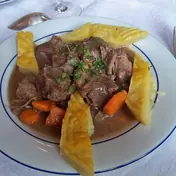
Daube avignonnaise ★ 4.8
Daube avignonnaise is Avignon's own daube: shoulder of lamb or mutton marinated overnight in white wine with thyme, bay and orange zest, then braised slowly with carrots and onions.
Where to try it: La Fourchette
Classic Provençal daube is beef in red wine; the Avignon version swaps in lamb or mutton and a white wine marinade. It descends from the carbonade, mutton stewed with vegetables and white wine, which Frédéric Mistral described in his Poème du Rhône as the food served to Rhône boatmen, and which René Jouveau set down in the Armana prouvençau of 1950, served with white beans and artichoke hearts. Mutton ran through Avignon cooking for centuries, though some Avignon bistros now cook the dish with beef under the same name.
Watch out for: Sulphites, Celery
-
Papeton d'aubergines ★ 4.5
Papeton d'aubergines is Avignon's aubergine flan: roasted aubergine flesh set with eggs, baked in a tall mould and turned out with a fresh tomato coulis.
The papeton is claimed as a typically Avignon dish, a flan of aubergine purée and eggs whose name is said to come from the mould it was baked in, shaped like a papal tiara, a nod to the popes who lived in the city from 1309 to 1377. Frédéric Mistral's Provençal dictionary does not list it, so the name may be more recent than the story.
Watch out for: Eggs, Milk
-
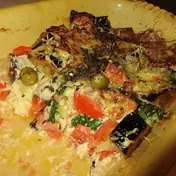
Tian provençal ★ 4.5
A tian is the vegetable gratin of the Comtat around Avignon: sliced courgette, tomato and aubergine baked in olive oil in the earthenware dish that gives it its name.
The word tian names both the vessel, a shallow glazed earthenware dish shaped like a truncated cone, and what is cooked in it; it comes from the Greek teganon, a frying pan. An 18th-century dictionary called it a lean stew. French sources place its origin in the Comtat Venaissin, the papal lands around Carpentras beside Avignon, whose cooks were known for their ways with fresh and dried vegetables.
Book food experiences in Avignon


-
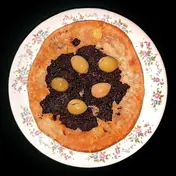
Tapenade ★ 4.4
Tapenade is the Provençal paste of black olives and capers pounded with olive oil, often with anchovy, spread on bread as an hors d'oeuvre in Avignon and across the south.
Where to try it: Les Halles d'Avignon, Beer Garden
The name comes from tapeno, the Provençal word for capers. According to the Provençal chefs Jean-Baptiste Reboul and Charles Julliard, it was created in 1880 by a chef named Meynier at La Maison Dorée in Marseille, who pounded equal weights of capers and black olives to garnish hard-boiled eggs and added anchovy, tuna, olive oil and cognac. Olive relishes go back to Roman writers such as Columella.
Watch out for: Fish
-
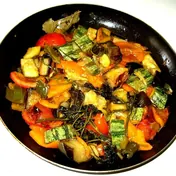
Ratatouille ★ 4.5
Ratatouille is the Provençal stew of summer vegetables, aubergine, courgette, peppers, tomato and onion cooked slowly in olive oil, one of the dishes Avignon households still cook.
The word comes from the Occitan ratatolha and the French touiller, to stir, and in the early 19th century it meant any coarse mixed stew. Tomatoes, peppers and squash reached France from the Americas but only became everyday food in the 18th and 19th centuries, and no recipe recognisable as modern ratatouille appears in print before the late 19th or early 20th century. It is most tied to Nice.
-
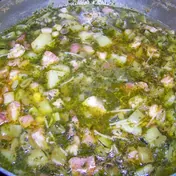
Soupe au pistou ★ 4.4
Soupe au pistou is the summer soup of beans, courgette and pasta that Avignon shares with all of Provence, finished with pistou pounded from basil, garlic and olive oil.
Pistou comes from the Provençal pista, to pound, and the word first meant the pestle, not the basil. Unlike Ligurian pesto it carries no pine nuts in the classic Provençal form. Jean-Baptiste Reboul's La Cuisinière provençale, first published in 1897, called the soup Genoese in origin and described it as thick, made with green beans, potatoes, tomatoes and vermicelli.
Watch out for: Gluten, Milk
-
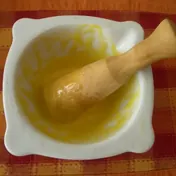
Aïoli ★ 4.3
Aïoli is the garlic and olive oil emulsion of Provence, one of the dishes Avignon still claims as its own, and served with salt cod and boiled vegetables it becomes a whole meal.
Where to try it: La Grande Brasserie BIB
The name joins the Provençal words for garlic, alh, and oil, òli. The sauce is probably ancient, but its first written traces date from medieval Provence. The purist version is pounded in a mortar from garlic and olive oil alone; many cooks bind it with egg yolk, lemon juice or bread. Served with salt cod and boiled vegetables it becomes aïoli garni.
Watch out for: Eggs, Fish
-
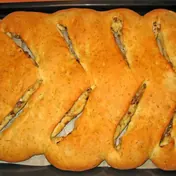
Fougasse ★ 4.2
Fougasse is the flat Provençal bread made with olive oil and slashed into a leaf, plain or with olives, lardons or anchovies, a bread of Avignon and the whole of Provence.
The name comes from the Latin panis focacius, bread baked in the hearth, the same root as Italian focaccia. Bakers first made it to test the heat of the wood oven before the day's bread went in, and it became the apprentices' morning snack. Savoury versions carry olives, onions, anchovies, lardons or cheese; a sweet fougasse is one of the thirteen desserts of Christmas.
Watch out for: Gluten
-
Papaline d'Avignon ★ 4.3
The papaline d'Avignon is a small chocolate shell holding a drop of Origan du Comtat, a marjoram liqueur from Mont Ventoux herbs, named for the Avignon popes and sold by Vaucluse pâtissiers.
Named in memory of the Avignon popes, the papaline is recent: the Syndicat des maîtres-pâtissiers de Vaucluse created it in 1960. Each piece weighs 8 to 9 grams and is a cousin of the chardon-liqueur. The liqueur inside, Origan du Comtat, was first made around 1870 by Auguste Blachère's distillery, then in Avignon, from marjoram and about sixty plants gathered on the slopes of Mont Ventoux, sweetened with Provence honey.
Watch out for: Milk
-
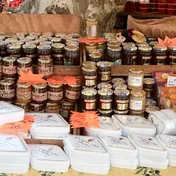
Calisson ★ 4.2
The calisson is Provence's almond-shaped sweet of ground almonds and candied melon under a thin royal icing, made mostly around Aix-en-Provence and the regional cousin of Avignon's papaline.
Calissons are tied to Aix-en-Provence, where most are still made. The name probably comes from the Provençal calissoun, a small chalice. Confections with similar names appear centuries before the Aix sweet: a 12th-century Latin text from Padua and Martino da Canal's Estoires de Venise of about 1275 both mention one, and a Provençal form, calisçon, has been cited from 1503.
Watch out for: Nuts, Eggs
-

Châteauneuf-du-Pape ★ 4.6
Châteauneuf-du-Pape is the Rhône wine named for the popes' new castle north of Avignon, mostly red and led by Grenache, and the wine the papal court first made famous.
Where to try it: Restaurant Sevin, Bar de La Mirande, Aimé
After the papacy moved to Avignon in 1309, Clement V took an interest in the vineyards of the village then called Châteauneuf-Calcernier, and his successor John XXII chose them to supply the palace with what he called vin du pape; more than 3,000 litres were sold to the Palais des Papes between 1325 and 1334, and John XXII built the castle. Rules drawn up by the growers in 1923, led by Baron Pierre Le Roy, became the first appellation rules in France, and the appellation was created in law in 1936. Eighteen grape varieties have been allowed since 2009.
Watch out for: Sulphites
Signature Dishes in Avignon, FAQ
What food is Avignon known for?
Avignon's signature dishes include Daube avignonnaise, Papeton d'aubergines, Tian provençal, Tapenade, Ratatouille. See our signature dishes chapter for where to eat each.