History

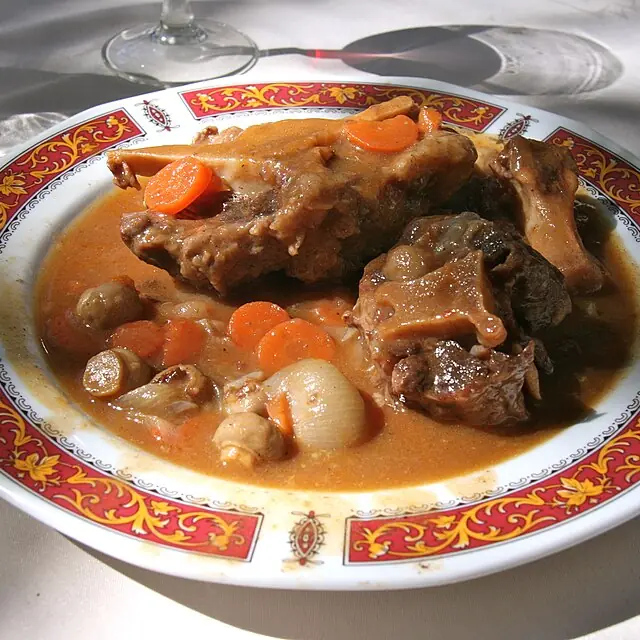
Rabo de toro is Córdoba's bullring dish, cooked from the tail of the animal after the fight and slow-braised because there is no other way to eat it. The city has kept it on tabernas cartas continuously; Bodegas Campos, open since 1908, has served it for more than a century. Andalusian versions differ mainly in the wine: Córdoba uses Montilla-Moriles, which is drier and more oxidative than the reds used further north, and gives the sauce its particular nutty edge. Today most oxtail sold in the city is beef rather than fighting bull, which is legal, normal and rarely mentioned on the menu.

Make it at home

Yield Serves 4Hands-on 40 minTotal 4 hrDifficulty Intermediate

Ingredients

  • 1.5kg oxtail, cut into thick sections
  • 2 onions, chopped
  • 2 carrots, chopped
  • 1 leek, chopped
  • 4 garlic cloves
  • 2 ripe tomatoes, grated
  • 500ml Montilla-Moriles amontillado or oloroso
  • 500ml beef stock
  • 2 bay leaves
  • Plain flour for dusting
  • Olive oil
  • Salt and black pepper

Method

  1. Season the oxtail, dust lightly with flour and brown hard in olive oil in a heavy casserole. Remove and set aside.
  2. In the same pan soften the onion, carrot, leek and garlic for 15 minutes until sweet.
  3. Add the grated tomato and cook out for 5 minutes until it darkens.
  4. Return the oxtail, pour in the wine and let it bubble for 5 minutes to burn off the alcohol.
  5. Add the stock and bay leaves, bring to a bare simmer, cover and cook for 3 hours until the meat pulls away from the bone.
  6. Lift out the meat, blend or sieve the sauce, reduce it until it coats a spoon, then return the oxtail to warm through.

Tip from the editors. Cook it the day before. Oxtail is better on the second day, and the fat sets on top overnight so you can lift it straight off.

Where to eat rabo de toro

Rabo de toro in Córdoba

Bodegas Campos ★ 4.5

Andalusian€€€riberaDaily 13:30-16:00, 20:00-23:00

Bodegas Campos has poured in Córdoba since 1908, a warren of patios and barrel-signed rooms off Calle Lineros serving rabo de toro and salmorejo.

Signature: Rabo de toro, Salmorejo, Flamenquín

Order: Rabo de toro, the dish the house has cooked for over a century.

Tip: Ask to walk through the barrel rooms before you sit; the signed butts are a century of visiting names.

Taberna Salinas ★ 4.6

Andalusian€€correderaMon-Fri 12:30-16:00, 20:00-23:30; Sat 12:30-16:00; Sun closed

Taberna Salinas serves salmorejo, flamenquín and fried aubergine off Córdoba's Corredera, in a barrel-lined room the Salinas family took on in 1924.

Try: Salmorejo and flamenquín

Order: Salmorejo, then flamenquines de jamón serrano.

Tip: An earlier tavern stood here from 1879; the Salinas family business itself dates from 1924.

Casa Pepe de la Judería ★ 4.4

Andalusian€€€juderiaSun-Thu 13:00-16:00, 20:00-23:00; Fri-Sat 13:00-16:00, 20:00-00:00

Casa Pepe de la Judería has fed Córdoba since 1928, a taberna downstairs and a roof terrace upstairs that looks straight at the Mezquita tower.

Signature: Mazamorra, Rabo de toro, Berenjenas fritas con miel de caña

Order: Mazamorra, the almond-and-bread ancestor of salmorejo.

Tip: The roof terrace is the reason to come, so ask for it when you book rather than taking a ground-floor table.

Taberna Góngora ★ 4.4

AndalusiancentroMon 13:00-16:00, 20:00-23:30; Wed-Sat 13:00-16:00, 20:00-23:30; Tue and Sun closed

Taberna Góngora is the family taberna on Conde de Torres Cabrera in Córdoba, adapting most of its carta for coeliacs on a separate chickpea-flour fryer.

Try: Rabo de toro and boquerones

Order: Rabo de toro, then boquerones, both at taberna prices.

Tip: It closes Tuesday and Sunday, an awkward pair that catches out anyone planning a long weekend.

All Córdoba signature dishes →

More cities are in research. Want rabo de toro covered somewhere specific? Tell us where you want to eat.

Browse all dishes →