Montpellier
Day trip · 3.5 hours
From Montpellier: Wine & Olive Oil Tasting Tour
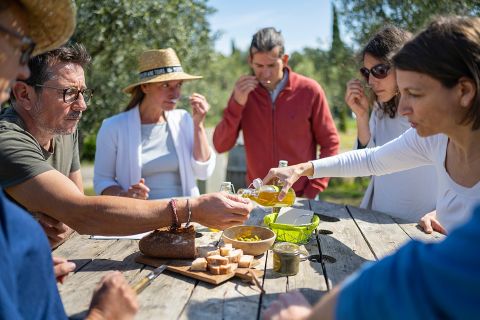
Escape Montpellier for a delightful morning discovering two of the Mediterranean’s most iconic treasures: olive oil and wine.
from€75Check dates
A green olive shaped like a crescent moon, pointed at one end, with firm buttery flesh and almost no bitterness. It is picked young, cured in brine and eaten as an aperitif rather than pressed for oil.
Where to eat it: 3 restaurants across 1 city.

Food tour in Montpellier
Small-Group Half-Day Languedoc Pic Saint-Loup Wine Tour from Montpellier
The Lucques is grown almost entirely in the Hérault and the Aude and takes its name, most sources agree, from the Italian city of Lucca. It has AOP status as Lucques du Languedoc. The curve is natural rather than a processing artefact, and the stone lifts cleanly out, which is why it is the olive of choice for a table bowl. Picking happens in September and October and the fruit is cured quickly in weak brine so the flesh stays pale green and the flavour stays sweet. In Montpellier it turns up automatically with a glass of Picpoul, salted almonds alongside, before anyone has ordered anything.
Tours, tastings and classes that match this page, bookable on GetYourGuide.
Day trip · 3.5 hours
Escape Montpellier for a delightful morning discovering two of the Mediterranean’s most iconic treasures: olive oil and wine.
Guided tour · 3 hours
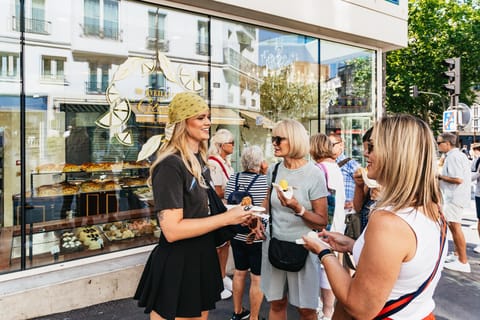
Join us on this fantastic food tour to taste and learn everything you've ever wanted to know about French gastronomy. Savory and sweet specialities...

Day trip · 4 - 4.5 hours
Discover St-Emilion on a guided village tour, followed by a guided visit and tasting of 3-4 wines with a French aperitif platter at a Grand Cru...
The Marché des Arceaux lines Montpellier's Saint-Clément aqueduct on Tuesday and Saturday, up to 80 producers selling organic vegetables, cheese and flowers.
TipThis is where the city's chefs shop; arrive by 09:00 on Saturday before the best producer stalls sell through.
The Plan Cabanes market fills Cours Gambetta in Montpellier six mornings a week, more than twenty traders serving the Figuerolles side of the old town.
TipCombine it with the surrounding Cours Gambetta grocers and pastry shops for mint, olives and msemen in one sweep.
Halles Castellane is Montpellier's iron-and-glass central market on Rue de la Loge, 25 stalls of cheese, oysters and produce a minute from the Comédie.
TipSeveral stalls shuck Bouzigues oysters to eat on the spot with a glass of Picpoul; go before noon for the full spread.
More cities are in research. Want olive lucques du languedoc covered somewhere specific? Tell us where you want to eat.