Kikunoi Honten 3 ★ ★ 4.9
The defining three-Michelin-star kaiseki room in Kyoto. Third-generation Yoshihiro Murata runs Kikunoi Honten, a 1912 ryotei below Kodaiji. Priced at ¥¥¥¥.
Signature: Kaiseki, Hamo, Ayu
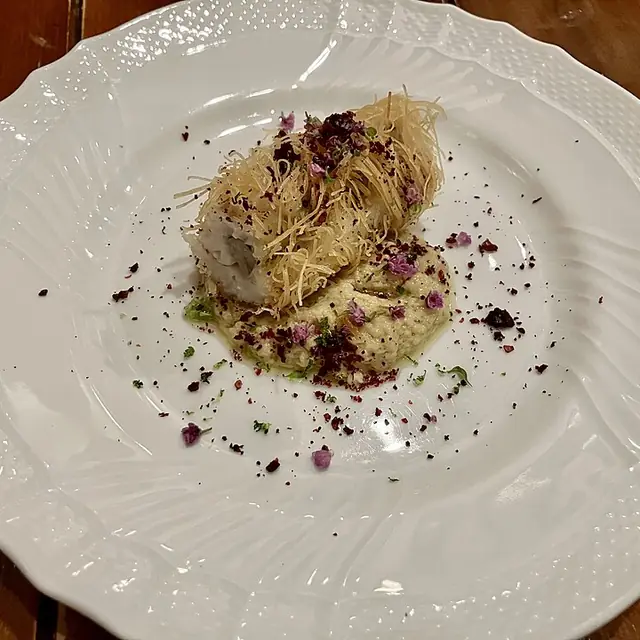
Pike conger eel, the summer fish of Kyoto. Bone-cut into chrysanthemum petals, quick-poached and served with plum vinegar at the city's kaiseki rooms.
Where to eat it: 3 restaurants across 1 city.
Hamo arrives in Kyoto from June to August across the Awaji Strait. The fish has hundreds of tiny bones, so Kyoto chefs developed honegiri, a slicing technique that cuts each fillet at millimetre intervals without severing the skin. The bones soften when quick-poached; the flesh flowers open like a chrysanthemum. The dish became the summer marker of Gion Matsuri, served at every ryotei in July alongside ume-su plum vinegar. Hyotei and Kikunoi serve the canonical version.
Common allergens: Fish
Tip from the editors. Honegiri is the entire dish. If your fish supplier can't do the bone-cutting, choose a different fish; the technique is what makes hamo edible.
This is the TableJourney editorial recipe, modelled on the canonical bistro / counter version. The first place to try the dish in its city of origin is below.
The defining three-Michelin-star kaiseki room in Kyoto. Third-generation Yoshihiro Murata runs Kikunoi Honten, a 1912 ryotei below Kodaiji. Priced at ¥¥¥¥.
Signature: Kaiseki, Hamo, Ayu
An Edo-era teahouse at the gate of Nanzen-ji in Kyoto, restyled as a ryotei in 1837. Located in Northern Higashiyama. Led by chef Yoshihiro Takahashi.
Signature: Morning gruel, Hyotei tamago, Hassun
Hiroshi Sasaki runs a teacher-and-apprentice kitchen on Komatsu-cho. Counter seats deliver a 12-course kaiseki with a freer hand than the old ryotei.
Signature: Kaiseki, Crab, Charcoal-grilled wagyu
More cities are in research. Want hamo covered somewhere specific? Tell us where you want to eat.