

Seoul
2h 30m
Seoul: Korean Cooking at Seoul Cooking Club!
Experience an immersive 2.5-hour local cooking class with an authentic Korean chef. We cater to all tastes including vegan, vegetarian, pescatarian,...
from$109Check dates
143 editor-picked korean restaurants across 37 cities.
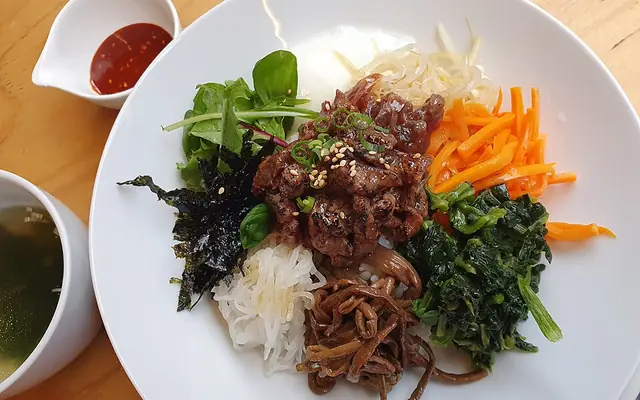
Korean cuisine is built on fermentation (kimchi, gochujang, doenjang, ganjang), the bap (rice) and guk (soup) backbone, and a deliberate spectrum of textures and temperatures within each meal. The standard Korean meal (hanjeongsik in its formal version) consists of rice, soup, a main dish, and 5 to 20 banchan (small side dishes), all served at once. The diner constructs each bite, mixing flavors from across the table, and the meal has no Western-style coursing.
Fermentation defines the cuisine. Kimchi alone has dozens of regional and seasonal variations (winter baechu kimchi with mature cabbage, summer mulkimchi with watery brine, kkakdugi with cubed radish, baek kimchi without chile). Gochujang (fermented red-pepper paste) and doenjang (fermented soybean paste) sit in every kitchen and are the base for stews (jjigae) and dipping sauces. Soy sauce (ganjang) comes in two main types: the lighter Joseon ganjang (for soups) and the darker household ganjang (for braises). UNESCO listed kimjang, the communal autumn kimchi-making ritual, as Intangible Cultural Heritage in 2013.
Korean cuisine extends well beyond BBQ. Bibimbap, naengmyeon, samgyetang, japchae, jjigae stews, hotpot (jeongol), rice-cake dishes (tteokbokki), street food (hotteok, gimbap, eomuk), and a serious sweets and rice-cake (tteok) tradition all sit alongside the better-known grill format. The modern Seoul restaurant scene has also produced a small Michelin-led fine-dining sector (Mingles, La Yeon, Onjium) that re-reads Joseon-dynasty court cuisine for modern tasting menus.
Tours, tastings and classes that match this page, bookable on GetYourGuide.
2h 30m
Experience an immersive 2.5-hour local cooking class with an authentic Korean chef. We cater to all tastes including vegan, vegetarian, pescatarian,...
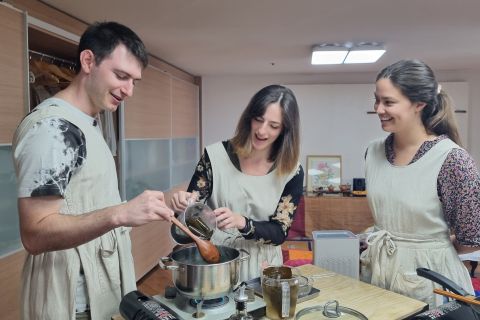
3 hours
Discover Korean food and culture by taking part in a Korean cooking class. Taste and learn how to cook traditional Korean dishes together with an...

Guided tour · 2.5 hours
Kensington Market is a must-see on any Toronto bucket list. Travel the world in one afternoon as we taste a variety of multicultural delicacies in...
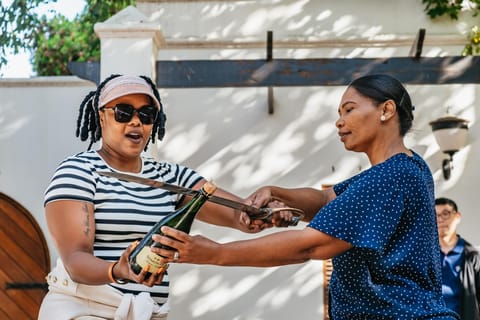
Day trip · 8h 30m
Explore the wine regions of Paarl, Franschhoek, and Stellenbosch in a day. Visit 3 estates, taste 15 wines including a sweet, decadent pairing and...
The best-scored korean place in each of 12 cities.
One of South Korea's three-Michelin-star restaurants, where chef Mingoo Kang weaves jang (fermented pastes) and cho (vinegars) into contemporary modern.
Book4 to 6 weeks ahead
Chef Junghyun Park's 14-seat counter in NoMad runs the most ambitious Korean tasting menu in New York City. Two Michelin stars, ten courses, $385 set price.
OrderThe full tasting; ordering anything off it misses the point.
TipReservations open 60 days in advance on Tock at midnight; set an alarm. Wine pairing or non-alcoholic both excellent.
Peter Cho and Sun Young Park's family-table Korean room in the Kerns neighbourhood of Portland, The Oregonian's 2017 Restaurant of the Year.
OrderThe dumpling and noodle prix fixe
TipOpen Thursday to Sunday for the family-style prix fixe. Saturday brunch is a la carte and easier to book.
Chef Sun Kim's two-Michelin-star kitchen; Korean tradition through Japanese minimalism and Western technique. No. 39 in Asia's 50 Best 2025.
Book3-4 weeks ahead
Benu in San Francisco is Corey Lee's three-Michelin-star modern Korean American tasting in SoMa, with a 14-seat counter and a 30-course pace through three.
Book6 to 8 weeks ahead
TipThe bar at sister Monsieur Benjamin takes walk-ins and runs the same culture on a bistro budget.
Addiert on Franz-Josefs-Kai is Jaeho Jung and Jungyun Kim's one-star Korean chef's table, ten seats around an open kitchen plating layered ferment courses.
Book4 weeks ahead
Le DORER won Busan's newest Michelin star in 2026, a Marine City tasting room where a young local chef reworks traditional Korean courses in miniature.
OrderThe seasonal tasting course; the late meat course and traditional dessert reworks stand out.
TipReserve through Catchtable and ask about parking at the Hanil Ordew building when you book.
Roy Choi's Kogi BBQ truck has rolled around Los Angeles since 2008, inventing the Korean-Mexican taco and the modern American food-truck movement.
OrderShort rib taco and the kimchi quesadilla.
TipFollow the truck's daily schedule on the website or Twitter; usually four stops a day across LA.
Hodo Kwaja on Bloor West Koreatown bakes walnut-shaped pastries since 2005, fresh chestnut-mold red-bean and walnut pastries at 12 for $5, the counter view.
OrderA dozen walnut pastries hot from the mold to share at the counter.
Why locals goKorean walnut-shaped pastry counter on Bloor West Koreatown filling chestnut-shaped molds with red bean and walnut, sold in 12-piece bags for $5.
TipCash and card. The counter sells out on busy Korean-festival nights at the Mod Club next door.
Dae Mon on Berlin Mitte's Monbijouplatz cooks a modern Korean tasting that pulls in Japanese and European techniques; the chic stone-and-wood room runs late.
OrderThe chef tasting menu; the bibimbap with wagyu and the charred mackerel are the signatures.
TipClosed Sunday. Lunch 12:00-14:30 weekdays is the easier seating; dinner books two weeks ahead via the website.
Han Mi serves grandmother-recipe Korean cooking on Broad Street in Chattanooga, grown from the Korean Underground pop-up into a full storefront.
OrderDak-galbi, then the pork cutlet if the table is hungry.
TipChef Panda's menu is compact and sells through; arrive before the 12:00 rush on Saturdays when service starts at noon.
Dongnae serves Korean cooking on Chandos Road in Redland, Bristol, a Michelin Guide listing whose great-value set lunch runs at about £24 a head.
OrderThe set lunch, around £24, one of the sharpest deals in the Michelin Guide.
TipSister restaurant to Bokman; while Bokman rebuilds after its kitchen fire, this is where that team's cooking lives.
One of South Korea's three-Michelin-star restaurants, where chef Mingoo Kang weaves jang (fermented pastes) and cho (vinegars) into contemporary modern.
Book4 to 6 weeks ahead
Chef Junghyun Park's 14-seat counter in NoMad runs the most ambitious Korean tasting menu in New York City. Two Michelin stars, ten courses, $385 set price.
OrderThe full tasting; ordering anything off it misses the point.
TipReservations open 60 days in advance on Tock at midnight; set an alarm. Wine pairing or non-alcoholic both excellent.
The restaurant that coined New Korean fine dining, where chef Jung Sik Yim's avant-garde plating and Korean pantry ingredients earned two Michelin stars.
Book2 to 4 weeks ahead
Peter Cho and Sun Young Park's family-table Korean room in the Kerns neighbourhood of Portland, The Oregonian's 2017 Restaurant of the Year.
OrderThe dumpling and noodle prix fixe
TipOpen Thursday to Sunday for the family-style prix fixe. Saturday brunch is a la carte and easier to book.
Chef Sun Kim's two-Michelin-star kitchen; Korean tradition through Japanese minimalism and Western technique. No. 39 in Asia's 50 Best 2025.
Book3-4 weeks ahead
Benu in San Francisco is Corey Lee's three-Michelin-star modern Korean American tasting in SoMa, with a 14-seat counter and a 30-course pace through three.
Book6 to 8 weeks ahead
TipThe bar at sister Monsieur Benjamin takes walk-ins and runs the same culture on a bistro budget.
On the 23rd floor of the Shilla Seoul, La Yeon serves royal-tradition Korean tasting menus against a panorama of the Han River basin, holding two Michelin.
Book2 to 3 weeks ahead
Addiert on Franz-Josefs-Kai is Jaeho Jung and Jungyun Kim's one-star Korean chef's table, ten seats around an open kitchen plating layered ferment courses.
Book4 weeks ahead
Le DORER won Busan's newest Michelin star in 2026, a Marine City tasting room where a young local chef reworks traditional Korean courses in miniature.
OrderThe seasonal tasting course; the late meat course and traditional dessert reworks stand out.
TipReserve through Catchtable and ask about parking at the Hanil Ordew building when you book.
Roy Choi's Kogi BBQ truck has rolled around Los Angeles since 2008, inventing the Korean-Mexican taco and the modern American food-truck movement.
OrderShort rib taco and the kimchi quesadilla.
TipFollow the truck's daily schedule on the website or Twitter; usually four stops a day across LA.
Hodo Kwaja on Bloor West Koreatown bakes walnut-shaped pastries since 2005, fresh chestnut-mold red-bean and walnut pastries at 12 for $5, the counter view.
OrderA dozen walnut pastries hot from the mold to share at the counter.
Why locals goKorean walnut-shaped pastry counter on Bloor West Koreatown filling chestnut-shaped molds with red bean and walnut, sold in 12-piece bags for $5.
TipCash and card. The counter sells out on busy Korean-festival nights at the Mod Club next door.
Jeongjitgan cooks Busan-style dwaeji gukbap around the clock in Sinpyeong, a Michelin Bib Gourmand shop whose name is Gyeongsang dialect for kitchen.
OrderUiseong garlic gukbap, the house twist on Busan's pork and rice soup.
TipIt sits by Sinpyeong Station with its own car park, and the kiosk ordering moves fast.
Hapcheon Gukbapjip has ladled old-style Busan dwaeji gukbap in Yongho-dong since 1999, a Bib Gourmand noteworthy for its clear, repeatedly basted broth.
OrderTtaro gukbap, the broth and rice served separately in the old style.
TipThe red-signed dining room fills at lunch; the Hanaro Mart car park over the road gives an hour free.
Broken Mouth - Lee's Homestyle in Downtown Los Angeles serves Korean-Hawaiian rice bowls and spam musubi at lunch from a single counter on Hill Street.
OrderSpam musubi and the kalbi rice bowl.
TipLunch counter, downtown business district; closed Sundays. Cash and card both.
Sun Nong Dan in Koreatown, Los Angeles serves seolleongtang ox-bone soup 24 hours a day and a cheese-topped galbi jjim that built a TikTok following.
OrderGalbi jjim braised short rib with cheese, finished tableside.
Tip24-hour, two-hour wait at 22:00 Friday; come at 23:30 instead, lines clear.
Chef Louis Han's Michelin-starred Korean fine-dining room on Telok Ayer. Seasonal Seoul cooking in a modernist hanok-inspired space with French technique.
Book2-3 weeks ahead
Dae Mon on Berlin Mitte's Monbijouplatz cooks a modern Korean tasting that pulls in Japanese and European techniques; the chic stone-and-wood room runs late.
OrderThe chef tasting menu; the bibimbap with wagyu and the charred mackerel are the signatures.
TipClosed Sunday. Lunch 12:00-14:30 weekdays is the easier seating; dinner books two weeks ahead via the website.
Han Mi serves grandmother-recipe Korean cooking on Broad Street in Chattanooga, grown from the Korean Underground pop-up into a full storefront.
OrderDak-galbi, then the pork cutlet if the table is hungry.
TipChef Panda's menu is compact and sells through; arrive before the 12:00 rush on Saturdays when service starts at noon.
Dongnae serves Korean cooking on Chandos Road in Redland, Bristol, a Michelin Guide listing whose great-value set lunch runs at about £24 a head.
OrderThe set lunch, around £24, one of the sharpest deals in the Michelin Guide.
TipSister restaurant to Bokman; while Bokman rebuilds after its kitchen fire, this is where that team's cooking lives.
Shin Jung Korean on East Colonial Drive in Mills 50 is the long-standing Korean room with bibimbap, bulgogi and the area's standby tabletop barbecue grills.
SignatureBibimbap, Bulgogi
Seoul Pocha on NW 23rd Street brings Korean pojangmacha energy to Oklahoma City with street snacks, fried chicken, soju, and tucked-away karaoke rooms.
OrderKorean fried chicken; tteokbokki
TipBook a private karaoke room in advance on weekends as they fill fast.
Seok Joung has served unadapted Korean home cooking on Rua Correia de Melo in Sao Paulo's Bom Retiro district since it first opened there in 2001.
TryBulgogi, bibimbap and banchan
Jungsik Yim's two-Michelin-star Tribeca room runs modern Korean tasting menus in New York City: bibimbap with sea urchin, dry-aged duck, abalone with kimchi.
Book4 weeks ahead
Kimchi Cult is Scotland's original Korean street-food counter, a tiny room off Byres Road in Glasgow serving bibimbap, bao and Korean fried chicken.
TryKorean fried chicken and bibimbap
TipIt opened in 2015 as Scotland's first Korean fast-food spot; the kimchi burger is the cult order.
The Den Den group's Korean fried chicken counter on Angell Street. Double-fried wings and drumsticks in plain or gochujang glazes; small dining room.
OrderAn order of double-fried drumsticks with sweet-and-spicy glaze, plus tteokbokki.
TipSister cafe Den Den Cafe Asiana on Benefit Street handles bibimbap and katsu in the daytime.
Kim's So opened in 2024 on Linnaeusstraat in Oost, an Amsterdam Korean room turning out crazy-spicy fried chicken, kimchi samgyeopsal. Priced at €€.
OrderCrazy-spicy Korean fried chicken with the soju highball.
TipTwo seatings a night, book the early one if you want to linger over the cocktail list.
So Kong Dong in Doraville, Atlanta's Buford Highway corridor, runs Korean comfort food: soondubu (silken tofu stew) at clay-pot temperature.
OrderThe soondubu jjigae with seafood or beef. Order an egg on the side; crack it into the bubbling stew.
TipLunch is busy with H Mart shoppers; dinner is quieter. Cash and card; family-friendly with high chairs.
Hoban Korean BBQ in Uptown has grilled tabletop bulgogi and galbi in Minneapolis since 2016. Korean barbecue, stone-pot bibimbap and rich stews.
OrderBulgogi grilled at the table with banchan, plus a sizzling stone-pot bibimbap.
TipTables have built-in grills, so come with a group to share several cuts. Closed Mondays.
Komah has served contemporary Korean cooking in Barra Funda since 2016, pairing classic dishes with a cosmopolitan menu in Sao Paulo, Brazil.
TipThe kitchen also runs a full delivery menu with its own slightly earlier last-order times than the dining room.
Bicol Korean Cuisine is a Liberdade barbecue room in Sao Paulo run by the same Korean family across three generations of tabletop grilling meals.
OrderA table-grill Samguiopsar or Garbi sharing set with banchan, or the bibimbap and Korean fried chicken.
TipTables have their own grill for cooking cuts to order; good for groups who want to share several banchan-style dishes.
Maru Korean Steakhouse grills galbi and bulgogi tableside on Bree Street in Cape Town's City Bowl, open for lunch and dinner every single day.
OrderMarinated galbi grilled at your table over charcoal, with Korean fried chicken for the table.
TipCome for Magic Hour, daily from 16:00 to 17:30, when selected bubbles, wine and beer on tap are half price before the grills get going.
Han Woo Ri simmers soon doo boo and grills bulgogi on South Limestone by the UK campus, the Korean kitchen that keeps Lexington students and expats fed.
SignatureSoon doo boo, Bulgogi
TipThe kitchen breaks between lunch and dinner; arrive before 14:00 or after 17:00 and start with kimchi dumplings.
Dooby's in Mount Vernon is an all-day Korean-leaning cafe, plating breakfast sandwiches by day and a ramen and Korean dinner menu after dark.
OrderThe breakfast sandwich early, or a bowl of ramen later in the day.
TipIt is part cafe, part bistro; the daytime counter and evening dinner service feel like two places.
Michael Lee's Korean parlour in the same building as M Sushi is the group's most casual concept, with fried chicken, army base stew and cold noodles.
SignatureKorean fried chicken, Budae jjigae, Cold ramyeon
Hansik Goo in Central is Mingoo Kang's one Michelin star Korean tasting menu room, an offshoot from his three star Seoul flagship Mingles, focusing on modern.
OrderAbalone wrapped dumpling and chicken roulade with ginseng rice.
Book2 to 3 weeks ahead
TipAdd the Korean fried chicken side; the yuzu garlic sauce alone is worth the trip back.
Soju in Garfield serves Korean-American cooking and soju cocktails in Pittsburgh. A small family-run room plating fried chicken, bibimbap and banchan.
OrderKorean fried chicken, a bibimbap and a round of the soju cocktails.
TipThe soju and craft cocktail list is half the fun. Reserve for weekends; the room is compact.
Gen Korean BBQ House in San Jose is the AYCE Korean barbecue destination for late-night diners, with premium meats and tableside grilling open until 23:30.
TryAYCE galbi, brisket, and bulgogi tableside
Oh My Gogi is Oklahoma City's original Korean-Mexican fusion food truck, with bulgogi tacos, Bugogi rice bowls, and steamed dumplings on every menu.
OrderBulgogi taco; Bugogi rice bowl
TipCheck @ohmygogiokc on Facebook for daily location updates before heading out.
Camino in Antwerp is a Korean kitchen on Muntstraat in the old centre. The room serves traditional Korean BBQ alongside sibling outlets Osaka and Tap Out.
OrderThe bibimbap and a portion of bulgogi off the grill menu.
TipThe Muntstraat room is the calmer of the two Antwerp Caminos. Reserve, especially Thursday to Sunday.
Seoul Pocha brings Korean street food, tabletop grills and soju pairings to Main Road in Rondebosch, Cape Town, in a social, casual setting.
OrderThe tteokbokki, chewy rice cakes in a spicy sauce that anchors the street food menu.
TipIt is named for the pojangmacha, Korea's covered-wagon street stalls, and the Korean fried chicken with soju is the crowd favourite for groups.
Suh Sushi Korean BBQ pairs table-grill barbecue with hand-crafted sushi on East Boardwalk Drive, family-run since the Suhs arrived from Seoul in 2008.
OrderAll-you-can-eat Korean barbecue with the banchan spread
TipThe all-you-can-eat barbecue options come with unlimited side dishes and miso soup; the table grills make it the group pick.
Seoul Garden in Al Karama bills itself as Dubai's first traditional Korean restaurant, open since 1999 and cooking bibimbap, galbi and Korean hot pot.
SignatureBibimbap, Galbi, Korean hot pot
Hanuri is a Korean barbecue restaurant on Rue de Contrai in Reims, a family-run brand built on shared grilled meat, open every evening from 19:00.
OrderMarinated Black Angus or Wagyu cooked on the table grill, with banchan side dishes refilled as you eat.
TipThere is no lunch service on Tuesdays; the Friday and Saturday dinner service opens at 18:30.
Nuri Grill & Bar serves a Korean Saturday brunch at the Hilton on Yas Island in Abu Dhabi from 12:15 to 16:00, with a set menu, unlimited drinks and a DJ.
OrderThe set menu of Korean dishes and steaks, with a dessert of your choice
TipPackages are AED 299 non-alcoholic, AED 449 with house beverages and AED 599 with champagne; children under six dine free.
David Choi's 2011 food truck grew into a small Korean-Mexican chain built on bulgogi tacos and kimchi-fried-rice bowls. The Chouteau kitchen is the original.
OrderThe Seoul taco and the gogi bowl with bulgogi.
TipThe gogi bowl feeds two if you are light eaters; add the chips and queso. Counter service, fast turnaround.
Korean BBQ bowl vendor at Transfer Co. Food Hall, serving bulgogi, galbi, and vegetable bowls over rice. One of the most consistent vendors in the building.
TryKorean BBQ rice bowls
Korean-American all-day cafe with 40 craft beers on tap. Mascarpone French Toast and Crab Eggs Benedict. Open daily from breakfast through late dinner.
Pojeong in Shanghai's Hongqiao Koreatown makes its Korean-style mul naengmyeon fresh daily, chilled buckwheat-potato noodles in icy beef broth.
TryMul naengmyeon, chilled buckwheat-and-potato-starch noodles in iced beef broth
TipAsk for some warm broth on the side to taste the noodles both ways.
Hankook serves Korean hot pot, cook-at-the-table meals and fried chicken on Defence Road in Al Nahyan, Abu Dhabi, open daily from 11:00 to 23:00.
OrderCook-your-own hot pot or a big bowl of Korean fried chicken, both named by Best Bites.
Why locals goEach table has its own stove for cooking at the table, and eight private booths sit in a room Best Bites says will not win awards for looks.
TipBest Bites says the dishes it tried cost AED 56 to AED 68, and that the room has eight private booths and tasting menus.
Jin Jin Soo Ra serves Korean grill and stew plates at Plaza Mont Kiara in Kuala Lumpur, including a beef bulgogi hanpan sized for a shared table.
OrderOrder the pork kimchi jjigae for its broth, or the beef bulgogi hanpan to share between two or three.
TipBanchan refills run to one round here, so ask for extra portions up front if you want more.
 Seoul40 places
Mingles, Jungsik
Seoul40 places
Mingles, Jungsik
 Busan38 places
Le DORER, Jeongjitgan
Busan38 places
Le DORER, Jeongjitgan
 Oklahoma City6 places
Seoul Pocha, Oh My Gogi
Oklahoma City6 places
Seoul Pocha, Oh My Gogi
 Los Angeles5 places
Kogi BBQ Truck, Broken Mouth - Lee's Homestyle
Los Angeles5 places
Kogi BBQ Truck, Broken Mouth - Lee's Homestyle
 São Paulo4 places
Seok Joung, Komah
São Paulo4 places
Seok Joung, Komah
 Chattanooga3 places
Han Mi
Chattanooga3 places
Han Mi
 New York City3 places
Atomix, Jungsik
New York City3 places
Atomix, Jungsik
 Reims3 places
Hanuri
Reims3 places
Hanuri
 Abu Dhabi2 places
Nuri Grill & Bar, Hankook
Abu Dhabi2 places
Nuri Grill & Bar, Hankook
 Antwerp2 places
Camino
Antwerp2 places
Camino
 Bristol2 places
Dongnae
Bristol2 places
Dongnae
 Cape Town2 places
Maru Korean Steakhouse, Seoul Pocha
Cape Town2 places
Maru Korean Steakhouse, Seoul Pocha
 Fort Collins2 places
Suh Sushi Korean BBQ
Fort Collins2 places
Suh Sushi Korean BBQ
 Glasgow2 places
Kimchi Cult
Glasgow2 places
Kimchi Cult
 Lexington2 places
Han Woo Ri
Lexington2 places
Han Woo Ri
 Portland2 places
Han Oak
Portland2 places
Han Oak
 Providence2 places
Den Den Korean Fried Chicken
Providence2 places
Den Den Korean Fried Chicken
 Singapore2 places
Meta, NAE:UM
Singapore2 places
Meta, NAE:UM
 St. Louis2 places
Seoul Taco
St. Louis2 places
Seoul Taco
 Vienna2 places
Addiert
Vienna2 places
Addiert
 Amsterdam1 place
Kim's So Korean Food
Amsterdam1 place
Kim's So Korean Food
 Atlanta1 place
So Kong Dong Tofu House
Atlanta1 place
So Kong Dong Tofu House
 Baltimore1 place
Dooby's
Baltimore1 place
Dooby's
 Berkeley1 place
Berkeley Social Club
Berkeley1 place
Berkeley Social Club
 Berlin1 place
Dae Mon
Berlin1 place
Dae Mon
 Dubai1 place
Seoul Garden
Dubai1 place
Seoul Garden
 Durham1 place
M Kokko
Durham1 place
M Kokko
 Hong Kong1 place
Hansik Goo
Hong Kong1 place
Hansik Goo
 Kuala Lumpur1 place
Jin Jin Soo Ra
Kuala Lumpur1 place
Jin Jin Soo Ra
 Minneapolis1 place
Hoban Korean BBQ
Minneapolis1 place
Hoban Korean BBQ
 Orlando1 place
Shin Jung Korean
Orlando1 place
Shin Jung Korean
 Pittsburgh1 place
Soju
Pittsburgh1 place
Soju
 Raleigh1 place
Bul Box (Transfer Co.)
Raleigh1 place
Bul Box (Transfer Co.)
 San Francisco1 place
Benu
San Francisco1 place
Benu
 San Jose1 place
Gen Korean BBQ House
San Jose1 place
Gen Korean BBQ House
 Shanghai1 place
Pojeong
Shanghai1 place
Pojeong
 Toronto1 place
Hodo Kwaja
Toronto1 place
Hodo Kwaja
Lighter seasoning, less spice, more variety of banchan. Royal court cuisine (gungjung eumsik) traditions live here. Galbitang, samgyetang, and refined naengmyeon are the regional flagships. Modern fine dining concentrates in Gangnam and Bukchon.
The acknowledged regional capital of Korean cuisine. Bibimbap (invented in Jeonju), the deepest banchan tradition (hanjeongsik tables stretch to 30+ plates), and an oversupply of seafood from the south coast. Jeonju was UNESCO-designated a City of Gastronomy in 2012.
Saltier, spicier, more fermented seafood. Busan is dwaeji gukbap (pork-and-rice soup) country, with hangover stews like haejangguk. Daegu is dakgalbi territory. Andong is famous for jjimdak (braised chicken) and salted mackerel.
Distinct island cuisine. Heuk-dwaeji (Jeju black pig), abalone porridge (jeonbokjuk), galchijorim (braised hairtail), tangerine-based desserts. The diving women (haenyeo) culture supplies fresh seafood directly.
Pyongyang-style naengmyeon (cold buckwheat noodle soup in a clear broth) is the most accessible regional tradition that remains in South Korea. Cold dumplings, milder seasoning, and the cold-noodle culture are northern specialties preserved by post-war refugees.
At a Korean restaurant, the meal arrives in waves: banchan first, then the ordered main dishes (jjigae, grilled meat, bibimbap), plus rice and soup. Rice and soup come in personal bowls; banchan are shared. Eat with the spoon and chopsticks together (spoon for rice and soup, chopsticks for everything else). Lift the bowl is not done; rice bowls and soup bowls stay on the table. Banchan refills are free; just ask. Mixing your own dipping sauce (gochujang plus sesame oil plus vinegar) is done at the table from the bottles provided. The standard closer of a heavy meal is a bowl of bori-cha (barley tea) or a small piece of fruit. The rookie mistakes are not using the spoon for rice (it is the Korean way), refusing soju (pouring is a social ritual; one shot accepted is hospitality), and eating banchan as appetizers (they are accompaniments to the main, not first courses).
Soju is the default Korean alcohol. Distilled rice (or grain) spirit, 16 to 24% ABV, drunk neat in small glasses. Beer (Cass, Terra, Hite) is the secondary; somaek (soju mixed into beer) is the standard mixed-drink. Makgeolli (cloudy fermented rice wine) is the traditional alternative, especially with pajeon (savory pancakes), bossam (boiled pork wraps), and on rainy days. Bori-cha (cold barley tea) and oksusu-cha (corn tea) are the non-alcoholic table drinks. Wine pairing with Korean food is increasingly common in Seoul; off-dry German Riesling or Korean traditional rice wines (cheongju) work with the spice.
Seoul holds the deepest Korean food scene: Bukchon and Insadong for traditional banchan and tea-houses, Gwangjang Market for the deepest street-food cluster, Gangnam for modern fine dining (Mingles, La Yeon, Onjium are all three-starred). Jeonju for the canonical bibimbap and hanjeongsik. Busan for fish markets (Jagalchi) and pork-rice soup. Andong for jjimdak. Jeju for island specialties. Outside Korea, Los Angeles's Koreatown is the deepest Korean food cluster outside Asia. New York (Atomix, Jua, Cote), Sydney, Tokyo (Korean Town in Shin-Okubo), London (Sollip, Kibou, Yori), and Toronto all hold strong Korean scenes.
Korean cuisine descends from prehistoric grain-and-soybean cooking on the Korean peninsula, codified during the Joseon dynasty (1392-1897) when the royal court cuisine (gungjung eumsik) set the formal standards. Kimchi as we know it emerged after the Columbian Exchange brought chile peppers to Korea in the 17th century. The Korean War and the 1960s-80s industrialization globalized Korean cuisine. Modern Korean fine dining is a 2010s phenomenon, led by chefs like Mingoo Kang (Mingles) and the Seoul Michelin scene.
No. They share rice as a staple and chopsticks as utensils, but the seasoning grammars are different (Korean leans on fermented red chile, sesame oil, and garlic; Japanese on dashi, soy, mirin). Korean meals are constructed by mixing across the table; Japanese meals are coursed and discrete.
No. Baechu (napa cabbage) kimchi is the most common, but there are 200+ types: kkakdugi (radish), oi sobagi (cucumber), pa kimchi (scallion), mu mallaengi (dried radish), baek kimchi (white, without chile), and mulkimchi (watery).
Gochugaru is dried red chile flakes, the seasoning. Gochujang is a fermented paste made from gochugaru, glutinous rice, soybeans, and salt, aged for months. Gochujang is the base for stews and sauces; gochugaru is the table-side or recipe seasoning.
More cities are in research. Want korean covered somewhere specific? Tell us where you want to eat.