Split is a seasonal brunch city, and that is the most important thing to know before you book. The traditional Dalmatian morning meal is burek (a flaky savory pastry, eaten with yogurt) or a piece of fritule (the small Dalmatian doughnut) with a strong macchiato, and that habit still anchors the local breakfast culture. Brunch as a sit-down weekend meal is newer, mostly a 2017-onward import driven by Riva-front cafes catering to the cruise-ship and short-stay tourist crowd, plus a smaller wave of Croatian operators in Varos and Radunica who eat brunch themselves.

The practical shape: brunch in Split peaks May through October and quiets noticeably from November to March, when the Riva cafes drop hours and some close entirely. In peak season (June, July, August), the brunch window runs 8am to 2pm with the 10am-noon block busiest; in shoulder season (April, May, September, October), the same operators open later (10am) and run a smaller menu. Most do not take bookings; you walk in. Prices land at 12-22 EUR for a full brunch plate with coffee on the Riva, less in Varos and Radunica.

Three subcultures sit alongside each other. The Riva waterfront scene, anchored by operators like Brasserie on 7 and the cafe terraces between Marmontova and the Diocletian Palace gates, is the polished tourist-led brunch with eggs benedict, acai bowls, and a sea view. Varos, the old wooden-house district just west of the Palace, holds the locals' brunch and marenda culture (a Dalmatian late-morning meal eaten standing or at a small table). Radunica, east of the Palace and across from the Pazar vegetable market, is the quieter neighborhood brunch zone with a handful of cafes serving a Croatian version of the format. The Pazar market itself, which opens at 6am daily, supplies the produce for all three.

Where to go: neighborhoods

The Riva (the palm-lined waterfront on the south side of the Diocletian Palace) is the polished brunch heartland, with operators like Brasserie on 7 running plate-led weekend menus and a sea view. The Diocletian Palace interior, the UNESCO-protected Roman core, holds smaller cafe brunches inside the courtyards and along Kresimirova. Varos, the wooden-house old quarter west of the Palace, is where the locals' marenda tradition runs (Konoba Fetivi on Tomica Stine for the heavier version, smaller cafes for the lighter brunch shape). Radunica, east of the Palace across Krajeva Tomislava, is the up-and-coming neighborhood corridor with a handful of cafes catering to the local crowd. Matejuska, the small fishermen's port at the west end of the Riva, is good for an early coffee and burek before the brunch hour.

Marenda: the Dalmatian late breakfast

Marenda is the Dalmatian institution every visitor should know. It is the late-morning meal, eaten between 9:30am and 11:30am, that historically filled the gap between the early fisherman's breakfast and the long Mediterranean lunch. Konobas (the traditional Dalmatian taverns) cook whatever the kitchen made that morning (a small portion of stew, grilled sardines, blitva with potatoes, a piece of bread) and serve it for a fixed low price. The format is more local than tourist; Konoba Fetivi in Varos is the celebrated address. Marenda is closer to a Spanish almuerzo than a New York brunch, but it sits in the same time slot, and a Split visitor doing one of each over a weekend gets the full picture.

Seasonality, mussels, and the Pazar market

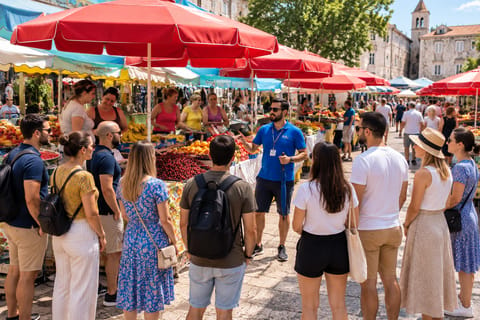
Split's eating calendar is sharper than most Adriatic cities. May through October is the brunch high season; November to March many Riva operators reduce hours or close. Mussel and seafood quality runs September through April, the opposite of brunch season, which is why the Riva is a brunch destination in summer and a seafood-dinner destination in winter. The Pazar vegetable market on the east edge of the Palace (open 6am daily) supplies the fritule, burek, and produce that the brunch cafes work with. A walk through Pazar before brunch is the local move; pick up a burek from a stall on the way.

How to time it

Peak season (June, July, August): cafes open at 8am, the brunch menu runs to 2pm, and the 10am-noon window is the busiest. Arrive at opening for the Riva sit-down operators (Brasserie on 7 in particular) or wait until 1pm to skip the queue. Shoulder season (April, May, September, October): operators open at 10am, smaller crowds, queue is lighter. Off-season (November to March): expect reduced hours, some Riva cafes closed entirely; the Varos and Radunica neighborhood operators are the more reliable winter brunch option. Most Split brunch spots do not take bookings; the polished Riva operators (Brasserie on 7) accept reservations during peak summer weekends via their website. The Pazar market burek stalls are a 7am-to-1pm operation seven days a week.

Brunch picks

Brasserie on 7 ★ 4.4

BrunchAll-day brunch on the Riva€€EUR 12-22diocletians-palaceDaily 08:00-11:30 breakfast, 12:00-17:00 lunchRecommended for the terrace

Brasserie on 7 on Split's Riva runs the city's flagship brunch service, opening at 08:00 with a French-Croatian platter menu and the best Adriatic terrace.

Order: Riva breakfast platter and a flat white

Tip: Book the front of the terrace; arrive by 09:00 for the calmest morning hour.

UpCafe ★ 4.5

BrunchVegetarian and vegan deli€€EUR 8-15bacviceMon-Fri 07:00-20:00, Sat 08:00-17:00Walk-in

UpCafe at Domovinskog rata 29A in Split is the city's vegetarian brunch counter, with display-case meal-prep plates and plant-milk lattes from 07:00.

Order: Wrap of the day with a green juice

Tip: Sundays closed; weekend brunch sits Saturday morning before the lunch rush.

D16 Coffee ★ 4.6

BrunchSpecialty coffee brunch counter€€EUR 4-12diocletians-palaceMon-Sat 08:00-20:00Walk-in

D16 Coffee on Dominisova in Split runs a morning brunch service of pastries and breakfast plates next to the city's most serious filter-coffee program.

Order: Filter coffee with a Kruscic pastry

Tip: Bring a Kruscic pastry from down the road; staff are fine with you eating it with their filter.

Bokeria Morning Counter ★ 4.1

BrunchCafe and pastry breakfast inside Bokeria€€EUR 5-15diocletians-palaceDaily 09:00-12:00 morning serviceWalk-in

Bokeria on Domaldova in Split opens at 09:00 with a quieter pastry-and-coffee morning service before the lunch kitchen fires up, with bar seats only.

Order: Espresso with a pistachio cornetto

Tip: Counter seats only before lunch; the front bar is the quietest part of an otherwise loud day room.

Frequently asked: brunch in Split

Is brunch in Split a year-round thing?

No. Split brunch peaks May through October. In November, December, January, February, and March, many Riva-front brunch cafes drop hours or close, and the brunch scene contracts to the Varos and Radunica neighborhood operators plus a few Diocletian Palace cafes. Plan accordingly if you visit off-season.

What is marenda?

Marenda is the Dalmatian late-morning meal, traditionally 9:30am to 11:30am, that sits between the early breakfast and the long Mediterranean lunch. Konobas serve whatever the kitchen made that morning (a small stew, grilled sardines, blitva with potatoes, bread) for a fixed low price. It is the local equivalent of brunch and predates the imported format by decades.

Do Split brunch spots take bookings?

Most do not. The walk-in default is the rule for Varos, Radunica, and the smaller Diocletian Palace cafes. The larger Riva operators (Brasserie on 7 in particular) accept reservations during peak summer weekends via their website. For unbooked spots, arrive at opening or wait until 1pm.

How much does brunch in Split cost?

A full sit-down brunch plate with coffee on the Riva runs 12-22 EUR. A marenda portion at a Varos konoba lands at 6-12 EUR. A burek and yogurt from a Pazar market stall is 3-5 EUR. Coffee at a third-wave cafe is 2.50-4 EUR. Split is cheaper than Dubrovnik and substantially cheaper than the Italian Adriatic coast.

Where do locals actually eat in the morning?

A burek or fritule from a Pazar market stall with a macchiato standing at a counter is the Dalmatian default, 4-6 EUR total. Younger locals doing a fuller sit-down brunch head to Varos cafes or the smaller Diocletian Palace operators rather than the Riva, which is mostly tourist crowd in peak season.

← Back to Split food guide

By when you want to eat