Signature dishes
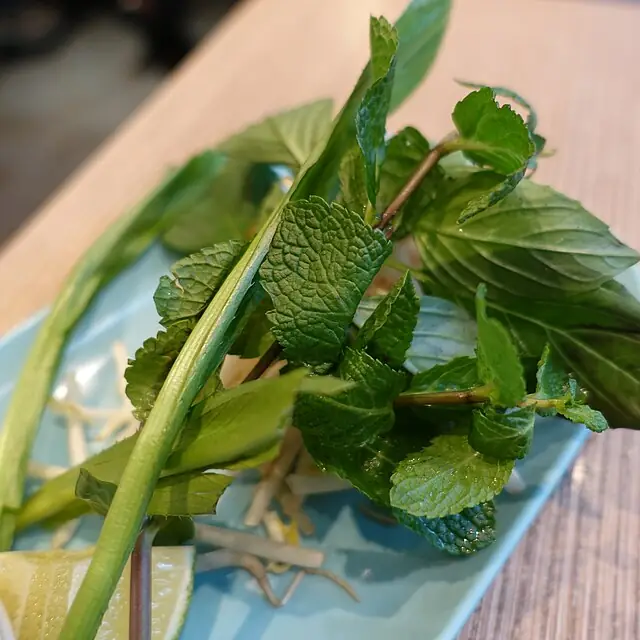
Vietnam's defining beef noodle soup, a bowl of flat rice noodles in a clear broth simmered for hours with beef bones, charred ginger and onion, star anise and cinnamon, topped with raw or brisket beef and a raft of herbs.
Where: Pho Hoa Pasteur, Pho Le, Pho Quynh
Price: 60,000-120,000 dong
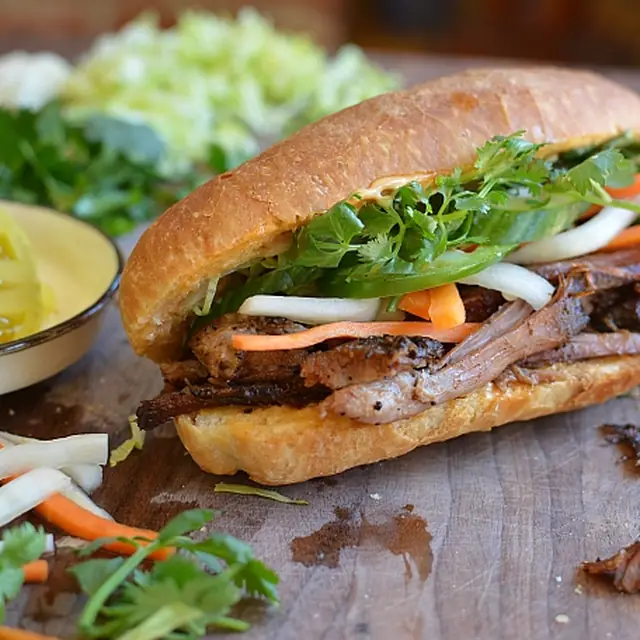
The Vietnamese sandwich, a crisp, airy baguette split and filled with pate, cold cuts or grilled meat, then loaded with pickled carrot and daikon, cucumber, coriander, chili and a slick of mayonnaise and soy or Maggi seasoning.
Where: Banh Mi Huynh Hoa, Banh Mi Bay Ho, Banh Mi Hong Hoa
Price: 25,000-60,000 dong
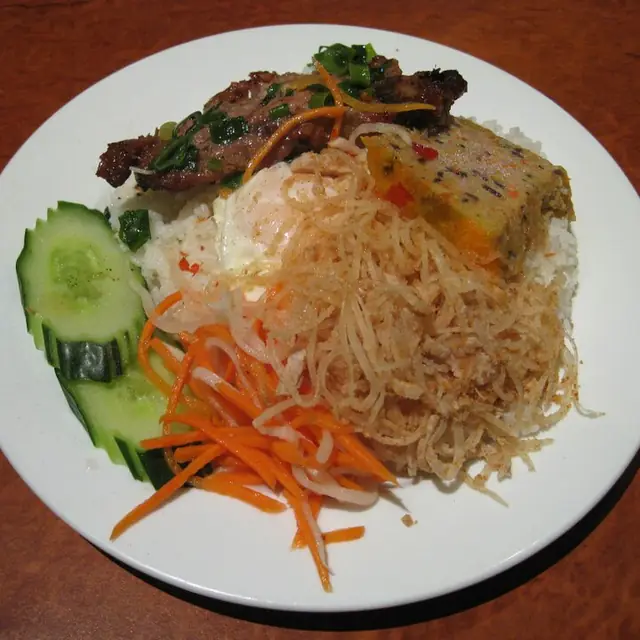
Broken rice, the quintessential Saigon plate: fractured rice grains topped with a marinated grilled pork chop, shredded pork skin, a steamed pork-and-egg meatloaf and a fried egg, dressed with sweet fish sauce and a bowl of scallion oil.
Where: Com Tam Ba Ghien
Price: 40,000-80,000 dong
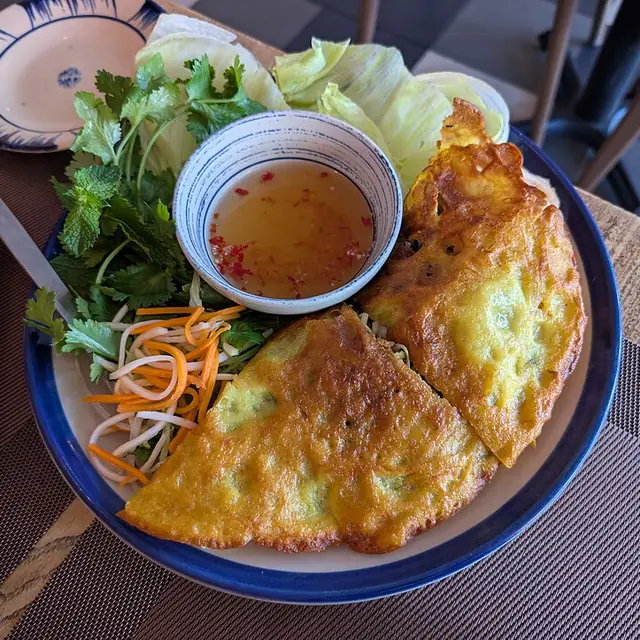
A large, crackling turmeric-yellow crepe of rice flour and coconut milk, fried until lacy and folded over shrimp, pork and bean sprouts, then torn into pieces, wrapped in mustard leaf and herbs and dipped in sweet fish sauce.
Where: Banh Xeo 46A, Secret Garden
Price: 60,000-120,000 dong
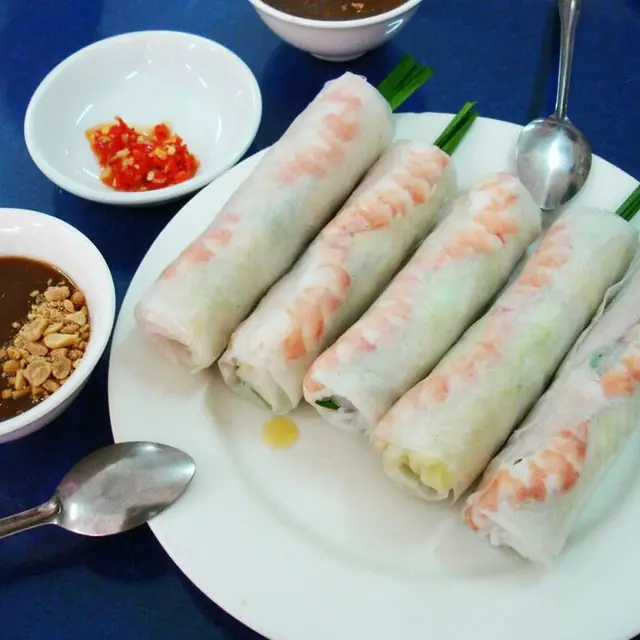
Fresh spring rolls, translucent rice-paper wrappers rolled around poached pork, whole prawns, rice vermicelli, lettuce and herbs, served cold and dipped in a peanut-hoisin sauce or nuoc cham. Light, clean and uncooked, the counterpoint to the fried roll.
Where: Secret Garden, Quan Ngon 138
Price: 40,000-80,000 dong
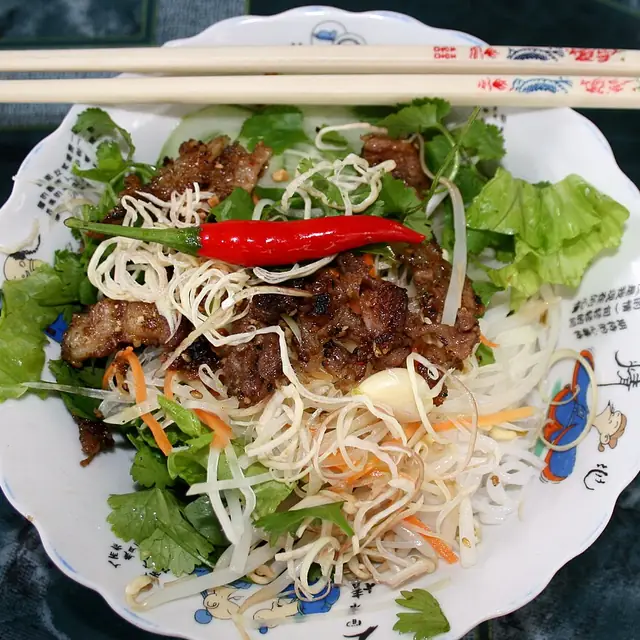
A bright, room-temperature noodle bowl: cold rice vermicelli topped with charcoal-grilled lemongrass pork, fresh herbs, pickled vegetables, cucumber, crushed peanuts and often a crisp fried spring roll, all dressed with sweet-and-sour nuoc cham poured over and tossed.
Where: Bun Thit Nuong Chi Tuyen
Price: 40,000-70,000 dong
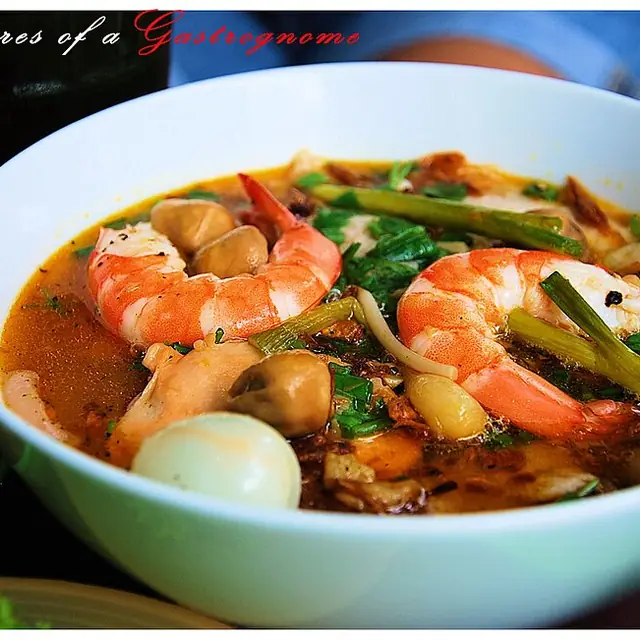
A Phnom Penh-style noodle soup that became a Saigon staple: chewy clear noodles in a sweet, clean pork-and-dried-squid broth, topped with sliced pork, prawns, quail eggs and offal, served either as a soup or dry with the broth on the side.
Where: Chu Se
Price: 50,000-90,000 dong
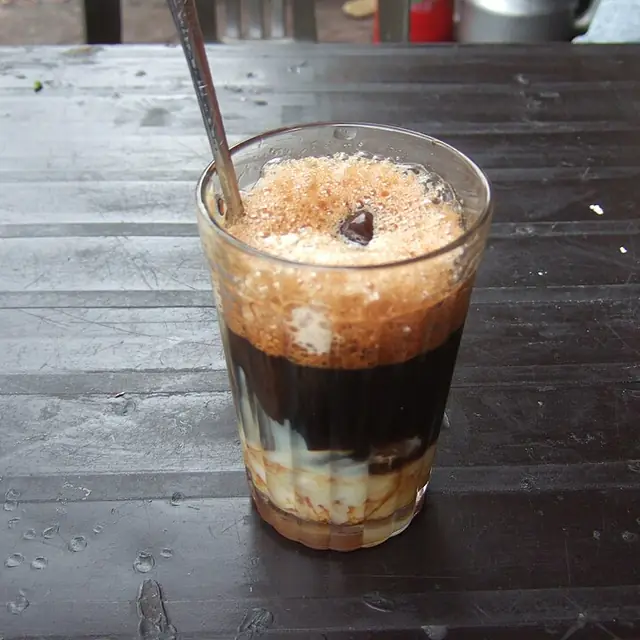
Iced milk coffee, the drink Saigon runs on: dark, bitter robusta dripped slowly through a metal phin filter over a layer of sweetened condensed milk, then stirred and poured over a glass of ice. Thick, sweet, intensely caffeinated and built for the heat.
Where: Cheo Leo Cafe, The Workshop Coffee, Runam Bistro
Price: 20,000-50,000 dong
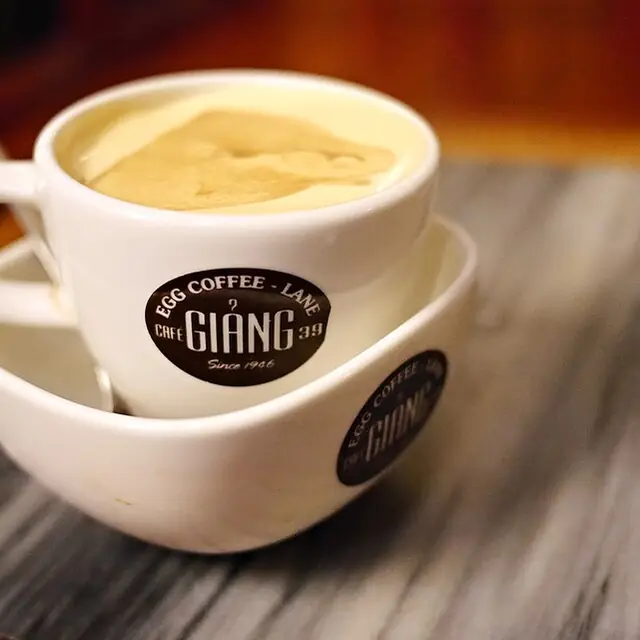
Egg coffee, a Vietnamese invention of whipped egg yolk and condensed milk beaten into a thick, sweet meringue-like custard and floated on a cup of strong hot coffee, drunk by spooning through the foam. A Hanoi creation now poured across Saigon.
Where: Runam Bistro
Price: 40,000-70,000 dong
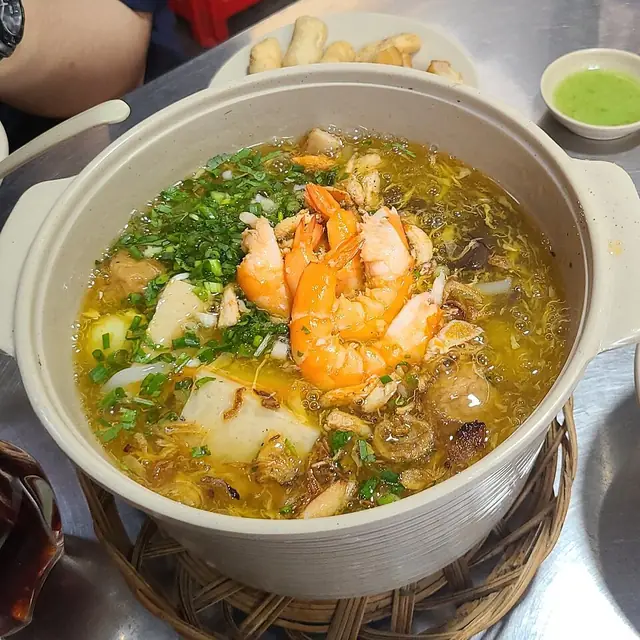
A thick, gluey crab noodle soup of chewy tapioca-and-rice noodles in a starchy, savoury broth loaded with crab meat, pork, quail eggs and cha, finished with black pepper and a squeeze of lime. Comforting, rich and unmistakably Saigon.
Where: Banh Canh Cua 87, Banh Canh Ghe Muoi Ot Xanh
Price: 45,000-90,000 dong
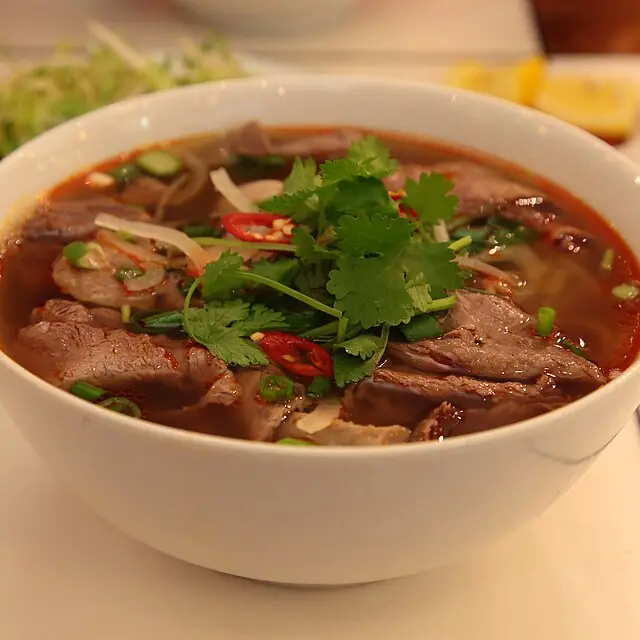
The fiery central-Vietnamese beef-and-pork noodle soup from Hue, built on a lemongrass-and-shrimp-paste broth stained red with chili oil, with thick round rice noodles, beef shank, pork knuckle and a slice of congealed blood. Bolder and spicier than pho.
Where: Bun Bo Nam Giao
Price: 50,000-90,000 dong
Pho
Vietnam's defining beef noodle soup, a bowl of flat rice noodles in a clear broth simmered for hours with beef bones, charred ginger and onion, star anise and cinnamon, topped with raw or brisket beef and a raft of herbs.
History: Pho emerged in northern Vietnam in the early 20th century around Nam Dinh and Hanoi, most likely as a marriage of Vietnamese rice noodles, Chinese beef-noodle technique and French demand for beef. When the country divided in 1954, southern-bound migrants carried it to Saigon, where it took on a sweeter, more heavily garnished character: a plate of bean sprouts, Thai basil, lime and chili on the side, and a splash of hoisin and sriracha in the bowl. Southern pho is richer and sweeter than the austere Hanoi original, and in Saigon it is eaten at any hour, from a 6am breakfast to a post-midnight bowl.
Where to try it: Pho Hoa Pasteur, Pho Le, Pho Quynh
Watch out for: Gluten, Soy
Banh mi
The Vietnamese sandwich, a crisp, airy baguette split and filled with pate, cold cuts or grilled meat, then loaded with pickled carrot and daikon, cucumber, coriander, chili and a slick of mayonnaise and soy or Maggi seasoning.
History: Banh mi is the clearest edible record of Saigon's French century. The colonists brought the baguette; Vietnamese bakers lightened it with rice flour into a thinner, crackly loaf, and by the 1950s Saigon vendors were splitting it and filling it with local pate, cha lua sausage, pickles and herbs. The result is a portable, self-contained meal sold from carts and shopfronts across the city, and its most famous purveyors, from Huynh Hoa to Bay Ho, guard their pate recipes closely. The word banh mi simply means bread; the sandwich took the name of the loaf it is built on.
Where to try it: Banh Mi Huynh Hoa, Banh Mi Bay Ho, Banh Mi Hong Hoa
Watch out for: Gluten, Egg, Soy
Banh xeo
A large, crackling turmeric-yellow crepe of rice flour and coconut milk, fried until lacy and folded over shrimp, pork and bean sprouts, then torn into pieces, wrapped in mustard leaf and herbs and dipped in sweet fish sauce.
History: The name banh xeo means sizzling cake, for the hiss the batter makes hitting a screaming-hot pan. A Southern and central Vietnamese dish, the Saigon version is large and generously filled, its batter coloured and flavoured with turmeric and coconut milk. It is a hands-on, communal dish: you tear off a piece, roll it in lettuce or mustard greens with a fistful of herbs, and dunk it in nuoc cham. Specialists like Banh Xeo 46A near Tan Dinh built reputations on a single well-made crepe, and the dish drew international attention when Anthony Bourdain filmed at a Saigon banh xeo stall.
Where to try it: Banh Xeo 46A, Secret Garden
Watch out for: Shellfish, Fish
Goi cuon
Fresh spring rolls, translucent rice-paper wrappers rolled around poached pork, whole prawns, rice vermicelli, lettuce and herbs, served cold and dipped in a peanut-hoisin sauce or nuoc cham. Light, clean and uncooked, the counterpoint to the fried roll.
History: Goi cuon are the fresh, unfried cousin of the crisp cha gio, and a Southern Vietnamese specialty. Cool and herbaceous, they suit Saigon's climate, and they are as much an assembly as a recipe: softened rice paper, a leaf of lettuce, vermicelli, herbs, a slice of poached pork and a split prawn laid so its pink shows through the wrapper. The peanut-hoisin dip is the Southern signature. They appear on nearly every Vietnamese menu in the city, from home-cooking rooms to the rooftop kitchen at Secret Garden.
Where to try it: Secret Garden, Quan Ngon 138
Watch out for: Shellfish, Peanuts, Soy
Bun thit nuong
A bright, room-temperature noodle bowl: cold rice vermicelli topped with charcoal-grilled lemongrass pork, fresh herbs, pickled vegetables, cucumber, crushed peanuts and often a crisp fried spring roll, all dressed with sweet-and-sour nuoc cham poured over and tossed.
History: Bun thit nuong is a Southern Vietnamese staple and a Saigon lunchtime workhorse, a dish built to be light and cooling in the heat. Cold noodles carry the smoke of grilled pork marinated in lemongrass, garlic, fish sauce and sugar, and the whole bowl is unified by nuoc cham rather than a hot broth. Sidewalk specialists like the Chi Tuyen stall on Co Giang have run for decades on this one dish, grilling pork over charcoal through the lunch rush. Add a fried cha gio spring roll and it becomes bun thit nuong cha gio.
Where to try it: Bun Thit Nuong Chi Tuyen
Watch out for: Fish, Peanuts, Soy
Hu tieu Nam Vang
A Phnom Penh-style noodle soup that became a Saigon staple: chewy clear noodles in a sweet, clean pork-and-dried-squid broth, topped with sliced pork, prawns, quail eggs and offal, served either as a soup or dry with the broth on the side.
History: Hu tieu Nam Vang, literally Phnom Penh noodles, travelled with Teochew Chinese and Cambodian migrants and settled deep into the food of Cho Lon and southern Saigon. The broth is lighter and sweeter than pho, built on pork bones and dried seafood, and the noodles are a firmer, more translucent rice noodle. The dish is endlessly customisable, ordered nuoc for soup or kho for the dry version with the broth alongside, and topped with whatever the stall offers, from prawns and quail eggs to liver and minced pork. It is a District 5 and 6 signature that has spread across the whole city.
Where to try it: Chu Se
Watch out for: Shellfish, Fish, Egg
Ca phe sua da
Iced milk coffee, the drink Saigon runs on: dark, bitter robusta dripped slowly through a metal phin filter over a layer of sweetened condensed milk, then stirred and poured over a glass of ice. Thick, sweet, intensely caffeinated and built for the heat.
History: When the French brought coffee to Vietnam in the 19th century they also created a supply problem: fresh milk was scarce and did not keep in the tropics, so sweetened condensed milk stood in for it. The result, dripped through the individual metal phin filter the French also introduced, became ca phe sua. Add ice, essential in Saigon's climate, and it becomes ca phe sua da. Vietnam grows mostly robusta, which is harsher and more caffeinated than arabica, and the slow phin drip and heavy sweetening are what tame it. It is sold on every corner, from plastic-stool stalls to old cafes like Cheo Leo.
Where to try it: Cheo Leo Cafe, The Workshop Coffee, Runam Bistro
Watch out for: Milk
Ca phe trung
Egg coffee, a Vietnamese invention of whipped egg yolk and condensed milk beaten into a thick, sweet meringue-like custard and floated on a cup of strong hot coffee, drunk by spooning through the foam. A Hanoi creation now poured across Saigon.
History: Egg coffee was invented in 1946 Hanoi by Nguyen Van Giang, a bartender at the Metropole hotel who, short of milk, whipped egg yolk with sweetened condensed milk to cap his coffee. The idea spread south, and Saigon cafes now serve their own versions hot and cold. The yolk is beaten with condensed milk until it turns pale, thick and mousse-like, then spooned over strong phin coffee so you drink the bitter coffee through a sweet custard cap. Cafes like Runam and a wave of specialty rooms have made it a fixture of the Saigon coffee menu.
Where to try it: Runam Bistro
Watch out for: Egg, Milk
Banh canh cua
A thick, gluey crab noodle soup of chewy tapioca-and-rice noodles in a starchy, savoury broth loaded with crab meat, pork, quail eggs and cha, finished with black pepper and a squeeze of lime. Comforting, rich and unmistakably Saigon.
History: Banh canh takes its name from its noodles, short thick strands of tapioca and rice flour with a slippery, chewy bite quite unlike pho's flat noodles. The cua version, with crab, is a Saigon favourite, its broth deliberately thickened until it clings. Tan Dinh's sidewalk stalls, including the long-running Banh Canh Cua 87, turned a single bowl into an institution, and coastal variants like banh canh ghe swap sea crab and a green-chili salt. It is eaten at all hours, a heavier, stickier counterpoint to the city's clear-broth noodle soups.
Where to try it: Banh Canh Cua 87, Banh Canh Ghe Muoi Ot Xanh
Watch out for: Shellfish, Egg, Fish
Bun bo Hue
The fiery central-Vietnamese beef-and-pork noodle soup from Hue, built on a lemongrass-and-shrimp-paste broth stained red with chili oil, with thick round rice noodles, beef shank, pork knuckle and a slice of congealed blood. Bolder and spicier than pho.
History: Bun bo Hue comes from the old imperial capital of Hue in central Vietnam, and it is everything pho is not: assertively spicy, scented with lemongrass and shrimp paste, and built on thick cylindrical rice noodles rather than flat ones. Migrants carried it south, and Saigon took to it despite, or because of, the heat, with long-running specialists like Bun Bo Nam Giao serving it since the 1990s. The broth balances the funk of mam ruoc shrimp paste against lemongrass, chili and a touch of sugar, and a proper bowl carries beef shank, pork knuckle, cha and cubes of blood.
Where to try it: Bun Bo Nam Giao
Watch out for: Shellfish, Fish